Emergency Elevator Repair in Los Angeles: Complete FAQ Guide
Who should be contacted first for emergency elevator repair in Los Angeles?
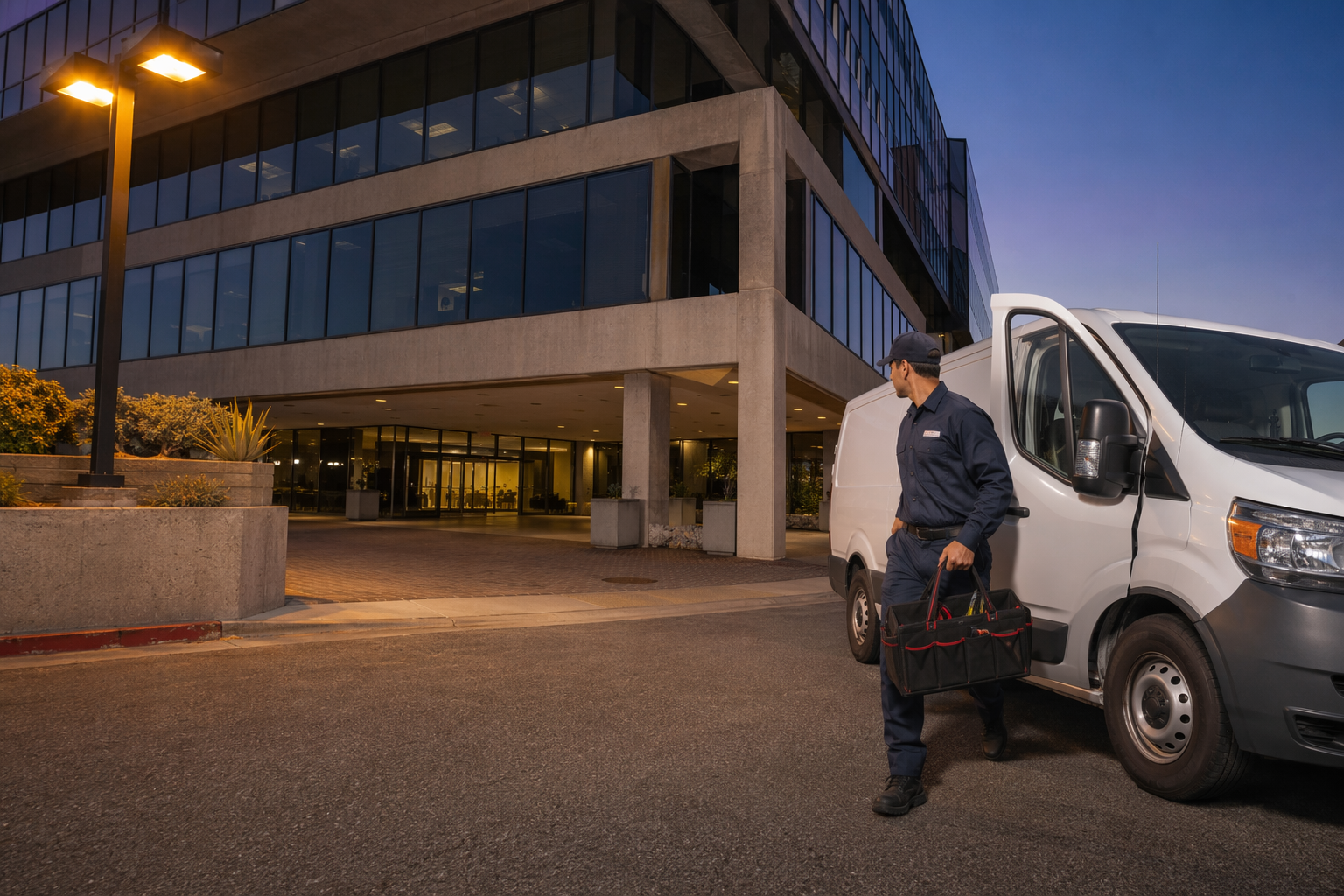
The first call should go to a California-licensed elevator contractor that handles urgent repair calls in the Los Angeles area, such as Liftech Elevator, which serves Los Angeles, Long Beach, Signal Hill, and Orange County.
Building owners and property managers should maintain the contact number of their elevator service contractor in a clearly accessible location — ideally posted in the machine room and at the building management office. If occupants are trapped inside the elevator, the fire department (911) should also be contacted simultaneously, as they are trained to perform passenger rescues. The elevator contractor is then responsible for determining the mechanical or electrical cause of the failure and restoring the unit to safe operation.
Under California law, elevator owners are responsible for keeping their units in safe working condition. Contracting with a licensed elevator company before an emergency occurs — rather than searching for help after the fact — is the most effective way to ensure a qualified technician is dispatched promptly when a breakdown happens.
What qualifies as an elevator emergency in California?
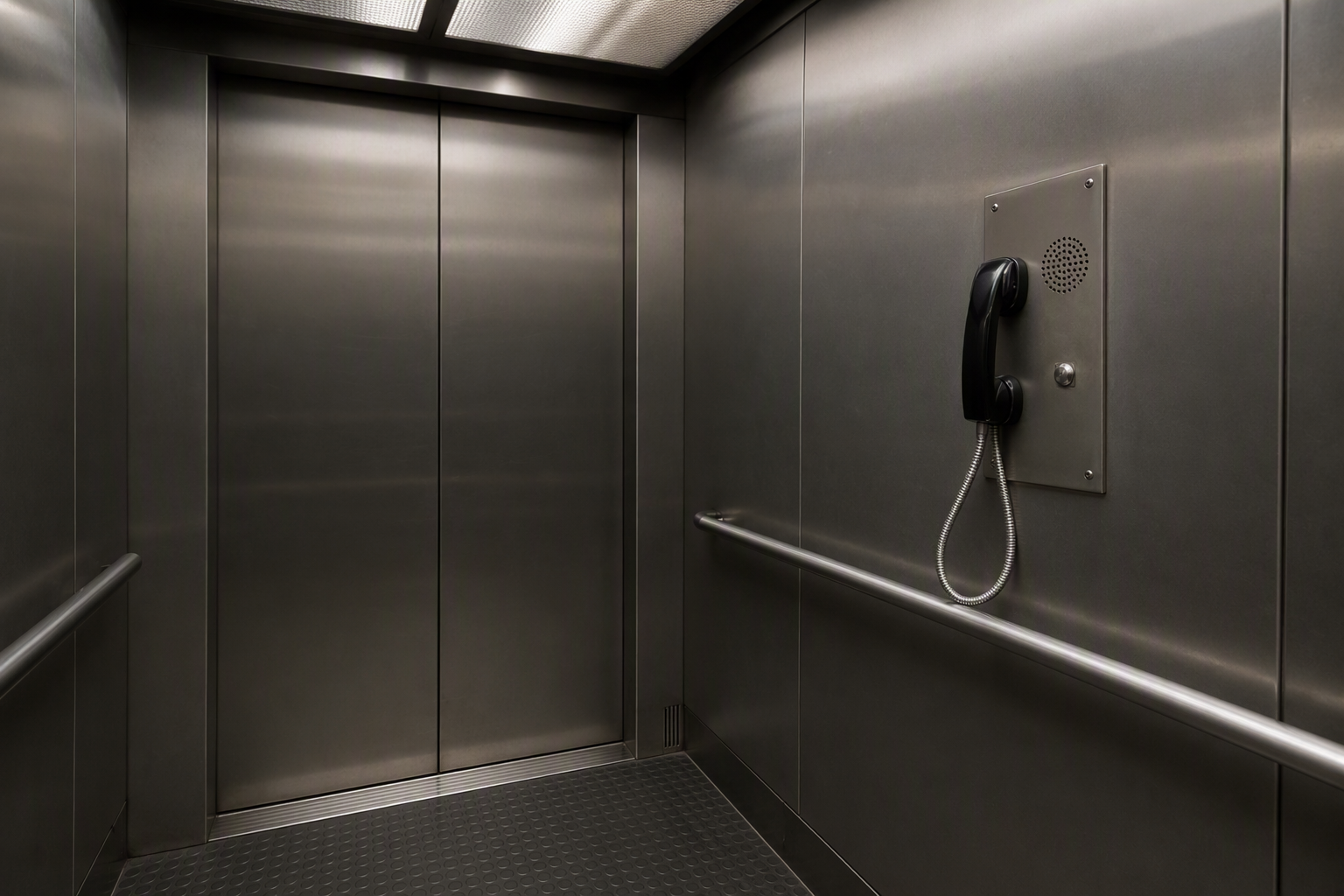
An elevator emergency is any condition that poses an immediate risk to passenger safety, including entrapment, sudden free-fall motion, doors that will not open, unusual smoke or burning smells, or a car that stops between floors.
California’s Department of Industrial Relations (DIR), Division of Occupational Safety and Health (Cal/OSHA) regulates elevator safety in the state. Events that trigger an emergency response include passenger entrapment, uncontrolled car movement, broken ropes or chains, hydraulic fluid leaks near ignition sources, and electrical failures causing the car to become inoperable. Building owners are required to report certain incidents to Cal/OSHA and may not return an elevator to service until it has been inspected and cleared by a certified elevator inspector.
Non-emergency issues — such as noisy doors, slow door response, or minor leveling errors — are urgent maintenance matters but do not require the same immediate escalation as the scenarios above.
What are the immediate steps to take when an elevator breaks down with passengers inside?
When passengers are trapped in a stopped elevator, building staff and property managers should follow a specific sequence of steps to protect occupant safety while awaiting professional help.
- Call 911 if any passenger reports a medical emergency, is in distress, or if the elevator is stuck in an unsafe position such as between floors.
- Communicate with the trapped passengers using the elevator’s in-car phone or intercom system. Reassure them that help is on the way and instruct them not to attempt to force the doors open or climb out of the car.
- Contact your elevator service contractor immediately and report the car location, number of passengers, and any unusual sounds or smells.
- Do not attempt to pry the doors open from the hallway — this can cause the elevator car to shift and create additional risk.
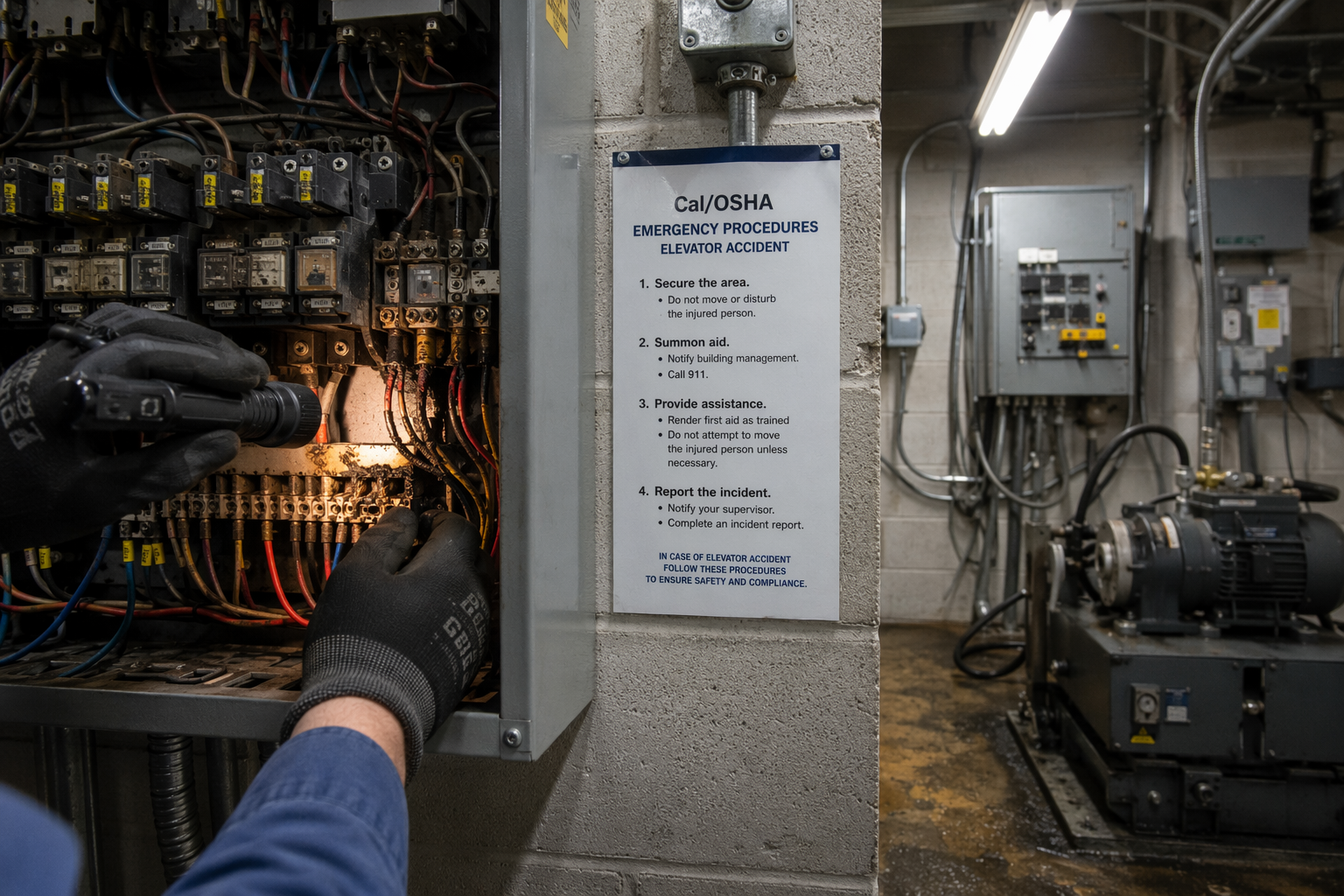
- Locate and review the machine room emergency procedure placard, which California regulations require to be posted in every elevator machine room.
- Secure the lobby landing at the affected floor to prevent additional passengers from pressing the call button repeatedly.
- Document the incident — note the time, floor, number of passengers, and any observable symptoms — for the service report and any required regulatory filings.
- Do not return the elevator to service until the licensed technician has inspected it and confirmed it is safe to operate.
Is elevator entrapment rescue the responsibility of the fire department or the elevator company?
Passenger rescue from a stopped elevator is typically performed by the local fire department, while the elevator company is responsible for diagnosing and repairing the mechanical or electrical failure that caused the entrapment.
The Los Angeles Fire Department and Long Beach Fire Department both train personnel in elevator rescue procedures. Fire department personnel can manually release brake mechanisms or manually open doors using approved landing door keys to extract passengers safely. However, fire department personnel are not elevator mechanics — once passengers are out, the unit must be taken out of service and a licensed elevator contractor must inspect and repair the equipment before it is returned to use. Attempting to restore service without this inspection violates California elevator safety regulations.
What certifications should an emergency elevator repair company in Los Angeles hold?
Any elevator repair company operating in California must hold a valid Elevator Mechanic Certification issued by the California Division of Occupational Safety and Health (Cal/OSHA) for its mechanics, and the contracting entity must be a licensed elevator contractor under California law.
Beyond state licensing, reputable companies may also maintain compliance with ASME A17.1 Safety Code for Elevators and Escalators, which is the foundational national standard for elevator design, construction, installation, and maintenance. Familiarity with this code is essential for technicians performing emergency repairs, as it governs allowable repair procedures and safety system requirements. Building owners in Los Angeles, Long Beach, and surrounding areas should verify a contractor’s license status with the California DIR before authorizing any repair work.
How does the ASME A17.1 code apply to emergency elevator repairs?
The ASME A17.1 Safety Code for Elevators and Escalators establishes the baseline safety requirements that govern not only elevator installation but also maintenance, alteration, and repair procedures, including emergency interventions.
When a technician responds to an emergency call, the repair work performed must conform to the applicable edition of ASME A17.1 as adopted by California. The code specifies requirements for safety devices such as governors, safeties, buffers, and door interlocks — all of which may be involved in a breakdown scenario. In 2026, California continues to enforce ASME A17.1 through the Cal/OSHA elevator safety program. Any repair that alters a safety-critical component typically requires a follow-up inspection before the elevator is returned to service. Building owners should request documentation of the repair and the applicable code sections addressed from their contractor.
What are the most common causes of emergency elevator failures?
The most common causes of elevator emergencies include hydraulic system failures, door mechanism malfunctions, motor or drive system faults, control board failures, and rope or chain issues in traction elevators.
| Failure Type | Elevator Type Affected | Typical Symptoms | Regulatory Reference |
|---|---|---|---|
| Hydraulic fluid leak or pump failure | Hydraulic | Car slowly sinks, won’t rise, or stops mid-travel | ASME A17.1 |
| Door interlock failure | Traction & Hydraulic | Doors won’t open, close, or car won’t move | ASME A17.1 |
| Motor or drive system fault | Traction (MRL & Machine Room) | Car stops suddenly, won’t respond to calls | ASME A17.1 |
| Control board or software failure | All modern types | Erratic floor selection, car passes floors, no response | ASME A17.1 |
| Governor or safety device activation | Traction | Car stops abruptly, safety clamps engaged | ASME A17.1 |
| Rope wear or broken strand | Traction | Unusual vibration, noise, or governor trip | ASME A17.1 |
| Power supply or electrical fault | All types | Complete loss of power to car and controls | OSHA |
How quickly must an elevator be repaired after an emergency shutdown in California?
California regulations do not specify a universal maximum downtime period for elevator repair, but building codes and lease agreements often impose obligations on building owners to restore accessible vertical transportation within a reasonable timeframe, particularly in buildings subject to ADA accessibility requirements.
For buildings where elevator service is the only accessible means of vertical travel, extended outages can create ADA compliance exposure if persons with disabilities are denied access to building floors. The U.S. Department of Justice has issued guidance indicating that building owners must take steps to provide accessible alternatives when elevator outages occur. Practically speaking, this means that property managers in Los Angeles and surrounding markets should treat elevator downtime as a compliance matter, not just a convenience issue, and should work with a qualified contractor like Liftech Elevator to prioritize restoration.
Does ADA compliance affect how quickly an elevator must be repaired?
Yes — under the Americans with Disabilities Act (ADA), building owners have an ongoing obligation to maintain accessible features, including elevators, in working condition, which means extended outages may constitute a failure to comply with federal accessibility law.
The ADA’s maintenance of accessible features requirement (28 C.F.R. § 35.133 and § 36.211) makes clear that isolated or temporary outages do not automatically violate the ADA if the owner is taking prompt corrective action. However, an elevator that remains out of service for an extended period without good-faith remediation efforts can expose a property owner to ADA complaints or litigation. Buildings in commercial districts throughout Los Angeles and Long Beach that serve the public should treat elevator repair responsiveness as a direct ADA obligation.
Can a building owner legally operate an elevator while waiting for parts during a repair?
No — California elevator safety regulations generally prohibit returning an elevator to passenger service if a known safety deficiency has not been corrected, even if the unit appears to be functioning.
Under Cal/OSHA elevator regulations and applicable editions of ASME A17.1, an elevator with a compromised safety device, defective door interlock, damaged rope, or malfunctioning control system must be taken out of service until repaired and, in some cases, inspected. Operating a flagged unit exposes the building owner to regulatory penalties and significant liability in the event of a subsequent incident. The only exception may apply in very narrow circumstances where a licensed technician has documented that the unit remains safe for limited use pending a non-safety-critical part — and even then, this determination must come from a licensed professional, not the building owner.
What is the difference between emergency elevator repair and preventive maintenance?
Emergency elevator repair addresses an active failure or safety incident that has already occurred, while preventive maintenance is a scheduled program designed to identify and correct developing issues before they cause a breakdown or emergency.
Preventive maintenance is the most effective tool for reducing emergency calls. A well-maintained elevator inspected and serviced according to ASME A17.1 standards will have lubricated guide rails, adjusted door operators, tested safety devices, and verified control system functionality — all of which reduce the likelihood of sudden failure. Building owners in Los Angeles, Signal Hill, and Orange County who defer maintenance to reduce costs often find that the cumulative repair expense of emergency calls far exceeds what a maintenance contract would have cost. Liftech Elevator provides maintenance programs designed to keep elevators operating reliably between inspections.
How often are elevators legally required to be inspected in California?
In California, elevators are required to be inspected periodically by a certified elevator inspector under the oversight of Cal/OSHA or an approved local enforcement agency, with the specific frequency depending on elevator type and usage classification.
California follows a mandatory inspection program administered through the Division of Occupational Safety and Health. Elevator owners must ensure their units receive periodic inspections and maintain a valid Certificate of Inspection. Inspections evaluate compliance with applicable editions of ASME A17.1 and California-specific amendments. The Certificate of Inspection must be posted in the elevator at all times. A lapsed inspection certificate is itself a violation and can trigger regulatory action independent of any breakdown event. Building owners should verify their inspection status with their elevator contractor as part of their ongoing compliance management.
What information should a property manager have ready when calling for emergency elevator repair?
Having key information ready before calling an elevator repair contractor reduces diagnostic time and helps the technician arrive prepared with the most likely replacement parts or tools needed.
Property managers should be prepared to provide the following: the building address and floor the car is stopped on, the elevator make and model number (found on the data plate in the car or machine room), the type of elevator (hydraulic, traction, MRL), a description of what happened immediately before the failure, whether passengers are currently trapped, any unusual sounds or smells reported, the elevator’s most recent service date, and the current Certificate of Inspection status. Having the machine room key accessible is also essential to avoid delays when the technician arrives.
Are there elevator repair requirements specific to Los Angeles County or the City of Los Angeles?
Yes — the City of Los Angeles and Los Angeles County have local elevator inspection enforcement programs that operate in coordination with the California Division of Occupational Safety and Health, and local ordinances may impose additional requirements beyond the statewide baseline.
The City of Los Angeles Department of Building and Safety (LADBS) enforces elevator safety within city limits, while unincorporated Los Angeles County areas fall under county jurisdiction. Property owners in these jurisdictions must comply with both state Cal/OSHA elevator regulations and any applicable local codes. Emergency repairs that alter equipment must be documented and may trigger a permit requirement with the local authority having jurisdiction (AHJ). Elevator contractors working in Los Angeles should be familiar with both state and local requirements — Liftech Elevator operates throughout Los Angeles and maintains awareness of the local regulatory landscape across the markets it serves.
What should building owners look for when choosing an emergency elevator repair company in Los Angeles?
Building owners should evaluate a potential elevator contractor on the basis of California licensure, demonstrated familiarity with ASME A17.1 and local codes, geographic coverage of their property location, and a clear protocol for emergency response calls.
Key evaluation criteria include: verification that the company holds a valid California elevator contractor license, confirmation that its mechanics are certified under Cal/OSHA requirements, a service area that includes the property’s city (Los Angeles, Long Beach, Signal Hill, or Orange County), experience with the specific elevator make and model installed in the building, a documented emergency call process, and the ability to provide written repair documentation including code references. Choosing a company based solely on price without verifying these qualifications can create significant regulatory and liability exposure for the building owner.
How do emergency elevator repairs affect a building’s insurance coverage?
Emergency repairs performed by unlicensed contractors or without required permits can void elevator-related provisions in a commercial property insurance policy and may result in denied claims if an incident occurs following an improper repair.
Most commercial property and general liability insurance policies covering buildings with elevators contain clauses requiring that elevator maintenance and repairs be performed by licensed contractors and that the unit remain in compliance with applicable codes. An insurer investigating a claim may request service records, permits, and inspection certificates. If documentation reveals that repairs were made by an unlicensed party or that the elevator was operating with a lapsed inspection certificate, the claim may be disputed. Property owners should confirm with their insurance broker that their elevator service contractor’s qualifications align with their policy requirements.
What role does OSHA play in elevator emergency situations in California?
California operates its own occupational safety and health program (Cal/OSHA) under federal OSHA approval, and this state agency has primary jurisdiction over elevator worker safety and incident reporting requirements in California workplaces.
Under California’s OSHA-approved state plan, Cal/OSHA enforces elevator safety for both building occupants and the mechanics who service the equipment. When an elevator accident or serious injury occurs, Cal/OSHA may require the building owner or contractor to report the incident, preserve the scene, and refrain from moving or repairing the elevator until the agency has conducted its investigation. Employers who allow elevator mechanics to work without proper lock-out/tag-out procedures or who pressure workers to bypass safety protocols may face Cal/OSHA enforcement action. Federal OSHA standards also provide the overarching framework that California’s state plan must meet or exceed.
What is the typical process an elevator technician follows when responding to an emergency repair call?
A licensed elevator technician responding to an emergency follows a structured diagnostic and safety-first protocol before attempting any repair work.
- Confirm passenger status — establish whether anyone is trapped in the car and coordinate with building staff and fire department if rescue is needed.
- Place the elevator out of service — apply lock-out/tag-out procedures to prevent the car from moving during diagnosis.
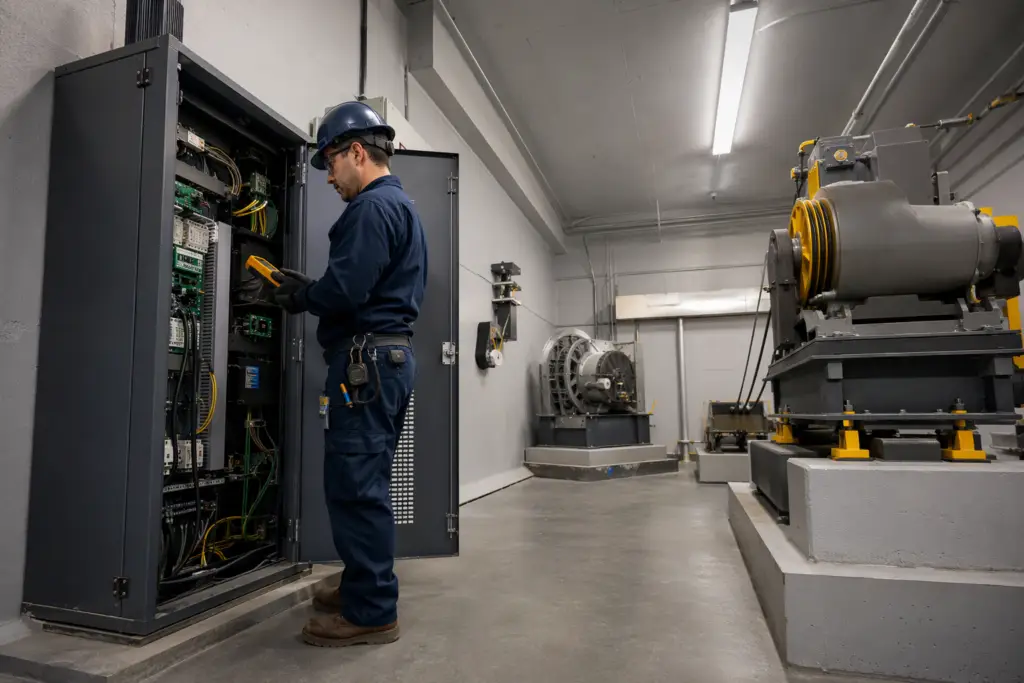
- Access the machine room — review the controller, motor, and drive system for fault codes or visible damage.
- Inspect the car and pit — check for hydraulic leaks, rope condition, buffer contact, or pit flooding if applicable.
- Diagnose the failure mode — identify whether the fault is electrical, mechanical, hydraulic, or software-related.
- Perform the repair — replace or adjust the failed component in accordance with ASME A17.1 requirements and manufacturer specifications.
- Test all safety devices — verify that governors, safeties, door interlocks, and limits are fully operational following the repair.
- Conduct a running test — operate the elevator through full travel at rated load conditions to confirm proper function before removing out-of-service status.
- Document the repair — provide the building owner with a written service report including the failure description, parts replaced, code references, and technician certification information.
- Advise on follow-up — notify the building owner if a Cal/OSHA or local AHJ notification or re-inspection is required before the unit is returned to regular service.
How can building owners in Los Angeles reduce the frequency of elevator emergencies?
The most effective strategy for reducing elevator emergencies is implementing a proactive maintenance program that includes regular lubrication, safety device testing, door system adjustments, and control system monitoring.
Buildings with active maintenance agreements consistently experience fewer emergency breakdowns than those that rely on reactive repair only. A structured maintenance program addresses the most common failure points — door operators, hydraulic seals, motor contacts, and control boards — before they reach a failure state. In addition to maintenance, keeping accurate service records, scheduling periodic code compliance reviews, and ensuring that the Certificate of Inspection is current and posted all contribute to a building’s overall elevator reliability. Liftech Elevator works with property owners across Los Angeles, Long Beach, Signal Hill, and Orange County to develop maintenance strategies appropriate for their specific equipment and usage patterns.
What should tenants and building occupants know about elevator safety in Los Angeles?
Tenants and building occupants should know the location of the in-car emergency phone, understand that they should never attempt to exit a stopped elevator on their own, and be aware of the building’s emergency contact procedures for elevator incidents.
California regulations require that elevators be equipped with a means of two-way communication for trapped passengers. Occupants should use this system — not try to force doors or climb through the top hatch — if the elevator stops unexpectedly. Building management is responsible for ensuring this communication system is tested and functional. Tenants in multi-tenant commercial buildings in Los Angeles and Long Beach should familiarize themselves with the building’s posted emergency procedures, and property managers should conduct periodic building-wide communications reminding occupants of elevator safety protocols. An informed building population is a meaningful layer of protection against panic-driven decisions that can worsen an elevator emergency.
Contact Liftech Elevator for a Free Elevator Assessment
If a building in Los Angeles, Long Beach, Signal Hill, or Orange County is experiencing elevator problems — or if it has been more than a year since the last professional inspection — do not wait for an emergency to discover a compliance gap. Liftech Elevator provides expert elevator repair, maintenance, and code compliance services throughout Southern California.
Call Liftech Elevator now at 562-609-3478 to schedule a free elevator assessment.
A licensed Liftech Elevator technician can evaluate the current condition of any elevator, identify safety or compliance issues, and recommend a maintenance plan designed to prevent costly emergency breakdowns — keeping the building’s occupants safe and the building owner on the right side of California elevator law.
Need elevator service you can rely on? Liftech Elevator is ready to help.