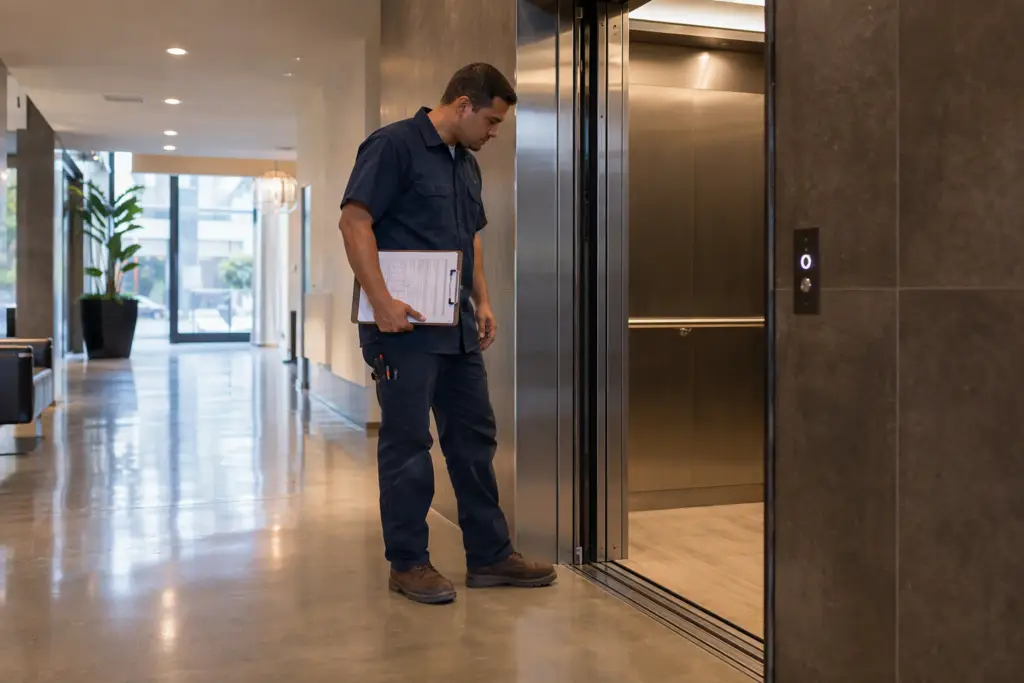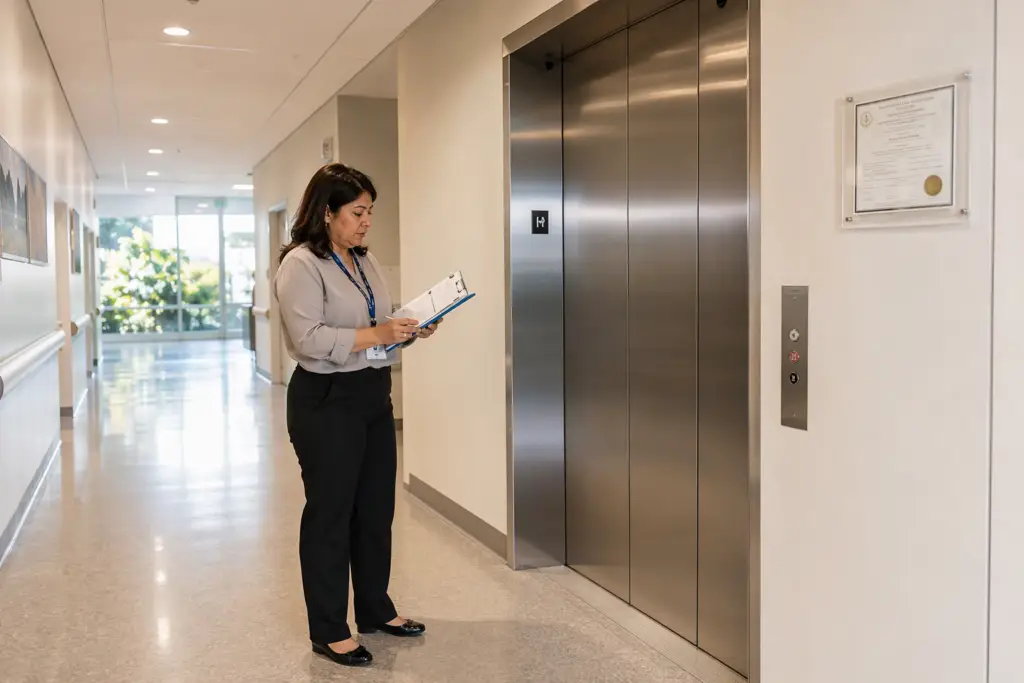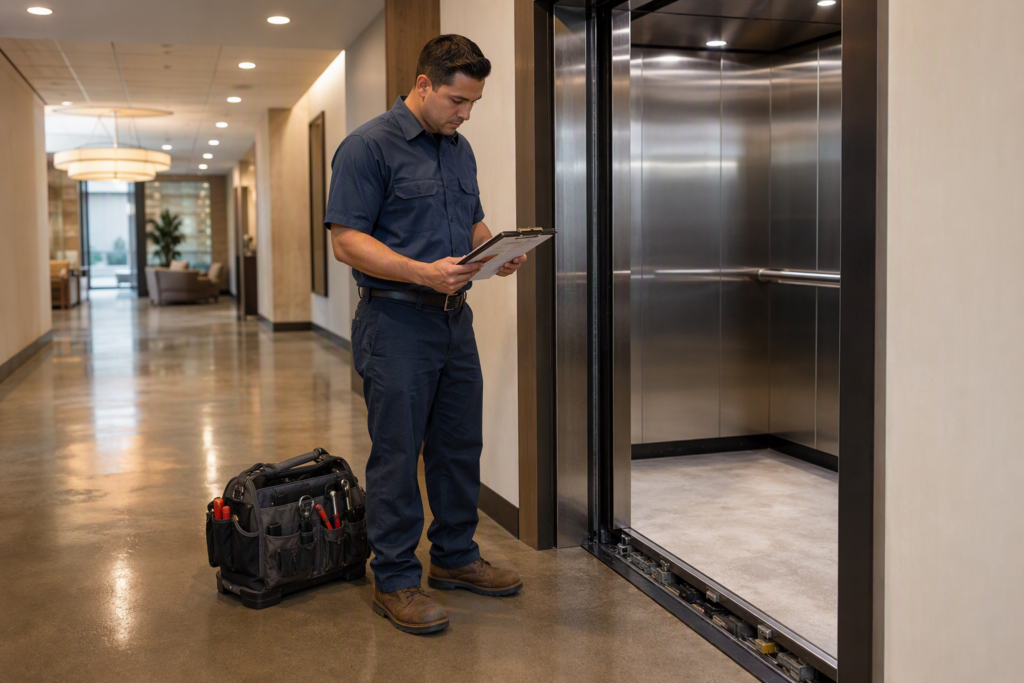
Best Elevator Maintenance Company Los Angeles: Complete FAQ Guide
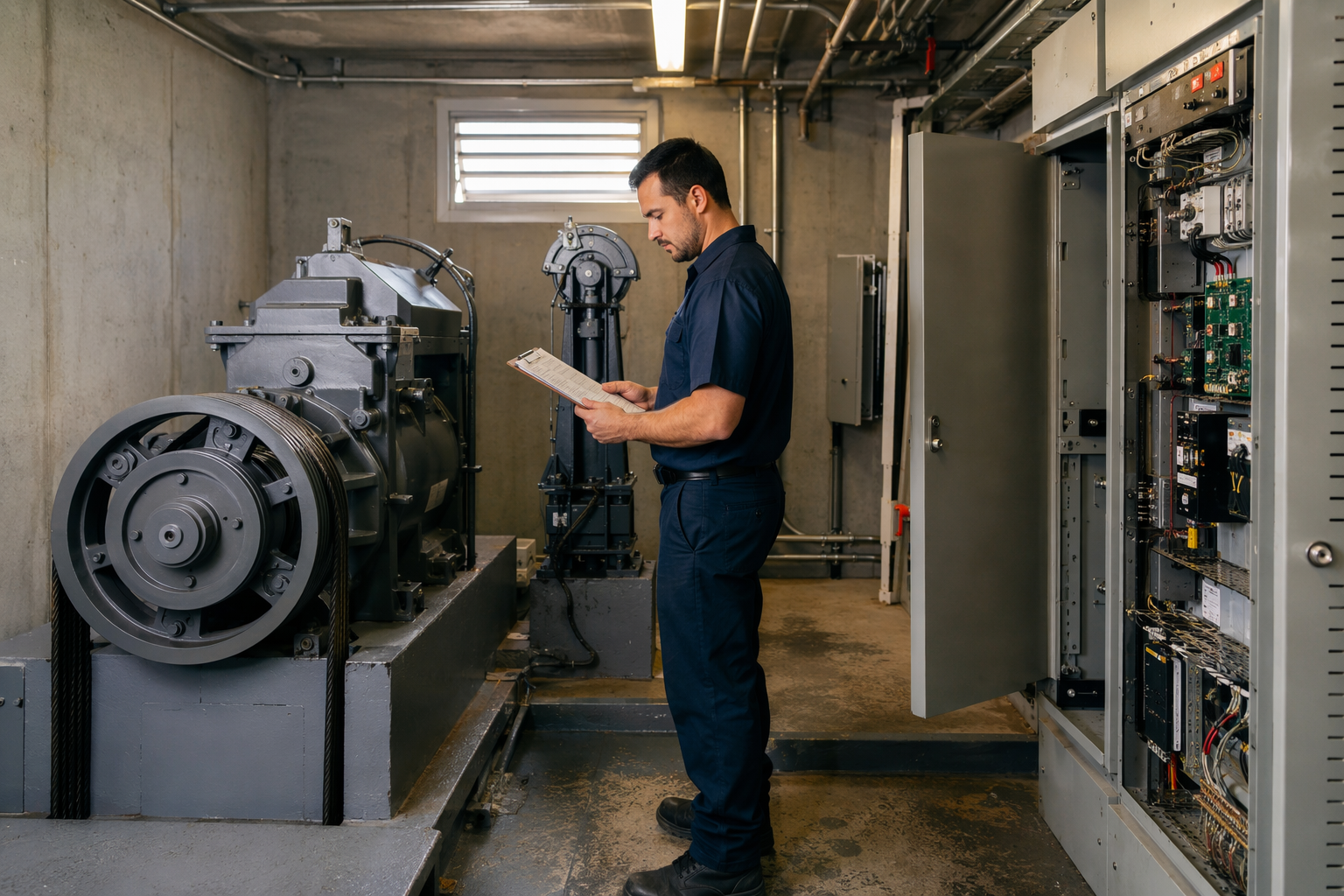
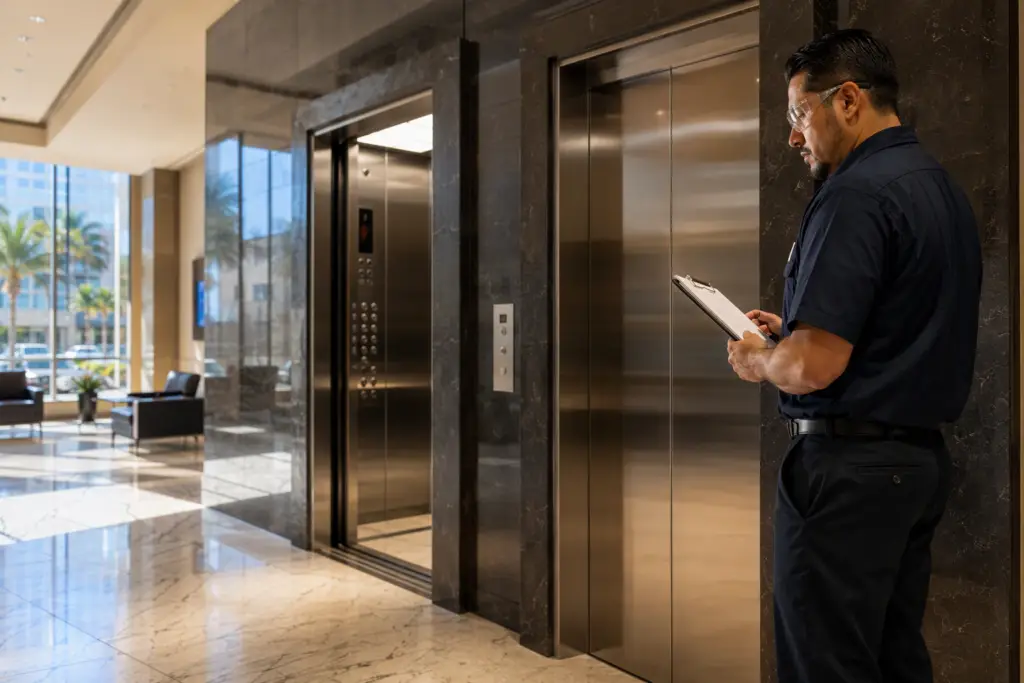
Finding the best elevator maintenance company in Los Angeles requires understanding compliance requirements, service scope, and what separates a qualified contractor from one that simply shows up with a toolbox. This comprehensive FAQ guide answers the most important questions property managers, building owners, and facility directors ask when evaluating elevator service providers across Los Angeles, Long Beach, Signal Hill, and Orange County.
What Makes an Elevator Maintenance Company the Best Choice in Los Angeles?
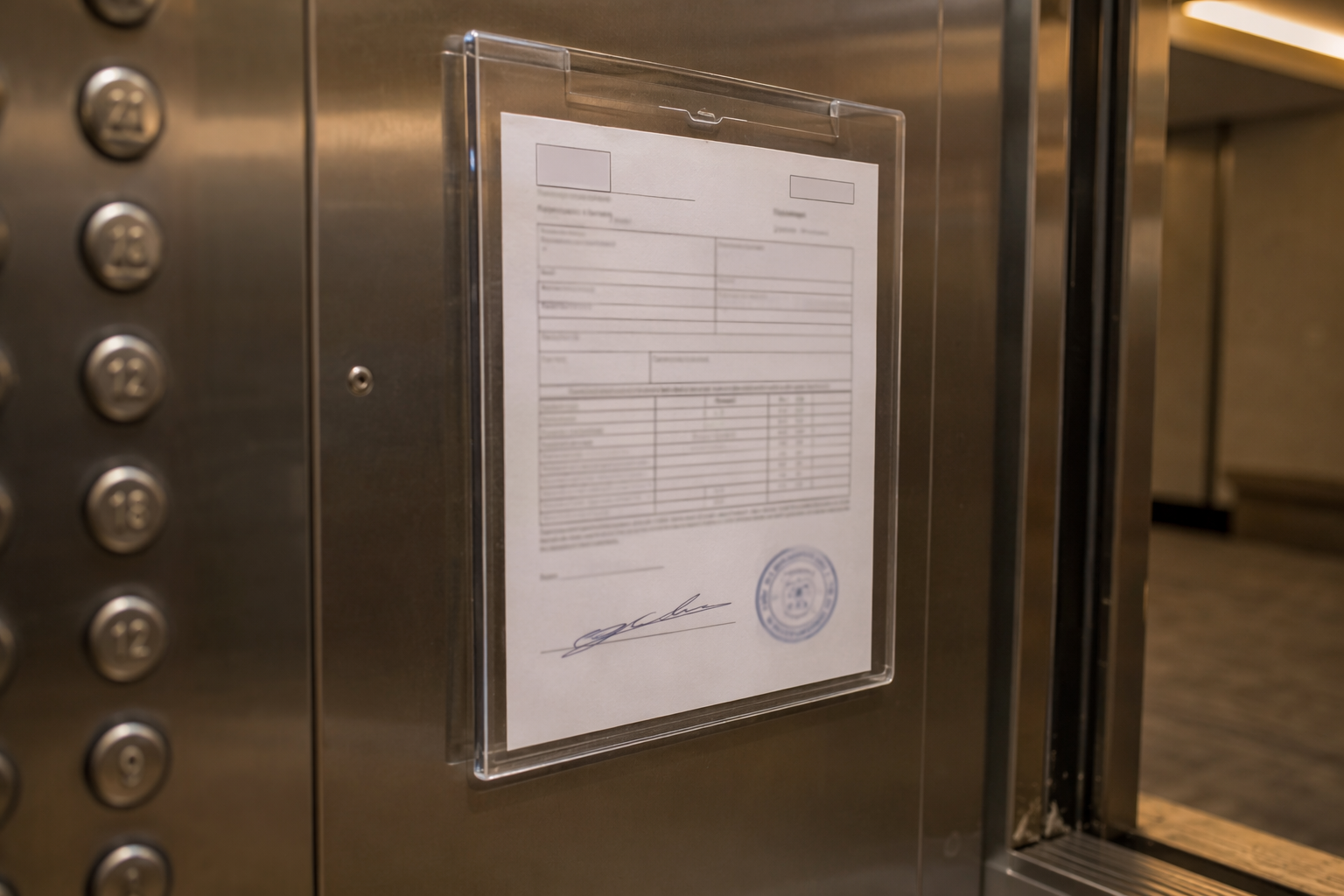
The best elevator maintenance company in Los Angeles combines verified code compliance, full-service capability across maintenance, inspection, and modernization, and a track record of serving the specific regulatory environment of California.
Los Angeles elevator owners operate under a layered compliance framework that includes the ASME A17.1 Safety Code for Elevators and Escalators, California’s Title 8 elevator safety orders, and local inspection protocols administered through the California Division of Occupational Safety and Health (Cal/OSHA). A qualified maintenance provider must be familiar with all three layers, not just the national standard. Liftech Elevator operates exclusively across Southern California — Los Angeles, Long Beach, Signal Hill, and Orange County — meaning its service teams work within this exact regulatory environment every day.
Key differentiators to evaluate include: documented maintenance procedures tied to ASME A17.1, the ability to perform Category 1 and Category 5 testing, in-house modernization capability, and verifiable familiarity with ADA accessibility requirements as they apply to vertical transportation equipment.
How Often Should Elevators Be Inspected in California?
California requires periodic elevator inspections at intervals established under Title 8, with testing categories aligned to ASME A17.1 that include annual Category 1 tests and five-year Category 5 tests for hydraulic and traction units.
Under the ASME A17.1 Safety Code for Elevators and Escalators — the foundational standard adopted and enforced by California — elevators must undergo different levels of periodic testing depending on their drive type. Category 1 tests (no load, rated speed) are required annually. Category 5 tests (full load, rated speed, including safety and governor tests) are required on a five-year cycle for traction elevators. Hydraulic elevators have their own Category 3 and Category 5 testing intervals as specified in the code.
Cal/OSHA’s Elevator, Ride, and Tramway Unit oversees the permitting and inspection process statewide. Property owners who allow inspection intervals to lapse face permit suspension and potential shutdown orders, which can expose them to significant liability. Working with a maintenance company that proactively tracks these intervals is essential for uninterrupted operations.
What Services Should a Full-Service Elevator Maintenance Company Offer?
A full-service elevator maintenance company should provide preventive maintenance contracts, emergency repair, annual and periodic code-required testing, modernization, and ADA compliance consultations as a unified service offering.
Fragmented service — where one vendor performs maintenance and another handles testing — creates accountability gaps that can delay permit renewals and complicate warranty claims. The strongest maintenance providers offer an integrated scope covering:
- Preventive maintenance programs tied to manufacturer specifications and ASME A17.1 intervals
- Category 1 and Category 5 testing with certified documentation
- Hydraulic fluid management and cylinder inspection
- Door operator, controller, and drive system repair
- Elevator modernization and cab renovation
- ADA compliance upgrades including button height, braille signage, and leveling accuracy
- Machine room and pit safety compliance under OSHA standards
Liftech Elevator provides this complete service spectrum across its Southern California service territory, allowing building owners to work with a single accountable partner from routine maintenance through full system modernization.
What Is the ASME A17.1 Code and Why Does It Matter for Los Angeles Buildings?
The ASME A17.1 Safety Code for Elevators and Escalators is the primary national standard governing elevator design, installation, inspection, testing, and maintenance, and California’s enforcement authority incorporates its requirements into the state’s elevator safety regulations.
First published by the American Society of Mechanical Engineers, ASME A17.1 establishes minimum safety requirements for hoistway construction, car dimensions, door operation, safety devices, buffers, governors, and maintenance intervals. The 2022 edition (referenced in 2026 as the current adopted cycle in many jurisdictions) includes updated provisions for seismic risk — particularly relevant in the Los Angeles basin — as well as machine-room-less (MRL) traction elevator requirements and hydraulic elevator cylinder testing protocols.
For property owners, ASME A17.1 compliance is not optional. California’s Title 8, Division 1, Chapter 4 references ASME A17.1 standards directly, meaning violations of the national code are simultaneously violations of state law. Any maintenance provider operating in Los Angeles must be able to demonstrate working knowledge of the current code edition and its California-specific amendments.
How Do Elevator Maintenance Contracts Differ and Which Type Is Right for My Building?
Elevator maintenance contracts typically range from basic lubrication-and-adjustment agreements to comprehensive full-coverage contracts, and the right choice depends on equipment age, usage intensity, and the building owner’s risk tolerance.
| Contract Type | Coverage Scope | Best For | Risk to Owner |
|---|---|---|---|
| Oil & Grease (Basic) | Lubrication, minor adjustments only | New equipment under manufacturer warranty | High — parts and major repairs billed separately |
| Examination & Adjustment | Lubrication, adjustments, minor parts | Low-traffic residential buildings | Moderate — major components excluded |
| Parts & Labor | Most parts and labor included | Mid-age commercial elevators | Low-Moderate — high-value parts may be excluded |
| Full Maintenance (Comprehensive) | All parts, labor, callbacks, and testing | High-traffic commercial, healthcare, high-rise | Low — predictable annual cost |
Los Angeles commercial property managers frequently underestimate the hidden costs of basic-tier contracts. When aging traction equipment requires controller board replacements or hydraulic systems need cylinder lining, those costs fall entirely on the building owner under a basic agreement. A comprehensive full-maintenance contract shifts that financial exposure to the service provider and aligns their incentives toward proactive prevention rather than reactive repair.
What ADA Requirements Apply to Elevator Equipment in California?
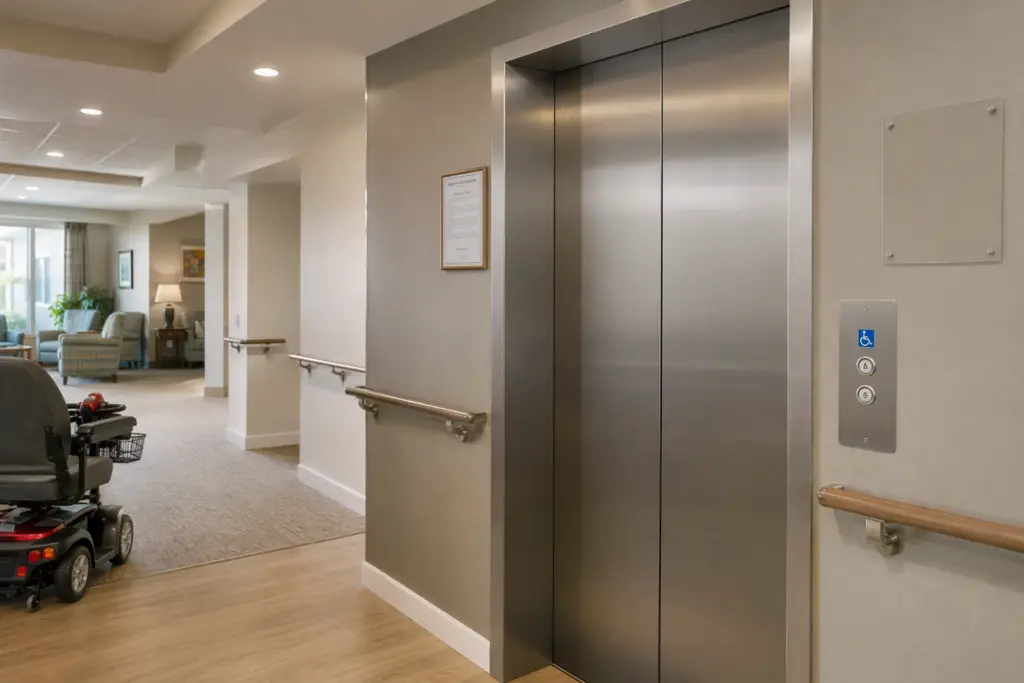
Under the Americans with Disabilities Act, elevators in multi-story commercial buildings must meet specific accessibility standards covering floor leveling accuracy, control button placement, audible signals, braille markings, and door timing.
The ADA Standards for Accessible Design (2010 edition, still operative in 2026) requires that elevator cars serving public accommodations and commercial facilities maintain floor level landings within one-half inch of the floor level. Control buttons must be mounted within the height range specified in the standards, and all buttons must have braille and raised character designations. Door reopening devices must remain effective for the full door operation cycle.
California adds a supplemental layer through the California Building Code (CBC) Chapter 11B, which in many cases is more stringent than federal ADA minimums. Property owners in Los Angeles, Long Beach, and surrounding jurisdictions must satisfy both the federal floor and the California-specific requirements. An elevator maintenance company operating in California must be equipped to evaluate and remediate ADA deficiencies during modernization or as standalone compliance upgrades.
What Are the Signs That an Elevator Needs Immediate Repair Rather Than Routine Maintenance?
An elevator requiring immediate repair rather than routine maintenance will typically exhibit floor leveling gaps greater than one-half inch, unusual mechanical sounds during operation, door hesitation or reversal failures, or control panel malfunctions indicating a safety device has been triggered.
Building managers should treat the following symptoms as calls for immediate professional assessment rather than deferred maintenance scheduling:
- Visible gap between the car floor and landing floor (a trip and fall liability under ADA and building codes)
- Intermittent or complete door failures, including doors that close too quickly
- Unusual grinding, banging, or squealing from the machine room or hoistway
- Erratic car movement or failure to respond to hall calls
- Safety device faults displayed on the controller
- Oil leaks in the machine room or pit for hydraulic units
- Burning smell from the controller or motor
Under OSHA general duty clause obligations, building owners have a responsibility to maintain equipment that does not expose occupants to recognized hazards. Continuing to operate an elevator exhibiting these symptoms may constitute a violation of that duty.
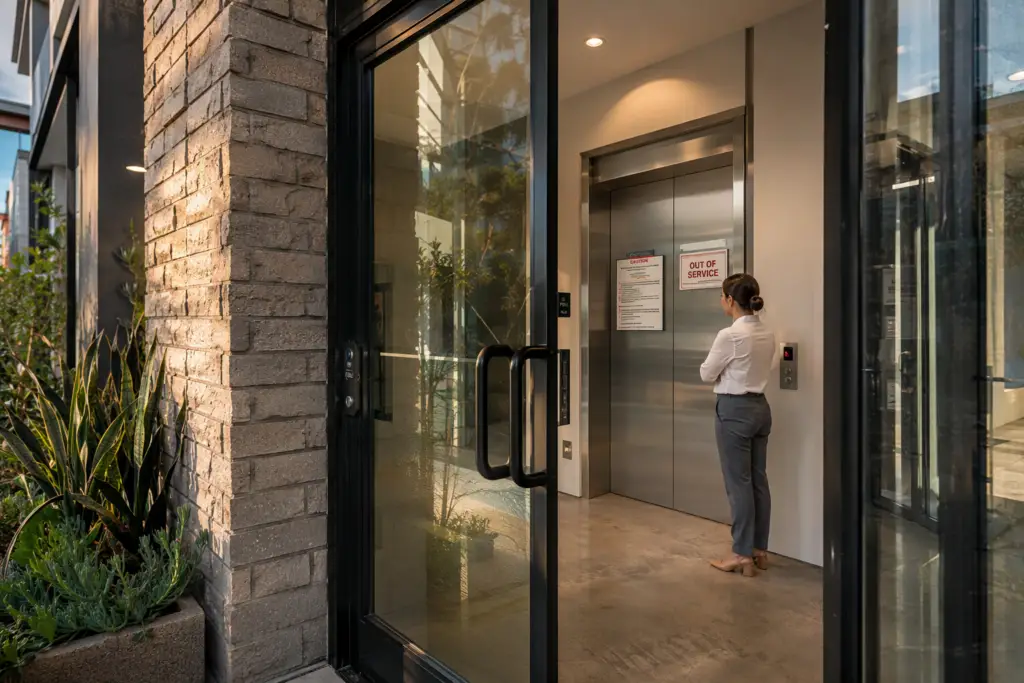
What Should I Do Immediately If an Elevator Malfunctions or Traps a Passenger?
If an elevator traps a passenger, the immediate priority is passenger safety and calm communication, followed by a structured notification sequence that includes emergency services and the elevator service provider.
- Activate the in-car emergency phone or intercom to communicate with the trapped passenger and confirm their condition.
- Call 911 if the passenger reports a medical emergency, distress, or if the car is positioned between floors with a significant drop to the nearest landing.
- Do not attempt to manually open hoistway doors or intervene mechanically without a licensed elevator mechanic present — doing so creates additional fall hazards.
- Contact your elevator service provider’s emergency line to dispatch a licensed mechanic.
- Keep the passenger informed of the estimated arrival time and advise them to remain calm and avoid the hoistway doors.
- Document the incident with photographs of the controller fault codes, the leveling position, and any visible anomalies for the service report.
- File the required incident documentation with Cal/OSHA if the malfunction resulted in injury or required fire department intervention.
How Long Does Elevator Modernization Take for a Typical Los Angeles Commercial Building?
Elevator modernization in a typical Los Angeles commercial building generally spans several weeks to a few months depending on the scope of work, permit processing timelines, and equipment lead times — with thorough pre-project planning being the single largest factor in minimizing downtime.
A full modernization — replacing the controller, drive system, cab interior, and door operators — is a more extensive project than a controller-only upgrade or a cab cosmetic renovation. California’s permit process through Cal/OSHA’s Elevator Unit requires plan submission and approval before work begins, and permit timelines vary by jurisdiction and current workload at the reviewing authority.
Property owners in high-traffic buildings often stagger modernization across multiple elevators to maintain passenger service throughout the project. Experienced modernization contractors build this phasing strategy into the project plan from the outset. Liftech Elevator provides modernization services across Los Angeles, Long Beach, Signal Hill, and Orange County with project scoping designed to account for local permit requirements and tenant impact.
What Is the Difference Between a Traction Elevator and a Hydraulic Elevator for Maintenance Purposes?
Traction elevators and hydraulic elevators have fundamentally different drive systems that require distinct maintenance procedures, testing intervals, and failure mode awareness from any qualified service provider.
Traction elevators use a motor-driven sheave and steel ropes (or flat belts in MRL configurations) to raise and lower the car counterweight system. Maintenance focus areas include rope condition and tension, sheave groove wear, brake adjustment, and controller/drive system calibration. The five-year Category 5 safety test for traction units involves governor and safety device testing under ASME A17.1.
Hydraulic elevators use a pump unit and cylinder to push the car upward, relying on gravity and controlled fluid release for descent. Maintenance priorities differ significantly: hydraulic fluid condition and level, pump unit and valve performance, cylinder integrity (particularly for in-ground single-bottom cylinders subject to corrosion), and environmental compliance related to hydraulic fluid containment under California’s underground storage and spill prevention regulations.
The two systems also age differently. Traction elevator controls and drives are frequently targeted for modernization at 20-25 year intervals as obsolete components become unavailable. Hydraulic cylinders in older buildings may require full cylinder replacement under ASME A17.1 testing requirements when they fail the required tests.
How Do I Evaluate and Compare Elevator Maintenance Companies in Los Angeles?
Evaluating elevator maintenance companies in Los Angeles requires assessing their code knowledge, service scope, geographic coverage, documentation practices, and whether their contract terms align with the building’s risk profile.
A structured evaluation framework should include the following criteria:
- Code Familiarity: Can the provider demonstrate knowledge of ASME A17.1 current edition, California Title 8, and local ADA requirements?
- Service Scope: Does the provider handle maintenance, testing, repair, and modernization in-house, or does it subcontract critical work?
- Geographic Presence: Is the provider’s primary service territory aligned with your building’s location, or are they a large national company dispatching from a remote hub?
- Documentation Practices: Does the provider supply written maintenance logs, test certificates, and permit documentation in a format accepted by Cal/OSHA?
- Contract Transparency: Are exclusions clearly enumerated in the maintenance agreement, or are they buried in fine print?
- References: Can the provider supply verifiable references from comparable properties in the same market?
Liftech Elevator focuses exclusively on the Southern California market — Los Angeles, Long Beach, Signal Hill, and Orange County — which means its service operations are calibrated to the specific regulatory, environmental, and logistical conditions of this region rather than a national average.
What Role Does Seismic Safety Play in Los Angeles Elevator Maintenance?
Seismic safety is a uniquely critical consideration for Los Angeles elevator maintenance, as ASME A17.1 includes seismic requirements specifically applicable to high-seismic-risk zones, and California’s adoption of these provisions means local elevators must be equipped and maintained with earthquake preparedness in mind.
The ASME A17.1 Safety Code for Elevators and Escalators includes provisions for seismic switches, counterweight retainer plates, and hoistway clearance requirements that are triggered in Seismic Design Categories C through F — classifications that apply across much of the Los Angeles basin given its proximity to active fault systems. Elevators installed or modernized after these provisions took effect must include seismic switches that take the elevator out of normal service upon detecting ground motion above a defined threshold.
Maintenance providers operating in Los Angeles should include seismic switch testing and counterweight retainer inspection as standard elements of their periodic maintenance visits. Older elevators that predate seismic code requirements may require retroactive upgrades as part of a modernization project. Building owners conducting seismic retrofit projects on their structures should coordinate elevator seismic compliance assessments simultaneously.
How Does Elevator Maintenance Affect Building Insurance and Liability?
A documented, code-compliant elevator maintenance program directly reduces a building owner’s liability exposure and is often a condition of commercial property insurance policies, as lapses in maintenance records can be used by insurers to deny claims related to elevator incidents.
Commercial property and general liability insurers typically require that elevators be maintained under a formal service agreement and that current inspection certificates be on file. In a personal injury claim arising from an elevator incident, the plaintiff’s counsel will routinely subpoena maintenance logs, test certificates, and callback records. Gaps in documentation — even when the elevator was functionally maintained — create evidentiary problems for the building owner’s defense.
Proactive maintenance documentation also supports risk management benchmarking. Properties that demonstrate consistent, code-compliant maintenance histories present a lower risk profile to underwriters. Some insurers have specific requirements around Category 5 test documentation and hydraulic cylinder inspection records that building owners and their maintenance providers must satisfy together.
What Questions Should I Ask Before Signing an Elevator Maintenance Contract?
Before signing an elevator maintenance contract in Los Angeles, building owners should ask specific questions about coverage scope, exclusion clauses, testing responsibilities, permit handling, and contract exit terms.
The most important pre-signature questions include:
- What parts and components are explicitly excluded from coverage?
- Who is responsible for scheduling and coordinating Cal/OSHA periodic inspections and who pays inspection fees?
- How are callback visits handled — are they included in the contract price or billed separately?
- Does the contract cover Category 5 testing labor and documentation, or is that a separate charge?
- What are the contract termination terms, and is there a performance-based exit clause if service standards are not met?
- Will the maintenance provider supply written logs after each visit detailing work performed and observations noted?
- Does the contract price adjust annually, and if so, by what mechanism?
How Do Elevator Maintenance Requirements Differ for Residential Versus Commercial Buildings in Los Angeles?
Residential and commercial elevators in Los Angeles share the same foundational ASME A17.1 code requirements for periodic testing, but differ in usage intensity, ADA applicability scope, and the practical maintenance priorities that arise from different traffic patterns.
A two-stop hydraulic elevator in a three-story residential condominium operates at far lower duty cycles than a traction elevator serving a twelve-story medical office building. While the code testing intervals are the same, the maintenance visit frequency and the parts most likely to require attention differ substantially. Residential elevators may accumulate fewer operational cycles per year but are not exempt from the same periodic testing requirements that apply to commercial units.
ADA requirements under Title III apply to places of public accommodation and commercial facilities. Private residential buildings have different applicability thresholds, though California’s Fair Housing Act provisions and CBC Chapter 11A impose accessibility requirements on certain residential building types. Property owners should consult with their elevator service provider and legal counsel to confirm which accessibility standards apply to their specific building classification.
What Is Elevator Modernization and When Should a Los Angeles Building Consider It?
Elevator modernization is the process of replacing obsolete or worn components — typically the controller, drive system, door operators, and cab interior — to restore code compliance, improve performance, and extend equipment service life without a full system replacement.
The primary triggers for modernization in Los Angeles buildings include:
- Controller or drive components that are no longer manufactured, making parts unavailable for repair
- Failure of Category 5 testing that reveals safety system deficiencies requiring more than adjustment
- ADA compliance deficiencies identified during inspection or tenant complaints
- Increased callback frequency indicating systemic equipment degradation
- Energy efficiency goals — modern variable-frequency drives reduce motor energy consumption substantially compared to older relay-based systems
- Building renovations that change traffic demand patterns beyond the original system design parameters
Modernization is typically more cost-effective than full replacement when the hoistway structure, cab enclosure, and guide rails remain in serviceable condition. A qualified elevator company can assess which components warrant replacement versus continued maintenance and provide a scope that optimizes the investment.
How Are Elevator Permits and Inspections Managed in Los Angeles County?
Elevator permits in Los Angeles County are issued and managed by the California Division of Occupational Safety and Health (Cal/OSHA) Elevator Unit, which requires a current permit to operate, annual inspection coordination, and periodic safety test documentation filed with the state.
Building owners are responsible for maintaining a current operating permit displayed in or near the elevator. Cal/OSHA assigns inspection responsibility and processes the test reports submitted by licensed elevator companies following required periodic testing. When an elevator fails an inspection or test, a deficiency notice is issued and the building owner must arrange corrective work and re-inspection within the timeframe specified by Cal/OSHA.
Los Angeles city buildings may also interact with the Los Angeles Department of Building and Safety (LADBS) for plan check on new installations and modernization projects. Understanding which agency has jurisdiction at each stage of a project — Cal/OSHA for operational permits and ongoing compliance, LADBS for construction permits on new work — is essential for avoiding permit delays. An experienced maintenance company operating in the Los Angeles market will be familiar with both agency processes.
Can a Single Elevator Maintenance Company Service Multiple Building Types and Elevator Brands?
A qualified elevator maintenance company should be capable of servicing multiple elevator brands and configurations, including traction, hydraulic, and machine-room-less systems from major manufacturers as well as legacy proprietary equipment found in older Los Angeles buildings.
Los Angeles’s commercial real estate stock includes buildings from every construction era, meaning service providers routinely encounter equipment from manufacturers no longer operating domestically, proprietary controller platforms from the mid-20th century, and the latest microprocessor-based MRL systems. A company limited to one or two brands by manufacturer agreements may not be the right fit for a portfolio that includes diverse equipment.
Independent elevator service companies, including Liftech Elevator, typically maintain cross-brand service capability that allows them to work on a wide range of equipment types without the constraints of exclusive manufacturer arrangements. This flexibility is particularly valuable for property managers overseeing multi-building portfolios across Los Angeles, Long Beach, Signal Hill, and Orange County where equipment diversity is the norm.
What Are Common Elevator Code Violations Found During Los Angeles Inspections?
Common elevator code violations found during Los Angeles Cal/OSHA inspections include inadequate lighting in machine rooms and pits, door reopening device failures, leveling accuracy outside acceptable tolerances, missing or expired permits, and safety device test documentation gaps.
The OSHA general industry standards and California’s Title 8 elevator safety orders both address machine room and pit conditions that are frequently cited during inspections. Machine room access must be restricted to authorized personnel, lighting must meet minimum foot-candle levels, and fire extinguisher maintenance must be current. In the hoistway pit, clearance dimensions, lighting, stop switches, and ladder access must all conform to ASME A17.1 requirements.
Door-related violations are among the most frequently identified issues in aging elevator stock. The door reopening device (typically a light curtain or mechanical reversing edge) must detect obstruction and reverse the door before contact throughout the door close cycle. Older mechanical edges that have drifted out of adjustment or light curtains with degraded sensor coverage are common findings. These deficiencies are both code violations and significant injury risk factors.
Why Is Local Expertise Important When Choosing an Elevator Maintenance Company in Los Angeles?
Local expertise matters in elevator maintenance because Los Angeles-specific factors — seismic requirements, Cal/OSHA regulatory nuances, local permit authority relationships, and the region’s distinctive mix of building ages and elevator types — require a service provider with genuine market familiarity rather than a generic national approach.
A national elevator company dispatching technicians from a regional hub may have broad brand coverage but limited depth in California-specific regulatory requirements, local permit processing procedures, or the particular failure patterns common in Southern California’s climate and building stock. The region’s Mediterranean climate introduces specific considerations around hydraulic seal performance, pit humidity management in coastal areas like Long Beach and Signal Hill, and the omnipresent seismic compliance dimension that does not arise to the same degree in most other U.S. markets.
Liftech Elevator’s service territory is focused entirely on Southern California — Los Angeles, Long Beach, Signal Hill, and Orange County — which means its operational knowledge is concentrated in the exact conditions, regulatory environment, and building types that its clients manage. That regional focus translates into more accurate assessments, faster permit navigation, and maintenance recommendations calibrated to the local context rather than a national average.
Get a Free Elevator Assessment for Your Los Angeles Property
Whether your elevator is due for its next periodic inspection, showing signs of wear, or approaching the age at which modernization makes financial sense, a professional assessment is the right starting point. Liftech Elevator serves building owners, property managers, and facility directors across Los Angeles, Long Beach, Signal Hill, and Orange County with comprehensive maintenance, testing, repair, and modernization services aligned to ASME A17.1 and California regulatory requirements.
Contact Liftech Elevator for a free elevator assessment: 562-609-3478
Need elevator service you can rely on? Liftech Elevator is ready to help.