State Elevator Inspection Frequency: The Complete Compliance Guide
Elevator inspection frequency is one of the most consequential compliance questions building owners, facility managers, and property developers face. Missing a mandated inspection window can result in shutdown orders, fines, liability exposure, and — most critically — undetected safety hazards. This guide compiles what the governing codes require, how states differ in their enforcement cycles, and what organizations should do to stay ahead of their inspection obligations in 2026.
What Federal and Model Codes Say About Inspection Frequency
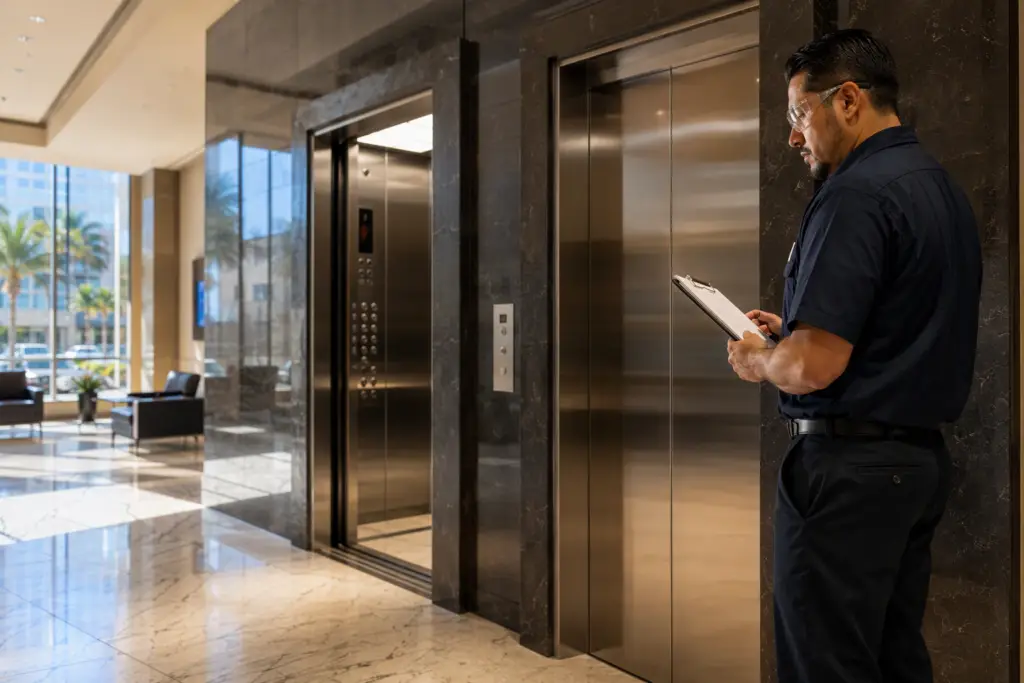
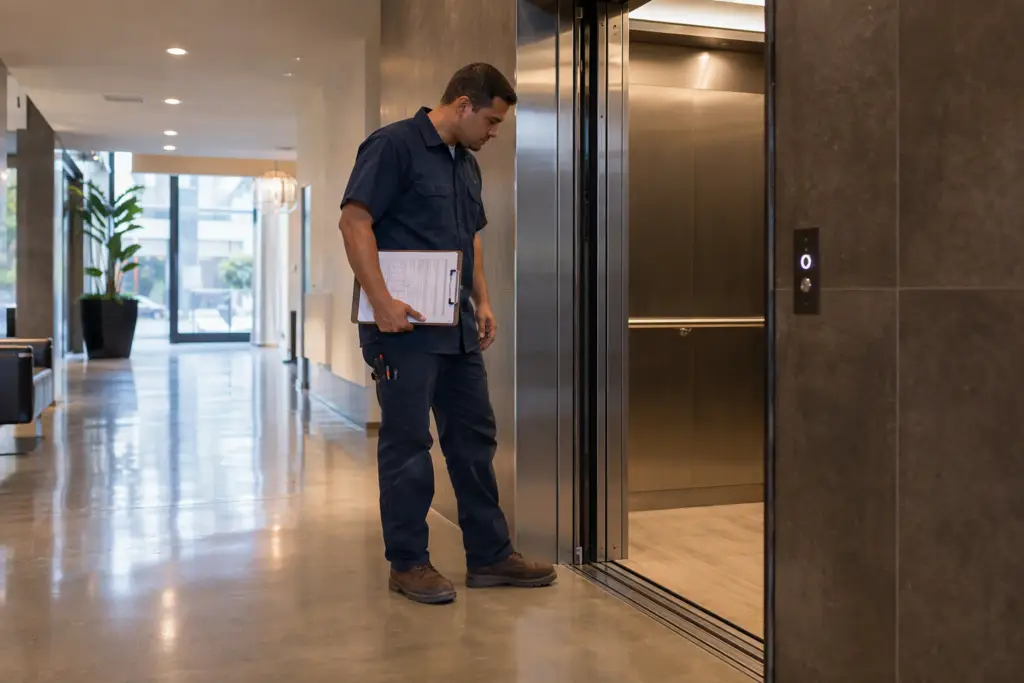
There is no single federal law that prescribes elevator inspection frequency for all building types. Instead, the authoritative technical baseline is the ASME A17.1/CSA B44 Safety Code for Elevators and Escalators, which is the model code adopted — sometimes with amendments — by most U.S. states and Canadian provinces. ASME A17.1 establishes categories of periodic tests and inspections, distinguishing between routine periodic inspections and more comprehensive category tests performed on longer cycles.
Under the ASME A17.1 framework, elevators are subject to a tiered inspection and testing schedule:
- Category 1 tests are typically required annually and cover operational safety devices, governors, and safeties without requiring the elevator to be removed from service for extensive disassembly.
- Category 5 tests are more intensive, involving full-load safety tests, and are generally required on a longer cycle — commonly every five years for traction elevators — though the exact interval is defined by the adopting jurisdiction.
- Periodic inspections (distinct from category tests) are commonly required on an annual or semi-annual basis, depending on the state authority having jurisdiction (AHJ).
States adopt the ASME A17.1 code by reference and layer their own administrative rules on top of it, which is why a building owner in one state may face a different inspection calendar than one in an adjacent state. The most current edition referenced by jurisdictions in 2026 is typically ASME A17.1-2022/CSA B44-22, though individual states may still be enforcing earlier adopted editions.
Workplace elevators also intersect with federal OSHA regulations, particularly for construction hoists and material lifts, where OSHA sets its own inspection intervals. For passenger elevators in commercial and residential settings, OSHA generally defers to state elevator safety authorities operating under the ASME framework.
How Do State Inspection Requirements Differ From Each Other?

State-level variation in elevator inspection frequency stems from several factors: the edition of ASME A17.1 a state has adopted, whether inspection authority is held at the state or local level, and whether the state permits owner-arranged third-party inspections or requires government inspectors.
Broadly, state approaches fall into three models:
- State-administered annual inspection programs: A state elevator safety bureau conducts or certifies all inspections on a defined annual cycle. Building owners receive an inspection certificate valid for one year.
- Local jurisdiction authority: Some states delegate elevator inspection authority to counties or municipalities, resulting in inspection intervals that vary even within the same state. A city may require semi-annual inspections for elevators in high-rise buildings while rural counties follow an annual schedule.
- Third-party qualified inspector programs: Several states allow or require building owners to hire ASME QEI (Qualified Elevator Inspector)-certified private inspectors, with results submitted to a state registry. Frequency requirements still come from state code, but the logistical responsibility shifts to the owner.
States that have adopted more recent ASME A17.1 editions and have active enforcement programs tend to have the most structured inspection calendars. States with older adoptions or limited enforcement capacity may have less consistent cycles in practice, which increases owner risk because liability follows the code regardless of whether government inspectors show up.
What Types of Elevators Have Different Inspection Frequencies?
Not all vertical transportation equipment is inspected on the same schedule. The type of elevator or lift significantly affects the required inspection frequency:
- Traction elevators (geared and gearless) in commercial buildings typically follow annual periodic inspection requirements plus the ASME A17.1 category test schedule.
- Hydraulic elevators are also subject to annual periodic inspections but have distinct category test requirements tied to their hydraulic system components, including pressure relief and cylinder integrity tests.
- Escalators and moving walks fall under ASME A17.1 as well and are generally subject to annual periodic inspections, though the specific safety device tests differ from elevator requirements.
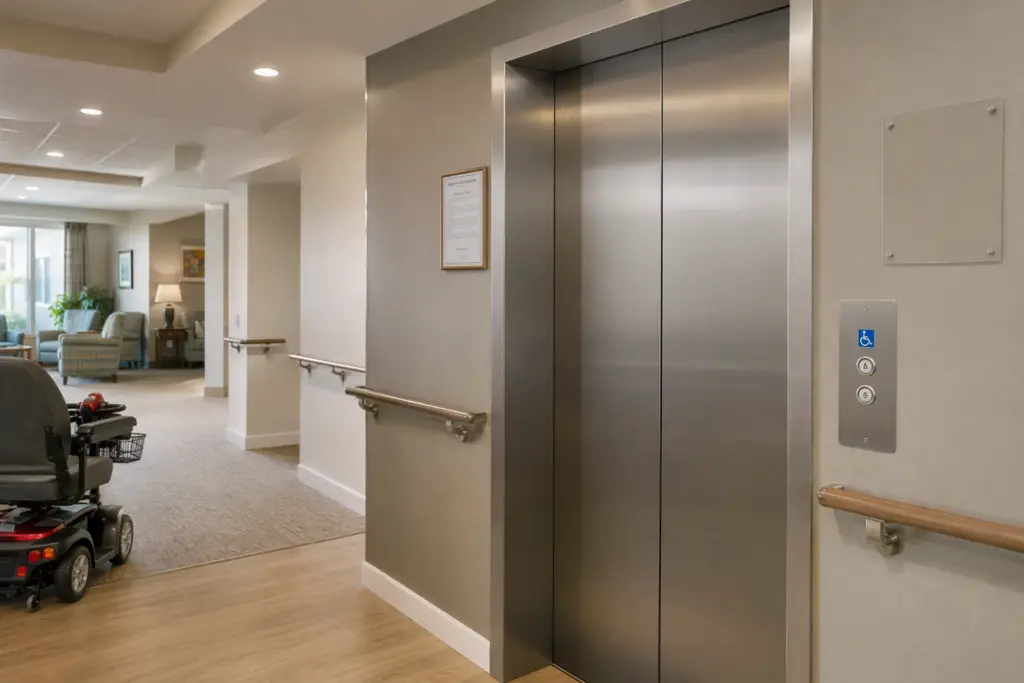
- Limited-use/limited-application (LULA) elevators and platform lifts used for ADA accessibility compliance are subject to inspection requirements under ASME A18.1 (the standard for platform lifts and stairway chairlifts) and relevant state rules, which may differ from full elevator inspection cycles.
- Residential elevators in single-family homes are often exempt from mandatory periodic inspections in many states, though this exemption should never be interpreted as meaning those elevators are safe without professional maintenance.
- Construction hoists and temporary elevators on jobsites fall under OSHA standards, which require inspections before first use and at defined intervals during a project.
What Triggers More Frequent Inspections Beyond the Annual Requirement?
Annual or semi-annual scheduled inspections represent the minimum floor, not the ceiling. Several circumstances trigger additional required inspections under most state codes:
- After a major alteration or repair: Any significant modification to an elevator’s control system, hoist ropes, safety devices, or structural components typically requires a post-alteration inspection and approval before the unit is returned to service.
- After an accident or incident: Most state codes require an elevator to be taken out of service and inspected following any incident involving passenger entrapment, injury, or equipment malfunction. The authority having jurisdiction must typically be notified.
- After an extended shutdown: Elevators that have been out of service for a defined period — commonly 30 days or more — are typically required to pass a reactivation inspection before resuming passenger service.
- Following a natural disaster or building emergency: Seismic events, flooding, or fires may require inspections before resuming operations, as mechanical and electrical components may be compromised even without visible damage.
- Change of occupancy or ownership: Some jurisdictions require a fresh inspection when a building changes ownership or is converted to a new use classification, since risk profiles and usage loads may shift significantly.
What Happens If an Elevator Fails Its Inspection?
When an elevator fails a periodic inspection, the consequences depend on the nature of the deficiency and the jurisdiction’s enforcement protocols. In general:
- Immediate shutdown orders apply to elevators with deficiencies classified as imminent hazards — failed safety devices, broken hoist ropes, malfunctioning door interlocks, or other conditions that present an immediate risk of injury.
- Conditional operation permits may be issued for lesser deficiencies, allowing the elevator to continue in service while repairs are completed within a defined timeframe — typically 30 to 90 days depending on the severity and the jurisdiction.
- Re-inspection fees and reinspection scheduling add to the cost of non-compliance, as the elevator must be inspected again after corrective work is completed.
- Liability exposure increases materially for building owners who continue operating an elevator after a failed inspection or who cannot demonstrate a current valid inspection certificate.
How Does Inspection Frequency Relate to Maintenance Contracts?
Inspection and maintenance are legally distinct activities, but they are operationally inseparable in a well-managed elevator program. Periodic inspections performed by a government or third-party inspector evaluate whether the elevator meets code requirements at a point in time. Ongoing maintenance — performed by qualified elevator mechanics — is what keeps the equipment in a condition likely to pass that inspection and, more importantly, to operate safely in between inspections.
A full-maintenance contract typically includes labor and parts for routine adjustments, lubrication, safety device testing, and callback response. An inspection-only or examination contract does not include proactive maintenance and places greater responsibility on the building owner to arrange repairs separately. Building owners should understand that the maintenance contract scope directly affects the likelihood of passing inspections and the cost of remediation when deficiencies are found.
Liftech Elevator approaches elevator compliance as a data-informed process, helping building owners track inspection due dates, document maintenance history, and align service schedules with the specific code requirements of their jurisdiction. A service provider that understands the local authority having jurisdiction — not just general ASME principles — is essential for keeping an elevator program in continuous compliance.
What Are the Trends Shaping Elevator Inspection Requirements in 2025–2026?
Several qualitative trends are reshaping how elevator inspections are conducted and enforced heading into 2026:
- Digital inspection records and online permit registries: An increasing number of state and local elevator authorities are moving to online portals where inspection certificates, test records, and violation histories are publicly accessible. This transparency raises the stakes for non-compliance, as certificate status can be verified instantly by prospective tenants, insurers, and litigants.
- Remote monitoring and predictive maintenance integration: Modern elevator control systems increasingly support IoT-based monitoring that logs operational anomalies in real time. Regulators in some jurisdictions are exploring how continuous monitoring data can complement or supplement periodic inspections, though no jurisdiction has yet formally replaced mandatory inspections with remote monitoring alone.
- Updated ASME A17.1 adoption: As more jurisdictions move toward adopting the 2022 edition of ASME A17.1, building owners should anticipate potential changes to category test intervals, requirements for secondary car door systems, and updated provisions for machine-room-less (MRL) elevator maintenance access. Organizations with aging elevator fleets may face new upgrade requirements as jurisdictions codify these provisions.
- Increased enforcement activity in high-density markets: Major metropolitan areas have experienced renewed scrutiny of elevator compliance following high-profile incidents, with some jurisdictions increasing inspection staffing or accelerating inspection cycles for elevators that have a history of violations.
- Accessibility enforcement convergence: Platform lifts and LULAs installed for ADA compliance are receiving increased attention from both elevator inspectors and accessibility enforcement agencies, as the intersection of safety code compliance and civil rights law creates dual exposure for building owners whose accessibility lifts are out of service or out of compliance.
Frequently Asked Questions About State Elevator Inspection Frequency
How often are elevators inspected by law?
The legal inspection frequency for elevators depends on state and local law, but the dominant baseline is annual periodic inspections, informed by the ASME A17.1 Safety Code for Elevators and Escalators. Some jurisdictions require semi-annual inspections for high-traffic or high-risk installations. Building owners should verify the specific requirements of their authority having jurisdiction rather than relying on general estimates.
What is the difference between an elevator inspection and an elevator test?
Under ASME A17.1, an inspection is a visual and operational examination to verify that an elevator and its components conform to code requirements. A test is a functional trial of a specific safety system — such as a governor, safety, or buffer — designed to demonstrate that the device operates correctly under defined conditions. Tests are categorized (Category 1 through Category 5) with different frequencies, and both inspections and tests are required components of a complete compliance program.
Who is qualified to perform a legally valid elevator inspection?
Most jurisdictions require inspections to be performed either by a state or municipal elevator inspector employed by the authority having jurisdiction, or by a private inspector who holds ASME QEI (Qualified Elevator Inspector) certification and is licensed or recognized by the state. The specific credential requirements vary by jurisdiction, and not every state recognizes QEI certification as sufficient on its own — some require additional state licensure.
Does OSHA regulate elevator inspection frequency?
Yes, but in a targeted way. OSHA sets elevator inspection requirements primarily for construction hoists, material elevators, and personnel hoisting equipment used on jobsites. For passenger elevators in finished buildings, OSHA generally defers to state elevator safety authorities operating under the ASME framework. Employers still have a general duty under OSHA to maintain workplace equipment in safe condition, which can implicate elevators even where OSHA does not set explicit inspection intervals.
What is a Category 5 elevator test and how often is it required?
A Category 5 test is the most comprehensive periodic test required under ASME A17.1 for traction elevators. It involves a full-load test of the elevator’s safety system, including running the car at rated speed and triggering the governor and safety under load. The test is physically demanding on equipment and typically requires advance scheduling, temporary removal from service, and a qualified elevator mechanic to execute. The ASME A17.1 framework calls for this test every five years for most traction elevators, though the adopting jurisdiction’s rules govern the exact schedule.
Can a building owner be fined for missing an elevator inspection?
Yes. State elevator safety laws typically authorize the authority having jurisdiction to issue civil fines for operating an elevator without a valid inspection certificate, failing to schedule a required inspection, or failing to remediate deficiencies within a mandated timeframe. In some jurisdictions, continued operation of a non-compliant elevator can constitute a criminal violation. Fine structures vary widely by state and municipality.
Does elevator inspection frequency change when a building changes ownership?
In many jurisdictions, a change of building ownership does not automatically reset the inspection calendar — the existing certificate remains valid until its expiration date. However, some jurisdictions require a fresh inspection upon sale, and new owners always inherit any open violations or deferred maintenance obligations. Due diligence in any property transaction should include a review of current elevator certificates, violation history, and maintenance records.
Are residential elevators subject to mandatory state inspections?
This varies significantly by state. Many states exempt elevators installed in single-family private residences from mandatory periodic inspection requirements. However, residential elevators in multi-unit residential buildings — condominiums, apartment complexes — are typically subject to the same inspection requirements as commercial elevators. Even where residential elevators are exempt from mandatory inspection, professional maintenance remains important for safety.
What documentation should a building owner keep for elevator inspections?
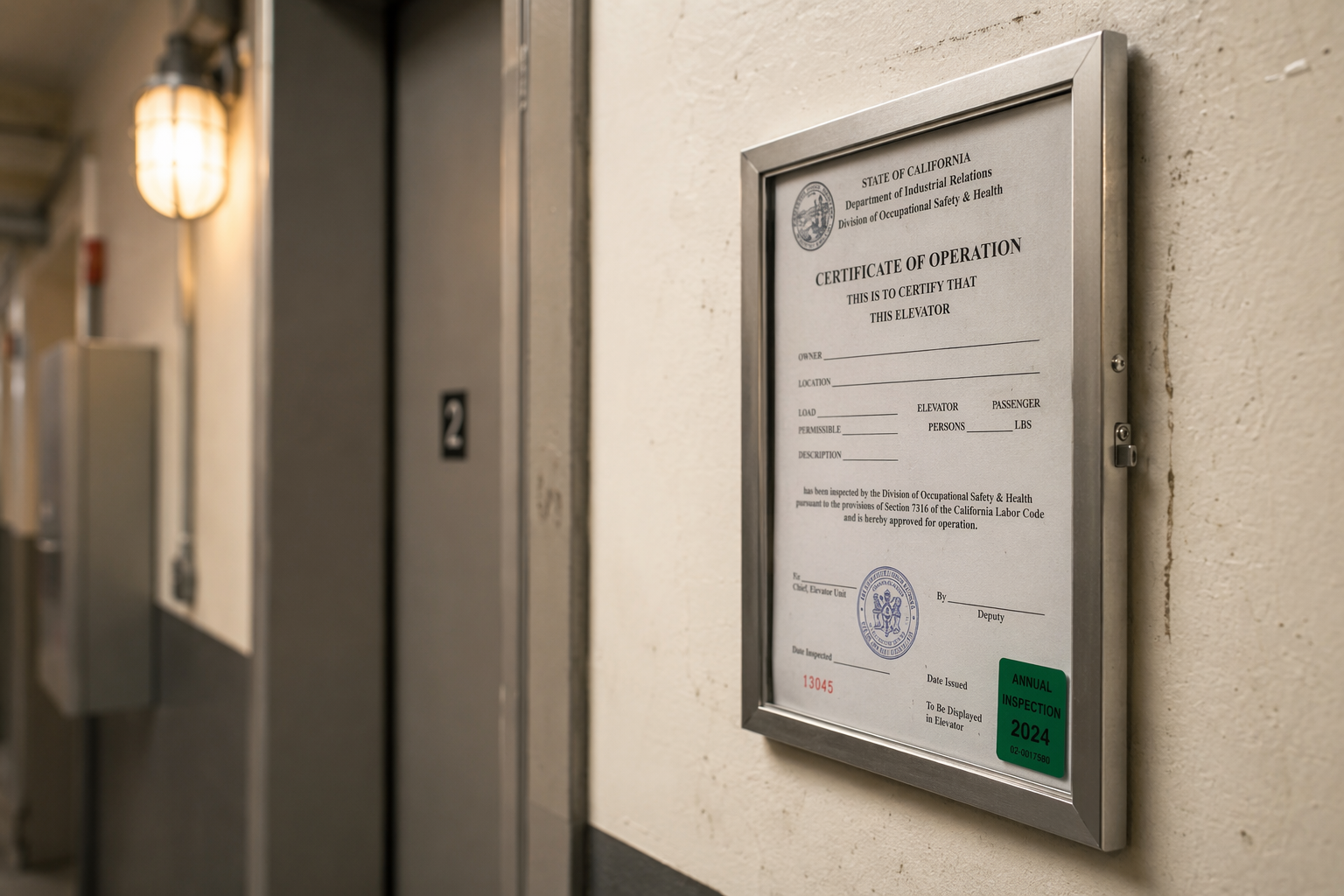
Best practice and, in most jurisdictions, legal requirement is to maintain the current elevator inspection certificate posted in or adjacent to the elevator. Additionally, building owners should retain records of all prior inspection reports, category test documentation, maintenance logs, repair records, and any violation notices and their resolutions. This documentation is essential in the event of a personal injury claim, insurance audit, or regulatory inquiry.
How does the ADA relate to elevator inspection requirements?
The Americans with Disabilities Act requires that elevators used as part of an accessible route in covered buildings be maintained in operable condition. Extended elevator outages that deprive individuals with disabilities of access to required accessible routes can constitute ADA violations independent of elevator safety code status. Building owners must therefore address both the safety code inspection cycle and the ADA’s operational availability requirements as parallel obligations.
What should a building owner do immediately after an elevator incident?
- Ensure the safety of all occupants and evacuate passengers from the elevator if entrapment has occurred, using qualified emergency personnel.
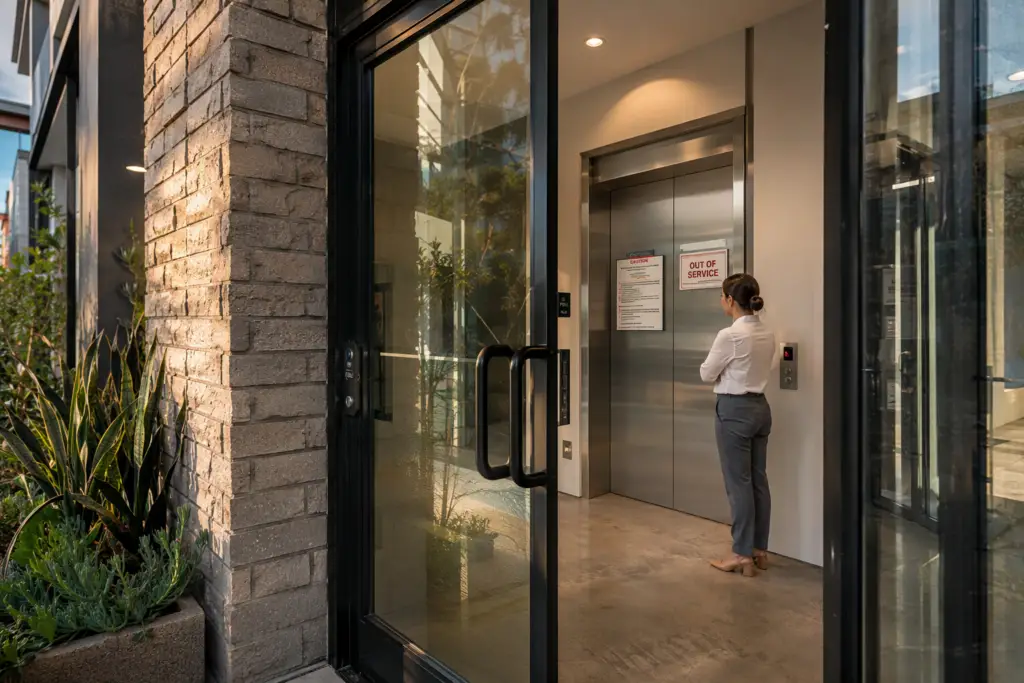
- Take the elevator out of service immediately by locking out the unit and posting it as out of service.
- Notify the authority having jurisdiction as required by state law — many states have mandatory incident reporting obligations with defined timeframes.
- Contact a qualified elevator service company to perform an emergency examination of the unit.
- Preserve all maintenance records, surveillance footage, and inspection documents relevant to the incident.
- Do not return the elevator to service until it has been inspected and cleared by the authority having jurisdiction or a qualified inspector as required by local code.
- Notify your insurance carrier in accordance with your policy requirements.
How Liftech Elevator Supports Inspection Compliance
Elevator compliance is not a one-time event — it is an ongoing program that requires tracking multiple deadlines, understanding jurisdiction-specific rules, coordinating qualified inspectors, and ensuring that corrective maintenance is completed before certificate expiration. Liftech Elevator works with building owners, property managers, and facilities teams to align service programs with the specific inspection requirements of their authority having jurisdiction, drawing on current knowledge of ASME code requirements and local regulatory frameworks.
A proactive approach to elevator compliance — rather than a reactive one — reduces the likelihood of failed inspections, avoids shutdown orders, and controls long-term maintenance costs by addressing issues before they become critical deficiencies. Liftech Elevator’s process-oriented service model treats inspection readiness as a continuous state, not an annual scramble.
Key Takeaways on State Elevator Inspection Frequency
- Annual periodic inspections are the dominant baseline in the U.S., informed by ASME A17.1, but the exact frequency is set by each state’s authority having jurisdiction.
- Inspection frequency varies by elevator type, occupancy, jurisdiction, and incident history — annual is a floor, not a ceiling.
- Category tests under ASME A17.1 layer additional testing requirements on top of periodic inspections, with cycles ranging from annual (Category 1) to five-year (Category 5) for traction elevators.
- OSHA governs inspection requirements for construction and workplace hoisting equipment; state elevator codes govern passenger elevators in finished buildings.
- ADA operational availability requirements run parallel to safety inspection obligations and create separate compliance risk for building owners.
- Triggers beyond the annual cycle — alterations, incidents, extended shutdowns, ownership changes — require attention to avoid unintentional violations.
- Digital records, remote monitoring integration, and updated ASME edition adoptions are the leading trends shaping elevator inspection in 2025–2026.
Get Expert Guidance on Your Elevator Compliance Obligations
Understanding your state’s elevator inspection frequency requirements is the first step toward a compliant, safe, and operationally reliable vertical transportation program. Whether you manage a single building or a multi-site portfolio, staying ahead of inspection cycles, category test deadlines, and jurisdiction-specific requirements demands a service partner with current code knowledge and a structured compliance process.
Contact Liftech Elevator for a free elevator assessment — call 562-609-3478 today.
Need elevator service you can rely on? Liftech Elevator is ready to help.