Elevator Modernization ROI Statistics: What Building Owners Need to Know
For commercial and residential building owners evaluating capital expenditures, elevator modernization stands out as one of the few infrastructure upgrades that simultaneously reduces operating costs, improves tenant satisfaction, supports regulatory compliance, and enhances asset value. This page compiles sourced data, expert guidance, and practical Q&A to help decision-makers understand the true ROI picture of elevator modernization in 2026.
What Is Elevator Modernization and Why Does ROI Matter?

Elevator modernization refers to the partial or complete replacement of aging elevator components — including control systems, motors, drive systems, cab interiors, doors, and safety devices — without necessarily replacing the entire hoistway structure. Unlike full elevator replacement, modernization preserves structural investments while bringing equipment performance up to current standards.
ROI matters to building owners because elevators are not passive assets. An aging elevator system generates recurring costs in the form of emergency service calls, replacement parts for discontinued components, energy consumption from inefficient motors, and lost productivity when units are out of service. When these ongoing costs are weighed against the capital investment of modernization, the financial case becomes concrete and trackable.
Liftech Elevator approaches modernization discussions with a data-driven assessment framework, helping clients identify which cost centers are most significant before recommending a scope of work.
What Are the Most Important ROI Drivers for Elevator Modernization?
The return on an elevator modernization investment is not a single number — it is the aggregate of several distinct financial benefits that compound over the useful life of the upgraded system. The most significant drivers include:
- Energy efficiency gains: Modern variable-voltage, variable-frequency (VVVF) drive systems and regenerative drives consume substantially less electricity than legacy hydraulic or older traction systems. Regenerative drives can return electricity to the building’s grid during descent, offsetting consumption elsewhere in the building.
- Maintenance cost reduction: Older systems require more frequent service visits, specialized parts that may be backordered or custom-fabricated, and emergency callouts that carry premium labor rates. Modern systems with digital diagnostics reduce diagnostic time and enable predictive maintenance.
- Downtime reduction: Every hour an elevator is out of service in a commercial building has a calculable cost in tenant dissatisfaction, ADA accessibility violations, and potential lease-renewal risk. Modern control systems are engineered for higher reliability and faster remote diagnostics.
- Property value and lease rate support: Commercial real estate appraisers and prospective tenants weigh the condition of vertical transportation equipment when evaluating buildings. A recently modernized elevator system signals proactive building management.
- Compliance cost avoidance: Bringing systems into alignment with current codes avoids fines, forced shutdowns, and costly emergency retrofits triggered by inspection findings.
What Does Elevator Modernization Typically Cost?
Modernization costs vary significantly based on the scope of work, the number of stops, the type of system (hydraulic versus traction), local labor rates, and whether cab interior work is included. A targeted controls-only modernization will carry a different price point than a full machine room and cab overhaul.
Because pricing is highly project-specific, Liftech Elevator recommends a formal site assessment before any budget assumptions are made. The assessment evaluates the current condition of all major subsystems and identifies which components are generating the most cost — and therefore offer the most return when replaced.
Cost components to anticipate in a modernization scope typically include:
- Control system and dispatch software
- Drive system (MG set replacement with VVVF drive is common)
- Door operators and door detection systems
- Cab interior renovation (lighting, flooring, fixtures)
- Safety system upgrades to meet current code
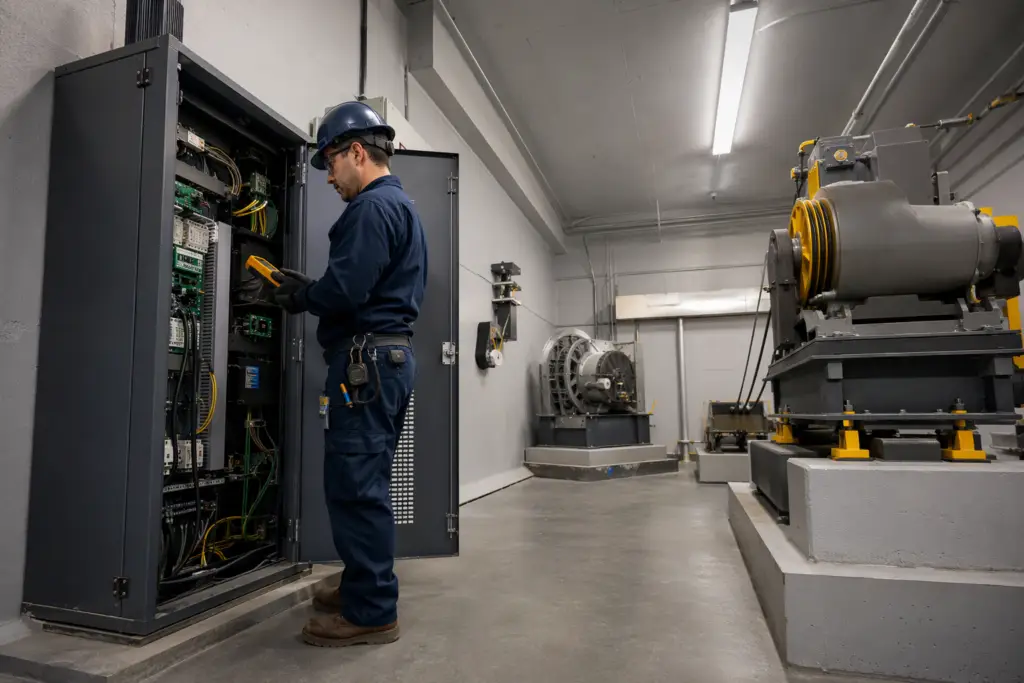
- Machine room improvements
- Testing, inspection, and permit fees
How Do Compliance Requirements Affect Modernization ROI?
Compliance-driven modernization represents a category of ROI that is often underappreciated: the cost of not modernizing. Elevator safety in the United States is governed by the ASME A17.1 Safety Code for Elevators and Escalators, which is adopted and enforced at the state and local jurisdiction level. Many jurisdictions have also adopted the ASME A17.3 Safety Code for Existing Elevators and Escalators, which establishes mandatory retrofit timelines for older installations.
Key compliance cost drivers include:
- Door reopening devices: ASME A17.3 includes requirements for door protection devices on older systems that may not have met original specifications.
- Firefighters’ Emergency Operation: Most jurisdictions require Phase I and Phase II firefighters’ operation per ASME A17.1 requirements, which must be retrofitted on older systems.
- Car enclosure and lighting standards: Cab enclosures must meet structural and illumination standards that older cabs may not satisfy.
- Accessibility: The Americans with Disabilities Act (ADA) establishes accessibility requirements for elevator controls, cab dimensions, and door timing that affect elevator systems in facilities open to the public.
When a modernization project brings a system into compliance with both ASME codes and ADA requirements simultaneously, the compliance cost avoidance — potential fines, forced shutdowns, and litigation exposure — should be counted as part of the ROI calculation.
How Long Does an Elevator Modernization Project Take?
Project timelines depend on scope, parts availability, permitting timelines in the local jurisdiction, and whether work can be staged to keep the elevator partially operational during the project. A controls-only modernization on a straightforward system may be completed in a matter of days to weeks. A full modernization of a multi-car, high-rise installation may span several months.
The modernization process typically follows these stages:
- Initial assessment: A qualified elevator technician inspects all major components, reviews maintenance records, and documents deficiencies relative to current code requirements.
- Scope development: Based on assessment findings, a prioritized scope of work is developed that aligns with the building owner’s budget cycle and operational constraints.
- Engineering and permitting: Modernization work requires permits in most jurisdictions. Engineering drawings may be required for significant scope changes.
- Equipment procurement: Control systems, drives, and other components are ordered. Lead times can vary based on manufacturer and component complexity.
- Installation: Qualified elevator mechanics perform the installation work. Scheduling is coordinated to minimize building disruption.
- Testing and inspection: The modernized system undergoes load testing and a formal inspection by the authority having jurisdiction (AHJ) before being returned to service.
- Certificate of operation: Upon passing inspection, the AHJ issues an updated certificate of operation.
What Energy Savings Can Modern Elevator Systems Deliver?
Energy efficiency is one of the most quantifiable components of elevator modernization ROI, and it has grown in prominence as commercial building owners pursue sustainability certifications and operating cost reductions.
Modern elevator technology delivers energy savings through several mechanisms:
- VVVF drives: Variable-voltage, variable-frequency drives replace legacy motor-generator sets and resistor-based control systems. They regulate motor speed precisely, eliminating the energy waste inherent in older starting and stopping methods.
- Regenerative drives: In traction elevators, regenerative drive systems capture energy during descent and counterweight-assisted ascent, converting it back to usable electricity for the building.
- LED cab lighting: Replacing fluorescent or incandescent cab lighting with LED fixtures reduces continuous electrical draw and maintenance intervals.
- Sleep mode and standby functions: Modern controls can dim lighting and reduce ventilation fan speed during idle periods, further reducing baseline consumption.
For buildings pursuing LEED certification or other green building standards, elevator energy performance data can contribute to scoring, adding an indirect financial benefit through certification status and associated lease premiums.
How Does Modernization Affect Elevator Maintenance Costs?
Maintenance cost reduction is a central pillar of modernization ROI and one of the most predictable. As elevator systems age past their design life — typically considered to be 20–25 years for major components — maintenance costs follow a characteristic curve of increasing frequency and severity of failures.
Factors that drive maintenance cost increases in aging systems include:
- Parts obsolescence, requiring custom fabrication or salvaged components
- Increased frequency of controller failures as circuit boards and relays age
- Hydraulic fluid leaks requiring environmental remediation in older hydraulic systems
- Rope and sheave wear that accelerates in systems with worn or misaligned components
- Door operator failures, which are among the most common sources of service calls in aging systems
After modernization, digital control systems enable remote monitoring and predictive diagnostics, allowing technicians to identify developing issues before they cause failures. This shift from reactive to predictive maintenance is a structural change in the cost model that compounds over time.
What Equipment Is Typically Replaced During Elevator Modernization?
The scope of equipment replacement varies by project, but a comprehensive modernization typically addresses:
- Controller and relay logic (replaced with solid-state microprocessor controls)
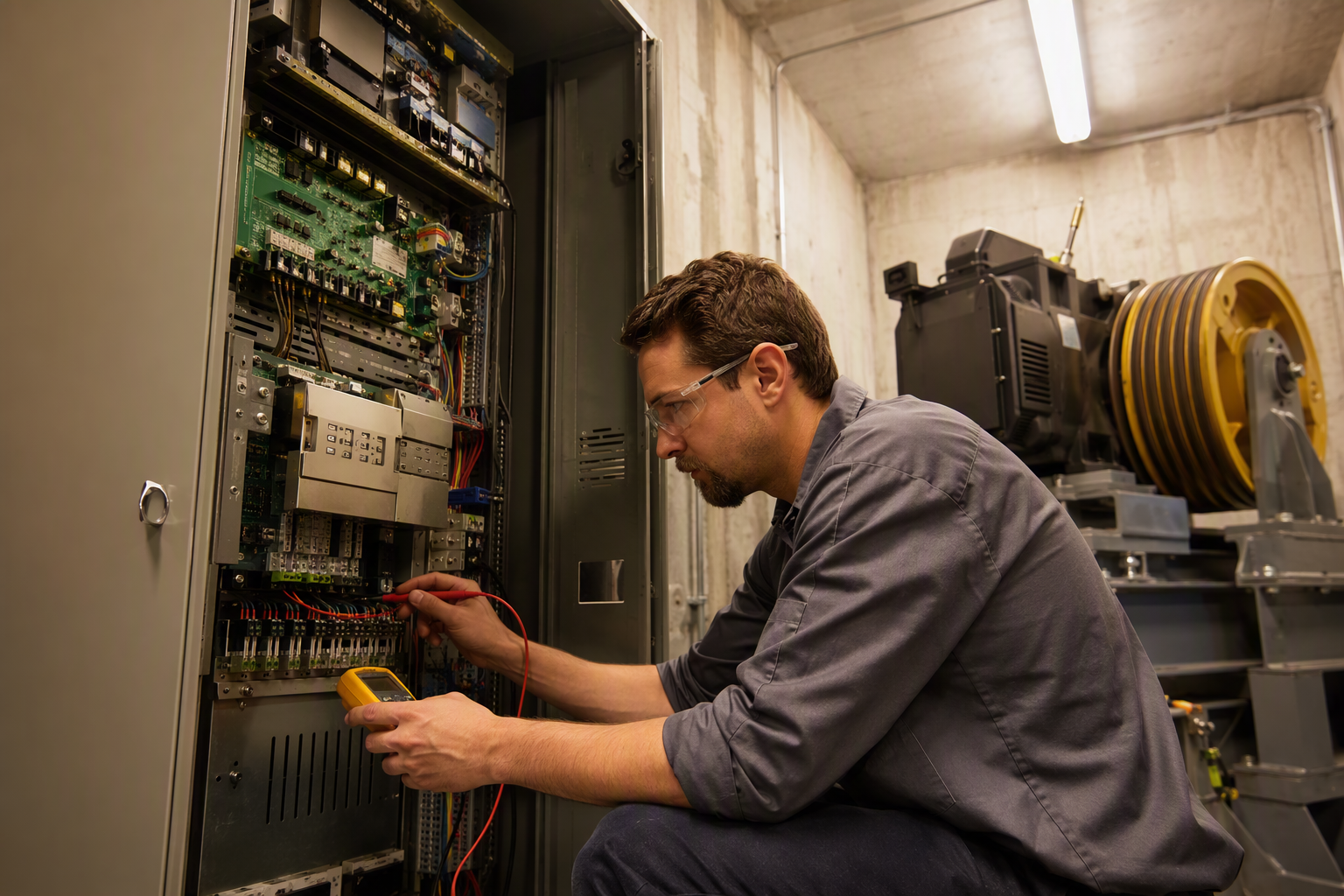
- Motor-generator set (replaced with VVVF drive)
- Door operators and door detection equipment
- Cab enclosure, including walls, ceiling, lighting, and flooring
- Hall fixtures and car operating panel
- Position indicators and dispatch system
- Safety devices including governor, buffers, and safeties (inspected and replaced as needed)
- Ropes (on traction systems) and sheaves
- Hydraulic power unit and piping (on hydraulic systems, often including underground cylinder replacement)
A phased approach is common when budget constraints exist — prioritizing safety-critical and high-ROI components first, with aesthetic and secondary upgrades in subsequent phases.
How Should Building Owners Compare Elevator Modernization Vendors?
Vendor selection is a material factor in modernization ROI because scope definition, component quality, installation quality, and post-modernization support all affect the realized return. Key evaluation criteria include:
- Scope specificity: A quality proposal specifies components by make, model, and performance specification — not generic descriptions.
- Code compliance documentation: The vendor should clearly state which editions of ASME A17.1 and A17.3 the modernized system will comply with, and which AHJ requirements are addressed.
- Warranty terms: Understand what is covered, for how long, and what the response commitment is for warranty issues.
- References and project history: Vendors with documented experience on comparable building types and system configurations carry lower execution risk.
- Post-modernization maintenance capability: A vendor who can also maintain the system after modernization eliminates the risk of warranty disputes between multiple parties.
Liftech Elevator provides detailed, component-specific modernization proposals that allow building owners and facility managers to make direct comparisons and understand precisely what their investment delivers.
What Are the Industry Trends Shaping Elevator Modernization ROI in 2025–2026?
Several trends are reshaping the elevator modernization landscape and influencing how ROI is calculated and realized:
- IoT and remote monitoring: Internet-connected elevator systems are becoming standard on modernization projects. Remote monitoring platforms provide real-time performance data, enable predictive maintenance, and reduce diagnostic time during service calls.
- Sustainability mandates: Building owners in regulated markets are increasingly subject to energy benchmarking requirements and carbon reduction targets. Elevator modernization that improves energy performance contributes directly to compliance with these mandates.
- Aging building stock: A significant portion of the commercial elevator population in the United States was installed in the 1980s and 1990s, placing many systems at or past their expected component life. This is driving sustained demand for modernization services.
- Supply chain normalization: After several years of parts delays, supply chains for elevator components have largely stabilized, improving project timeline predictability.
- Code enforcement cycles: Many jurisdictions are actively enforcing ASME A17.3 retrofit deadlines that had been deferred. Building owners who have delayed compliance-driven modernization face increasing regulatory pressure.
- Destination dispatch systems: Modern group dispatch technology reduces average wait times and improves energy efficiency in multi-elevator buildings, adding an operational ROI dimension beyond simple component replacement.
How Does Elevator Modernization Compare to Full Replacement?
Full elevator replacement — removing the entire system including the car, hoistway, and structural elements — is rarely the most cost-effective path when the hoistway and structural shaft are sound. Modernization typically delivers comparable performance improvements at a fraction of the capital cost because the most expensive structural elements are preserved.
The decision framework generally favors modernization when:
- The hoistway structure is in sound condition
- The building’s vertical transportation requirements have not fundamentally changed
- The primary issues are component age, efficiency, and compliance rather than capacity or speed
Full replacement becomes more appropriate when the hoistway itself requires structural work, when a significant change in capacity or configuration is needed, or when the building is undergoing a comprehensive renovation that makes full replacement logistically practical.
What Should Building Owners Do Immediately If Their Elevator System Is Approaching End of Life?
- Gather maintenance records: Compile service history, inspection certificates, and any outstanding violation notices from the AHJ.
- Review current certificate of operation: Confirm the system is currently permitted to operate and identify any conditions attached to the certificate.
- Request a modernization assessment: A qualified elevator service provider should conduct a comprehensive inspection of all major subsystems and document findings relative to current code requirements.
- Identify compliance deadlines: Determine whether the local jurisdiction has active ASME A17.3 retrofit deadlines that apply to the installation date of the existing system.
- Develop a capital plan: Work with the service provider to develop a phased modernization plan that aligns with the building’s budget cycle and minimizes operational disruption.
- Obtain multiple proposals: Evaluate at least two to three detailed, component-specific proposals before committing to a contractor and scope.
- Confirm permitting requirements: Work with the selected contractor to understand permit timelines in the local jurisdiction, which can affect project scheduling significantly.
How Does Elevator Modernization Affect Property Value?
Vertical transportation equipment is a material consideration in commercial real estate valuation, particularly for mid-rise and high-rise properties where elevator access is essential rather than supplementary. Appraisers, prospective buyers, and institutional investors increasingly scrutinize the condition and remaining useful life of building systems — including elevators — as part of their due diligence process.
A recently modernized elevator system supports property value through several channels:
- Reduced capital expenditure reserves required by buyers and lenders, who discount value when major system replacements are anticipated
- Improved tenant retention and attraction, particularly in markets where tenant sophistication is high
- Reduced liability exposure associated with outdated safety systems
- Demonstrated building management quality, which influences tenant renewal decisions
Is Elevator Modernization Eligible for Tax Incentives or Financing?
Elevator modernization may qualify for favorable tax treatment depending on the jurisdiction, the nature of the improvements, and the building type. Qualified Improvement Property (QIP) provisions under federal tax law have historically allowed accelerated depreciation for certain commercial building improvements, which can improve the after-tax economics of a modernization project. Building owners should consult with a qualified tax advisor to evaluate applicability to their specific situation.
For ADA-related improvements, the IRS has historically made available the Disabled Access Credit and the Barrier Removal deduction for eligible small businesses. Details and current eligibility requirements should be confirmed with a tax professional and by reviewing current IRS guidance.
Financing options for elevator modernization include equipment financing, commercial property improvement loans, and in some cases, utility rebate programs for energy-efficient upgrades. Some utilities offer incentive programs for commercial customers who install energy-efficient motors and drive systems — components commonly included in elevator modernization scope.
Summary: Key Takeaways on Elevator Modernization ROI
Elevator modernization delivers ROI through a combination of energy savings, maintenance cost reduction, downtime reduction, compliance cost avoidance, and property value support. The strongest financial cases combine multiple ROI drivers — a system that is simultaneously inefficient, unreliable, and out of compliance with current ASME A17.1 and A17.3 standards presents a compelling modernization opportunity on multiple dimensions.
Building owners who approach modernization proactively — before forced compliance timelines or major system failures — retain control over scope, timing, and vendor selection. Those who wait typically face higher costs, compressed timelines, and reduced negotiating leverage.
Liftech Elevator works with commercial and residential building owners to develop data-driven modernization assessments that translate system condition findings into concrete financial projections, helping clients make capital allocation decisions with clarity and confidence.
Get a Free Elevator Modernization Assessment
Understanding your building’s elevator modernization ROI starts with a thorough assessment of current system condition, compliance status, and cost drivers. Liftech Elevator provides complimentary assessments that give building owners the data they need to make informed capital investment decisions.
Contact Liftech Elevator for a free elevator assessment: 562-609-3478
Need elevator service you can rely on? Liftech Elevator is ready to help.