Elevator Service Contract Negotiation Tips: A Complete Comparison and Decision Guide

Elevator service contracts are long-term commitments that directly affect building safety, regulatory compliance, and operating budgets. Whether managing a commercial office tower, a residential high-rise, or a healthcare facility, property owners and facility managers benefit significantly from understanding what to negotiate—and what to avoid—before committing to any maintenance agreement. This guide breaks down every major decision point to help you negotiate a contract that protects your equipment, your occupants, and your bottom line.
What Are the Main Types of Elevator Service Contracts?
Before entering any negotiation, it is essential to understand the three primary contract structures available in the elevator service industry. Each model allocates risk differently between the building owner and the service provider.
| Contract Type | What Is Covered | Owner Risk Level | Best For |
|---|---|---|---|
| Full Maintenance (Comprehensive) | Labor, parts, emergency callbacks, lubrication, adjustments, and most repairs | Low — provider absorbs most repair costs | Older equipment; high-traffic buildings; owners preferring budget predictability |
| Examination & Lubrication (Oil & Grease) | Routine inspections, lubrication, minor adjustments only | High — owner pays separately for all parts and labor | Newer equipment still under manufacturer warranty; low-traffic installations |
| Parts & Labor (Semi-Comprehensive) | Labor included; parts billed separately, or vice versa | Medium — predictable labor costs but variable parts exposure | Mid-age equipment; owners with some repair budget flexibility |
Choosing the wrong contract type is one of the most costly mistakes building owners make. A full maintenance contract on a newly installed unit may represent overpaying for coverage you do not yet need, while a bare-bones examination contract on aging equipment can expose a building to unpredictable five-figure repair bills.
How Do Elevator Service Contract Costs Compare?
Contract pricing varies based on equipment type, number of units, building location, and the scope of coverage selected. The table below reflects the general cost structure — not specific figures — so owners can benchmark proposals they receive.
| Cost Factor | Full Maintenance | Parts & Labor | Exam & Lube Only |
|---|---|---|---|
| Monthly Premium | Highest | Moderate | Lowest |
| Unexpected Repair Exposure | Minimal | Moderate (parts or labor variable) | Very High |
| Budget Predictability | Excellent | Good | Poor |
| Value on New Equipment | Lower | Moderate | Higher |
| Value on Aging Equipment | Higher | Moderate | Lower |
| Typical Contract Term | 3–5 years | 1–3 years | 1 year (often month-to-month) |
What Compliance Requirements Must an Elevator Service Contract Address?
Regulatory compliance is non-negotiable in any elevator service agreement. Service contracts must align with the inspection and testing intervals prescribed by the ASME A17.1 Safety Code for Elevators and Escalators, which is the foundational safety standard adopted by most jurisdictions across North America. The 2022 edition of this code, which remains the current applicable reference heading into 2026, specifies mandatory maintenance, inspection, and testing procedures that service providers must follow.
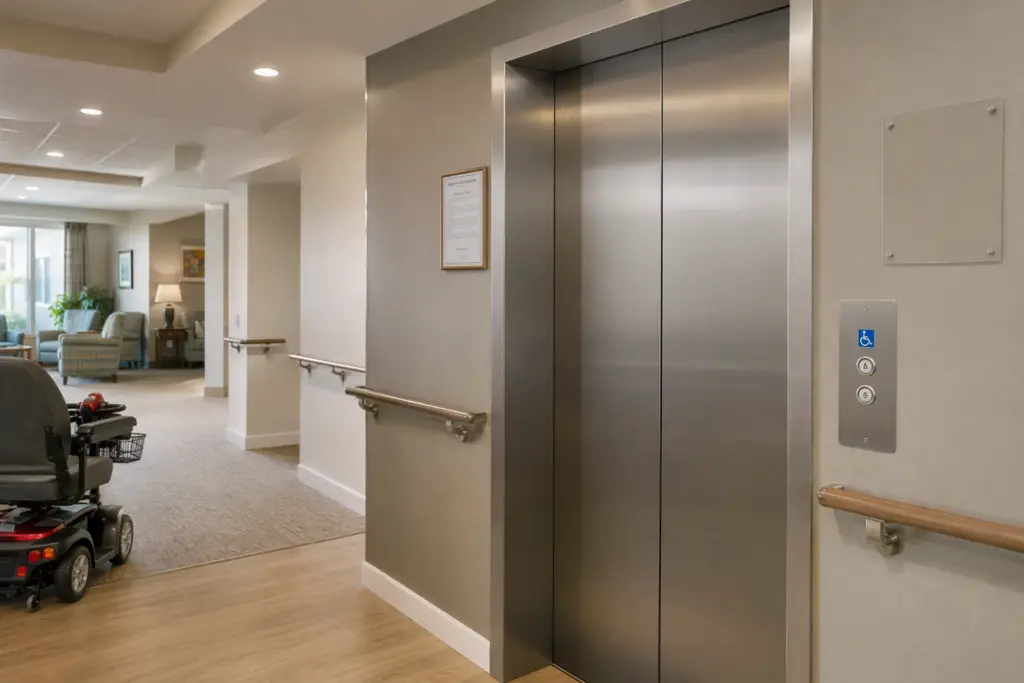
Additionally, elevators in public-facing and commercial buildings must comply with accessibility requirements under the Americans with Disabilities Act (ADA), which governs elevator dimensions, door timing, and call button placement. Service contracts should explicitly state that all maintenance work will preserve ADA-compliant operation.
Workplace safety during elevator maintenance and repair falls under OSHA standards, and building owners should confirm that any contracted provider operates in full compliance with applicable OSHA regulations. Ensure your contract includes language requiring the service provider to maintain all necessary permits and insurance.
How Should You Prepare Before Negotiating an Elevator Service Contract?
- Audit your existing equipment. Document the age, model, usage patterns, and known deficiencies of every elevator unit. This information determines which contract type offers the best value and gives you leverage in pricing discussions.
- Review your current contract thoroughly. Identify all exclusions, auto-renewal clauses, and termination penalties before approaching any new provider.
- Obtain competing proposals. Request itemized bids from at least three independent service companies. Independent providers — such as Liftech Elevator — often offer more flexible terms and competitive pricing compared to OEM-affiliated contractors.
- Clarify jurisdiction-specific inspection requirements. Local authorities having jurisdiction (AHJ) may impose additional requirements beyond the ASME A17.1 Safety Code. Confirm who is responsible for scheduling and paying for third-party inspections.
- Define your priorities in writing. Determine whether budget predictability, equipment uptime, or compliance coverage is your primary concern before entering negotiations — your priority ranking will dictate which terms to push hardest on.
- Consult with a facilities attorney. For multi-unit buildings or high-value portfolios, a legal review of contract language — particularly around liability, indemnification, and dispute resolution — is a worthwhile investment before signing.
What Key Terms Should You Always Negotiate in an Elevator Contract?
| Contract Term | Why It Matters | What to Push For |
|---|---|---|
| Exclusions List | Defines exactly what the contract does NOT cover — can significantly reduce the value of a “full” contract | Request a comprehensive written exclusions list; negotiate to reduce or cap exposure on high-risk items |
| Auto-Renewal Clause | Many contracts auto-renew at escalated rates with little notice | Require written notice at least 90 days before renewal; negotiate a cap on any automatic price escalation |
| Price Escalation Terms | Multi-year contracts often include annual rate increases tied to CPI or at the provider’s discretion | Cap annual escalations at a defined percentage; tie any increases to a verifiable index |
| Callback & Priority Language | Vague “reasonable time” language provides no accountability | Seek clearly defined callback windows with written consequences for non-performance |
| Parts Sourcing Clauses | Some OEM providers restrict use of third-party parts, limiting competition and increasing costs | Ensure the contract allows use of equivalent-quality parts that meet code requirements |
| Termination for Cause | Protects the owner if the provider fails to perform | Negotiate clear, objective performance benchmarks that, if unmet, trigger a right to terminate without penalty |
| Inspection & Compliance Responsibility | Ambiguity about who schedules and pays for statutory inspections can result in compliance failures | Define in writing whether the service company or the building owner manages inspection scheduling and fees |
| Liability & Indemnification | Determines who bears financial responsibility if a maintenance failure causes injury or property damage | Ensure the provider carries adequate insurance and accepts liability for failures arising from their own work |
What Are the Pros and Cons of Long-Term vs. Short-Term Elevator Contracts?
| Factor | Long-Term Contract (3–5 Years) | Short-Term Contract (1 Year or Less) |
|---|---|---|
| Pricing Leverage | Providers may offer lower rates in exchange for commitment | Less negotiating power on price |
| Flexibility | Low — difficult to exit if service quality declines | High — easy to switch providers annually |
| Budget Predictability | High — locked-in rates (subject to escalation caps) | Variable — rates may change at renewal |
| Technology Risk | May lock you into a provider as equipment evolves | Freedom to adapt as technology changes |
| Relationship Continuity | Technicians become familiar with your specific equipment | May face technician turnover and learning curve each cycle |
| Best For | Stable, multi-unit portfolios with established equipment | Single units; new installations; owners evaluating provider quality |
Should You Choose an OEM Provider or an Independent Elevator Service Company?
Original equipment manufacturers (OEMs) and their affiliated service networks often present themselves as the default choice for elevator maintenance. However, independent certified service providers can offer meaningful advantages that building owners should weigh carefully.
| Comparison Point | OEM-Affiliated Provider | Independent Provider (e.g., Liftech Elevator) |
|---|---|---|
| Multi-Brand Capability | Limited — typically services own brand only | Broad — qualified across multiple elevator brands and models |
| Contract Flexibility | Often rigid, standardized agreements | Generally more negotiable terms and customizable coverage |
| Parts Sourcing | May require proprietary parts at premium pricing | Can source equivalent-quality parts competitively |
| Price Competitiveness | Brand premium often factored into pricing | Competitive market pricing without brand overhead |
| Local Accountability | May escalate to regional or national dispatch | Direct relationship with local service team |
| Code Compliance | Follows ASME A17.1 and applicable codes | Follows same ASME A17.1 and applicable codes |
Liftech Elevator is an independent certified elevator service provider offering maintenance, inspection, and repair services across a wide range of elevator brands and models. Because Liftech Elevator operates without OEM restrictions, it can offer building owners more flexible contract terms, transparent pricing structures, and the ability to service mixed-brand portfolios — making it a strong candidate to include in any competitive bid process.
What Common Mistakes Do Building Owners Make When Signing Elevator Contracts?
Understanding common pitfalls helps owners enter negotiations with a more informed and defensible position.
- Signing without reading the exclusions list in full. A contract labeled “full maintenance” may exclude major components such as hydraulic cylinders, motor generators, or door operators. Always demand a complete written exclusions list.
- Accepting vague callback language. Language such as “prompt response” or “reasonable time” has no enforceable meaning. Negotiate for specific, measurable service windows.
- Ignoring auto-renewal provisions. Many contracts renew automatically with limited notice windows. Missing the cancellation deadline can lock a building into another full term at an escalated rate.
- Failing to address compliance responsibility. If the contract does not specify who manages statutory inspection scheduling and fees, both parties may assume the other is responsible — resulting in compliance lapses and potential violations.
- Not requiring proof of insurance. Always request current certificates of insurance before work begins, including general liability and workers’ compensation coverage.
- Bundling multiple buildings without individual performance clauses. Portfolio contracts can obscure poor performance at individual buildings. Negotiate unit-by-unit accountability where possible.
How Does Elevator Maintenance Contract Negotiation Affect Long-Term ROI?
The financial case for thorough contract negotiation extends well beyond the monthly service fee. Poorly negotiated contracts that result in deferred maintenance, compliance violations, or extended equipment downtime carry compounding costs that far outweigh any short-term savings from accepting a lower upfront price.
Key ROI considerations include:
- Equipment lifespan. Consistent, code-compliant maintenance under a well-structured agreement extends useful equipment life — deferring major capital expenditure on modernization or replacement.
- Downtime costs. In commercial and residential settings, prolonged elevator outages affect tenant satisfaction, ADA accessibility compliance, and — in healthcare or high-rise settings — can create genuine safety and liability exposure.
- Regulatory penalties. Failure to meet inspection and maintenance requirements under the ASME A17.1 Safety Code for Elevators and Escalators or local AHJ requirements can result in mandatory shutdowns and fines that dwarf the cost of proper maintenance.
- Negotiated price stability. A well-capped multi-year agreement protects against market-rate increases during periods of labor cost inflation in the elevator trades.
What Should Be Included in a Final Elevator Service Contract Checklist?
- Complete description of all covered equipment (unit IDs, model numbers, locations)
- Explicit and exhaustive exclusions list — in writing, attached as an exhibit
- Defined scope of routine maintenance visits (frequency, tasks performed per visit)
- Clear callback and priority service language with defined obligations
- Annual price escalation terms with a defined cap or index reference
- Auto-renewal notice requirements (minimum 90-day written notice recommended)
- Termination for cause provisions with objective performance benchmarks
- Compliance responsibility clause addressing inspection scheduling and fees under applicable codes
- Parts sourcing terms allowing equivalent-quality alternatives where permitted by code
- Insurance requirements — provider must furnish current certificates before work begins
- Dispute resolution process (arbitration, mediation, or jurisdiction for litigation)
- Indemnification and liability allocation language reviewed by legal counsel
When Is the Right Time to Renegotiate an Existing Elevator Service Contract?
Renegotiation opportunities arise more frequently than many building owners recognize. Key trigger points include:
- Approaching the auto-renewal window. The period 90–120 days before an auto-renewal date is the strongest negotiating window — the provider has the most incentive to retain the account.
- After a major repair or recurring callback. Documented service failures provide concrete leverage to renegotiate exclusions, callback terms, or pricing.
- Following a portfolio change. Acquiring or disposing of buildings changes your leverage on multi-unit pricing.
- After a code or regulatory update. Changes to the ASME A17.1 Safety Code for Elevators and Escalators or local jurisdiction requirements may expand required services — use these moments to clarify compliance responsibility in the contract.
- When competitive bids reveal a pricing gap. Even if you intend to stay with your current provider, a well-documented competing proposal from an independent company such as Liftech Elevator creates a legitimate basis to renegotiate rates and terms.
How Does an Independent Elevator Assessment Help Before Signing a Contract?
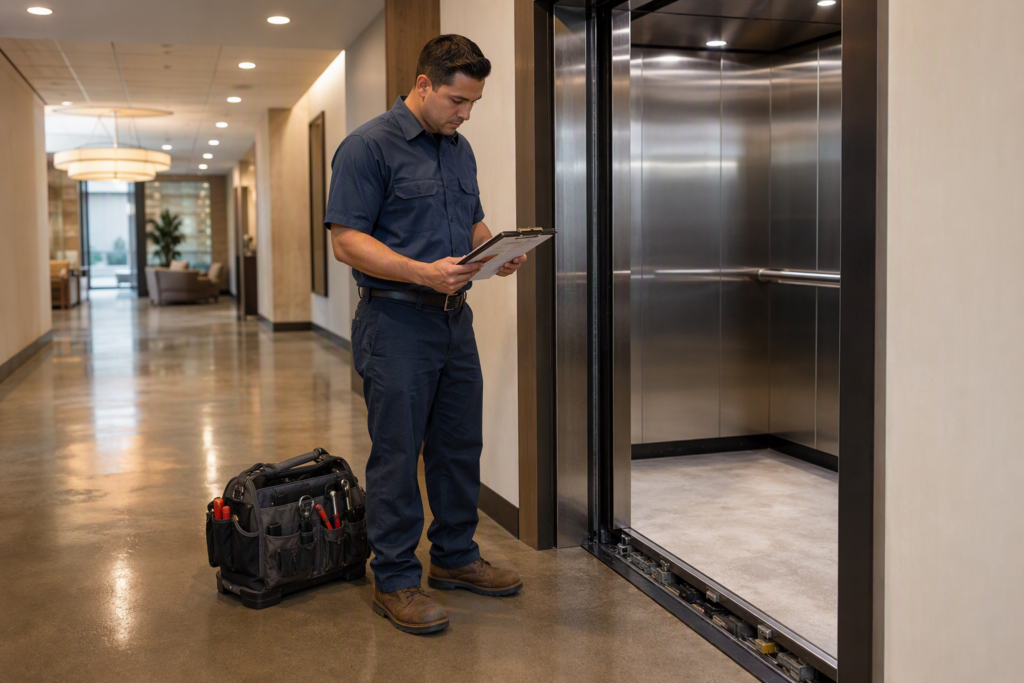
An independent equipment assessment conducted before signing any new or renewed service contract provides building owners with an objective baseline of equipment condition. This assessment serves several practical functions in negotiations:
- Identifies pre-existing deficiencies that should be excluded from the new contractor’s liability — or, conversely, documented as the provider’s responsibility to remediate
- Determines whether the equipment’s age and condition justify a full maintenance contract or a more limited coverage model
- Provides an independent record of equipment state that can be referenced if disputes arise later about the cause of a failure
- Validates whether the proposed service scope in a contract actually matches the documented maintenance needs of the equipment
Liftech Elevator offers free elevator assessments to help building owners enter contract negotiations with clear, objective information about their equipment — providing a stronger foundation for every term discussed at the table.
Ready to Negotiate a Better Elevator Service Contract?
Before signing or renewing any elevator maintenance agreement, building owners deserve an objective, independent assessment of their equipment and contract terms. Liftech Elevator provides transparent, code-compliant elevator service with flexible contract options tailored to the specific needs of each building and portfolio.
Contact Liftech Elevator for a free elevator assessment: 562-609-3478
Need elevator service you can rely on? Liftech Elevator is ready to help.