Healthcare Elevator Maintenance Standards: What Hospitals & Medical Facilities Must Know
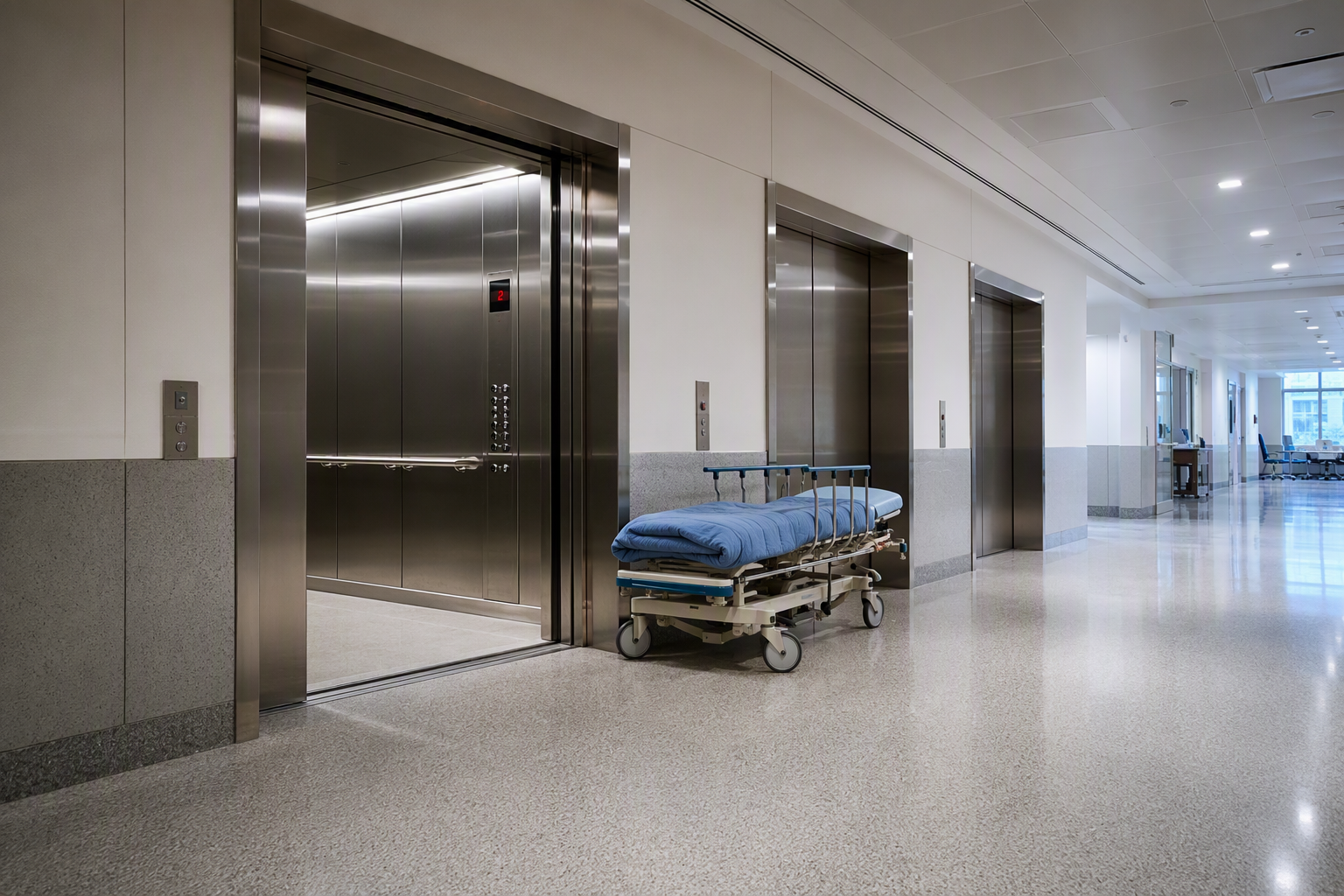
Elevators in healthcare environments carry an extraordinary responsibility. From transporting patients on gurneys to moving critical medical equipment between floors, every vertical lift in a hospital, outpatient clinic, or long-term care facility is a direct link in the chain of patient care. A failure is not merely an inconvenience — it can delay treatment, compromise emergency response, and create serious liability exposure. This guide covers the full compliance landscape, inspection protocols, maintenance best practices, and the questions every healthcare facility manager should be able to answer.
What Elevator Maintenance Standards Apply to Healthcare Facilities in California?
Healthcare facilities in California are subject to a layered compliance framework that goes beyond the baseline standards applied to commercial buildings. Understanding each layer is essential before scheduling a maintenance program or an inspection.
- ASME A17.1 Safety Code for Elevators and Escalators: The foundational national standard governing design, installation, operation, testing, inspection, and maintenance of elevators. California adopts and enforces this code through the Division of Occupational Safety and Health (Cal/OSHA).
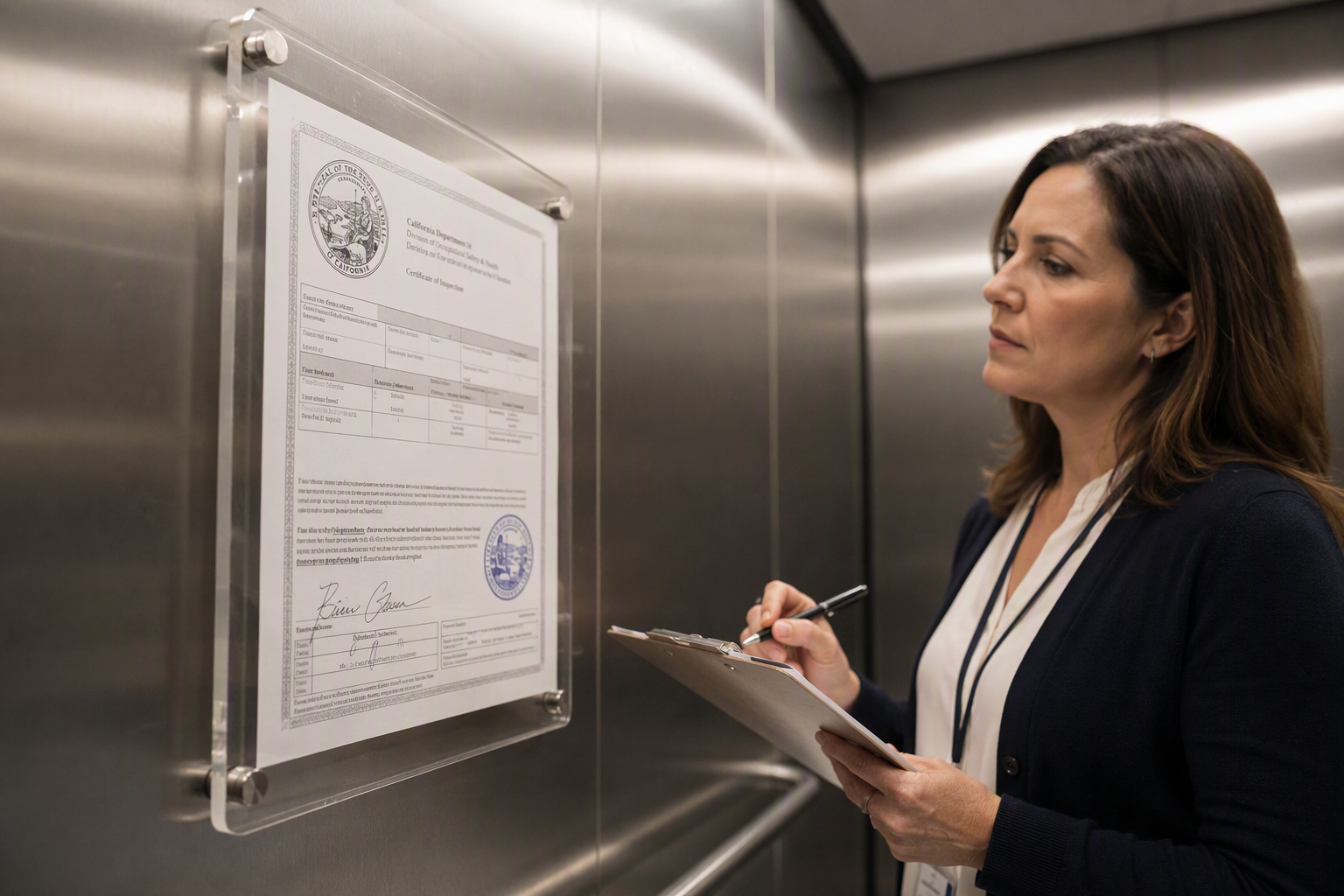
- California Code of Regulations, Title 8: Incorporates elevator safety requirements administered by the Elevator Safety Unit under the Department of Industrial Relations. All elevators must hold a current Certificate of Inspection.
- California Title 24 (California Building Standards Code): Establishes accessibility and construction standards for healthcare occupancies, including elevator cab dimensions, door timing, and floor-level landing accuracy relevant to patient transport.
- HCAI (formerly OSHPD) Requirements: The California Department of Health Care Access and Information governs the design and construction of licensed healthcare facilities. Any modification to an elevator system in a licensed hospital or skilled nursing facility must be reviewed and approved by HCAI.
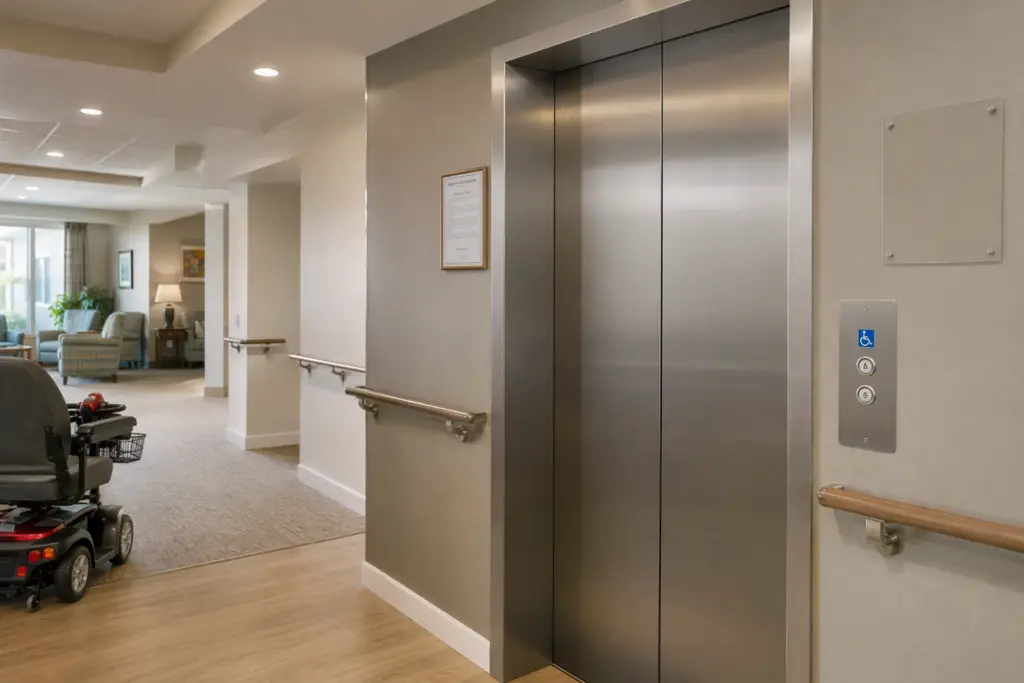
- Americans with Disabilities Act (ADA): Mandates accessible routes, cab dimensions, control panel heights, audible signals, and Braille markings in facilities open to the public — including all patient-facing healthcare environments.
- OSHA Standards: Federal OSHA and Cal/OSHA requirements address elevator-related workplace safety for maintenance personnel and healthcare workers who use freight or service elevators.
Liftech Elevator works with healthcare facility managers throughout Signal Hill, Long Beach, Los Angeles, and Orange County to navigate this multi-layer compliance environment and ensure every elevator meets current 2026 code requirements.
Why Are Elevator Maintenance Standards Stricter for Healthcare Than for Retail or Commercial Buildings?
Healthcare facilities operate under higher scrutiny for several reasons:
- Patient dependency: Patients on stretchers, in wheelchairs, or connected to IV equipment cannot use stairs. An out-of-service elevator in a medical setting creates a direct patient safety risk.
- 24/7 continuous operation: Unlike retail or office buildings, hospitals and urgent care centers run around the clock, placing higher wear demands on elevator components.
- Infection control requirements: Elevator interiors in healthcare settings must be maintainable to hygienic standards, influencing cab material choices and the maintenance schedule for cab interiors and door tracks where debris accumulates.
- Emergency response integration: Healthcare elevators are typically part of the facility’s emergency response plan. Fire service operation (Phase I and Phase II) must be tested and documented in accordance with ASME A17.1.
- Joint Commission and CMS surveys: Accredited hospitals are subject to The Joint Commission (TJC) and Centers for Medicare & Medicaid Services (CMS) surveys. Elevator maintenance logs, inspection certificates, and deficiency correction records are reviewed as part of the Environment of Care (EC) standards.
How Often Must Healthcare Elevators Be Inspected and Maintained?
Inspection and maintenance intervals for elevators in California healthcare facilities are governed by the ASME A17.1 Safety Code for Elevators and Escalators and enforced by the California Division of Occupational Safety and Health.
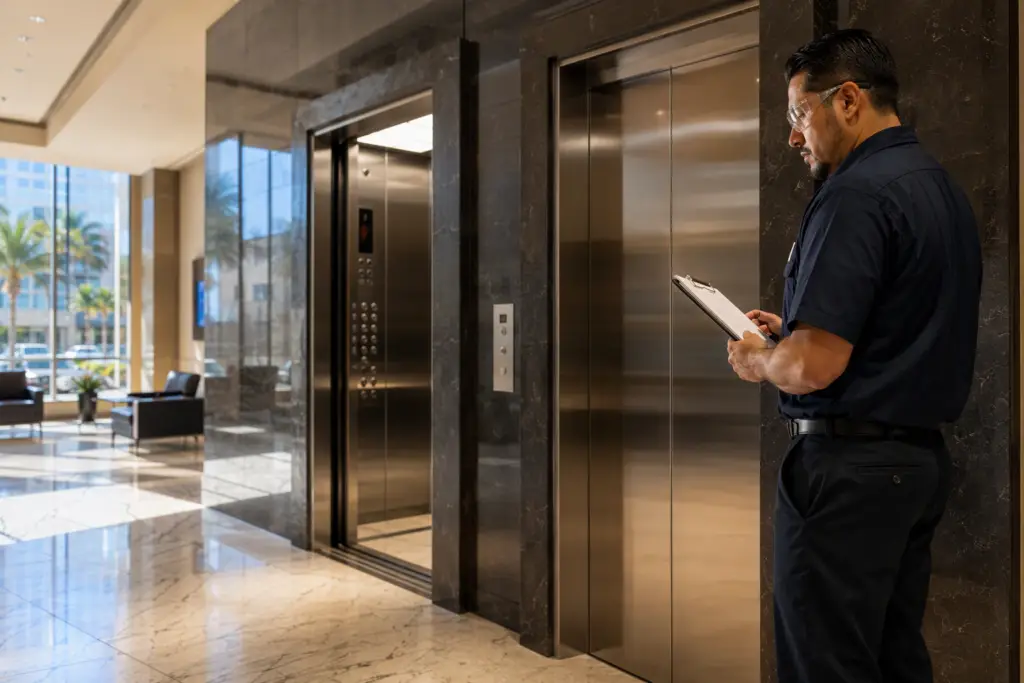
- Annual periodic inspection: California requires a full periodic inspection by a Qualified Elevator Inspector (QEI) at minimum once per year to maintain a valid Certificate of Inspection.
- Five-year full-load safety test: ASME A17.1 requires a Category 5 test — a full-load, full-speed safety test — on a five-year cycle for most traction elevators commonly found in multi-story medical buildings.
- Routine preventive maintenance: While the minimum inspection interval is annual, industry practice and Joint Commission Environment of Care standards expect documented preventive maintenance on a more frequent schedule — typically monthly or quarterly depending on elevator usage intensity.
- Category 1 tests: An annual no-load safety test is required for most elevator types under ASME A17.1, separate from the periodic inspection.
Liftech Elevator provides scheduled preventive maintenance programs designed specifically for the high-cycle demands of healthcare facilities in Los Angeles and Orange County, with documentation structured to support Joint Commission and CMS survey readiness.
What Components Require Special Attention in a Healthcare Elevator Maintenance Program?
- Door systems: Door open/close timing, force limits, and obstruction sensitivity are critical in healthcare settings where gurney wheels and IV poles are common door obstructions. ADA door timing requirements must be maintained.
- Leveling accuracy: Floor-level accuracy is paramount when wheeling patients. Misleveling creates a tripping hazard and can make it difficult or impossible to move wheeled equipment across the threshold.
- Emergency communication systems: A two-way communication device is required by ADA and ASME A17.1. In a healthcare environment, this system must be tested regularly and must connect to a monitored location.
- Emergency lighting and power: Battery backup systems must be tested to confirm they activate upon loss of normal power, maintaining cab lighting and communication.
- Fire service operation (Phase I & II): Automatic recall to a designated floor on fire alarm activation, and manual firefighter operation mode, must be tested and documented.
- Load capacity and rated speed: Elevators transporting bariatric patients or heavy medical equipment must operate within rated capacity. Overload devices must be functional.
- Hydraulic fluid containment: Hydraulic elevators require inspection of cylinder, piping, and containment systems. Environmental compliance is relevant in California for fluid containment.
What Are the ADA Requirements for Elevators in Medical Buildings?
Under the Americans with Disabilities Act, elevators serving medical facilities must meet accessibility standards that include:
- Minimum cab interior dimensions sufficient to accommodate a wheelchair and attendant
- Control buttons no higher than the specified maximum mounting height for accessible reach range
- Raised and Braille characters on all floor designations and control buttons
- Audible signals announcing floor arrivals and door operation
- Door reopening devices that respond to obstructions without requiring contact
- Adequate lighting levels within the cab for visually impaired users
ADA compliance is not a one-time installation check — it must be verified as part of ongoing maintenance, because hardware components such as audible signals, tactile buttons, and door sensors degrade over time.
What Happens During a Healthcare Elevator Maintenance Visit?
A structured preventive maintenance visit for a healthcare elevator typically follows this sequence:
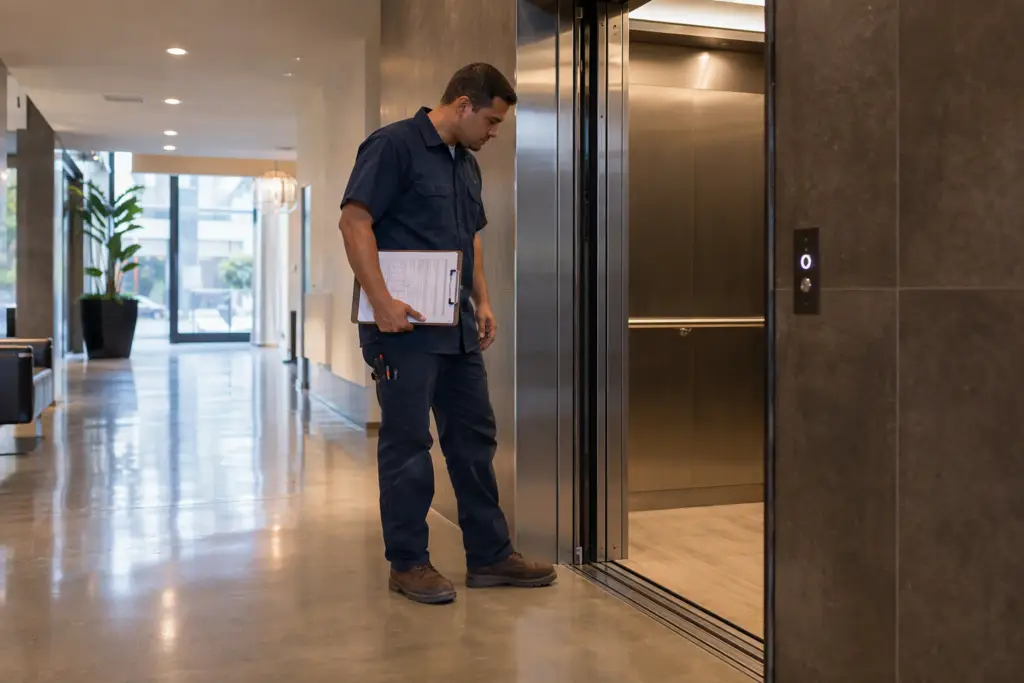
- Review of maintenance logs and prior deficiency reports to identify any open items or patterns requiring attention.
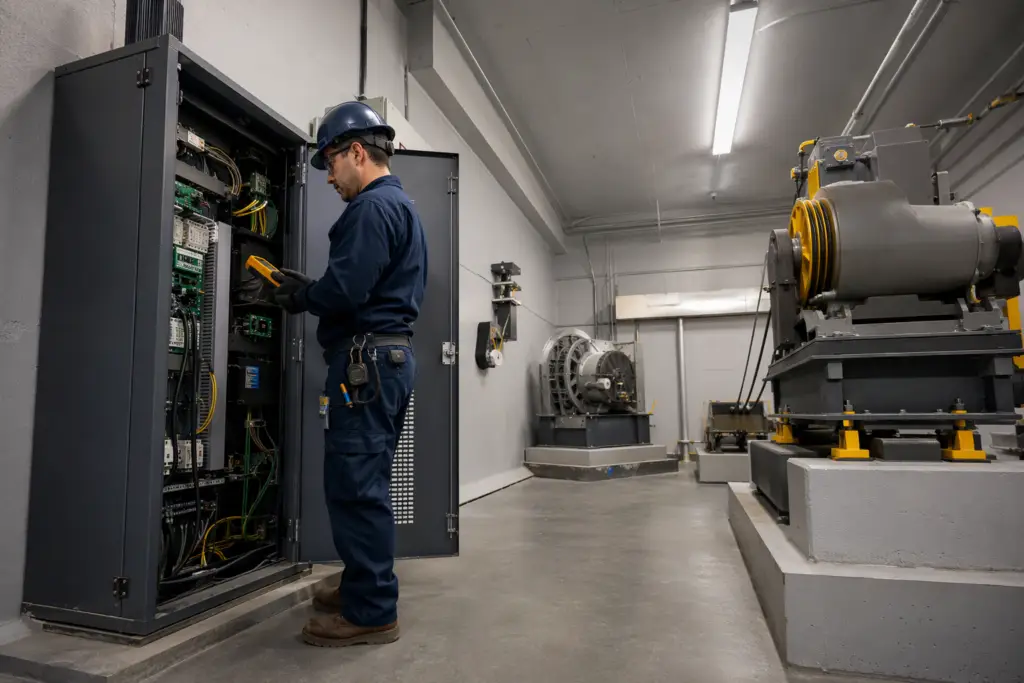
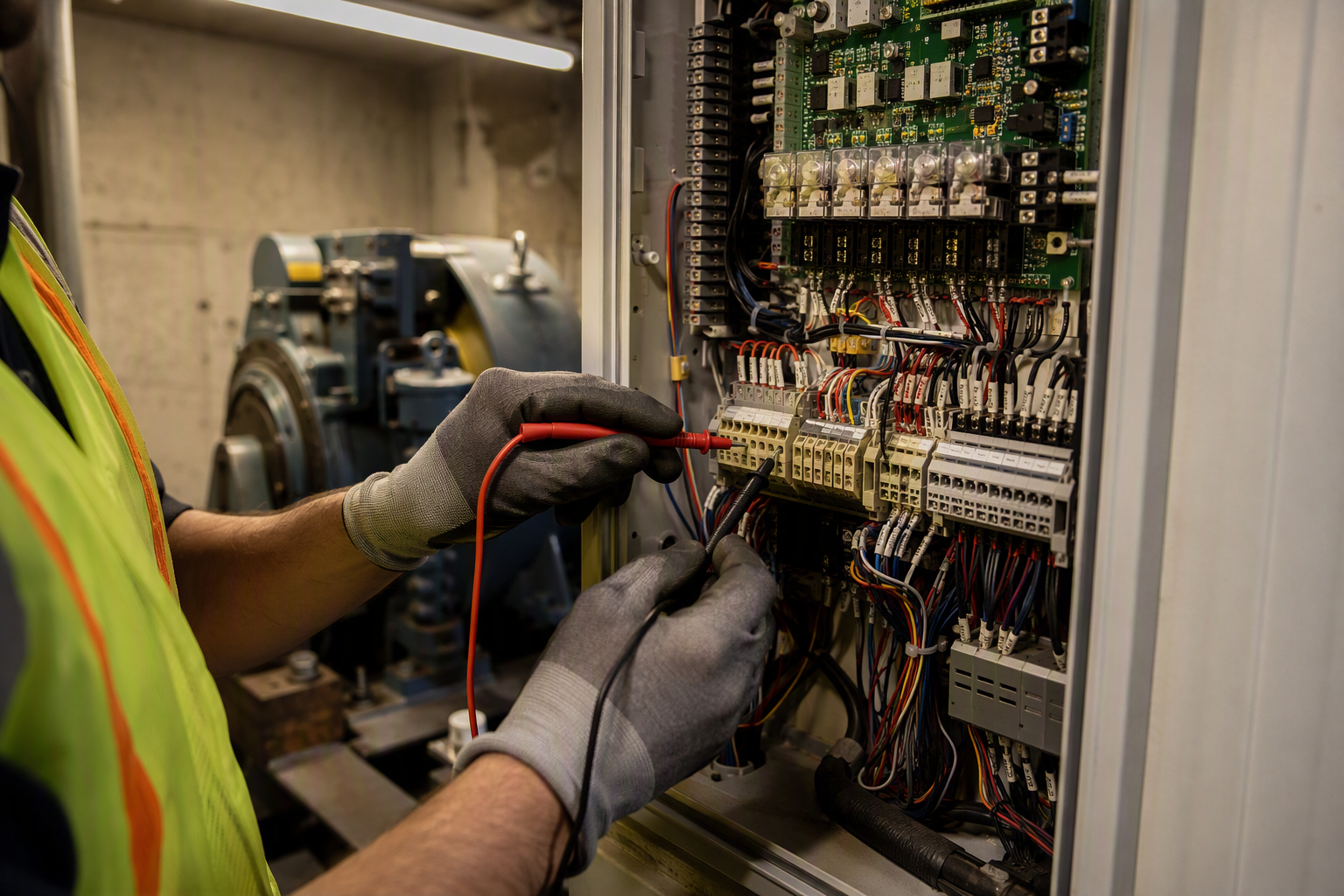
- Machine room inspection — examination of the motor, controller, drive unit, brake, and governor for wear, overheating, or fluid leaks.
- Hoistway inspection — guide rails, buffers, safeties, counterweight, and traveling cables checked for condition and proper clearances.
- Door system testing — door open and close force, timing, reopening device sensitivity, and track cleanliness verified against ASME A17.1 and ADA parameters.
- Cab interior inspection — lighting, emergency communication, flooring condition, control panel button function, and accessibility features checked.
- Leveling test — the elevator is run to each floor to verify accurate landing and consistent floor-level alignment.
- Fire service operation test — Phase I recall and Phase II operation tested and logged.
- Emergency systems test — battery backup lighting and two-way communication confirmed operational.
- Documentation — all findings, adjustments made, and recommended corrective actions are recorded in a written report suitable for regulatory or accreditation review.
How Should a Healthcare Facility Respond to an Elevator Deficiency Notice?
- Review the notice immediately to determine whether the deficiency is classified as an imminent hazard (requiring immediate shutdown) or a non-imminent deficiency with a correction deadline.
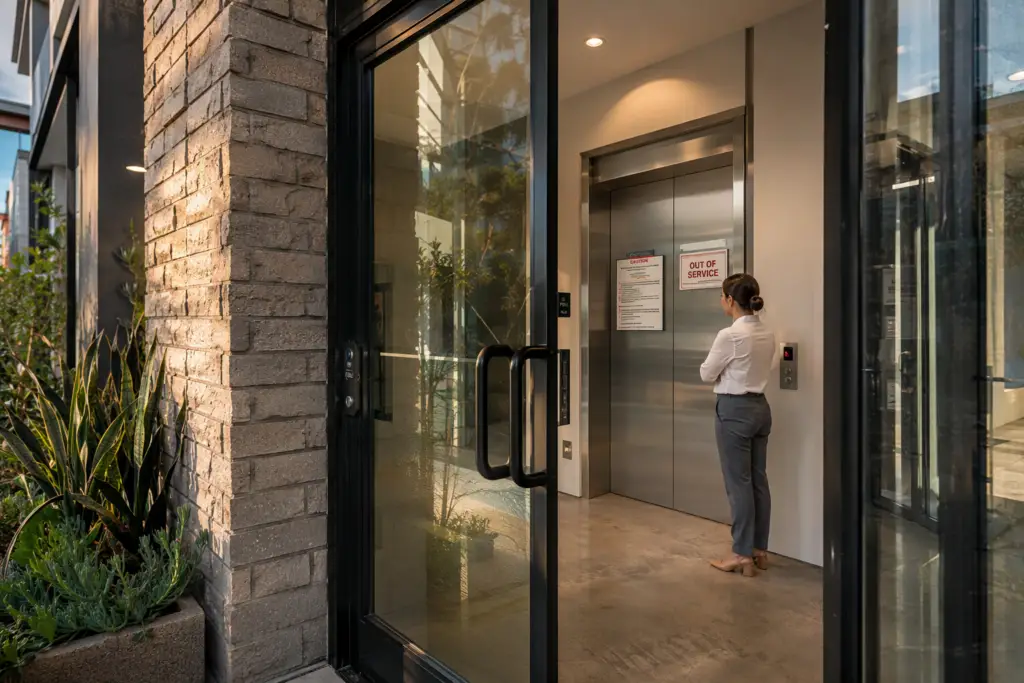
- Take the elevator out of service if the deficiency presents a risk of injury until repairs are completed. Document the out-of-service decision.
- Notify your elevator service provider promptly to schedule repair work within the timeframe specified in the notice.
- Communicate to clinical staff and facility management so patient transport workflows can be adjusted as needed.
- Obtain written confirmation of repair completion from the service provider, including description of work performed and parts replaced.
- Request a follow-up inspection if required by the deficiency notice before returning the elevator to service.
- Update maintenance records and the deficiency log so documentation is available for the next Joint Commission, CMS, or state inspection.
What Documentation Must Healthcare Facilities Keep for Elevator Compliance?
Regulatory surveyors and accreditation reviewers expect healthcare facilities to maintain organized, readily accessible records including:
- Current Certificate of Inspection (posted in or near the elevator)
- Inspection reports from the Qualified Elevator Inspector
- Maintenance logs for all scheduled preventive maintenance visits
- Records of all Category 1 and Category 5 tests
- Deficiency notices received and documentation of corrections made
- Emergency communication test logs
- Fire service operation test records
- Records of any modernization or alteration work with HCAI approval documentation where applicable
Gaps in documentation are among the most common findings during Joint Commission Environment of Care surveys. Liftech Elevator provides maintenance documentation formatted to meet both California regulatory requirements and accreditation standards used by healthcare facilities across Long Beach and the greater Los Angeles area.
How Do You Choose the Right Elevator Maintenance Vendor for a Healthcare Facility?
Selecting an elevator service provider for a healthcare environment requires evaluating criteria that go beyond price:
- Licensing: The provider must hold a valid California elevator contractor license as required under the California Labor Code and enforced by the Division of Occupational Safety and Health.
- Healthcare facility experience: Familiarity with HCAI approval processes, Joint Commission documentation expectations, and the operational sensitivity of hospital environments.
- Maintenance program structure: A written preventive maintenance agreement with clearly defined scope, service frequency, and documentation deliverables.
- Multi-manufacturer capability: Healthcare facilities often have mixed elevator inventories. A qualified independent contractor should be capable of servicing multiple equipment brands.
- Local presence: A provider with demonstrated service presence in the local market — Signal Hill, Long Beach, Los Angeles, and Orange County — can support facilities efficiently.
Liftech Elevator serves healthcare facilities across these markets as a certified elevator service company with the technical capability to maintain a broad range of elevator systems and the documentation discipline that healthcare compliance demands.
Questions Your Inspector Will Ask
Whether the inspection is conducted by a California state elevator inspector, a Joint Commission surveyor, or a CMS reviewer, these are the questions healthcare facility managers must be prepared to answer:
- Is the current Certificate of Inspection posted and within its valid period?
- Where are the maintenance logs, and do they reflect the frequency required by your maintenance contract?
- When was the last Category 1 annual test performed, and where is the test report?
- When is the next Category 5 five-year test due?
- Have any deficiency notices been issued, and what documentation exists showing corrective action?
- When was the emergency two-way communication system last tested?
- When was Phase I and Phase II fire service operation last tested and by whom?
- Is there documentation of HCAI approval for any alterations made to elevator systems?
- Are door reopening devices functioning within ADA-required parameters?
- Does the facility have a written elevator out-of-service protocol for clinical operations continuity?
Reviewing these questions with your current service provider before a scheduled inspection is a sound risk management practice. Liftech Elevator provides pre-inspection review support to help healthcare clients in Orange County and Los Angeles approach regulatory visits with complete, organized documentation.
What Should a Healthcare Facility Do If an Elevator Fails Between Scheduled Maintenance Visits?
- Take the elevator out of service immediately and post clear signage for patients, visitors, and staff.
- Activate your facility’s elevator out-of-service contingency plan, including redirecting patient transport to operational elevators.
- Contact your elevator service provider to report the failure and initiate a service call.
- Document the failure event — time, symptoms observed, any error codes displayed — to assist the technician in diagnosing the problem efficiently.
- Do not attempt to restore service manually by overriding safety devices, as this may create hazardous conditions and may void compliance status.
- Notify facility management and the relevant department heads so workflow adjustments can be made for patient care continuity.
- Retain the service report from the repair visit and add it to the elevator’s maintenance file.
Are There Specific Elevator Requirements for Skilled Nursing Facilities and Outpatient Clinics?
Yes. While the core compliance framework — ASME A17.1, California Title 8, and ADA — applies across healthcare occupancy types, the specific application varies:
- Skilled Nursing Facilities (SNFs): Subject to HCAI oversight for any construction or alteration. CMS Conditions of Participation and state licensing surveys both include physical environment reviews that encompass elevator safety and accessibility.
- Outpatient clinics and medical office buildings: May not be licensed healthcare facilities subject to HCAI, but still must comply with California Title 24 accessibility requirements and maintain a valid Certificate of Inspection under California Title 8.
- Hospitals: Subject to the full HCAI regulatory framework. Any elevator alteration requires HCAI project approval before work commences.
- Ambulatory Surgery Centers (ASCs): CMS certification of ASCs includes an evaluation of the physical environment. Elevators in multi-story ASC buildings must be maintained to the same standards as other medical facilities.
Get a Free Elevator Assessment for Your Healthcare Facility
Maintaining elevator compliance in a healthcare environment requires a service partner who understands both the technical requirements of ASME A17.1 and the operational reality of a clinical setting. Whether your facility is in Signal Hill, Long Beach, Los Angeles, or Orange County, Liftech Elevator can evaluate your current compliance status, identify documentation gaps, and provide a structured maintenance program built around the demands of healthcare operations.
Contact Liftech Elevator for a free elevator assessment — call 562-609-3478 today.
Need elevator service you can rely on? Liftech Elevator is ready to help.