Senior Living Elevator Requirements: Complete FAQ Guide for California Facilities
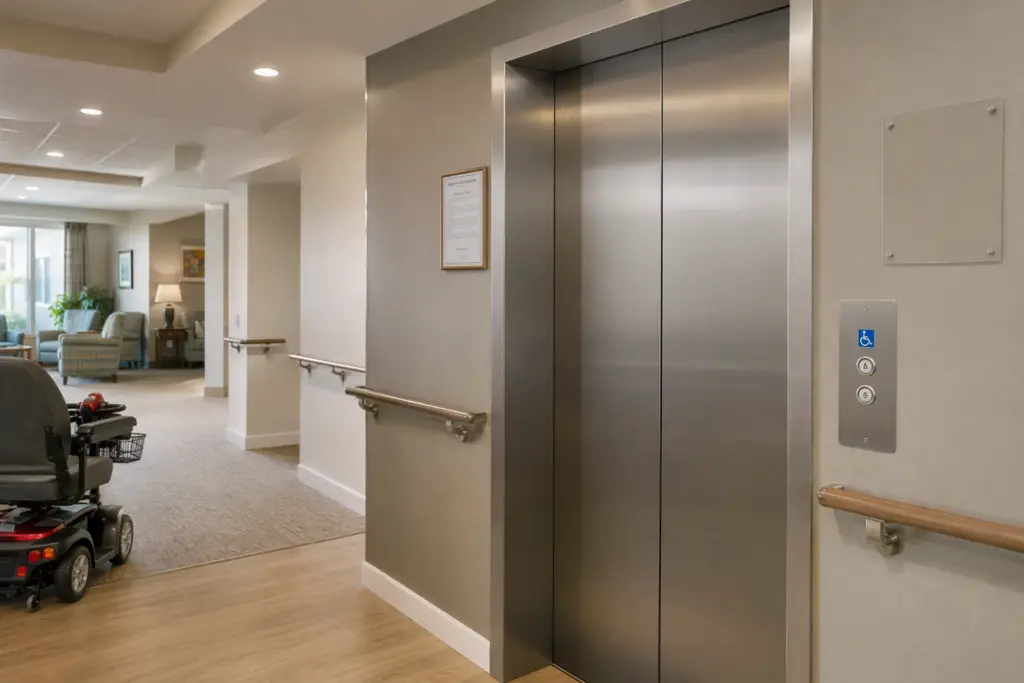
Senior living facilities — including assisted living communities, skilled nursing facilities, continuing care retirement communities, and independent senior housing — face a distinct and layered set of elevator compliance obligations. These requirements exist to protect a population that often relies on mobility aids, has limited reaction time, and may have hearing or vision impairments. Failing to meet these standards creates both serious safety risks and significant legal liability. The questions and answers below cover every major aspect of elevator compliance for senior living in California.
What are the core federal and California elevator requirements for senior living facilities?
Senior living elevators must satisfy three overlapping regulatory frameworks: the ASME A17.1 Safety Code for Elevators and Escalators, federal ADA accessibility requirements, and California’s Title 24 building standards administered by the Division of the State Architect (DSA).
ASME A17.1 is the primary mechanical and safety standard, governing everything from hoistway construction and cab size to door operation and emergency systems. The ADA sets minimum accessibility benchmarks — particularly for door width, call button height, floor indicators, and Braille signage — that apply to any facility open to the public or serving residents with disabilities. California’s Title 24 frequently exceeds federal minimums and is enforced at the local building department and Cal/OSHA level.
For senior living specifically, the combination of these codes means elevators must be physically accessible to wheelchair users and people with walkers, must have audible and visual floor indicators, must provide slow door closing speeds, and must include code-compliant emergency communication systems that connect to a live monitoring center.
What minimum cab dimensions are required for senior living elevators?
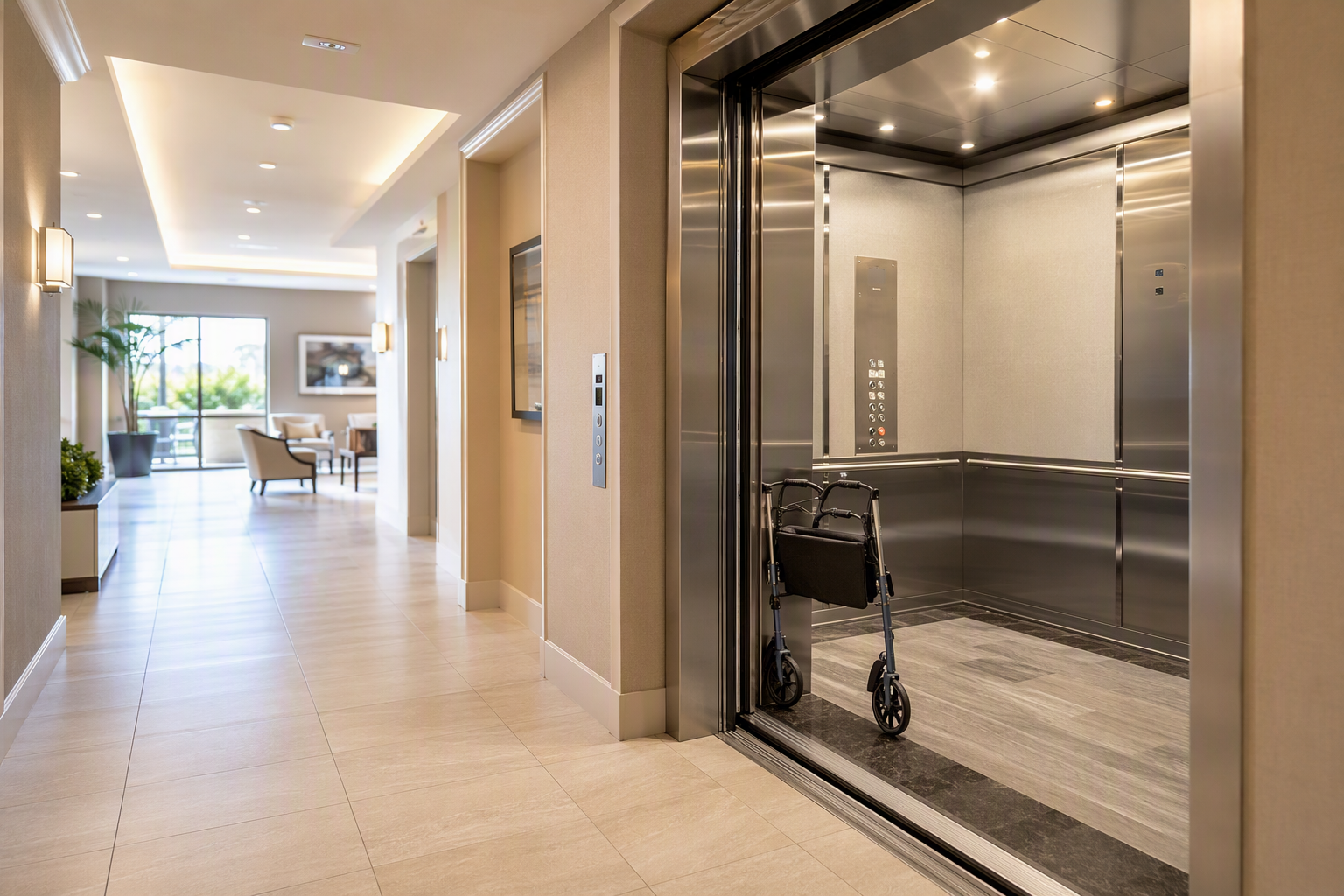
The ADA requires a minimum elevator interior of 80 inches deep by 68 inches wide for center-opening doors, or 51 inches wide for side-opening configurations — though senior care best practice and California guidance often favor larger cabs to accommodate power wheelchairs and attendants simultaneously.
A standard ADA-compliant cab must provide at least 36 inches of clear door width. However, many modern senior living facilities specify 42-inch clear door openings to accommodate wider power wheelchairs and hospital-style transport chairs. The cab floor must be level with the landing within a tight tolerance — ASME A17.1 specifies leveling accuracy — to prevent trip hazards that are especially dangerous for residents with balance or mobility impairments.
Interior finishes also matter practically. Handrails on at least one side wall (and ideally three walls) are strongly recommended for senior populations. Non-slip flooring, sufficient interior lighting, and contrasting color on door edges and handrails all support the usability requirements that overlap with ADA guidance.
How many elevators does a senior living facility need?
California building code generally requires at least one accessible elevator in any multi-story senior living building, but the number of required units depends on building occupancy, floor count, resident population, and emergency evacuation planning requirements.
For larger assisted living and skilled nursing facilities, a single elevator creates a critical single point of failure — especially during medical emergencies when gurneys and wheelchairs must move between floors simultaneously. Most facility planners and code consultants recommend a minimum of two elevators for any building housing more than two occupied floors of senior residents. California’s Office of Statewide Health Planning and Development (OSHPD) sets additional requirements for licensed healthcare facilities that may dictate elevator redundancy.
Emergency evacuation planning is another driver. Non-ambulatory residents cannot use stairwells, making elevators the primary vertical egress path during emergencies — a reality that underscores why redundancy is not merely convenient but safety-critical.
What ADA requirements apply specifically to elevator controls in senior living buildings?
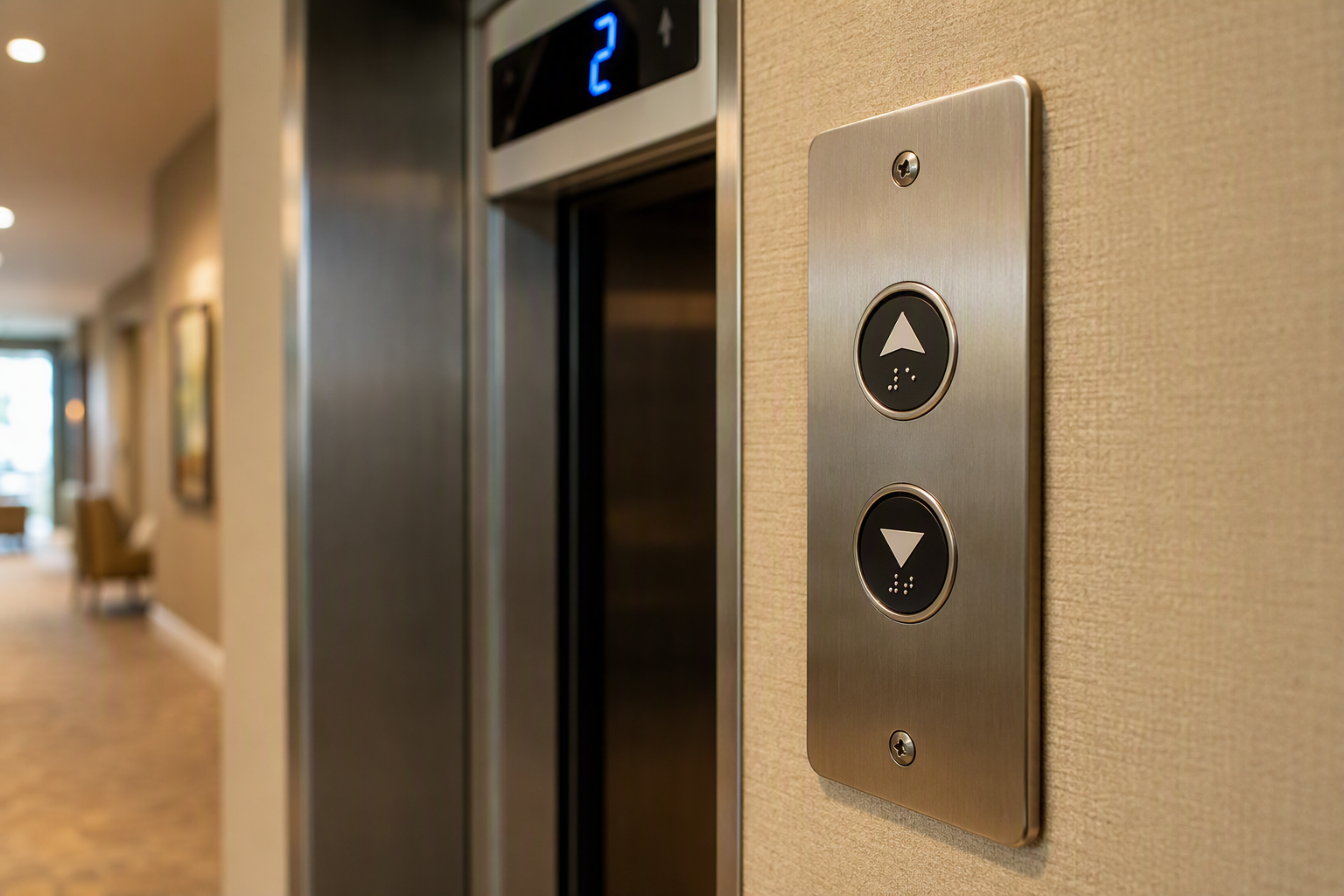
ADA standards require that elevator call buttons be mounted between 15 and 48 inches above the finished floor, be at least three-quarters of an inch in diameter, include raised characters and Braille, and be illuminated when activated.
Inside the cab, floor buttons must be arranged in ascending order, mounted on a side wall (not the rear wall), and positioned so the highest operable control is no more than 48 inches from the floor. Emergency controls — including the stop button, alarm, and telephone — must be grouped at the bottom of the panel, no lower than 35 inches above the floor, to ensure access from a seated position.
Audible signals must sound once for up travel and twice for down travel. A verbal or visual announcement of the floor served is required in buildings with four or more stories. These details, while seemingly minor, have significant practical impact for seniors with low vision or hearing loss — two of the most prevalent impairments in the senior living population.
What door timing and closing speed standards apply to elevators serving senior residents?
ASME A17.1 and ADA standards together require that elevator doors remain open long enough for a person moving at a slow pace to safely enter or exit — the ADA specifies a minimum door-open time of at least 3 seconds before closing begins.
For senior living environments, door-close times are a critical safety parameter. Residents using walkers, canes, or wheelchairs move more slowly than able-bodied individuals, and doors closing too quickly can cause injury or prevent boarding. Many senior living operators program door-open times well beyond the 3-second minimum — often 5 to 8 seconds — as a facility policy decision within the range permitted by the controller settings.
Door reopening devices are mandatory under ASME A17.1: a non-contact sensor must detect an obstruction and reopen the door without physical contact. In senior living facilities, this device must be fully functional at all times, as a malfunctioning door sensor is one of the most common causes of resident injury. Regular testing and maintenance of door sensors is a core component of any senior living elevator maintenance agreement.
What emergency communication requirements must senior living elevators meet?
ASME A17.1 requires every passenger elevator to have a two-way communication system that connects a trapped passenger to a location with a staff member capable of responding — and in California, this line must connect to a 24-hour monitored center, not just an internal phone.
The emergency telephone must operate hands-free, require no lifting of a handset, and automatically dial the monitoring center when activated. This is particularly important for senior residents who may have limited hand strength or upper body mobility. The phone must also be usable by individuals with hearing loss, which typically means TTY (text telephone) compatibility or equivalent visual communication capability.
California elevator regulations require that the emergency lighting system maintain illumination in the cab for a minimum period following a power loss, providing a safe environment during entrapment events. Battery backup systems must be tested regularly and documented as part of the maintenance record.
How often must senior living elevators be inspected in California?
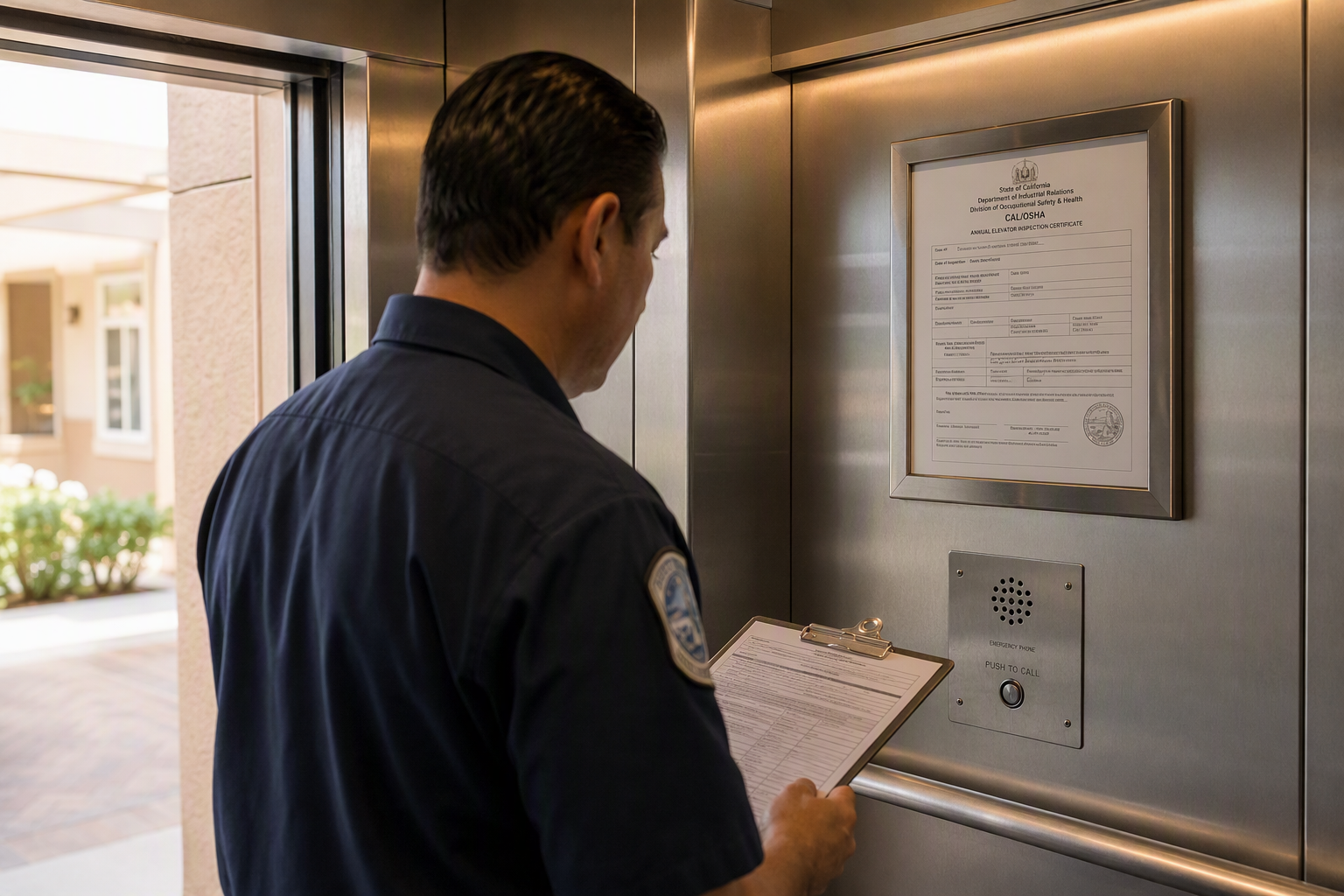
California requires that elevators in senior living and other public or multi-unit residential buildings undergo a periodic inspection at least once annually, conducted by a California-certified elevator inspector under the authority of Cal/OSHA’s Elevator, Ride, and Tramway Unit.
Annual inspections verify the elevator’s compliance with current applicable codes, test all safety devices, confirm proper leveling, check door operation, test emergency communication systems, and review maintenance records. Facilities must prominently display the current inspection certificate inside the elevator cab — a certificate that expires annually and triggers re-inspection.
Beyond the state inspection, responsible facility operators should also maintain a routine maintenance schedule — typically monthly or quarterly preventive maintenance visits — through a qualified elevator service company. Liftech Elevator provides certified elevator maintenance and inspection support to senior living facilities across Signal Hill, Long Beach, Los Angeles, and Orange County, helping facilities stay in continuous compliance between state inspections.
What are the load capacity requirements for senior living elevators?
ASME A17.1 establishes minimum load capacity ratings based on cab size, and most senior living applications require a minimum of 2,500 pounds capacity — with healthcare-adjacent facilities often specifying 3,500 pounds or greater to accommodate bariatric equipment and gurney transport.
Load capacity is not merely about the weight of residents and staff. In senior living environments, elevators must also accommodate motorized wheelchairs and scooters (which can weigh several hundred pounds), hospital beds, stretchers, and large medical equipment during move-ins or emergency transport. Specifying a larger cab with higher capacity at the design stage is significantly less expensive than retrofitting later.
The rated load must be displayed inside the cab in a visible location, and the elevator must be equipped with a load-weighing device that prevents operation when overloaded — a requirement under ASME A17.1 that protects both the mechanical system and building occupants.
What is the difference between a commercial elevator and a residential elevator — and which does a senior living facility need?
Senior living facilities with three or more residents on multiple floors are classified as commercial or multi-family residential occupancies and must install commercial-grade elevators compliant with ASME A17.1 — not the less-stringent ASME A17.1 Section 5.3 private residence elevator standard.
Residential elevators designed for single-family homes have lower load ratings, reduced safety device requirements, and are not approved for use in facilities serving multiple, non-related occupants. The distinction matters because some smaller assisted living operators have attempted to install residential-grade lifts to reduce costs — a decision that creates serious code violations, insurance exposure, and safety hazards.
Any senior living facility that is licensed by the California Department of Social Services or Department of Public Health is subject to commercial elevator requirements regardless of how the building is structured architecturally.
What is a machine-room-less (MRL) elevator, and is it suitable for senior living facilities?
Machine-room-less (MRL) elevators house the drive machinery within the hoistway rather than a separate machine room, and they are fully compliant with ASME A17.1 and ADA requirements — making them a viable and increasingly common choice for senior living construction and renovations.
MRL systems offer practical advantages for senior living retrofits: they require less dedicated building space, can be installed in existing buildings with fewer structural modifications, and often have lower energy consumption profiles compared to older hydraulic systems. For assisted living facilities undergoing renovation without the space for a separate machine room, MRL elevators are frequently the most practical solution.
Hydraulic elevators — still common in lower-rise senior living buildings — are also ASME A17.1 compliant but require a machine room and have specific environmental containment requirements for hydraulic fluid. Traction elevators (cable-driven) are standard for mid- and high-rise senior housing. The appropriate system type depends on building height, traffic demands, and structural conditions.
What are the California-specific regulations that go beyond federal ADA elevator requirements?
California’s Title 24 building standards and the California Building Code (CBC) impose accessibility requirements that frequently exceed federal ADA minimums, including stricter reach range limits, additional tactile warning requirements, and specific provisions for facilities serving people with developmental disabilities.
California also requires that elevators in covered facilities meet the accessibility requirements of the California Disabled Persons Act and the Unruh Civil Rights Act, which provide broader protections than the federal ADA and allow for private civil litigation — increasing the legal stakes of non-compliance beyond federal enforcement mechanisms.
For facilities licensed by California state agencies (Department of Social Services for residential care, Department of Public Health for skilled nursing), elevator compliance is also reviewed during facility licensing inspections — meaning an elevator violation can directly threaten a facility’s operating license, not just trigger a building code fine.
What happens if a senior living facility’s elevator fails a California inspection?
If a Cal/OSHA elevator inspector finds code violations, the facility receives a written notice of violation with a mandatory correction timeline — and if the violation poses an imminent safety hazard, the elevator can be placed out of service immediately until the deficiency is corrected and re-inspected.
For a senior living facility, an elevator being placed out of service is not merely an inconvenience — it can constitute an emergency that prevents non-ambulatory residents from accessing meals, medical care, and essential services on other floors. This operational reality makes proactive maintenance and pre-inspection audits essential risk management tools.
Facilities that receive violation notices should engage a certified elevator service company immediately to assess the scope of required repairs and establish a documented correction timeline. Liftech Elevator assists senior living operators throughout Long Beach, Los Angeles, Signal Hill, and Orange County in addressing inspection findings efficiently, with full documentation for Cal/OSHA re-inspection.
What are the steps a senior living facility should follow to assess elevator compliance?
A structured compliance assessment should follow a documented process that covers code research, physical inspection, gap analysis, remediation, and verification — the following steps represent the recommended protocol for senior living operators.
- Gather current documentation: Collect the elevator’s current inspection certificate, maintenance logs, modernization records, and original installation permit to establish a baseline compliance history.
- Identify applicable codes: Confirm which edition of ASME A17.1 and California CBC applied at the time of installation, and determine what code upgrades are required under the current edition when alterations are made.
- Conduct a physical audit: Measure cab dimensions, door widths, button heights, leveling accuracy, and door timing against current ADA and ASME A17.1 requirements using calibrated test equipment.
- Test all safety systems: Verify emergency communication, emergency lighting, overload protection, door reopening devices, and governor/safety systems are fully operational.
- Review signage and Braille: Confirm that all required Braille designations, floor indicators, and load-rating placards are present, correct, and legible.
- Develop a remediation plan: Prioritize deficiencies by risk level — safety-critical items first, accessibility upgrades second — and obtain cost estimates for all required work.
- Execute repairs and modifications: Complete all remediation work using licensed elevator contractors, with proper permit pulls and Cal/OSHA notification where required.
- Schedule re-inspection or verification: After remediation, request a state inspection or have the certifying inspector verify correction of any outstanding violations.
How do senior living elevator requirements compare to standard commercial elevator requirements?
Senior living elevators carry heightened requirements in several categories — door timing, cab size, handrail provisions, and emergency communication — that reflect the specific mobility and sensory needs of an aging resident population.
| Requirement Category | Standard Commercial Building | Senior Living Facility (Recommended) | Applicable Standard |
|---|---|---|---|
| Minimum clear door width | 36 inches | 42 inches (best practice) | ADA |
| Minimum door-open time | 3 seconds | 5–8 seconds (facility policy) | ADA / ASME A17.1 |
| Minimum load capacity | 2,000–2,500 lbs | 2,500–3,500 lbs (gurney/bariatric) | ASME A17.1 |
| Interior handrails | Not universally required | Three-wall handrails (strongly recommended) | California CBC / Best Practice |
| Emergency phone | Required (two-way) | Required + hands-free + TTY compatible | ASME A17.1 / ADA |
| Floor announcement (audible/visual) | Required in 4+ story buildings | Required regardless of floor count (best practice) | ADA |
| Annual state inspection | Required (Cal/OSHA) | Required (Cal/OSHA) + potential licensing agency review | California Elevator Safety Act |
| Non-contact door reopening device | Required | Required — zero-tolerance for malfunction | ASME A17.1 |
What is elevator modernization and when is it required for senior living facilities?
Elevator modernization refers to the replacement or upgrade of major elevator components — controls, doors, drive systems, or cab finishes — and California building code triggers new code compliance requirements when alterations exceed defined thresholds.
Under ASME A17.1 and California’s elevator regulations, certain categories of alteration require the installation bring the entire elevator into compliance with currently applicable code sections — not just the altered component. This means that a senior living facility undertaking a significant modernization must plan for a potentially comprehensive upgrade rather than a simple part replacement.
Common modernization drivers for senior living elevators include aging hydraulic systems that pose environmental risks, obsolete relay-logic controls that are no longer supportable with replacement parts, worn door operators that can no longer reliably meet door timing requirements, and cab interiors that do not meet current ADA accessibility standards. Proactive modernization planning — ideally before a failure occurs — allows facilities to manage costs and minimize disruption to residents.
How should a senior living facility choose an elevator service company in California?
A qualified elevator service company for a senior living application must hold a valid California Elevator Safety Certificate, carry appropriate commercial liability and workers’ compensation insurance, have demonstrated experience with healthcare-adjacent and senior living environments, and be capable of providing 24-hour emergency response for entrapment situations.
Facilities should request documentation of the contractor’s California certification, verify their standing with Cal/OSHA’s Elevator, Ride, and Tramway Unit, and review their experience with the specific elevator systems installed in the building. References from other senior living or healthcare facilities in the same region are valuable indicators of relevant experience.
Contract terms matter as well. A comprehensive maintenance agreement for a senior living facility should include regular preventive maintenance visits, documented safety testing, parts coverage terms, and clear emergency callback provisions. Facilities should also confirm that their service provider maintains familiarity with current editions of ASME A17.1 and California Title 24, as code interpretations evolve. Liftech Elevator serves senior living communities across Signal Hill, Long Beach, Los Angeles, and Orange County, providing maintenance, modernization, and compliance support tailored to the senior care environment.
What are the most common elevator violations found in California senior living facilities?
The most frequently cited elevator deficiencies in senior living settings involve door safety devices, leveling accuracy, emergency communication systems, expired inspection certificates, and missing or damaged ADA-required signage and Braille designations.
Door sensor malfunctions are among the highest-risk deficiencies — a door that does not reopen reliably when obstructed poses a direct injury risk to residents using mobility aids. Leveling issues — where the cab floor does not align precisely with the landing floor — create trip hazards that are disproportionately dangerous for elderly residents with balance challenges or vision impairment.
Emergency phone systems that have not been tested or maintained, or that connect to an unmanned or discontinued phone line, are another common finding. California requires that the emergency phone connect to a continuously monitored location, and this requirement is frequently overlooked as monitoring services change or are consolidated. Facilities that allow their inspection certificates to lapse face immediate enforcement action upon any complaint or incident.
Does the Fair Housing Act affect elevator requirements in senior housing?
Yes — the Fair Housing Act requires that covered multi-family housing built for first occupancy after March 13, 1991 include accessible elevator features in buildings with four or more units and at least one elevator, applying requirements parallel to but distinct from the ADA.
Under the Fair Housing Act’s design and construction requirements, elevators in covered senior housing must provide accessible routes from building entrances to dwelling units, with accessible elevator features including usable controls, sufficient cab size, and compliant door configurations. Violations of Fair Housing Act design requirements can result in enforcement actions through the U.S. Department of Housing and Urban Development (HUD) or private civil litigation by affected residents.
Senior living facilities that are subject to both the ADA (for common areas and public accommodations) and the Fair Housing Act (for residential units) must ensure their elevators satisfy both sets of requirements — which, in practice, generally means designing and maintaining to the more stringent standard in each category.
What should a senior living facility do if a resident becomes trapped in an elevator?
When a resident is trapped in an elevator, facility staff must follow a documented emergency entrapment protocol that prioritizes resident communication, professional rescue, and post-incident documentation — never attempting to move the elevator manually without qualified elevator personnel.
- Establish immediate communication: Use the elevator’s two-way emergency phone to speak with the trapped resident, confirm their physical condition, and reassure them that help is being arranged.
- Contact the elevator monitoring center: Confirm that the emergency phone line has connected to the monitoring center or call the elevator service company’s emergency callback line directly.
- Notify facility administration and nursing staff: Inform the appropriate facility personnel so that medical assessment can be arranged if needed, particularly for residents with cardiac conditions or anxiety disorders.
- Keep the resident calm and informed: Maintain continuous communication through the intercom or phone, providing updates on the estimated rescue timeline.
- Do not attempt unauthorized rescue: Staff should never attempt to open elevator doors manually or move the cab without a licensed elevator technician present — improper intervention can cause falls or mechanical failure.
- Await certified elevator personnel: Allow the responding elevator technician to conduct the controlled release and assist the resident safely from the cab.
- Conduct post-incident documentation: After the event, document the incident in the facility’s maintenance and incident logs, report as required to Cal/OSHA and licensing agencies, and have the elevator inspected before returning it to service.
How much does elevator compliance and modernization typically cost for a senior living facility?
Elevator compliance costs for senior living facilities vary widely depending on the scope of deficiencies, the age and type of the existing system, and whether partial repairs or full modernization is required — and facilities should obtain itemized quotes from certified contractors rather than relying on general estimates.
Minor compliance remediation — such as replacing Braille signage, adjusting door timing, or repairing a door sensor — involves relatively modest costs compared to major modernization projects that replace control systems, drive equipment, or cab finishes. Full hydraulic-to-traction conversion projects or complete control modernizations represent the highest capital investment category.
California senior living operators should budget for compliance work proactively rather than reactively, as emergency repairs and post-incident corrections typically carry premium costs and create operational disruptions. Many facilities also explore whether elevator modernization qualifies for tax treatment as a capital improvement, and whether ADA-related accessibility upgrades may qualify for relevant federal tax incentives — questions best addressed with a financial advisor familiar with healthcare real estate.
Liftech Elevator provides detailed assessments for senior living facilities throughout Southern California, including Signal Hill, Long Beach, Los Angeles, and Orange County, allowing facility operators to make informed capital planning decisions based on actual equipment conditions rather than estimates.
What ongoing maintenance practices keep senior living elevators compliant and reliable?
A comprehensive preventive maintenance program — covering lubrication, adjustment, safety device testing, door mechanism inspection, and controller diagnostics — is the single most effective tool for maintaining continuous elevator compliance and minimizing unplanned outages in senior living facilities.
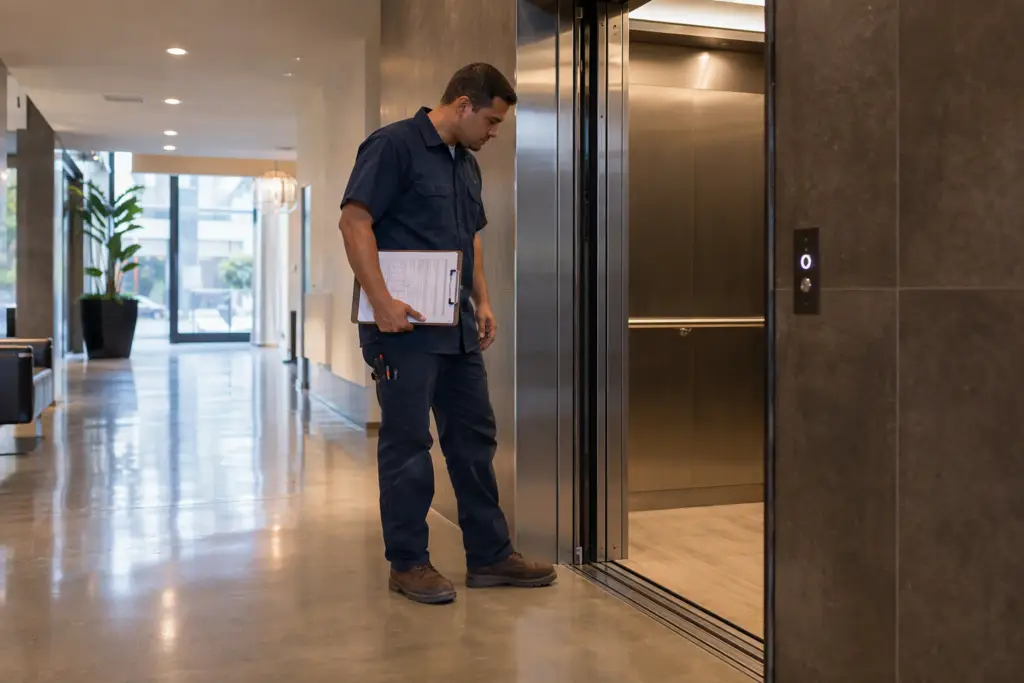
Monthly or quarterly maintenance visits by a certified elevator technician should include physical inspection of all moving components, testing of door reopening devices, verification of cab leveling, confirmation that emergency lighting and communication systems are operational, and review of any resident or staff complaints about elevator performance. All maintenance activities should be documented in a written log retained at the facility and available for review during Cal/OSHA inspections.
Oil and fluid checks are essential for hydraulic elevator systems, as are annual tests of the governor and safety devices for traction elevators. Controller and software diagnostics have become increasingly important as modern elevator systems incorporate digital controls that require firmware updates and cybersecurity awareness. Facilities should also conduct informal daily checks by trained staff — noting unusual sounds, door hesitation, rough rides, or leveling discrepancies and reporting them to the service company promptly.
Proactive parts replacement — replacing components approaching the end of their service life before failure occurs — is far less disruptive and costly than emergency repair, particularly for a senior living community where elevator downtime directly affects resident welfare.
Contact Liftech Elevator for a Free Elevator Assessment
Senior living facilities across Signal Hill, Long Beach, Los Angeles, and Orange County trust Liftech Elevator for certified elevator maintenance, compliance assessments, modernization, and emergency service. Whether a facility is preparing for a Cal/OSHA inspection, addressing a notice of violation, or planning a modernization project, Liftech Elevator’s team provides the technical expertise and documented service records that senior living operators require.
Call Liftech Elevator today: 562-609-3478
Schedule a free elevator compliance assessment and receive a written evaluation of your facility’s current elevator condition, applicable code requirements, and recommended remediation priorities — with no obligation.
Need elevator service you can rely on? Liftech Elevator is ready to help.