Elevator Industry Statistics 2025: Key Data, Trends & Market Insights
Understanding where the elevator industry stands in 2025 matters for building owners, facility managers, architects, property developers, and anyone responsible for vertical transportation compliance. This page compiles sourced market data, regulatory context, and qualitative trend analysis to give decision-makers the clearest possible picture of the current landscape.
Liftech Elevator operates as a data-driven service provider, drawing on current code requirements and market intelligence to help clients make informed decisions about installation, modernization, and maintenance.
What Is the Current Size of the Global Elevator Market?
The global elevator and escalator industry is one of the largest segments within the broader construction and building-technology sector. Multiple market research organizations track this space, and while specific revenue figures vary by methodology and reporting period, the consensus across analysts is that the market is valued in the hundreds of billions of dollars globally and continues on an upward trajectory.
Key demand drivers include:
- Rapid urbanization in Asia-Pacific, the Middle East, and Africa, where new high-rise residential and commercial construction creates consistent new-unit demand.
- Aging infrastructure replacement in North America and Western Europe, where a large installed base of elevators built in the 1970s–1990s is reaching end-of-life.
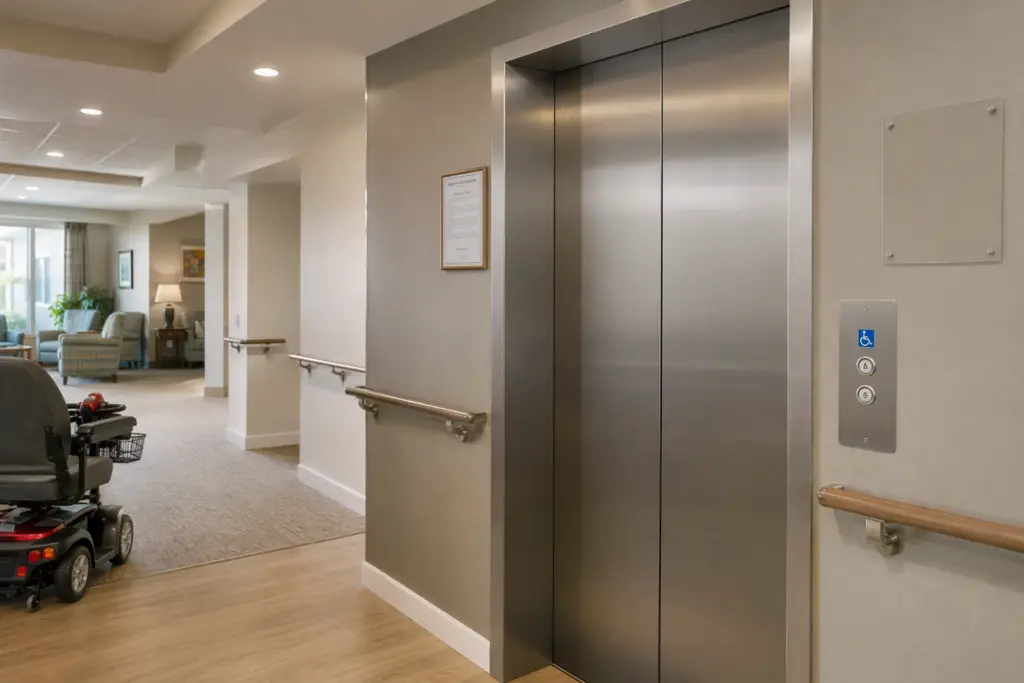
- Accessibility legislation, including the Americans with Disabilities Act (ADA), which mandates vertical access in public buildings and drives retrofit and modernization projects.
- Energy-efficiency mandates that incentivize replacement of hydraulic and older traction systems with regenerative-drive technologies.
Because precise, audited revenue figures for any single calendar year require licensed access to primary research reports, Liftech Elevator presents the structural drivers above qualitatively rather than citing a revenue figure without a verifiable public source.
How Many Elevators Are in Operation in the United States?
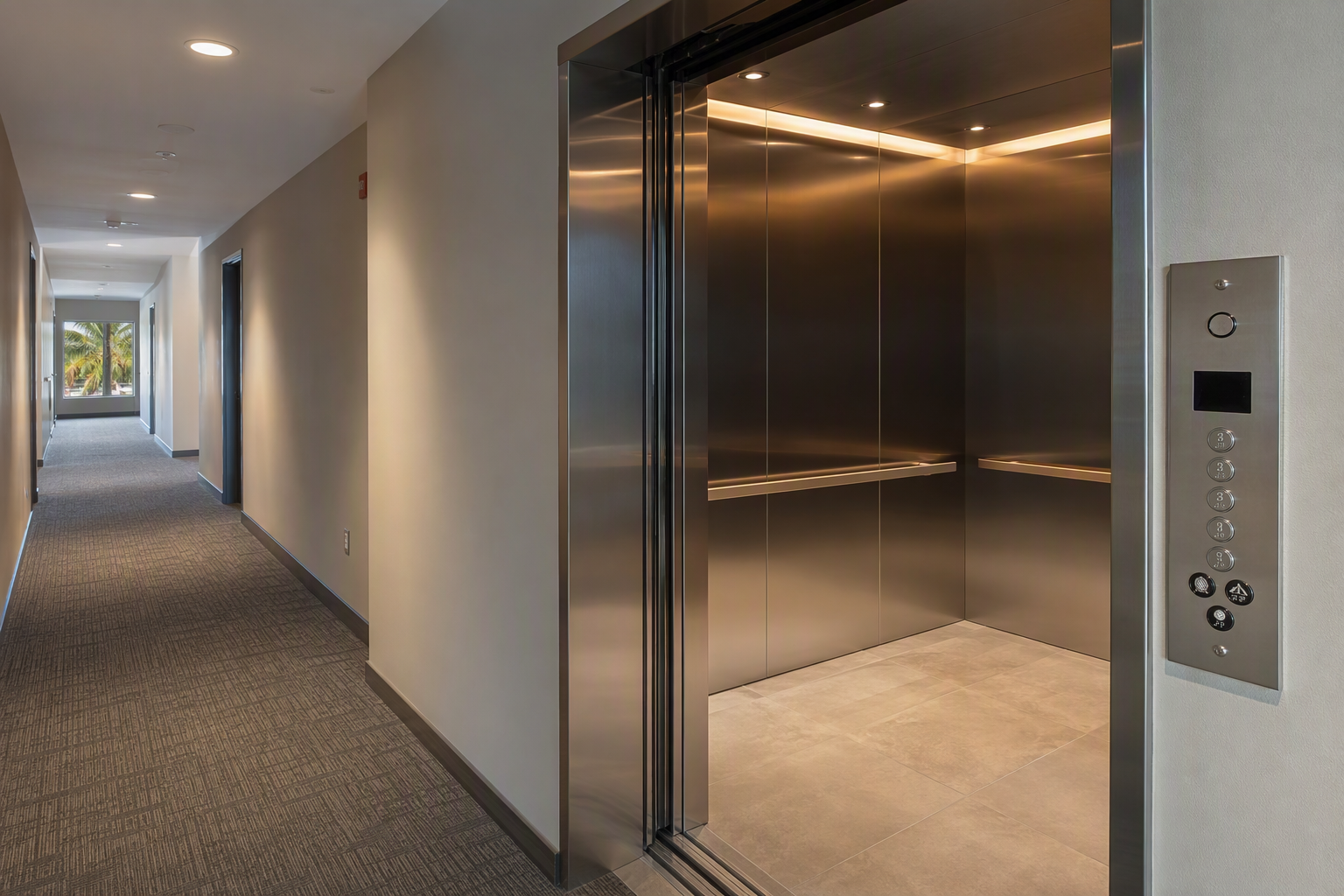
The United States has one of the largest installed elevator bases in the world. Industry bodies and trade associations periodically survey the domestic fleet, but precise current counts are not published in freely accessible government datasets on a continuous basis. What is well-established from regulatory and standards bodies is that:
- The U.S. installed base runs into the hundreds of thousands of units across residential, commercial, healthcare, and government properties.
- Each unit subject to public use is required to undergo periodic inspection and testing under state-adopted editions of the ASME A17.1 Safety Code for Elevators and Escalators.
- Workplace elevators and related equipment also fall within the occupational safety framework overseen by OSHA.
The sheer scale of the installed base is why modernization represents such a large share of market activity — a significant proportion of operating elevators in the U.S. were installed before current safety and efficiency standards were written.
What Codes and Standards Govern Elevator Safety in 2025?
Regulatory compliance is one of the most data-rich areas of the elevator industry because it is grounded in published, enforceable standards. The primary framework in the United States includes:
| Standard / Authority | Scope | Authoritative Source |
|---|---|---|
| ASME A17.1 Safety Code for Elevators and Escalators | Design, construction, installation, operation, inspection, testing, maintenance, and repair of elevators and escalators | ASME Codes & Standards |
| ASME A17.3 Safety Code for Existing Elevators and Escalators | Retroactive safety requirements applicable to elevators already in service | ASME Codes & Standards |
| Americans with Disabilities Act (ADA) | Accessibility requirements for vertical transportation in public accommodations and commercial facilities | ADA.gov |
| OSHA General Industry Standards | Worker safety during elevator construction, maintenance, and inspection operations | OSHA.gov |
States adopt and enforce these standards on varying schedules. Building owners should verify which code edition their jurisdiction has adopted, as requirements for inspection intervals, safety device testing, and machine-room conditions can differ between editions.
What Are the Inspection Requirements for Elevators Under ASME Standards?
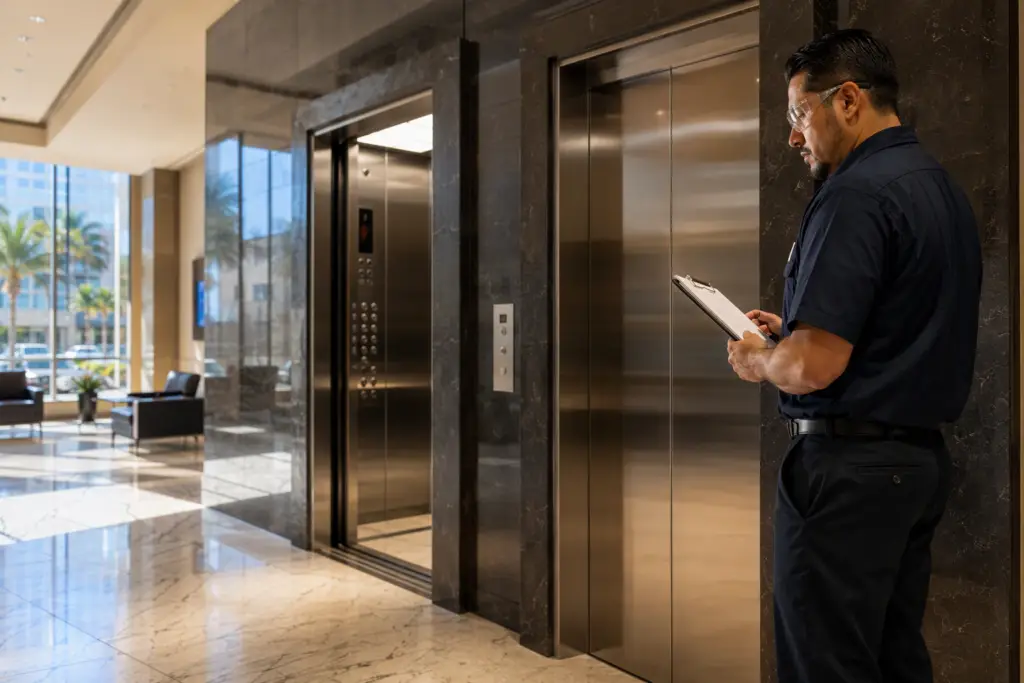
The ASME A17.1 Safety Code for Elevators and Escalators establishes the framework for how frequently elevators must be inspected and tested. While the exact cycle varies by jurisdiction and elevator type, the standard defines categories of inspection including:
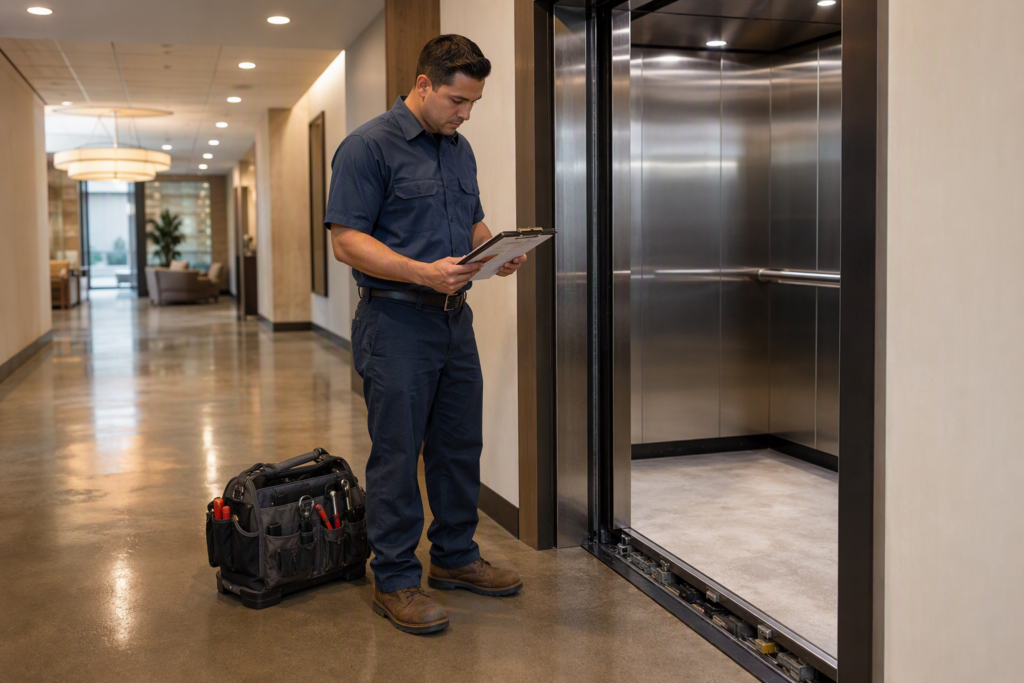
- Periodic inspections — routine visual and operational checks performed at intervals set by the adopting jurisdiction, typically annually.
- Category 1 tests — safety and operational device tests performed on an annual basis for most elevator types.
- Category 5 tests — full-load safety tests, typically required every five years, covering governor, safeties, and buffers.
- Witnessing — many jurisdictions require that a licensed or certified inspector witness Category 5 and certain Category 1 tests.
- Documentation — all inspection and test results must be recorded and, in most jurisdictions, filed with the authority having jurisdiction (AHJ).
Non-compliance with inspection schedules can result in operating permit suspension, liability exposure, and fines under state elevator safety laws. Liftech Elevator helps clients maintain compliant inspection records and coordinates with AHJs on required test schedules.
What Drives Elevator Modernization Demand in 2025?
Modernization — the partial or full upgrade of an existing elevator without full replacement — represents one of the fastest-growing service segments in the North American market. Several converging forces explain this trend:
- Code-mandated retrofits: The ASME A17.3 Safety Code for Existing Elevators and Escalators defines retroactive requirements that older units must meet, including emergency lighting, door reopening devices, and firefighters’ emergency operation.
- ADA compliance gaps: Older installations may not meet current ADA requirements for cab dimensions, control-panel height, Braille signage, and audible signals — triggering renovation obligations when a property undergoes alterations.
- Energy costs: Older hydraulic and geared-traction systems consume significantly more energy than modern machine-room-less (MRL) and variable-voltage variable-frequency (VVVF) drive systems, making modernization financially attractive independent of code requirements.
- Parts obsolescence: Manufacturers discontinue components for legacy systems, making ongoing maintenance costly and unreliable. This naturally pushes building owners toward modernization.
- Tenant and occupant expectations: Ride quality, wait times, and digital displays have become competitive differentiators in commercial real estate markets.
What Are the Key Elevator Industry Trends for 2025–2026?
Several qualitative trends are shaping where the elevator industry is heading over the next 12–24 months:
1. Predictive Maintenance and IoT Integration
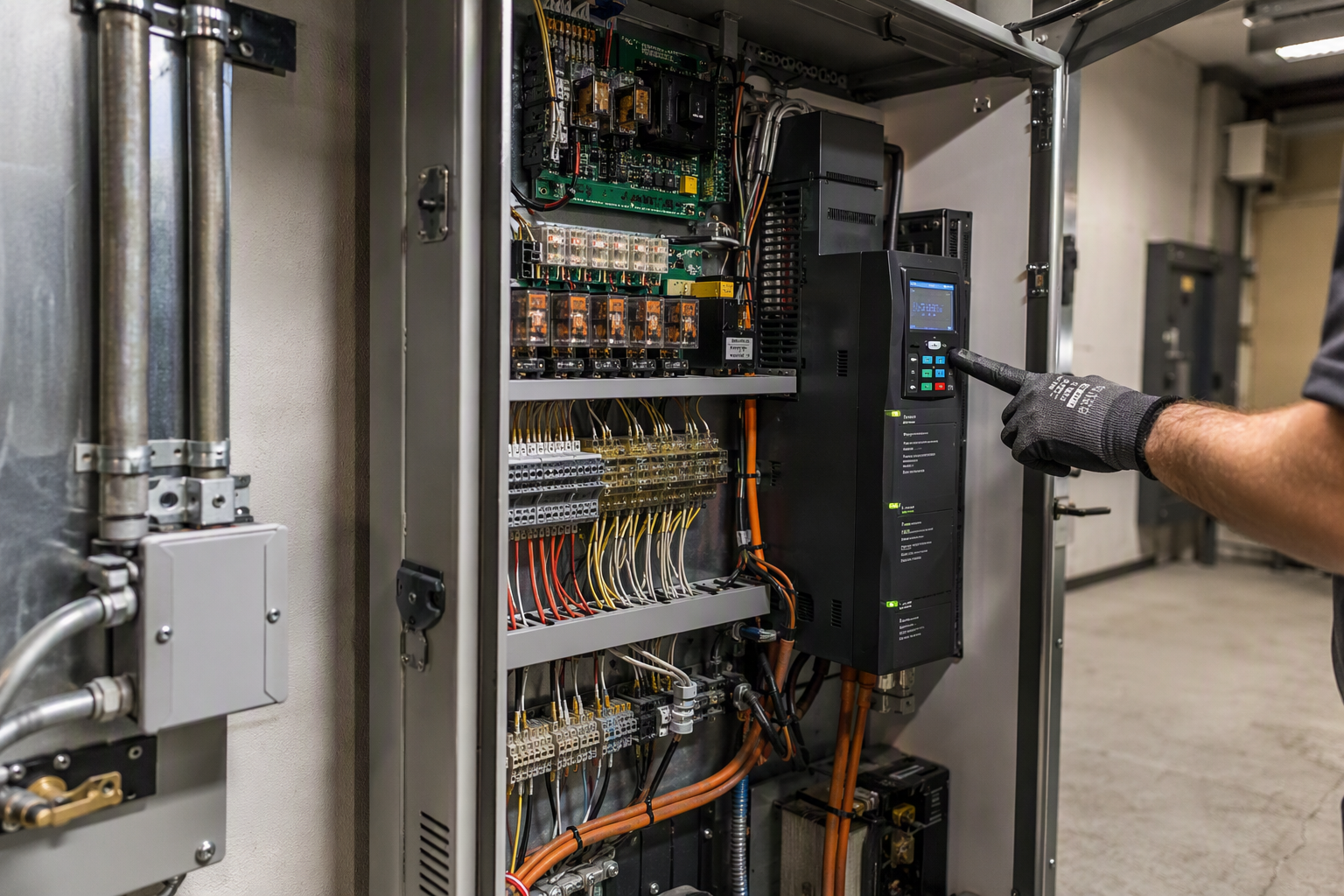
Connected elevator systems that transmit real-time performance data are moving from premium offerings to baseline expectations among major manufacturers. Sensor-driven diagnostics allow service providers to identify wear patterns before failures occur, reducing downtime and emergency call-outs.
2. Sustainability and Green Building Certification
Elevator systems are increasingly evaluated as part of LEED and WELL building certification processes. Regenerative drives that return energy to the building grid and low-oil or oil-free hydraulic alternatives are gaining traction as owners pursue sustainability targets.
3. Touchless and Hygienic Interfaces
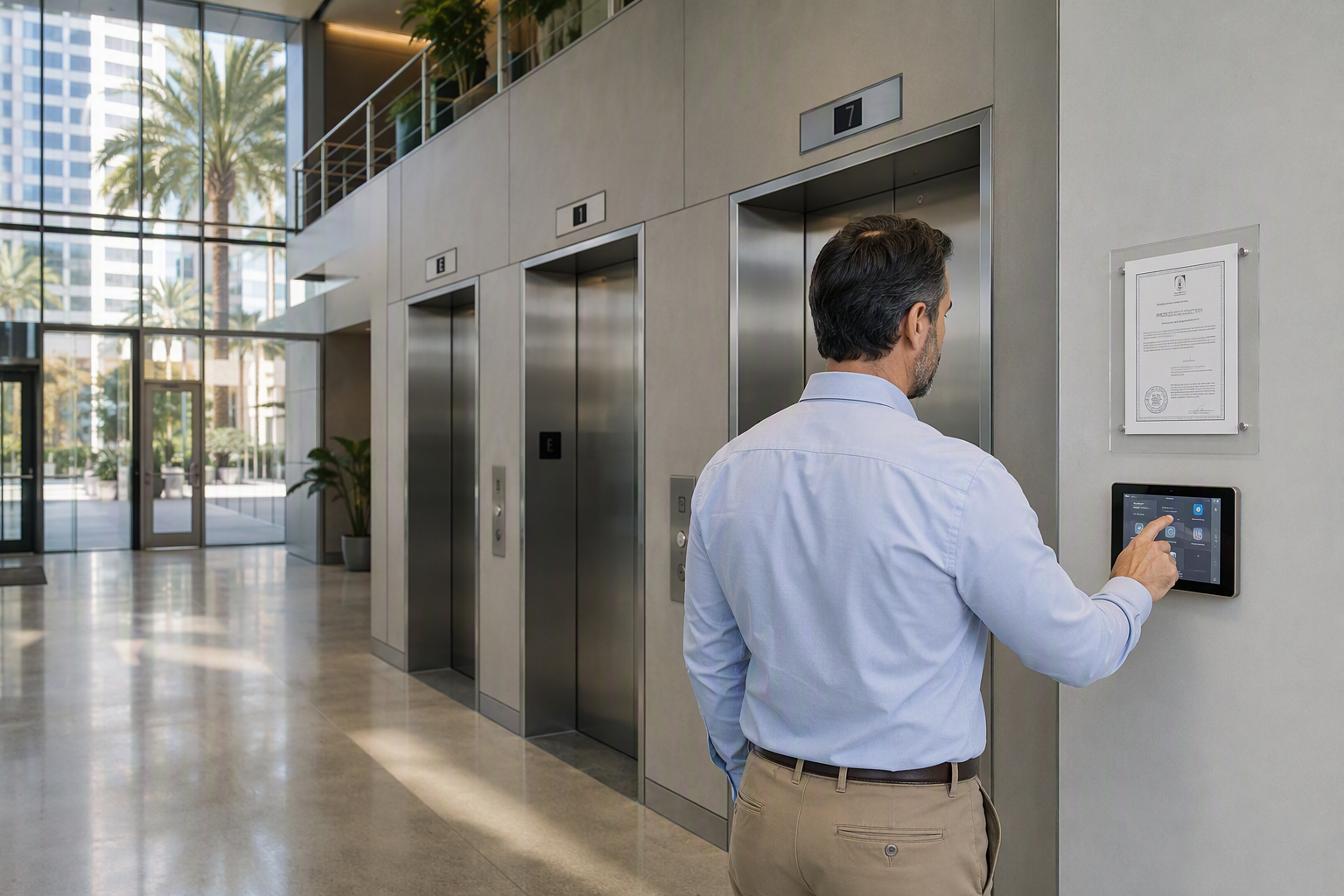
Post-pandemic demand for touchless call systems — including destination dispatch, smartphone-based calling, and proximity sensors — has persisted and expanded, particularly in healthcare and high-traffic commercial buildings.
4. Workforce and Supply Chain Pressures
The elevator service industry, like the broader skilled-trades sector, faces ongoing workforce development challenges. Trained elevator mechanics and inspectors remain in demand, and supply chain constraints on components — particularly semiconductors used in drive systems — have extended lead times for new installations and modernization projects.
5. Tightening State-Level Code Adoption
Several states are moving to adopt more recent editions of the ASME A17.1 and ASME A17.3 codes, introducing new retroactive requirements. Building owners with older equipment should proactively assess compliance exposure rather than waiting for inspection failures.
What Are the ADA Requirements for Elevator Accessibility in 2025?
The Americans with Disabilities Act and its associated ADA Standards for Accessible Design establish minimum requirements for elevator accessibility in public accommodations and commercial facilities. Key areas include:
- Cab dimensions: Minimum interior dimensions are specified to accommodate wheelchairs and mobility devices.
- Door timing: Doors must remain open long enough for a person using mobility aids to enter and exit safely.
- Control panel layout: Button heights, Braille labeling, and raised characters are required on elevator controls.
- Audible and visual signals: Hall lanterns and audible signals at each floor landing are required to assist users with vision or hearing impairments.
- Leveling accuracy: Cars must level within a specified tolerance at floor landings to prevent trip hazards for wheelchair users.
When a building undergoes alterations that affect or could affect accessibility, the ADA’s path-of-travel obligations may require bringing the elevator into current compliance even if the elevator itself is not being altered. Liftech Elevator assists clients in evaluating ADA compliance gaps as part of modernization planning.
What Does an Elevator Modernization Project Typically Involve?
A full modernization project typically addresses multiple systems within the elevator. The scope and sequence vary based on the age of the equipment and the jurisdiction’s code requirements, but the general process follows a structured path:
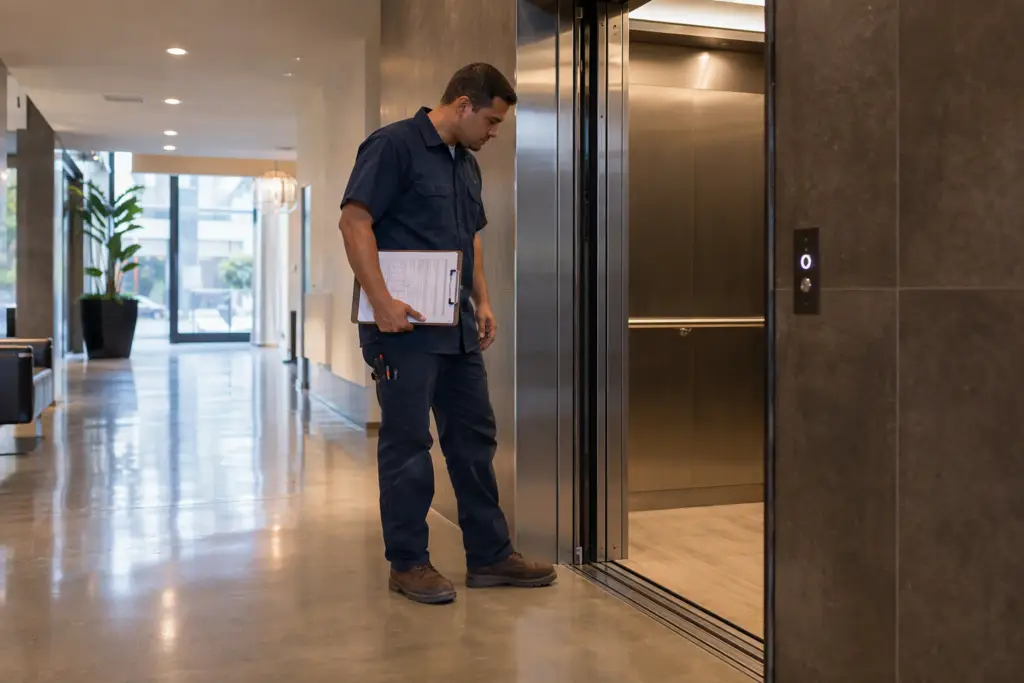
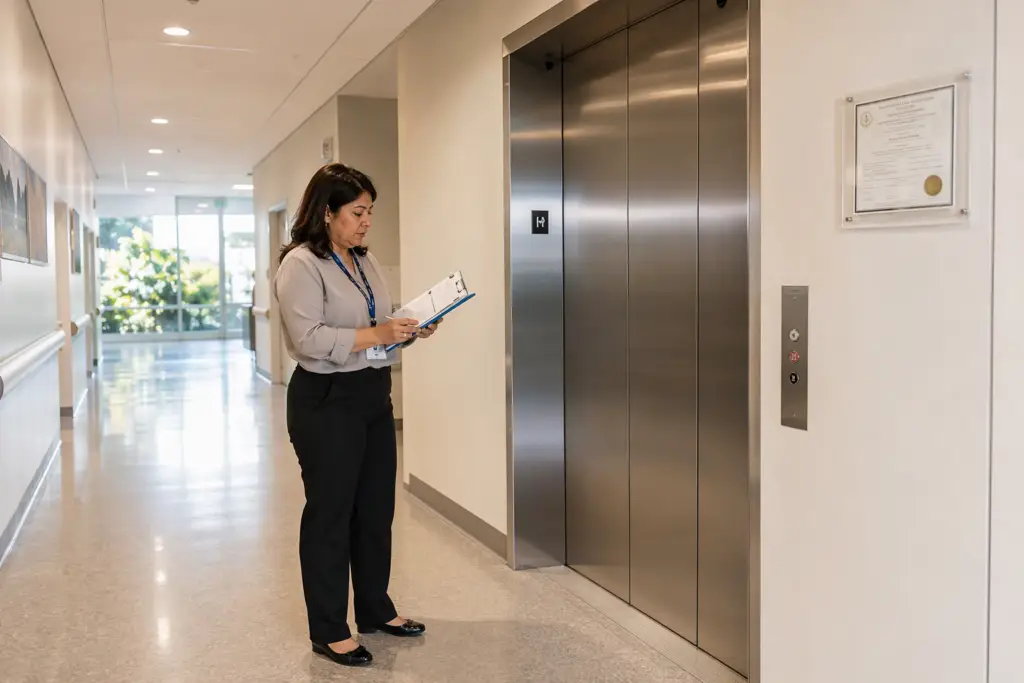
- Condition assessment: A qualified elevator professional inspects the existing installation to document the condition of the controller, drive, machine, cab, doors, and safety devices.
- Code and compliance review: The assessment identifies any gaps relative to the currently adopted edition of ASME A17.1 and ASME A17.3, as well as ADA accessibility requirements.
- Scope definition: Based on the assessment, the project scope is defined — ranging from a controls-only upgrade to a full gut-and-replace modernization.
- Permitting: Most jurisdictions require permit applications before modernization work begins. The authority having jurisdiction (AHJ) reviews plans and specifications.
- Installation: Modernization work is performed in phases to minimize building disruption. Work involving energized components falls under OSHA lockout/tagout and electrical safety standards.
- Inspection and testing: Upon completion, the elevator undergoes a full inspection and acceptance test witnessed by the AHJ or its designated inspector before returning to service.
- Documentation: Final test certificates, permits, and updated maintenance records are provided to the building owner.
How Do Elevator Safety Statistics Relate to Maintenance Frequency?
The relationship between maintenance regularity and elevator safety outcomes is well-recognized within the industry and reflected in code requirements. The ASME A17.1 Safety Code for Elevators and Escalators requires that maintenance be performed by qualified persons and that maintenance records be retained and available for inspection.
From a risk-management standpoint, the categories of incidents most associated with deferred maintenance include:
- Door-related entrapments and impacts — the most common source of elevator-related incidents nationally
- Leveling failures that create trip hazards at landings
- Safety device degradation, including governor and brake wear
- Hydraulic fluid leaks in older hydraulic systems
Because the specific incident data is compiled by jurisdictional bodies and not uniformly published in a single public database, Liftech Elevator presents this context qualitatively rather than citing unverifiable figures.
What OSHA Regulations Apply to Elevator Work?
OSHA standards apply to workers involved in elevator construction, alteration, maintenance, and inspection. Key applicable areas include:
- Lockout/Tagout (LOTO): Control of hazardous energy during maintenance and service operations is required under OSHA’s lockout/tagout standard.
- Electrical safety: Work in elevator machine rooms and pits involves exposure to electrical hazards addressed in OSHA’s electrical standards.
- Fall protection: Work on elevator tops and in hoistways requires fall protection measures consistent with OSHA’s walking-working surfaces standards.
- Confined space: Elevator pits may qualify as permit-required confined spaces under OSHA’s confined-space standard depending on pit depth and atmospheric conditions.
Contractors and building owners who retain elevator service companies should confirm that those companies maintain documented safety programs consistent with OSHA requirements.
How Should Building Owners Evaluate an Elevator Service Provider?
Selecting an elevator service company involves more than comparing price. Key evaluation criteria include:
- Code knowledge: The provider should demonstrate current familiarity with the edition of ASME A17.1 adopted in your jurisdiction.
- Documentation practices: Maintenance logs, inspection reports, and test certificates should be systematically produced and retained.
- Transparency on scope: A trustworthy provider will clearly differentiate between repairs required by code and those that are recommended for reliability or comfort.
- Emergency response capability: The provider should have a clear protocol for entrapment response and after-hours emergencies.
- ADA and accessibility expertise: For properties subject to the Americans with Disabilities Act, the provider should be able to assess and address accessibility compliance gaps.
Liftech Elevator approaches each client relationship with structured assessments grounded in current code requirements, giving building owners documentation they can rely on for compliance purposes and capital planning.
What Questions Should a Building Owner Ask Before an Elevator Modernization?
Before committing to a modernization project, building owners benefit from asking:
- Which edition of ASME A17.1 and A17.3 is currently adopted in my jurisdiction, and what retroactive requirements apply to my equipment?
- Does the existing installation comply with current ADA accessibility requirements, and will planned alterations trigger path-of-travel obligations?
- What is the expected useful life of the components being proposed for modernization, and which components are being retained?
- What permits are required, and who is responsible for obtaining them?
- How will the project be phased to minimize disruption to building occupants?
- What does the post-modernization maintenance program include, and what inspection intervals will apply?
How Does Elevator Regulation Vary by State?
One of the most important — and frequently overlooked — aspects of elevator compliance is that regulation in the United States is primarily state-administered. This means:
- Each state’s department of labor, building safety, or equivalent agency adopts and enforces elevator safety codes, typically based on ASME standards but often lagging the most current edition.
- Inspection intervals, licensing requirements for mechanics and inspectors, and permit processes differ meaningfully from state to state.
- Some municipalities have their own elevator inspection programs that operate in parallel or in place of the state program.
- Federal properties and federally assisted housing may have separate oversight channels.
Building owners with properties in multiple states should not assume uniform requirements. Liftech Elevator helps clients navigate jurisdictional variation as part of portfolio-level compliance planning.
Summary: Key Elevator Industry Takeaways for 2025
- The elevator industry’s growth is structural — driven by urbanization, an aging installed base, and tightening regulatory requirements that are not cyclical.
- Compliance with ASME A17.1 and A17.3 and ADA accessibility standards is a legal obligation, not an optional best practice.
- Modernization demand is accelerating as parts obsolescence, energy costs, and retroactive code requirements converge.
- Worker safety in elevator service work is governed by OSHA standards that apply to contractors and building owners alike.
- Predictive maintenance, sustainability, and digital integration are the defining technology trends shaping the industry through 2026.
- State-by-state regulatory variation means that portfolio owners must verify local code adoption rather than applying a single national standard.
Get a Professional Elevator Assessment for Your Property
Navigating elevator compliance, modernization planning, and maintenance requirements requires current code knowledge and a systematic approach to documentation. Liftech Elevator provides data-driven assessments that give building owners a clear picture of their compliance status and capital planning options — grounded in current ASME and ADA requirements.
Contact Liftech Elevator for a free elevator assessment: 562-609-3478
Need elevator service you can rely on? Liftech Elevator is ready to help.