Top Rated Elevator Maintenance Company in Signal Hill, CA: Complete FAQ Guide
Building owners, property managers, and facilities directors in Signal Hill have specific questions about elevator maintenance — from inspection schedules and compliance obligations to service contracts and modernization timelines. This comprehensive FAQ hub addresses the full range of questions surrounding professional elevator maintenance in Signal Hill, CA, drawing on applicable federal codes, California regulations, and industry best practices.
What makes an elevator maintenance company “top rated” in Signal Hill, CA?
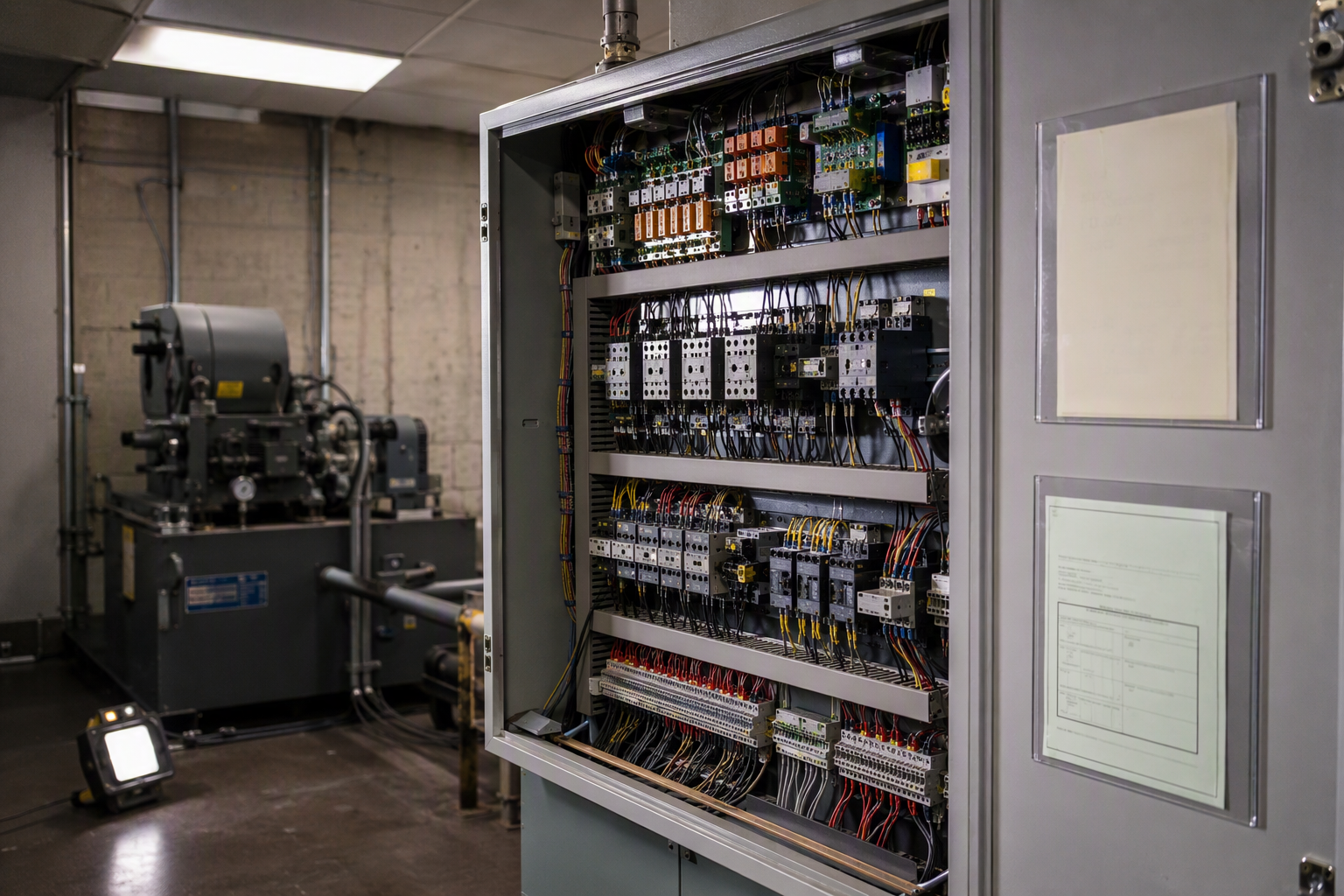
A top rated elevator maintenance company in Signal Hill holds appropriate California contractor licensing, demonstrates fluency in both ASME A17.1 Safety Code for Elevators and Escalators and California Division of Occupational Safety and Health (Cal/OSHA) Title 8 elevator regulations, and maintains documented service histories for every unit it services.
Beyond technical qualifications, a highly rated provider delivers clear communication about code compliance status, transparent maintenance records, and consistent technician quality across service visits. In Signal Hill — a compact city with a dense mix of commercial, industrial, and mixed-use properties — local knowledge of the Authority Having Jurisdiction (AHJ) and familiarity with the Long Beach area inspection ecosystem is a meaningful differentiator. Liftech Elevator serves Signal Hill and the surrounding region with exactly this combination of technical competence and local operational knowledge.
How often are elevators required to be inspected in California?
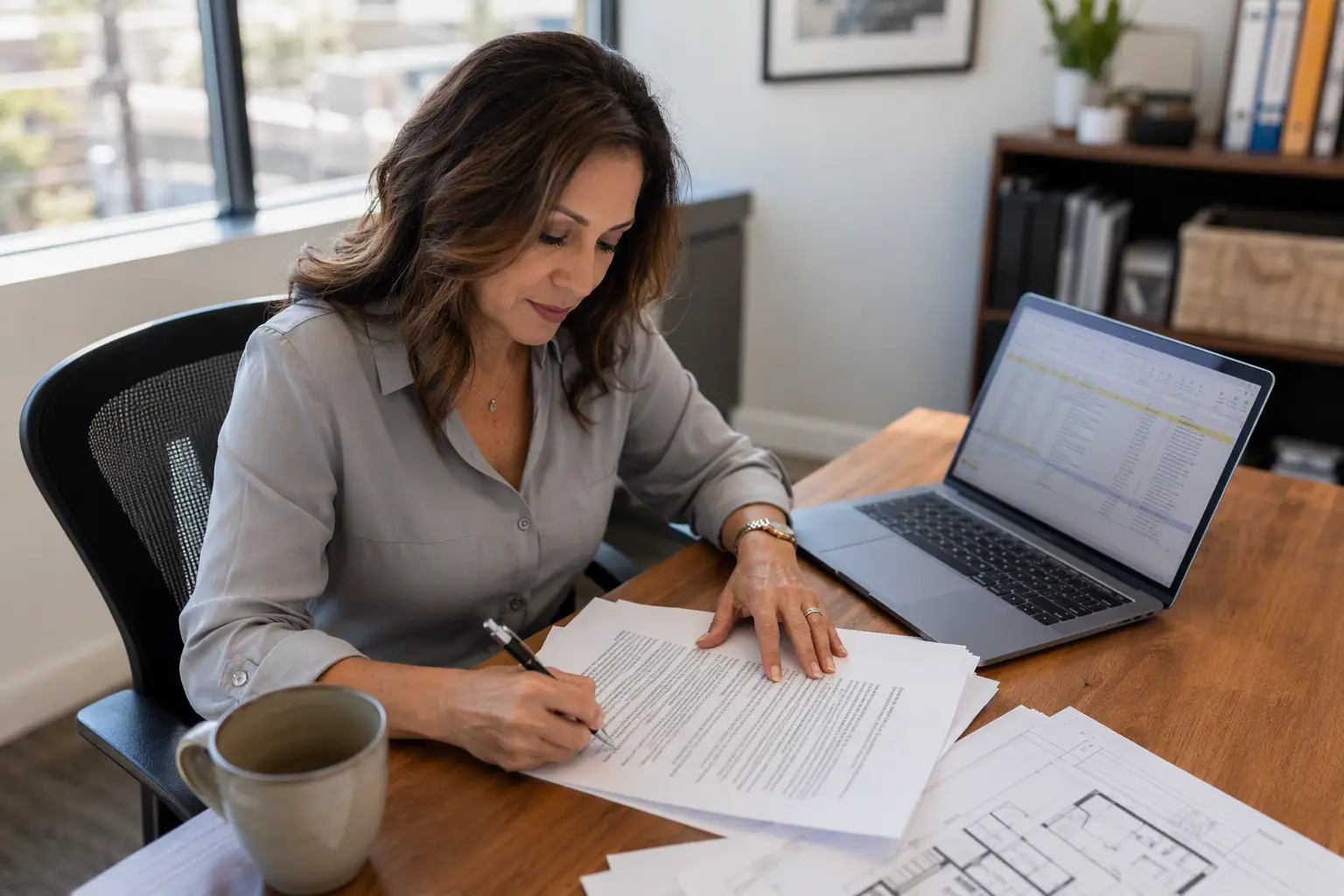
California requires elevators to undergo periodic inspections by a certified inspector, with the exact interval governed by Cal/OSHA Title 8 regulations and aligned with the ASME A17.1 Safety Code for Elevators and Escalators, which mandates periodic and annual inspections with witnessed tests at prescribed intervals.
In practical terms, most commercial and residential elevators in California must pass an annual inspection to maintain a valid operating permit. In addition to the standard annual inspection, full-load tests and other category tests (Category 1 and Category 5) are required on a defined cycle depending on the type of equipment, hydraulic system, and safety devices installed. Building owners are responsible for scheduling these inspections and ensuring that the elevator is accessible and in safe operating condition when the inspector arrives.
Failing to maintain current inspection permits can result in mandatory shutdown of the elevator, fines, and — critically — exposure to liability if an incident occurs during a lapsed permit period. A qualified maintenance provider such as Liftech Elevator tracks inspection schedules on behalf of clients and coordinates with the AHJ to keep permits current.
What is ASME A17.1 and why does it matter for Signal Hill building owners?
ASME A17.1 is the foundational Safety Code for Elevators and Escalators published by the American Society of Mechanical Engineers, and it establishes the design, construction, operation, inspection, testing, and maintenance requirements that California adopts as the basis for its elevator regulations.
For Signal Hill building owners, compliance with ASME A17.1 is not optional — it is incorporated into California law and enforced by Cal/OSHA’s Elevator, Ride, and Tramway Unit. The code covers everything from minimum pit depth and machine room ventilation to the performance requirements of safety devices such as governors, safeties, and buffers. When a maintenance company references ASME A17.1 compliance, it means every inspection, adjustment, and repair performed aligns with these enforceable requirements rather than informal or outdated practices.
What does a standard elevator maintenance contract typically include?
A standard elevator maintenance contract typically covers scheduled lubrication and adjustment visits, safety device testing, minor parts replacement, and coordination of required annual inspections — though the exact scope varies significantly depending on whether the contract is a “oil and grease” (basic) or “full-service” (comprehensive) agreement.
Building owners should carefully distinguish between contract tiers before signing:
| Contract Type | Typical Inclusions | Parts Coverage | Best Suited For |
|---|---|---|---|
| Oil & Grease (Basic) | Lubrication, minor adjustments, visual checks | None or minimal consumables | New equipment under manufacturer warranty |
| Examination & Adjustment | All basic items plus functional testing of safety devices | Limited wear items | Newer equipment, budget-conscious owners |
| Comprehensive (Full-Service) | All above plus major parts, repairs, and emergency callbacks | Most mechanical and electrical parts | Aging equipment, high-traffic buildings |
| Modernization-Inclusive | All comprehensive items plus upgrade planning and phased modernization | Full parts plus upgrade components | Equipment approaching end-of-life |
Liftech Elevator structures maintenance agreements to match the actual condition and usage profile of each elevator rather than applying a one-size-fits-all contract. Property managers in Signal Hill and Long Beach are encouraged to request a written scope of services before committing to any maintenance agreement.
What are the ADA requirements for elevators in commercial buildings?
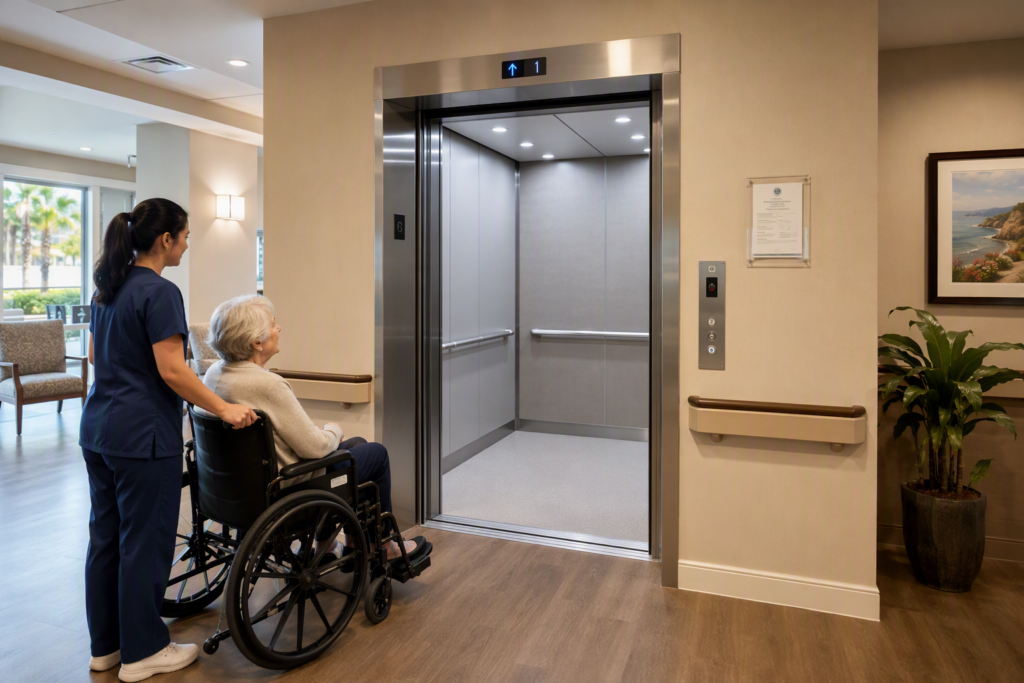
Under the Americans with Disabilities Act (ADA), elevators in multi-story commercial buildings must meet specific accessibility requirements covering cab dimensions, control panel height and tactile markings, door timing, leveling accuracy, and audible/visual signals.
Key ADA elevator provisions include requirements for Braille and raised character floor designations, door reopening devices that detect obstruction, floor-level accuracy within a defined tolerance to allow smooth entry and exit for wheelchair users, and voice announcements in larger buildings. For Signal Hill property owners, ADA compliance is an ongoing obligation — not a one-time installation check. Maintenance practices directly affect compliance: a door that closes too quickly due to a maladjusted operator, or a cab that consistently mislevels by more than the permitted tolerance, creates an ADA violation even if the elevator was originally installed to code.
How do I know if my elevator needs modernization versus routine maintenance?
An elevator typically requires modernization rather than routine maintenance when recurring breakdowns, obsolete parts availability, inability to meet current code requirements, or significant energy inefficiency make continued patch repairs economically and operationally unsustainable.
Key indicators that point toward modernization include: controllers that are no longer supported by the manufacturer, hydraulic systems with outdated underground cylinders that pose environmental risk, relay logic control systems that lack modern diagnostic capability, and safety devices that cannot be upgraded to meet current ASME A17.3 Safety Code for Existing Elevators and Escalators requirements. A qualified elevator maintenance provider will conduct a condition assessment that documents the age, component status, parts availability, and compliance gap of the existing installation — giving the building owner a factual basis for the modernization-versus-repair decision.
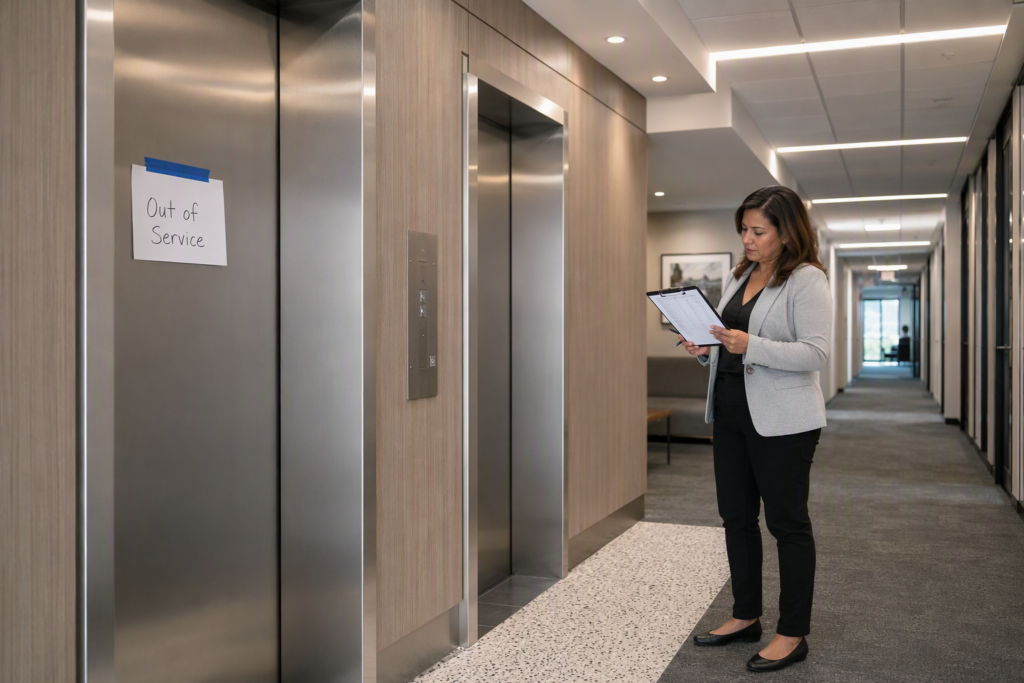
What should I do immediately if an elevator malfunctions or traps passengers?
A passenger entrapment is a life-safety event requiring a structured, calm response that prioritizes passenger safety and coordinates emergency services appropriately.
- Call 911 immediately if passengers report distress, medical concerns, or if the car is stopped between floors in a position that could pose a fall risk upon opening.
- Communicate with trapped passengers through the emergency phone or intercom inside the cab — assure them that help is on the way and instruct them not to attempt to pry open doors or exit the car.
- Contact your elevator maintenance provider’s emergency line to dispatch a certified technician.
- Do not allow untrained building staff or bystanders to attempt a manual rescue — improper procedures can result in injury from moving counterweights, hydraulic movement, or fall hazards at the hoistway entrance.
- Secure the area around the elevator entrance on all floors to prevent others from attempting to force doors.
- Document the time of malfunction, the floor location, and any observations about the elevator’s behavior immediately prior to the stoppage — this information assists the technician in rapid diagnosis.
- After the event, ensure a full inspection is completed by a certified technician before returning the elevator to service.
How does Cal/OSHA regulate elevator maintenance companies operating in Signal Hill?
California’s Division of Occupational Safety and Health (Cal/OSHA) oversees the Elevator, Ride, and Tramway (ERT) Unit, which licenses elevator inspectors, issues permits to operate, and enforces maintenance and safety standards for elevators in commercial and residential buildings throughout the state, including Signal Hill.
Elevator mechanic certification in California is governed by Cal/OSHA, which requires that mechanics performing certain categories of work hold appropriate certifications. Building owners have a corresponding obligation to ensure that the companies they hire employ properly certified personnel. Maintenance logs, inspection reports, and test records must be retained and made available to inspectors upon request. Non-compliant building owners can face stop-work orders, civil penalties, and the revocation of operating permits.
What is the difference between preventive maintenance and corrective maintenance for elevators?
Preventive maintenance consists of scheduled, proactive servicing — lubrication, adjustment, cleaning, and testing — performed at regular intervals to prevent failures, while corrective maintenance is reactive repair work performed after a component has failed or a deficiency has been identified.
A robust elevator maintenance program prioritizes preventive work because it reduces downtime, extends component life, controls costs over time, and supports consistent compliance with ASME A17.1 requirements. Corrective-only approaches tend to result in higher total lifecycle costs, more frequent entrapments, and greater difficulty passing annual inspections. The optimal maintenance frequency for any given elevator depends on traffic volume, equipment age, and the type of drive system — factors that a qualified provider such as Liftech Elevator assesses during an initial site evaluation.
How long does elevator modernization typically take?
The duration of an elevator modernization project varies based on the scope of work, equipment lead times, building access constraints, and permit processing timelines — but partial modernizations (such as controller replacement only) often take days to a couple of weeks, while full modernizations involving cab, machine, and control replacement can take several weeks to a few months.
In Signal Hill and the broader Los Angeles County area, permit processing through the AHJ is a variable that experienced contractors plan for proactively. Submitting complete permit documents, coordinating inspector availability, and sequencing the shutdown period to minimize occupant disruption are hallmarks of a well-managed modernization project. Building owners should request a detailed project schedule — with milestones for permit submittal, equipment delivery, installation, testing, and final inspection — before work begins.
What types of elevators does a full-service maintenance company in Signal Hill service?
A full-service elevator maintenance company in Signal Hill typically services traction elevators (geared and gearless), hydraulic elevators (conventional and MRL-style), machine-room-less (MRL) traction elevators, limited-use/limited-application (LU/LA) elevators, and platform lifts — each with distinct maintenance requirements under ASME A17.1.
Signal Hill’s building stock includes a mix of low-rise commercial properties, industrial facilities, and residential buildings that collectively feature a range of elevator types. Hydraulic elevators are common in low-rise applications, while traction systems are prevalent in mid-rise structures. Each drive type has its own lubrication schedule, safety device configuration, and inspection category requirements. A maintenance provider with experience across all equipment types offers a significant advantage over one that specializes narrowly.
How do I compare elevator maintenance companies before choosing one in Signal Hill?
Comparing elevator maintenance companies in Signal Hill requires evaluating technical qualifications, contract terms, local service capability, compliance track record, and transparency of documentation — not simply price.
A structured evaluation should include the following criteria:
- California contractor licensing: Verify the company holds an active California Contractors State License Board (CSLB) license in the appropriate classification.
- Certified mechanic workforce: Confirm that field technicians hold current California elevator mechanic certifications as required by Cal/OSHA.
- Contract scope transparency: Request a line-item breakdown of what is and is not included in the proposed contract tier.
- Inspection coordination: Ask whether the company manages permit renewals and inspection scheduling on the building owner’s behalf.
- Service documentation: Verify that detailed written reports are provided after every maintenance visit, not just verbal updates.
- Local references: Request references from other Signal Hill, Long Beach, or Los Angeles County properties of similar type and elevator count.
- Emergency response capability: Confirm that emergency callback service is available and that the contractual terms define the scope of emergency coverage clearly.
What are the consequences of deferred elevator maintenance for Signal Hill property owners?
Deferred elevator maintenance in Signal Hill exposes property owners to elevator shutdowns by Cal/OSHA, civil liability for injuries resulting from neglected safety devices, ADA enforcement actions, and significantly higher repair costs when minor issues progress into major component failures.
From a legal standpoint, California property owners have a non-delegable duty to maintain elevators in a safe condition for occupants. If a passenger is injured and maintenance records show chronic deferrals, missed inspections, or unaddressed deficiencies, that documentation becomes evidence of negligence. Beyond liability, equipment that is not regularly maintained deteriorates faster, meaning that a building owner who defers maintenance to save short-term costs typically faces accelerated modernization timelines and more disruptive capital expenditures.
What is ASME A17.3 and how does it apply to existing elevators in Signal Hill?
ASME A17.3 is the Safety Code for Existing Elevators and Escalators, which establishes the retroactive safety requirements that existing installations must meet — even if they were compliant at the time of original installation — and it is a critical reference for any Signal Hill building with older elevator equipment.
Unlike ASME A17.1, which governs new installations, ASME A17.3 addresses the large installed base of elevators that predate current code editions. California adopts ASME A17.3 provisions through its regulatory framework, meaning that a 1980s-era hydraulic elevator may be subject to retroactive requirements for pit stop switches, car enclosure integrity, or emergency lighting that did not exist when it was installed. Identifying and addressing these retroactive requirements is a key component of a compliance-focused maintenance program.
How do maintenance logs and documentation protect Signal Hill building owners?
Complete, accurate maintenance logs protect Signal Hill building owners by demonstrating due diligence in safety compliance, supporting insurance claims, providing evidence in the event of litigation, and giving Cal/OSHA inspectors the documentation they require during permit inspections.
California regulations require that certain records be maintained for elevators and be available at the premises or upon request. A maintenance provider that delivers written reports after every visit — including the date, work performed, parts replaced, deficiencies noted, and technician identification — creates a defensible paper trail. Conversely, verbal-only reporting or spotty record-keeping leaves building owners unable to demonstrate that required maintenance was performed. Liftech Elevator provides documented service records as a standard element of its maintenance program, giving clients the transparency needed to manage compliance proactively.
What role does elevator maintenance play in building energy efficiency?
Properly maintained elevators consume less energy than neglected units because well-lubricated components reduce friction losses, correctly adjusted hydraulic systems minimize pump cycling, and modern control systems — which may be part of a modernization package — can incorporate regenerative drives and standby modes that reduce overall power consumption.
For Signal Hill commercial building owners pursuing LEED certification or seeking to reduce operating costs, elevator energy efficiency is a meaningful line item. Hydraulic elevators in particular benefit from regular fluid condition monitoring and pump adjustment, as degraded fluid and worn pump seals increase energy demand. Traction elevators with older relay logic controllers can see significant efficiency improvements through controller modernization that incorporates variable-frequency drives. A maintenance provider that understands the energy dimension of elevator performance adds value beyond mere compliance.
What is the permit-to-operate process for elevators in Signal Hill, CA?
In Signal Hill and throughout California, elevators must hold a current permit to operate issued by the Authority Having Jurisdiction (AHJ) — typically Cal/OSHA’s Elevator, Ride, and Tramway Unit — which is renewed annually following a satisfactory periodic inspection.
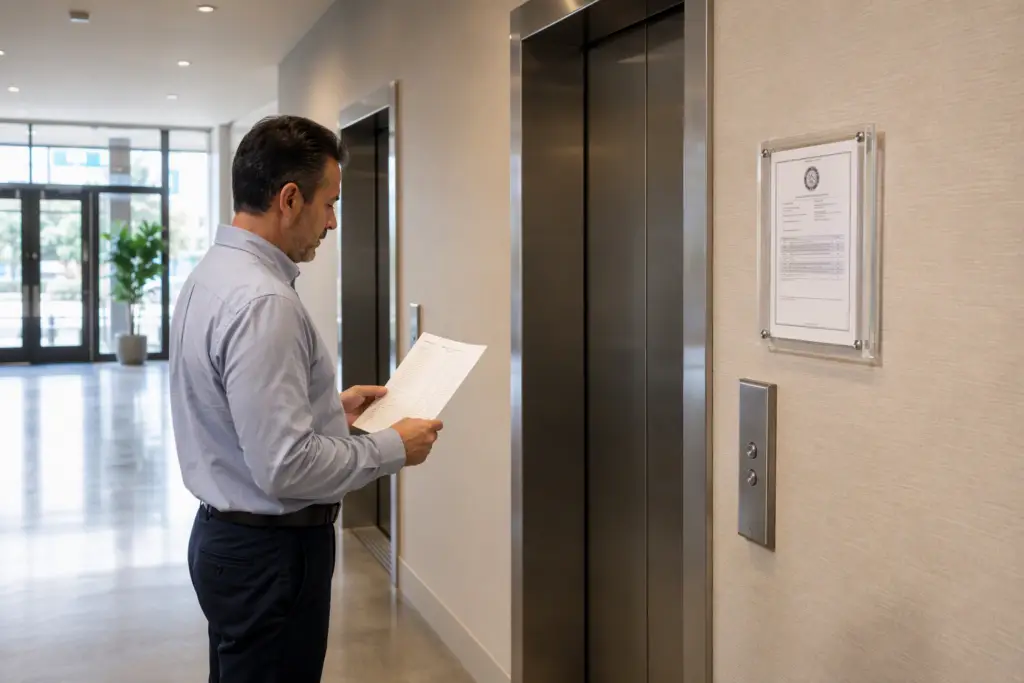
The process generally involves the building owner or their designated maintenance contractor scheduling a periodic inspection with a Cal/OSHA-approved inspector, passing the inspection with no unresolved safety violations, paying the applicable permit fee, and posting the permit in or near the elevator cab as required. If deficiencies are found during an inspection, the owner is given a timeframe to correct them before the permit is issued or renewed. Operating an elevator without a valid permit is a violation of California law and can result in the elevator being ordered out of service immediately. A proactive maintenance provider tracks permit expiration dates and schedules inspections with adequate lead time to address any pre-inspection deficiencies.
How should Signal Hill property managers evaluate an elevator’s remaining useful life?
Evaluating an elevator’s remaining useful life requires a formal condition assessment that examines the age and obsolescence of major components — controller, machine, hydraulic power unit, cab, and safety devices — parts availability from the original manufacturer, and the frequency and cost trend of recent repairs.
There is no universal industry-standard lifespan figure that applies uniformly across all elevator types and usage conditions, so a qualified assessment by a credentialed elevator professional is more reliable than any rule of thumb. The assessment should produce a written report that categorizes components by condition (good, marginal, or end-of-life), identifies any items that are out of compliance with current ASME A17.3 retroactive requirements, and provides a cost comparison between continued maintenance, partial modernization, and full modernization. Liftech Elevator offers this type of structured assessment for property owners in Signal Hill, Long Beach, Los Angeles, and Orange County who need an objective basis for capital planning decisions.
What questions should a Signal Hill building owner ask before signing an elevator maintenance contract?
Before signing an elevator maintenance contract, building owners should ask pointed questions about scope, exclusions, technician qualifications, escalation procedures for major repairs, and contract termination terms — vague answers to any of these questions are a meaningful warning sign.
Recommended questions include:
- What specific tasks are performed during each scheduled maintenance visit, and how frequently are those visits scheduled?
- Which parts and repairs are explicitly excluded from this contract?
- How are major repair needs communicated and approved before work proceeds?
- Who is the designated point of contact for my building, and how is escalation handled if routine service is insufficient?
- Does the contract include coordination of the annual Cal/OSHA inspection, and are any resulting corrective repairs covered?
- What are the contract term length and early termination provisions?
- How are maintenance records delivered, and in what format are they retained?
- Is emergency callback service included, and what constitutes an emergency under this agreement?
Why do Signal Hill property owners choose Liftech Elevator for elevator maintenance?
Signal Hill property owners choose Liftech Elevator because it combines technical fluency in California-specific elevator codes, structured maintenance documentation, and a service territory that spans Signal Hill, Long Beach, Los Angeles, and Orange County — making it a practical single-source provider for multi-property portfolios.
A top rated elevator maintenance company is defined not just by technical competence but by operational reliability: showing up on schedule, completing work thoroughly, documenting it accurately, and proactively communicating compliance risks before they become permit violations or safety incidents. Liftech Elevator structures its maintenance programs around these principles, giving building owners in Signal Hill a maintenance partner that manages the complexity of California elevator compliance on their behalf rather than leaving that burden to the building owner.
Ready to Schedule Your Elevator Assessment?
Building owners and property managers in Signal Hill, Long Beach, Los Angeles, and Orange County can take the first step toward full elevator compliance and optimized performance today.
Contact Liftech Elevator for a free elevator assessment — call 562-609-3478 to speak with a certified elevator service professional.
Liftech Elevator serves Signal Hill CA, Long Beach CA, Los Angeles CA, and Orange County CA with maintenance, inspection, modernization, and repair services aligned with ASME A17.1 and A17.3 Safety Codes and ADA accessibility requirements.
Need elevator service you can rely on? Liftech Elevator is ready to help.