Hydraulic Elevator Leak Repair Quotes: Everything Building Owners Need to Know
Can a building owner get a quote for repairing a hydraulic elevator leak?
Yes — any Cal/OSHA-certified Qualified Conveyance Company (CQCC) operating in California can provide a repair quote after completing a diagnostic inspection of the hydraulic system.
A quote for hydraulic elevator leak repair is not a simple flat-rate figure. The final scope depends on where the leak originates — whether that is the cylinder, the piston rod, the hydraulic power unit, underground piping, or the control valve assembly — as well as the age of the unit, the type of hydraulic fluid in use, and whether the repair triggers a material alteration requiring a Cal/OSHA permit before work begins. Responsible companies will not issue a binding quote without first inspecting the system, because an undersized or oversized repair scope creates liability for the building owner and the contractor alike.
Liftech Elevator provides diagnostic assessments for hydraulic systems across Signal Hill, Long Beach, Los Angeles, and Orange County, helping property owners understand the full scope of work before committing to a repair contract.
What causes hydraulic leaks in elevator systems?
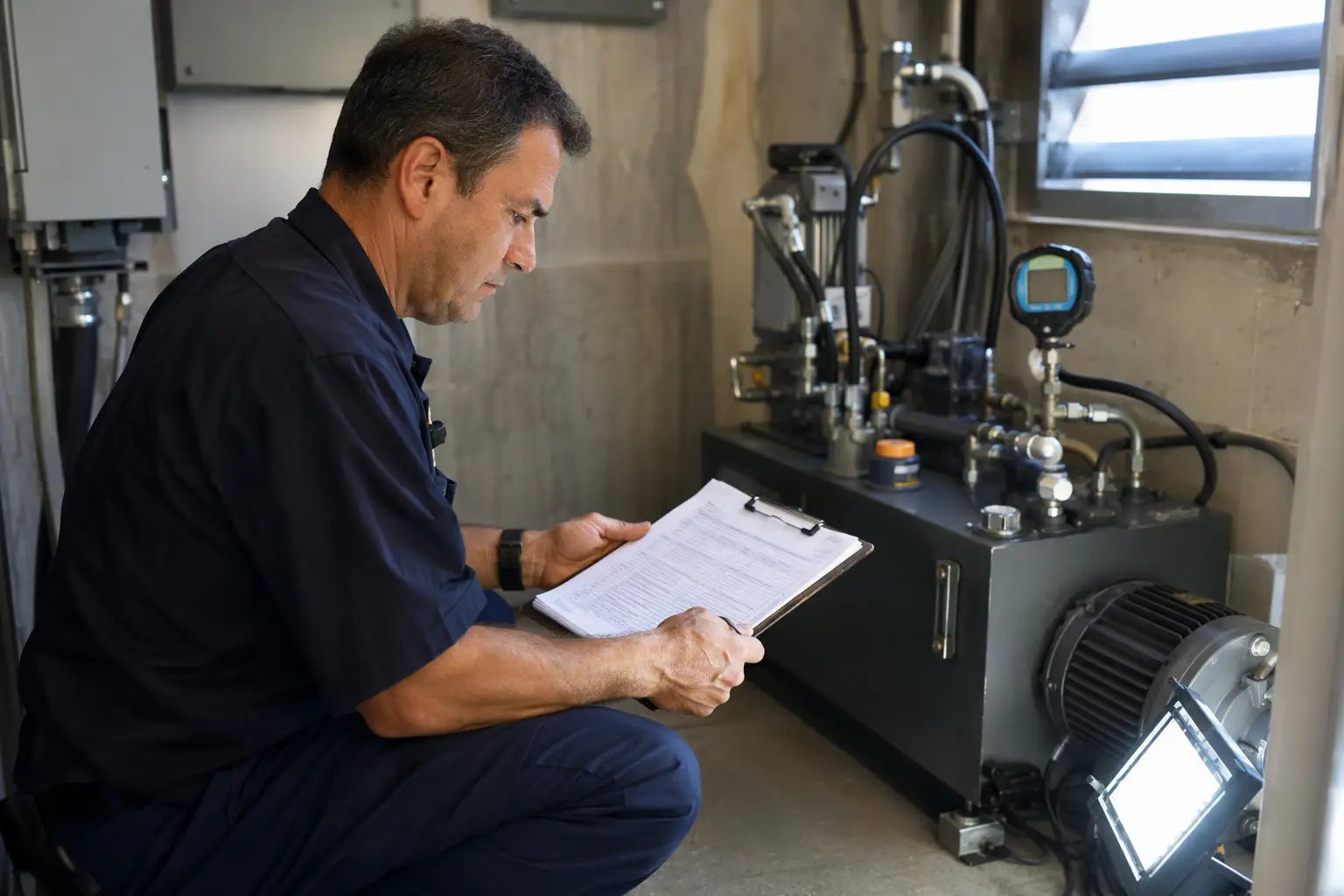
Hydraulic elevator leaks originate from a predictable set of failure points that worsen over time if left unaddressed.
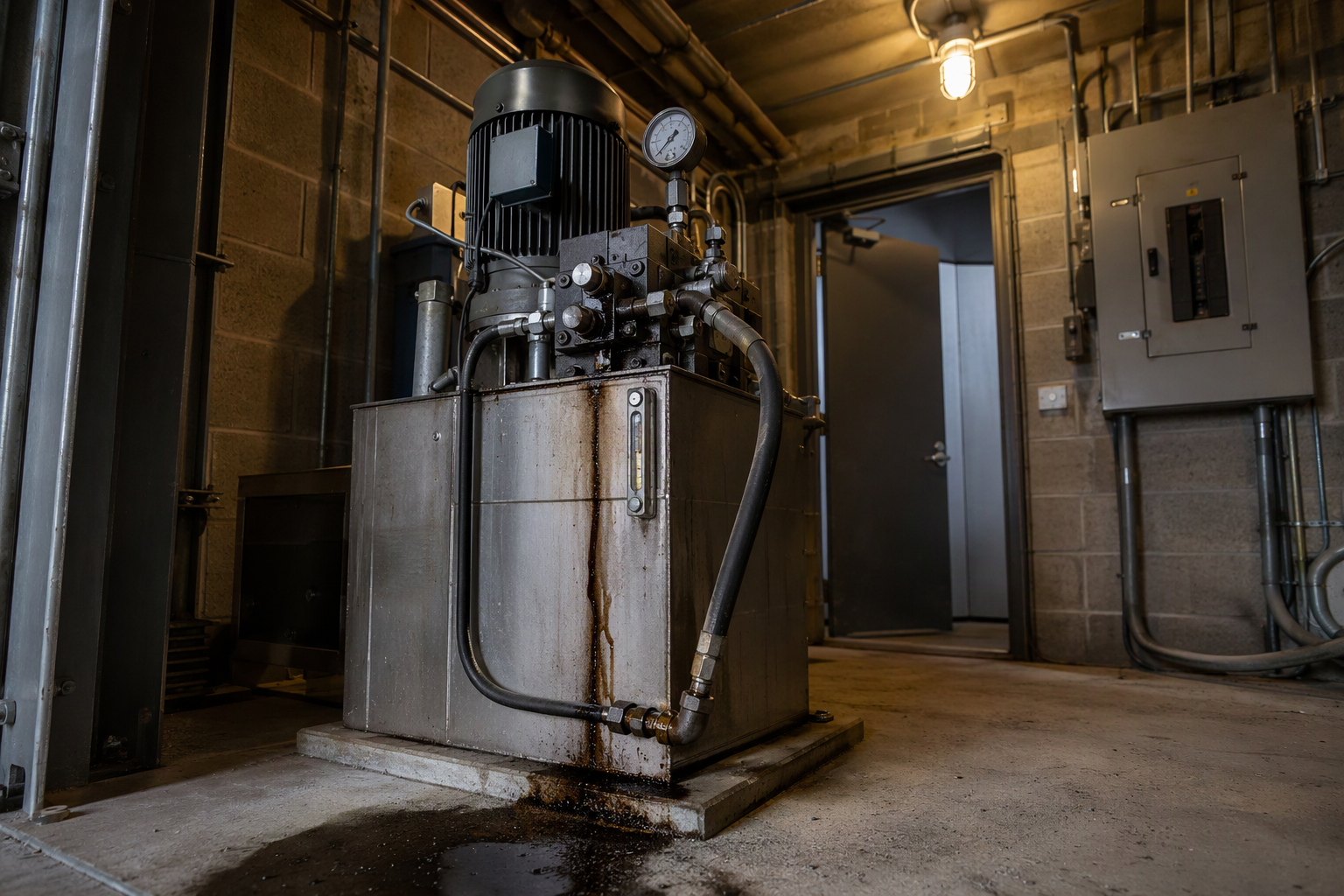
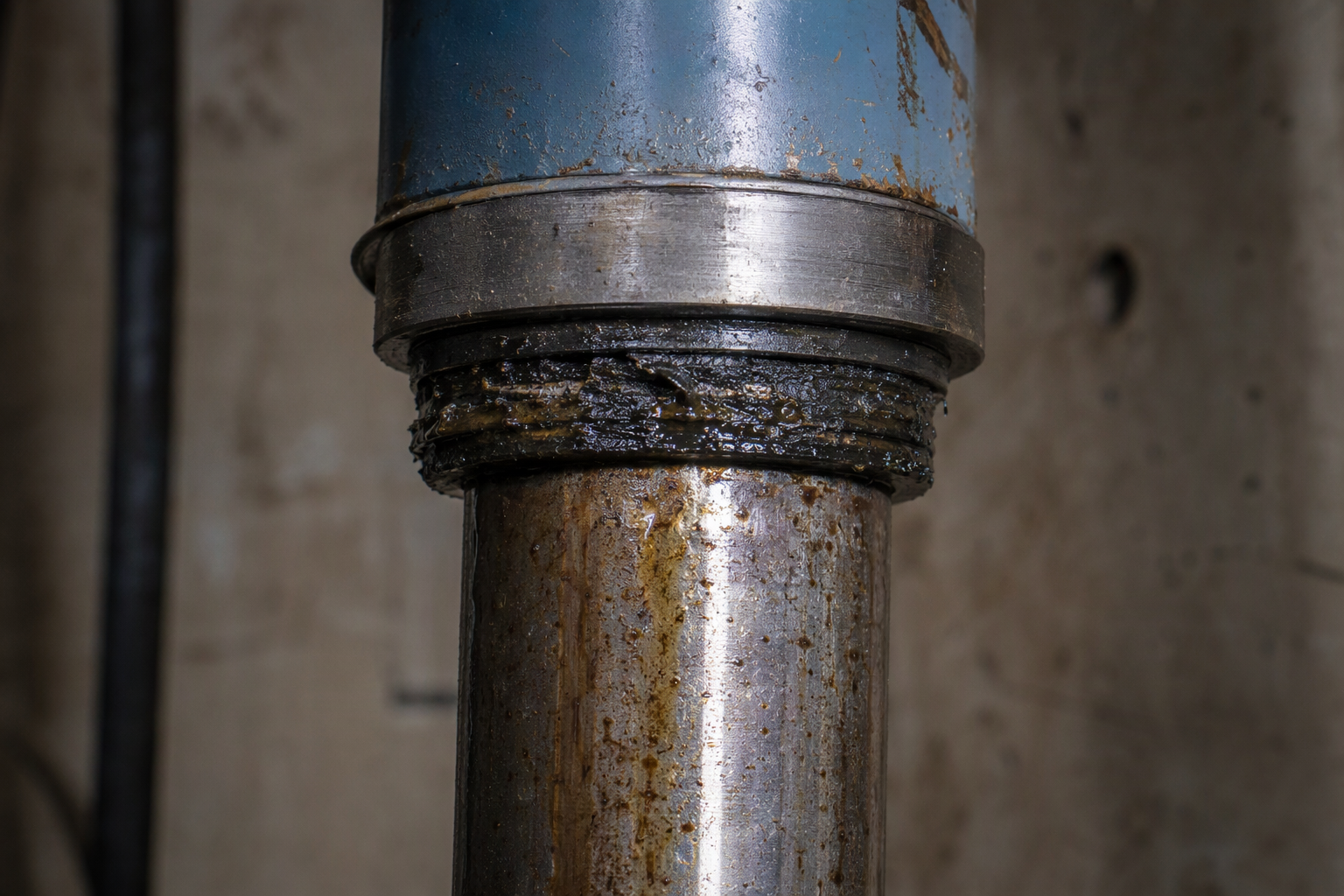
The most common sources include deteriorated cylinder seals and piston rod packings, corrosion or pinhole failures in buried single-bottom cylinders, cracked or loose hydraulic hose connections at the power unit, failing control valve gaskets, and aging hydraulic fluid that has broken down and is attacking rubber seals from the inside. Underground hydraulic cylinders installed before modern double-bottom and PVC-sleeved designs are a persistent concern in California because many buildings still operate equipment installed under earlier code editions.
Under the ASME A17.1 Safety Code for Elevators and Escalators, hydraulic elevator systems must meet specific requirements for cylinder design, pressure relief, and leak containment. California has adopted ASME A17.1/CSA B44, 2004 edition, in its Group IV Elevator Safety Orders under Title 8 of the California Code of Regulations, Sections 3000–3146. A California Standards Board public hearing held on June 18, 2026, addressed a proposed Group V update that would incorporate portions of ASME A17.1-2019, though no effective date has been posted as of mid-2026.
Why does a diagnostic inspection have to come before a quote?
A certified mechanic must physically inspect the hydraulic system before a repair quote can be accurate, because the visible symptom — fluid on the floor or a slowly sinking car — rarely reveals the full scope of the underlying problem on its own.
During a diagnostic inspection, a Certified Competent Conveyance Mechanic (CCCM) will check the cylinder and piston for wear and corrosion, perform a pressure test on the hydraulic circuit, inspect the power unit tank, hoses, fittings, and control valve, and evaluate whether the hydraulic fluid shows signs of contamination or chemical breakdown. Only after this assessment can a company accurately describe the parts required, the labor hours involved, whether fluid must be drained and replaced, and whether environmental containment or soil remediation may be needed for an underground cylinder leak. Skipping the inspection and quoting from a symptom description alone is a red flag in a potential service provider.
What does hydraulic leak repair typically involve?
Hydraulic elevator repair encompasses a range of tasks that vary significantly in complexity depending on where the leak is located and how long it has been developing.
Minor repairs — such as replacing a worn piston rod seal or tightening a hose fitting — are relatively straightforward jobs that a CCCM can complete in a single service visit. More involved repairs include replacing the entire hydraulic power unit, resealing or relining the cylinder, or addressing an underground single-bottom cylinder failure, which may require excavation, environmental assessment under applicable California environmental regulations, and coordination with the local authority having jurisdiction. Fluid-related repairs also require proper disposal of petroleum-based or biodegradable hydraulic fluid in compliance with applicable waste disposal requirements.
In all cases, California Labor Code Sections 7300–7324.2 require that only a CCCM working for a CQCC-certified company may perform the repair work.
Is a Cal/OSHA permit required before hydraulic leak repairs begin?
Yes — if the repair constitutes a material alteration of the elevator, California law requires a Cal/OSHA permit before any work begins.
Under California’s Elevator Safety Orders, a permit from Cal/OSHA is required before a conveyance is materially altered. Replacing a cylinder, relining the jack assembly, or upgrading the hydraulic power unit are examples of work that typically qualifies as a material alteration. Routine maintenance tasks such as packing replacement or minor hose repair generally do not require a separate permit beyond the elevator’s existing permit to operate, but the distinction between routine maintenance and material alteration is one that the CQCC and the local authority having jurisdiction must evaluate for the specific scope of work. The building’s CQCC contractor is responsible for making that determination and filing the appropriate documentation with Cal/OSHA before work begins.
Who is legally authorized to repair a hydraulic elevator in California?
Only a Certified Competent Conveyance Mechanic (CCCM) employed by a Certified Qualified Conveyance Company (CQCC) may legally perform hydraulic elevator repairs in California.
These certifications are issued by Cal/OSHA’s Elevator Unit within the California Department of Industrial Relations. The CQCC certification requires the company to hold a current C-11 Elevator Contractor license issued by the California Contractors State License Board (CSLB), along with active workers’ compensation and liability insurance. The CCCM certification is required for any mechanic who works on elevator equipment without direct supervision. Both certifications are renewed every two years and require at least eight hours of continuing education per renewal cycle. Building owners should request current CQCC certification documentation and CCCM credentials from any contractor before authorizing repair work.
What information should a building owner gather before requesting a hydraulic repair quote?
Having key system documentation ready before contacting a service company accelerates the quoting process and helps the mechanic arrive prepared for the diagnostic inspection.
Useful information to gather includes the elevator’s make, model, and installation year; the current permit to operate number posted in the car; the most recent inspection report from Cal/OSHA or, for Los Angeles properties, from the Los Angeles Department of Building and Safety (LADBS), which operates its own conveyance inspection program; maintenance history records; any prior repair invoices referencing the hydraulic system; and a description of how the leak is presenting — floor staining, fluid pooling in the pit, a sinking car at rest, or a combination of these. The more complete this picture, the more efficiently the diagnostic inspection can be structured and the more accurate the resulting quote will be.
How does the quoting process work with Liftech Elevator?
Liftech Elevator approaches hydraulic repair quotes through a structured diagnostic process that begins with a site assessment before any repair scope or pricing is committed to writing.
A CCCM mechanic from Liftech Elevator reviews the elevator’s operational history, inspects the hydraulic circuit from the cylinder through the power unit, and identifies the leak source. Once the diagnostic is complete, the scope of repair is documented in detail — parts, labor, fluid disposal, permit requirements, and inspection coordination — so the building owner receives a quote that reflects the actual work required rather than a low-entry estimate that expands after the job begins. Liftech Elevator serves building owners across Signal Hill, Long Beach, Los Angeles, and Orange County.
What is the difference between a hydraulic elevator repair quote and a maintenance contract proposal?
A repair quote addresses a specific, identified failure, while a maintenance contract proposal covers ongoing preventive care designed to reduce the likelihood of future failures — and these are two separate commercial documents with different cost structures.
A repair quote will itemize the parts and labor for the specific hydraulic work required, any permit fees, fluid costs, and disposal. A maintenance contract typically covers routine lubrication, adjustment, inspection, and minor parts replacement on a recurring basis, and in California, holding a full maintenance contract with a CQCC-licensed company is the condition under which Cal/OSHA may issue a permit to operate for up to two years rather than the standard one-year term. Building owners evaluating a repair quote should also ask the contractor about maintenance contract options, because a neglected hydraulic system that is repaired without a subsequent maintenance plan frequently develops the same or related failures within a short period.
What are the most common hydraulic elevator leak repair scenarios and how do they compare?
The scope and complexity of hydraulic leak repairs vary considerably depending on the failure point, and understanding the differences helps building owners evaluate quotes they receive.
| Leak Source | Typical Repair Scope | Permit Required (CA) | Environmental Concern | Typical Downtime |
|---|---|---|---|---|
| Piston rod packing / seal | Packing replacement, fluid top-off | Generally no (routine maintenance) | Low | Hours to one day |
| Hydraulic hose or fitting | Hose replacement, connection inspection | Generally no (routine maintenance) | Low | Hours to one day |
| Control valve / gasket | Valve rebuild or replacement | Depends on scope | Low to moderate | One to several days |
| Power unit tank or pump | Power unit rebuild or replacement | Likely yes (material alteration) | Moderate | Several days to one week |
| Underground single-bottom cylinder | Excavation, cylinder replacement or relining, possible soil assessment | Yes (material alteration) | High — fluid in soil | Weeks |
These ranges are illustrative; actual downtime and permit requirements depend on the specific system, the AHJ, and site conditions. A CQCC contractor is the appropriate party to confirm permit obligations for any specific repair scope.
What happens if a hydraulic elevator leak is not repaired promptly?
An unrepaired hydraulic leak does not stabilize on its own — it progresses in a predictable pattern that creates escalating safety, regulatory, and environmental risks for the building owner.
From a safety standpoint, hydraulic fluid loss reduces system pressure, causing the elevator car to sink between floors or fail to maintain its position, which creates a step hazard and can trap passengers. Under the ASME A17.1 Safety Code for Elevators and Escalators, hydraulic elevators are required to have pressure relief and lowering devices precisely because of the hazards associated with pressure loss. From a regulatory standpoint, Cal/OSHA inspectors and Certified Competent Conveyance Inspectors (CCCI) are authorized to place an elevator out of service if it presents a safety hazard — and a leaking hydraulic system can reach that threshold. From an environmental standpoint, underground cylinder leaks introduce petroleum-based hydraulic fluid into surrounding soil, which may trigger remediation obligations under California environmental statutes separate from the elevator regulatory framework.
What should a building owner do immediately when a hydraulic leak is discovered?
When a hydraulic leak is discovered, the building owner or property manager should follow a specific sequence of steps to protect passengers, contain liability, and comply with California regulatory requirements.
- Take the elevator out of service immediately by switching it to independent service or shutting it down, and post clear out-of-service notices at every landing.
- Contact a CQCC-certified elevator company to arrange a diagnostic inspection as soon as possible — do not allow untrained maintenance staff to attempt to identify or stop the leak.
- Document the leak visually — photograph fluid on the pit floor, the car sill, or the machine room floor — and note the date and time of discovery for the maintenance log.
- Notify your building’s insurance carrier of the situation, particularly if the elevator is in a public-access building subject to ADA accessibility requirements, as extended outages may create additional obligations.
- Verify that the elevator’s current permit to operate, issued by Cal/OSHA (or LADBS for Los Angeles properties), is posted in the car and confirm its expiration date so the repair contractor can coordinate the post-repair inspection and permit renewal if required.
- Request a written repair quote and confirm that the contractor’s CQCC certification and C-11 license are current before authorizing any work.
Does ADA compliance affect hydraulic elevator repair decisions?
Yes — building owners subject to the Americans with Disabilities Act must consider accessibility continuity when planning hydraulic elevator repairs, particularly when the repair results in extended downtime.
The ADA requires that accessible routes remain available in covered facilities. When the only accessible vertical access point in a multi-story building is the elevator undergoing hydraulic repair, building owners should evaluate whether a reasonable accommodation — such as temporary relocation of services to accessible floors — is required during the outage period. Additionally, if a hydraulic repair rises to the level of a material alteration under the ADA’s definition (separate from the Cal/OSHA definition), it may trigger requirements to bring the elevator’s cab, controls, and communication features into compliance with current ADA Standards for Accessible Design. Building owners should consult with an ADA accessibility consultant or legal counsel when a major hydraulic repair is planned.
How does an underground cylinder hydraulic leak differ from a surface hydraulic leak in terms of repair complexity?
Underground cylinder leaks are categorically more complex than surface hydraulic leaks because they involve excavation, potential environmental remediation, and a materially altered elevator that requires Cal/OSHA permit processing and post-repair inspection before it returns to service.
Many hydraulic elevators installed in California before modern code revisions used single-bottom cylinders buried directly in the soil beneath the elevator pit, without a PVC containment sleeve. When these cylinders corrode or develop pinholes, hydraulic fluid migrates into surrounding soil. The repair options for an underground single-bottom cylinder typically include excavation and full cylinder replacement, cylinder relining using an approved internal sleeve method, or conversion of the elevator to a different drive type — each of which is a material alteration requiring a Cal/OSHA permit before work begins, a post-repair inspection by a State safety engineer or CCCI, and issuance of a new permit to operate before the elevator returns to service.
How long does it take to receive and act on a hydraulic elevator repair quote?
The timeline from initial contact to an authorized repair in progress depends on the diagnostic inspection schedule, the complexity of the repair scope, and the Cal/OSHA permit processing time where a permit is required.
For surface leaks — seal replacements, hose repairs, control valve work — a diagnostic inspection and written quote can typically be completed within a short number of business days once the inspection is scheduled, and work can begin as soon as the quote is accepted. For material alterations such as cylinder replacement, the Cal/OSHA permit application must be submitted and approved before work begins, which adds processing time that varies by workload at the Elevator Unit. Building owners who have allowed an elevator’s annual inspection to lapse should also factor in the time required to schedule a Cal/OSHA inspection and obtain a current permit to operate. California law requires every conveyance to be inspected at least once a year, and arranging the annual reinspection is the elevator owner’s responsibility.
What qualifications should a building owner verify before hiring a hydraulic elevator repair company?
Before hiring any elevator repair contractor in California, a building owner should verify four specific credentials to confirm the company is legally authorized to perform the work.
First, confirm the company holds a current Certified Qualified Conveyance Company (CQCC) certificate issued by Cal/OSHA’s Elevator Unit. Second, confirm the company holds a current C-11 Elevator Contractor license issued by the California Contractors State License Board (CSLB) — this is a prerequisite for CQCC certification. Third, confirm the individual mechanic who will perform the repair holds a current Certified Competent Conveyance Mechanic (CCCM) certificate issued by Cal/OSHA. Fourth, request current certificates of workers’ compensation and general liability insurance. California CQCC, CCCM, and conveyance inspector certificates are valid for two years; always ask for a copy of the current certificate rather than relying on a verbal representation. Hiring an uncertified contractor to work on an elevator in California exposes the building owner to regulatory liability.
Can a building owner negotiate or structure a hydraulic elevator repair quote?
A building owner can — and should — ask a contractor to structure the quote in phases and clarify which line items are fixed versus variable before signing a repair authorization.
Responsible contractors will separate the diagnostic inspection cost from the repair scope, identify which parts are known quantities versus contingent on what is found during disassembly, and specify what environmental or permit costs are included. Building owners managing multi-elevator properties or multiple sites may also inquire whether combining a repair authorization with a full maintenance contract changes the total cost structure, since maintenance contracts affect the permit-to-operate duration Cal/OSHA can issue. Accepting the lowest quote without verifying scope clarity is a common source of cost overruns — a quote that omits fluid disposal, permit fees, or a post-repair inspection coordination charge will expand once those items surface during the job.
How does routine hydraulic elevator maintenance reduce the frequency of leak repairs?
Consistent preventive maintenance by a CQCC-certified company is the most effective way to identify developing hydraulic issues before they become emergency repairs requiring extended downtime and significant unplanned expenditure.
During routine maintenance visits, a CCCM will monitor hydraulic fluid levels and condition, inspect piston rod seals for early-stage weeping, check hose and fitting integrity, test relief valve operation, and record system pressure readings. These checks create a documented baseline that reveals deterioration trends before a seal fails completely or a fitting fractures. Fluid condition monitoring is particularly valuable — hydraulic fluid that has absorbed water or become acidic will attack seals from within, and identifying that condition early allows a controlled fluid change rather than an emergency repair following a blowout. California law provides a regulatory incentive for consistent maintenance: Cal/OSHA may issue a permit to operate for up to two years for an elevator covered by a full maintenance contract with a CQCC-licensed company, rather than the standard annual permit.
What role does the annual Cal/OSHA inspection play in identifying hydraulic leaks?
The mandatory annual Cal/OSHA inspection is a regulatory checkpoint — not a substitute for ongoing maintenance — but it does provide an independent assessment of the hydraulic system’s condition by a credentialed inspector.
Under California Labor Code Sections 7300–7324.2 and the Title 8 Elevator Safety Orders, every conveyance must be inspected at least once a year by a State of California safety engineer or a Certified Competent Conveyance Inspector (CCCI). During that inspection, the pit is examined for fluid accumulation, the hydraulic system is checked for evidence of active or historic leakage, and the inspector may require corrective action before issuing or renewing the permit to operate. An elevator found unsafe may be placed out of service until the deficiency is corrected and a new inspection confirms compliance. Building owners should not wait for the annual inspection to surface a known hydraulic issue — if a leak is observed between inspections, the elevator should be taken out of service and a CQCC contractor contacted immediately. Arranging the annual reinspection is the elevator owner’s responsibility.
Are there environmental reporting obligations associated with underground hydraulic elevator leaks in California?
Underground hydraulic elevator cylinder leaks that result in soil or groundwater contamination may trigger obligations under California environmental regulations that are separate from and in addition to the elevator code requirements administered by Cal/OSHA.
Petroleum-based hydraulic fluid introduced into soil through a leaking underground elevator cylinder is a recognized environmental concern. Building owners who discover or suspect an underground cylinder leak should consult with an environmental consultant familiar with California regulations to determine whether a report to the local Unified Program Agency (UPA), Regional Water Quality Control Board, or other responsible agency is required. The repair contractor handles the elevator-specific regulatory pathway through Cal/OSHA; the environmental pathway is a separate obligation that the building owner must address independently. Liftech Elevator technicians serving Los Angeles, Long Beach, Signal Hill, and Orange County are experienced in identifying the signs of underground cylinder leakage and can advise building owners on the information needed to initiate the appropriate consultations.
Contact Liftech Elevator for a free elevator assessment at 562-997-3639.
Need elevator service you can rely on? Liftech Elevator is ready to help.