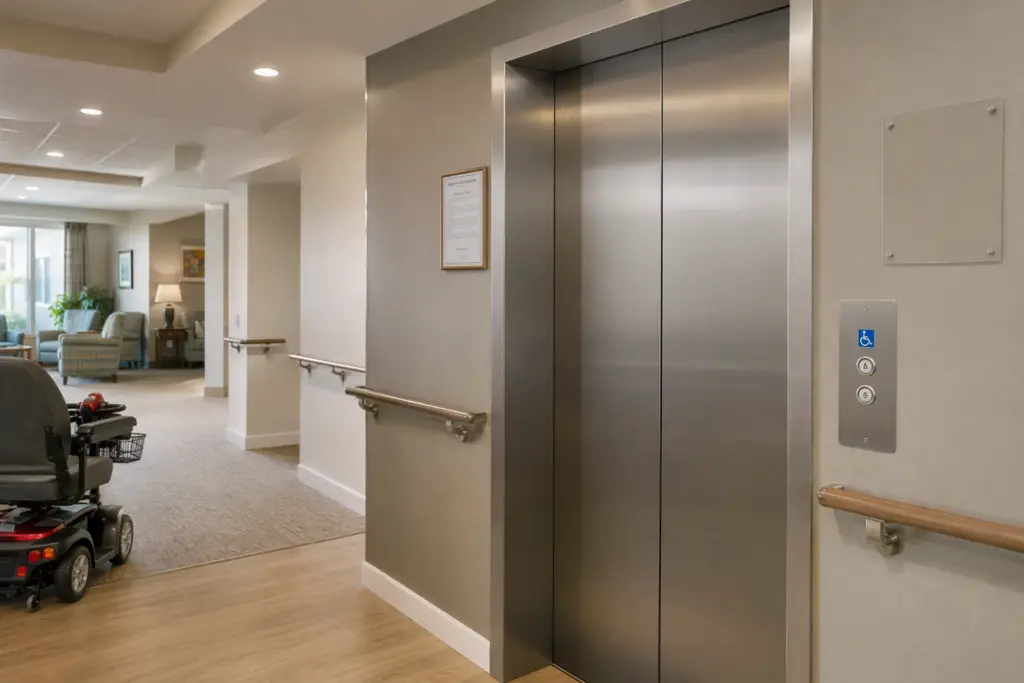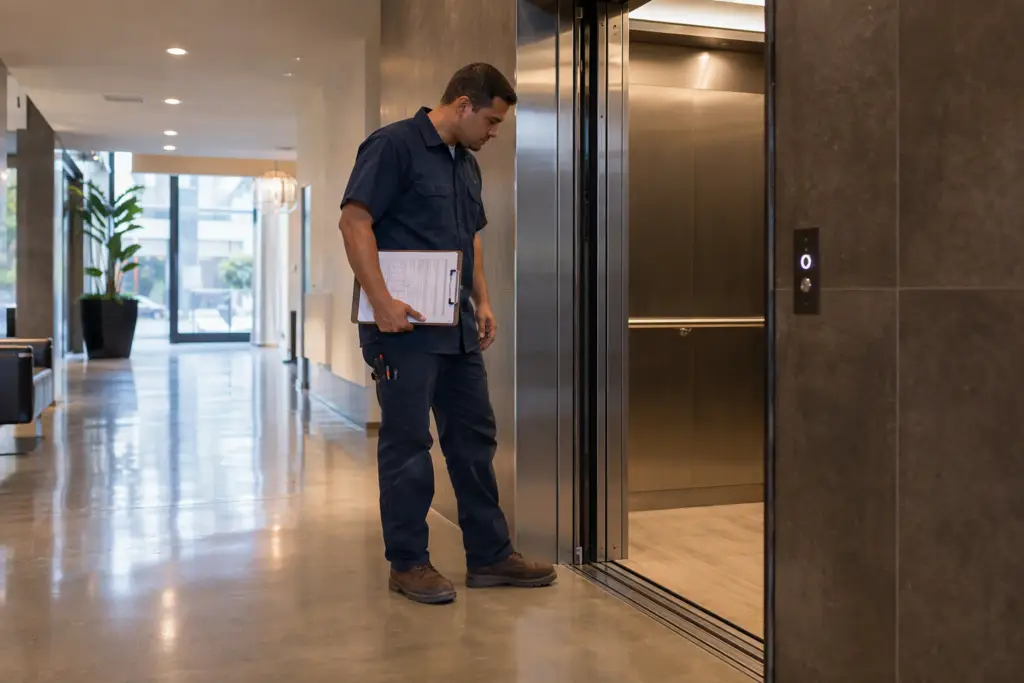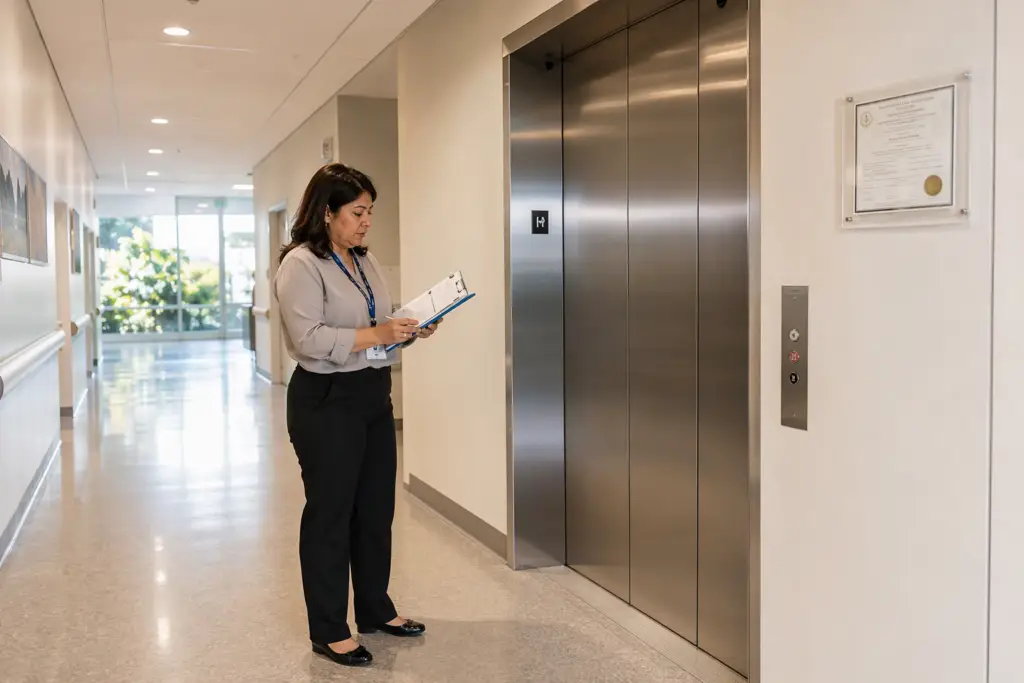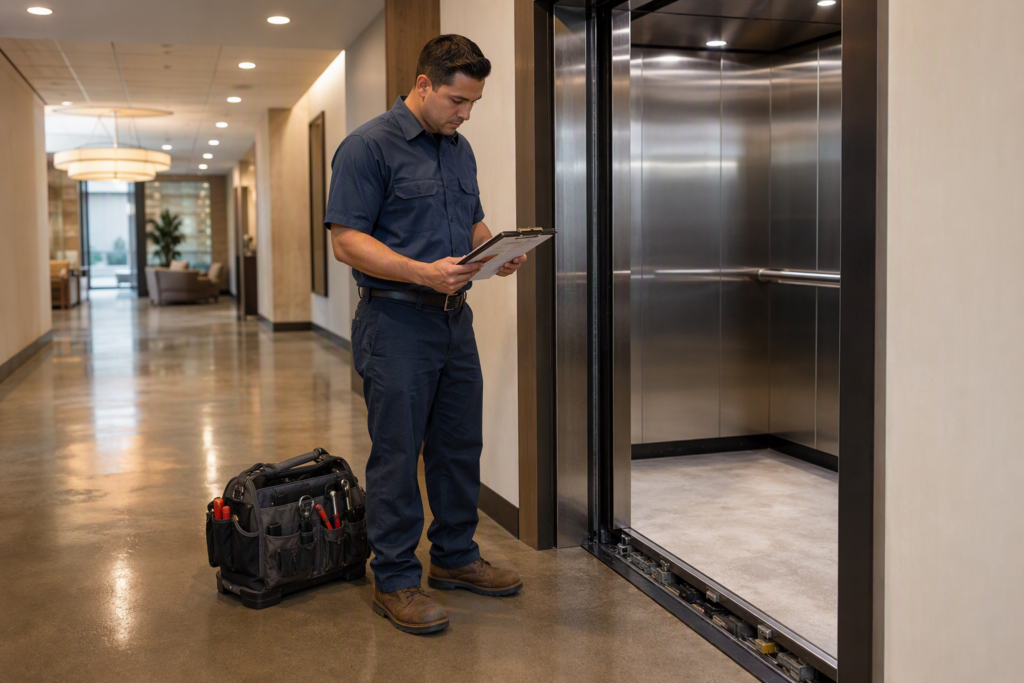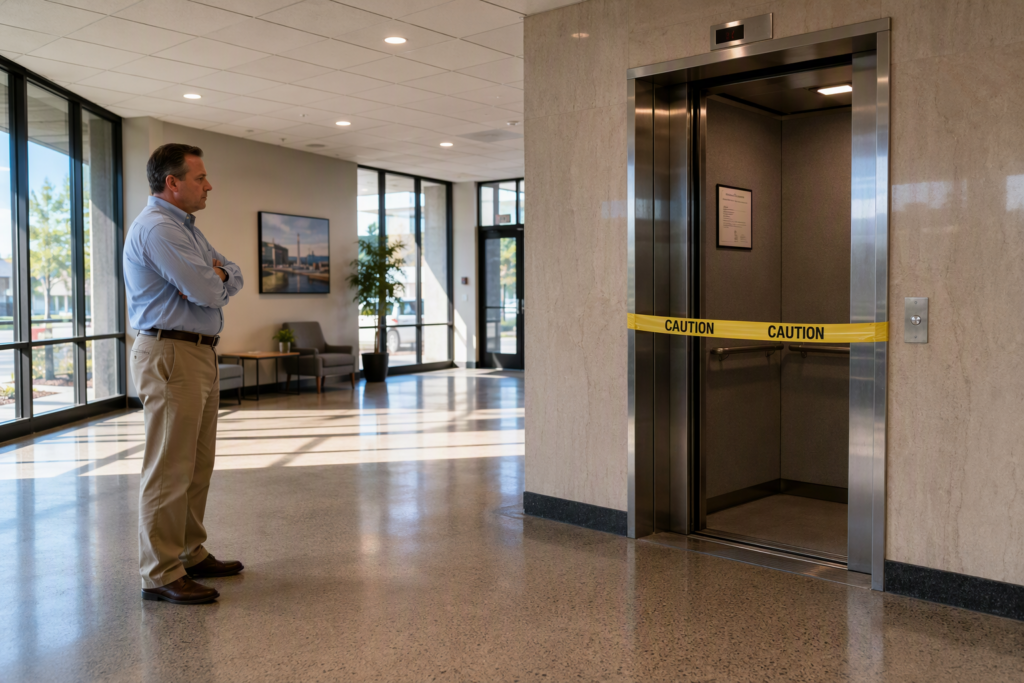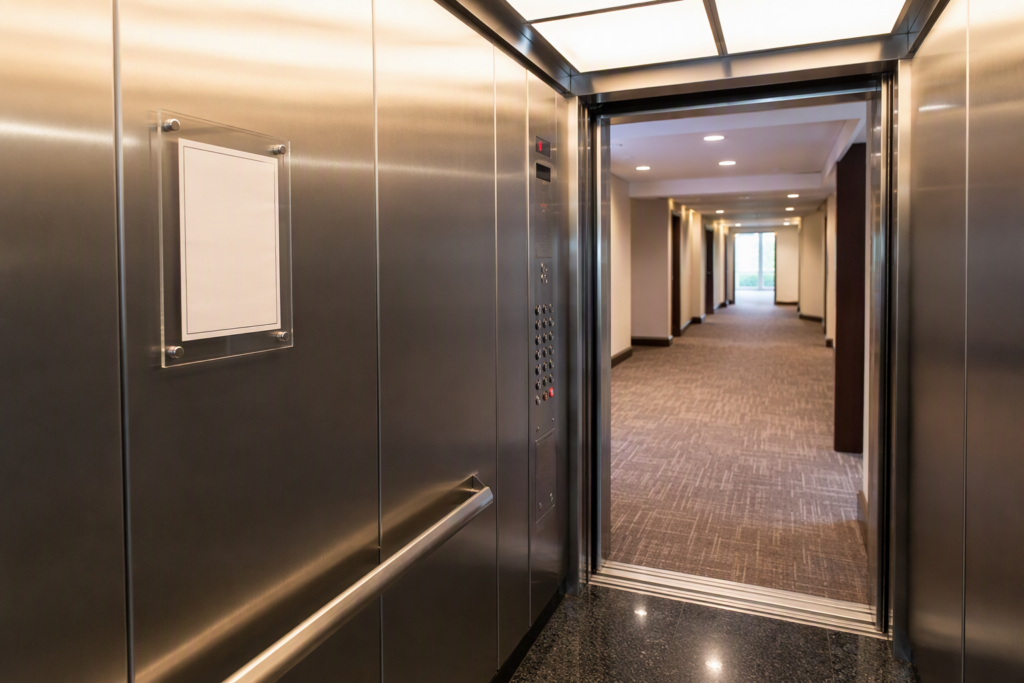
What Is Elevator Modernization and Why Does It Matter in Los Angeles and Orange County?
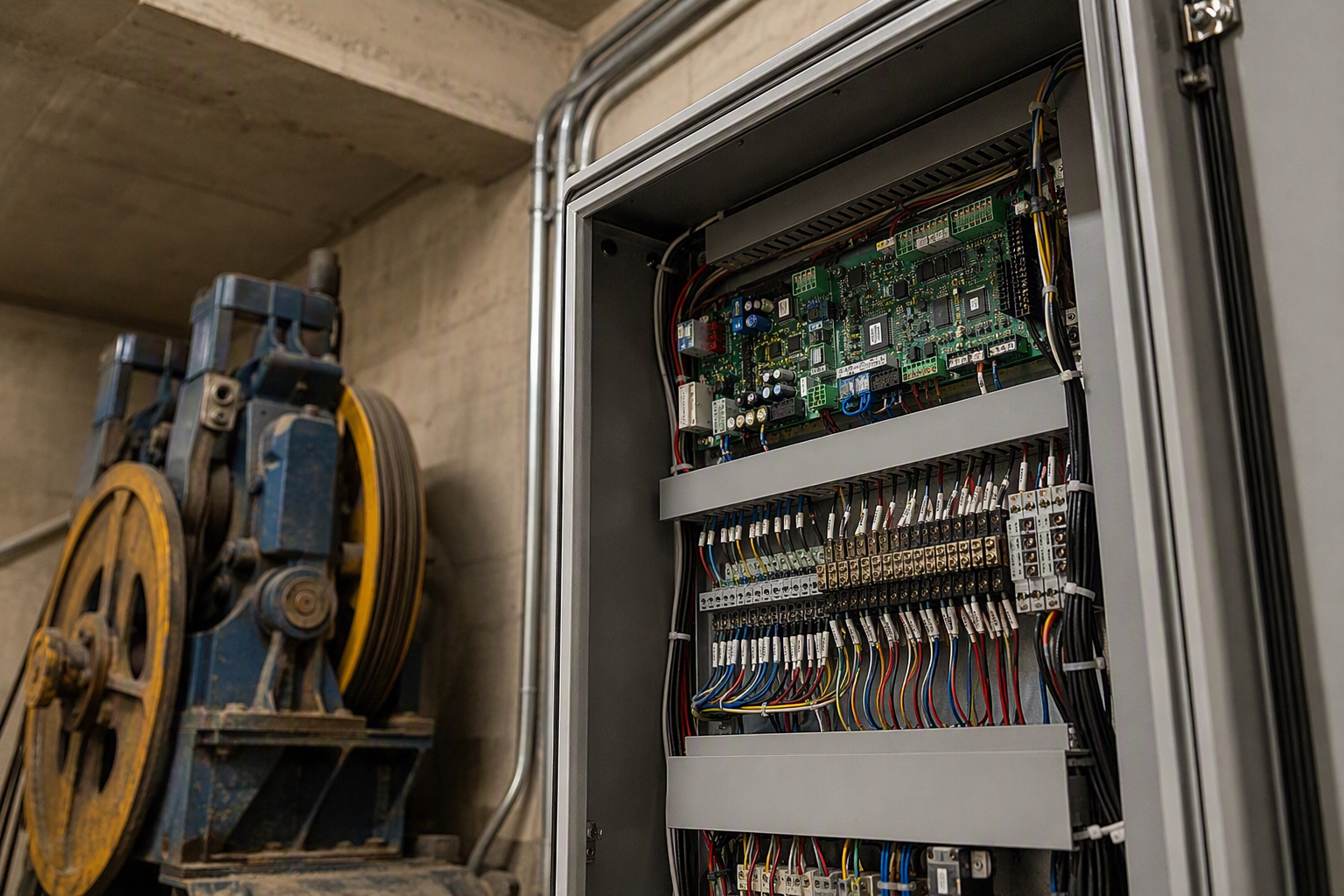
Elevator modernization is the process of replacing or upgrading aging components — controls, drive systems, doors, cabs, and safety devices — to extend service life, improve reliability, reduce energy consumption, and bring equipment into compliance with current codes.
In the Los Angeles and Orange County markets, aging elevator infrastructure is common. Many commercial and residential buildings contain equipment installed decades ago that no longer meets the performance expectations of modern occupants or the safety requirements of current code editions. Modernization addresses those gaps without the cost and construction disruption of a full equipment replacement and hoistway rebuild.
Regulatory pressure is also a meaningful driver. California’s elevator safety program, administered through the Division of Occupational Safety and Health (Cal/OSHA) Elevator Unit, enforces ASME A17.1 Safety Code for Elevators and Escalators and ASME A17.3 Safety Code for Existing Elevators and Escalators for existing installations. When routine inspections surface violations, owners in Los Angeles and Orange County must remediate them — and modernization is frequently the most cost-effective path forward.
What Does Elevator Modernization Cost in Los Angeles and Orange County?

Elevator modernization cost in Los Angeles and Orange County depends heavily on the scope of work, building type, and equipment age, making a site-specific assessment the only reliable way to arrive at a project budget.
That said, modernization projects broadly fall into three tiers:
- Partial modernization — upgrading the controller and relay logic to a modern solid-state or microprocessor-based system, often combined with new door operators and cab interior finishing. This is the most common entry-level scope.
- Mid-scope modernization — replacing the controller, drive machine or motor-generator set, door equipment, safeties, and adding updated signaling and fixtures.
- Full modernization — replacing virtually all equipment above the pit and in the machine room (or machine-room-less equivalent), including the hoist machine, roping, controller, cab, doors, and all safety devices. Full modernization approaches the cost of new equipment but preserves the existing hoistway structure.
The table below illustrates the general scope tiers and key cost-influencing variables. Note that these are qualitative benchmarks; actual pricing requires a formal proposal from a qualified elevator contractor.
| Modernization Tier | Typical Scope | Primary Cost Drivers | Common Applications |
|---|---|---|---|
| Partial / Controls Only | Controller, relay logic, fixtures, cab cosmetics | Controller type, number of stops, permit fees | Mid-age commercial buildings, HOA residential |
| Mid-Scope | Controller, drive, door operators, safeties, signaling | Machine type (traction vs. hydraulic), code upgrades required | Older commercial, medical, government buildings |
| Full Modernization | All equipment, roping, cab, doors, machine, pit work | Capacity, speed, building height, ADA compliance scope | Pre-1980s buildings, heavy-use commercial, large residential |
| Hydraulic Conversion or Upgrade | Power unit, jack and cylinder, oil, controller | In-ground vs. above-ground jack, environmental remediation | Low-rise commercial and residential |
What Specific Factors Drive Elevator Modernization Cost the Most?
The single greatest determinant of modernization cost is the gap between current equipment condition and the target performance and compliance standard.
The factors below consistently influence final project pricing in the Los Angeles and Orange County markets:
- System type: Traction elevators (geared and gearless) and hydraulic elevators have fundamentally different modernization pathways and cost profiles. Gearless traction systems serving high-rise buildings in downtown Los Angeles carry higher replacement-equipment costs than single-stop hydraulic units serving a two-story commercial building in Orange County.
- Number of stops: Each additional floor adds wiring, fixtures, door equipment, and engineering complexity — all of which increase cost.
- Machine room configuration: Buildings with dedicated machine rooms allow straightforward equipment access. Machine-room-less (MRL) retrofits or buildings where the machine room has been repurposed introduce significant additional scope.
- Code compliance gaps: When an inspection or violation notice identifies deficiencies under ASME A17.3 or ADA requirements, those items become mandatory scope additions. See the ADA compliance section below.
- Seismic requirements: California’s seismic risk profile is unique. Cal/OSHA enforces seismic design and retrofitting requirements for elevators, and buildings in high-seismic zones — which includes much of Los Angeles and Orange County — may require seismic switches, counterweight screens, and other devices as part of a modernization project.
- Permit and inspection fees: Los Angeles and Orange County have distinct permitting structures. Los Angeles Department of Building and Safety (LADBS) fees and local AHJ (Authority Having Jurisdiction) plan-check timelines affect both cost and schedule.
- Cab size and capacity: Larger cab dimensions and higher weight ratings require heavier-duty mechanical components, increasing material cost.
- Building access and logistics: High-density urban sites in Los Angeles, particularly in downtown or dense commercial corridors, may require after-hours work, street permits for crane access, or freight staging accommodations — all of which add labor cost.
How Do Traction and Hydraulic Elevator Modernization Costs Compare?
Traction and hydraulic elevator modernization follow different cost structures because the underlying mechanical systems differ substantially.
Traction elevators — which use a hoist machine, sheave, and wire ropes — are common in mid- and high-rise buildings across Los Angeles’s commercial corridors. Modernization typically centers on the drive system (AC vs. DC, variable-voltage variable-frequency drives), the controller, and the cab. When the existing hoist machine is serviceable, a partial modernization focusing on the controller and drive can extend useful life significantly. When the machine must be replaced, the project scale increases considerably because of machine room access, rigging, and roping requirements.
Hydraulic elevators, common in low-rise applications throughout Orange County and Signal Hill, present a different set of considerations. Older in-ground single-bottom jack systems may require cylinder replacement and, critically, environmental assessment for potential underground oil contamination — a cost variable unique to hydraulic systems and governed by California environmental regulations. Above-ground holeless hydraulic systems avoid this environmental risk entirely. Power unit modernization on hydraulic elevators is generally less expensive than traction machine replacement, but cylinder work can make hydraulic projects cost-competitive with traction modernization.
What ADA Requirements Affect Elevator Modernization Scope and Cost?
ADA compliance is a legally significant modernization driver that can add meaningful scope to any project.
The Americans with Disabilities Act (ADA) establishes accessibility standards for elevators in commercial buildings open to the public. When a building undergoes a renovation — and elevator modernization qualifies as an alteration — ADA requirements for elevator accessibility may be triggered for the altered elements and, depending on the scope, for the path of travel to the altered area.
Key ADA-driven cost items in a modernization project include:
- Door width and reopening device compliance
- Call button height and tactile signage requirements
- Interior cab dimensions meeting minimum clear floor space standards
- Audible and visual signals at each landing
- Braille and raised character floor indicators
- Leveling accuracy (within one-half inch of landing) to prevent tripping hazards
Building owners in Los Angeles and Orange County should budget for ADA compliance items as a standard component of any modernization rather than treating them as optional. Failure to address these items during modernization may result in future enforcement actions or civil liability.
How Do Seismic Requirements in California Affect Modernization Cost?
California’s seismic environment creates mandatory modernization cost items that do not apply in most other states.
California enforces seismic protection requirements for elevator equipment, and many buildings in Los Angeles and Orange County sit in high-seismic-hazard zones. During a modernization project, the scope of required seismic upgrades depends on the age of the existing equipment, the AHJ’s interpretation of applicable code editions, and the building’s seismic zone classification. Required items commonly include seismic switches (that stop and level the car during a seismic event), counterweight derailment screens, governor rope retainers, and pit layouts designed to protect occupants and equipment.
Seismic compliance items are not optional — they are enforced as part of the permit and inspection process administered by Cal/OSHA and local AHJs. Building owners and property managers should explicitly ask contractors to identify all seismic code compliance items in their modernization proposals so these costs are not discovered mid-project.
What Is the Elevator Modernization Process Step by Step?
A well-managed modernization follows a structured sequence from initial assessment through final inspection and return to service.
- Initial assessment and condition survey: A qualified elevator contractor inspects all existing equipment — controls, machine, roping, cab, doors, pit, and machine room — and identifies deficiencies, code gaps, and modernization opportunities.
- Scope definition and specification: Based on the condition survey, the contractor develops a detailed scope of work, specifying equipment models, compliance items, and performance targets.
- Proposal and contract execution: Owner receives a written proposal with itemized scope, contract terms, and project timeline. Multiple competitive bids are advisable for large-scope projects.
- Permit application: The contractor submits plans and permit applications to the appropriate AHJ — in Los Angeles, typically LADBS; in Orange County, the relevant city building department. Plan check timelines vary and should be factored into the project schedule.
- Equipment procurement: Major components — controller, drive, hoist machine if applicable, cab materials, door operators — are ordered. Lead times on certain components can affect project start dates.
- Shutdown and demolition: The elevator is taken out of service, existing equipment removed, and the hoistway, pit, and machine room prepared for new equipment installation.
- Installation: New equipment is installed in the machine room or hoistway, wiring completed, and all safety devices fitted and adjusted.
- Testing and adjustment: All systems are tested to specified performance parameters — travel, leveling, speed, door timing, and safety device operation — and adjusted as needed.
- Cal/OSHA inspection: A state-licensed elevator inspector performs the required acceptance inspection. This is a mandatory step for all permitted elevator work in California before the unit is returned to passenger service.
- Certificate issuance and return to service: Upon passing inspection, Cal/OSHA issues an updated permit to operate. The elevator is returned to service and documentation is provided to the building owner.
How Long Does an Elevator Modernization Project Take?
Project duration depends on scope, permit processing timelines, and equipment lead times, but most modernization projects require the elevator to be out of service for a meaningful period that building owners must plan around.
Partial modernizations — controller upgrades with minimal mechanical scope — may be completed in a matter of weeks once permits are in hand. Mid-scope and full modernizations involving machine replacement and significant hoistway work extend the timeline considerably. Permit plan-check timelines with Los Angeles and Orange County AHJs are a variable that experienced contractors account for in project scheduling — expedited review options exist in some jurisdictions but add cost.
Building owners with a single elevator serving multiple floors should plan for temporary accessibility accommodations during the outage period, particularly given ADA obligations to provide accessible routes. Multi-elevator buildings can often phase work to keep at least one cab in service.
What Equipment Is Typically Replaced During a Full Modernization?
A full modernization addresses every major system in the elevator installation to deliver essentially new-equipment performance within the existing hoistway.
Equipment commonly replaced or fully refurbished includes:
- Controller: Obsolete relay logic panels are replaced with modern solid-state or microprocessor controllers offering diagnostics, remote monitoring capability, and energy management features.
- Drive system: Motor-generator sets and DC drives are replaced with modern AC variable-voltage variable-frequency (VVVF) drives, which improve ride quality and reduce energy consumption.
- Hoist machine (traction): Geared machines near end of life may be replaced; gearless permanent-magnet machines offer quiet operation and high efficiency.
- Ropes and sheaves: All hoist ropes and governor ropes are replaced; sheaves are inspected and replaced if worn.
- Door operators and door equipment: High-cycle door operators, safety edges, and light curtains replace worn mechanical equipment to improve door reliability — one of the most common causes of elevator callbacks.
- Cab interior: Walls, flooring, ceiling, lighting, and handrails are refinished or replaced.
- Hall and car fixtures: Buttons, displays, position indicators, and communication devices are replaced with ADA-compliant, modern fixtures.
- Safety devices: Governor, safeties, buffers, and oil compensation equipment are inspected and replaced as required by code or condition.
- Pit and machine room equipment: Lighting, ladder, stop switches, and environmental controls are upgraded to current standards.
How Does Elevator Modernization Compare to Full Replacement?
Modernization preserves the existing hoistway and structural elements while replacing functional equipment, whereas full replacement involves removing all equipment and rebuilding the entire installation — including potential hoistway modifications.
Full replacement is warranted when the hoistway itself is structurally deficient, when a change in building use requires fundamentally different elevator performance (higher speed, greater capacity), or when modernization costs approach replacement costs without delivering equivalent value. In the vast majority of cases involving sound hoistway structures — the situation in most well-maintained commercial and residential buildings in Los Angeles and Orange County — modernization delivers code compliance, improved performance, and extended service life at significantly lower cost and disruption than full replacement.
Liftech Elevator’s assessment process evaluates both pathways to give building owners in Signal Hill, Long Beach, Los Angeles, and Orange County an objective basis for the decision.
What Permits and Inspections Are Required for Elevator Modernization in California?
All elevator modernization work in California requires permits and acceptance inspection before the unit is returned to service.
In California, elevator safety regulation falls under Cal/OSHA’s Elevator, Ride, and Tramway Unit. Permit applications are submitted to the AHJ — which in Los Angeles is LADBS, while in Orange County cities, the jurisdiction varies by municipality. For installations covered under Cal/OSHA’s permit system, the state performs the acceptance inspection. The inspector verifies that installation complies with the applicable edition of ASME A17.1 for new work and ASME A17.3 for the existing installation. A new permit to operate is issued only after the unit passes inspection.
Attempting to return a modernized elevator to service without a passed inspection and updated permit is a serious violation. Building owners should confirm with their contractor that all permit and inspection milestones are managed as part of the project scope, not left to the owner to coordinate independently.
How Can Building Owners Evaluate Elevator Modernization Proposals?
Comparing modernization proposals requires a structured approach because contractors can legitimately differ on scope, equipment brand, and compliance interpretation.
Key evaluation criteria include:
- Scope specificity: A credible proposal names specific equipment models, brands, and code compliance items. Vague descriptions of “new controls” without manufacturer identification make it difficult to compare bids accurately.
- Code compliance itemization: All mandatory compliance items — seismic, ADA, ASME A17.3 violations — should be explicitly listed so the owner understands what is being addressed.
- Permit responsibility: Confirm which party is responsible for permit applications, plan-check fees, and scheduling the Cal/OSHA inspection.
- Warranty terms: Understand what warranty coverage applies to both equipment and labor, and what maintenance obligations are tied to warranty validity.
- Contractor licensing: California requires elevator contractors and mechanics to be appropriately licensed. Owners should verify that all bidding contractors hold current California licenses for elevator work.
- References and local experience: Contractors with demonstrated experience in the Los Angeles and Orange County markets understand local AHJ procedures, seismic requirements, and permitting timelines — reducing project risk.
What Are Common Signs That an Elevator Needs Modernization Rather Than Repair?
The clearest signal that modernization is warranted rather than continued incremental repair is a pattern of recurring service calls on the same components combined with obsolete parts availability.
Additional indicators include:
- Relay-based controllers with logic that technicians must interpret from aged schematics
- Motor-generator sets producing excessive noise or heat
- Repeated door malfunctions that are not resolved by adjustment or component replacement
- Leveling inaccuracy that creates a persistent tripping hazard and ADA leveling violation
- Inability to source OEM parts without custom fabrication
- Escalating maintenance costs that approach the cost of modernization amortized over a reasonable service period
- Outstanding inspection violations that cannot be resolved by repair alone
- Energy costs significantly higher than modern equipment would produce
Liftech Elevator can assess whether an elevator’s condition favors continued maintenance and targeted repair versus a modernization investment, providing building owners in Long Beach, Signal Hill, Los Angeles, and Orange County with a clear, unbiased recommendation.
How Does Elevator Modernization Affect Building Energy Costs?
Modern elevator systems consume meaningfully less energy than the motor-generator sets and DC drive systems found in elevators installed before the widespread adoption of VVVF technology.
The energy efficiency gains from modernization come from multiple sources. AC VVVF drives consume power proportional to demand rather than running at constant motor excitation levels. Regenerative drives — available on many modern traction systems — return braking energy to the building’s electrical system. LED cab lighting replaces fluorescent or incandescent fixtures. Standby mode controls reduce power draw during periods of low demand. For buildings with multiple elevators, the cumulative energy savings over the lifecycle of modernized equipment represent a meaningful offset against the capital investment.
In the Los Angeles and Orange County markets, where commercial electricity rates are significant, energy performance is a legitimate factor in the modernization ROI analysis — not merely a marketing talking point.
How Does Remote Monitoring Technology Factor Into a Modernization?
Modern elevator controllers support remote monitoring and diagnostic capabilities that were not available on relay-logic systems, and a modernization project is the natural time to implement these features.
Remote monitoring systems collect real-time performance data — door cycle counts, leveling accuracy, fault codes, temperature, and load data — and transmit it to a monitoring platform accessible to the service contractor. This enables predictive maintenance: identifying components trending toward failure before a breakdown occurs, rather than responding after the elevator has gone out of service with passengers or freight affected.
For property managers overseeing multiple buildings across Los Angeles or Orange County, remote monitoring provides centralized visibility into elevator health across a portfolio without requiring physical site visits for routine status checks. Liftech Elevator incorporates modern monitoring capabilities into modernization project planning as a component of long-term service strategy.
What Role Does Preventive Maintenance Play After Modernization?
Modernization delivers new-equipment reliability, but that reliability is sustained only through a disciplined preventive maintenance program consistent with manufacturer requirements and code standards.
California requires that elevators receive regular maintenance and inspection. ASME A17.1 establishes maintenance requirements for elevator equipment, and Cal/OSHA enforces annual inspection and permit renewal. A modernized elevator that is not maintained according to manufacturer specifications and code requirements will experience accelerated wear, reduced reliability, and potential code violations — negating the investment made in modernization.
Building owners should secure a maintenance agreement with a qualified elevator service company at the time of modernization completion, with service intervals and scope aligned to the new equipment’s maintenance requirements. Manufacturers’ warranties often include maintenance obligations as a condition of coverage.
How Should Building Owners Budget for Elevator Modernization?
Effective modernization budgeting requires treating the project as a capital improvement with a multi-year planning horizon rather than a reactive repair expense.
Best practices for budgeting include:
- Obtaining a condition assessment from a qualified contractor several years before the expected modernization need, so scope and cost can be anticipated in the capital budget cycle
- Requesting itemized proposals that separate mandatory compliance costs (seismic, ADA, ASME violations) from elective improvements (cab aesthetics, premium fixtures)
- Accounting for soft costs: permit fees, plan-check fees, expediting fees if timeline is critical, and temporary accessibility accommodations during outage
- Considering phased modernization for multi-elevator buildings where cash flow constraints exist — phasing allows compliance and reliability improvements to begin while deferring remaining scope
- Evaluating financing options where available, as some equipment suppliers and service companies offer financing structures for capital projects
How Does Building Age and Elevator Vintage Affect Modernization Scope?
The older the elevator installation, the larger the gap between existing equipment and current code requirements — and the broader the scope of mandatory modernization work.
Buildings constructed before approximately 1980 are particularly likely to contain equipment that predates modern safety code editions, ADA requirements (which took effect in 1990), and California’s seismic retrofit requirements. For these installations, modernization is not primarily a reliability or aesthetics decision — it is substantially a compliance necessity. The longer remediation is deferred, the greater the accumulated compliance exposure and the higher the risk of an inspection-triggered shutdown order from Cal/OSHA.
For buildings in the Signal Hill, Long Beach, Los Angeles, and Orange County markets, many of which contain commercial and residential elevator installations from the 1960s and 1970s, the compliance driver for modernization is particularly acute. Liftech Elevator regularly assists property owners and managers in assessing the compliance status of older installations and developing modernization roadmaps aligned to their budget and operational timelines.
What Questions Should Building Owners Ask When Selecting an Elevator Modernization Contractor?
Selecting the right contractor is as important as selecting the right equipment — project outcomes depend heavily on contractor expertise, local knowledge, and project management discipline.
Recommended questions for contractor evaluation include:
- Is your company licensed to perform elevator work in California, and can you provide your license number for verification?
- Are your mechanics represented by or trained through a recognized elevator trade program?
- What specific experience do you have with this elevator type and system age?
- Who will serve as the project superintendent and be the primary point of contact throughout the project?
- How do you manage permit applications and Cal/OSHA inspection scheduling?
- What is your process for managing unforeseen conditions discovered during demolition — how is scope change communicated and priced?
- What equipment brands do you work with, and are you factory-authorized for warranty service on the equipment you propose to install?
- Can you provide references from comparable modernization projects completed in Los Angeles or Orange County within the past three years?
- What maintenance agreement do you recommend post-modernization, and is it included or separately priced?
Get an Accurate Modernization Assessment for Your Building
Every elevator modernization project in Los Angeles and Orange County is unique. Equipment age, building type, code compliance gaps, seismic requirements, and permit complexity all shape the scope and cost in ways that no generic estimate can capture accurately. The only reliable starting point is a thorough, site-specific assessment by a qualified elevator contractor with demonstrated experience in the local market.
Liftech Elevator provides comprehensive elevator assessments for property owners and managers throughout Signal Hill, Long Beach, Los Angeles, and Orange County, covering equipment condition, code compliance status, modernization scope, and long-term maintenance strategy. The assessment process is designed to give building owners the information they need to make confident, well-budgeted modernization decisions — without surprises mid-project.
Contact Liftech Elevator for a free elevator assessment. Call 562-609-3478 to schedule your site visit and receive a detailed, no-obligation modernization evaluation.
Need elevator service you can rely on? Liftech Elevator is ready to help.