Elevator Safety Code Compliance for Healthcare Facilities
Hospitals, outpatient clinics, skilled nursing facilities, and medical office buildings in Signal Hill, Long Beach, Los Angeles, and Orange County face some of the most demanding elevator compliance requirements of any vertical industry. Patient transport, emergency evacuation protocols, and round-the-clock operational demands mean that an elevator that fails a safety inspection is not merely an inconvenience — it can directly affect patient outcomes and trigger serious regulatory consequences.
This guide covers every dimension of elevator safety code compliance for healthcare facilities, from the specific codes that apply, to what inspectors examine, to how Liftech Elevator helps Southern California healthcare operators stay ahead of violations.
What Elevator Safety Codes Apply to Healthcare Facilities?
Healthcare facilities are subject to a layered framework of elevator safety standards that goes beyond the requirements placed on general commercial buildings.
- ASME A17.1 Safety Code for Elevators and Escalators: The foundational national standard governing the design, construction, installation, operation, inspection, testing, maintenance, alteration, and repair of elevators. California adopts and enforces this code through the Division of Occupational Safety and Health (Cal/OSHA) elevator unit.
- Americans with Disabilities Act (ADA): Mandates accessible elevator design elements including cab dimensions, door timing, control panel height, audible floor announcements, and Braille signage — all critical in healthcare settings where wheelchair users, patients on gurneys, and mobility-impaired individuals are frequent riders.
- California Code of Regulations, Title 8: California’s state-level elevator safety regulations, administered by the Division of Occupational Safety and Health, incorporate and extend federal standards. Healthcare facilities in Los Angeles County and Orange County must comply with Title 8 inspection and permit requirements.
- The Joint Commission (TJC) Environment of Care Standards: Accredited hospitals must demonstrate that all vertical transport equipment is maintained and inspected per manufacturer recommendations and applicable codes as part of the Environment of Care chapter.
- NFPA 101 Life Safety Code: Governs elevator use during fire emergencies, including Phase I and Phase II fire service recall operations — especially critical in multi-story hospital towers.
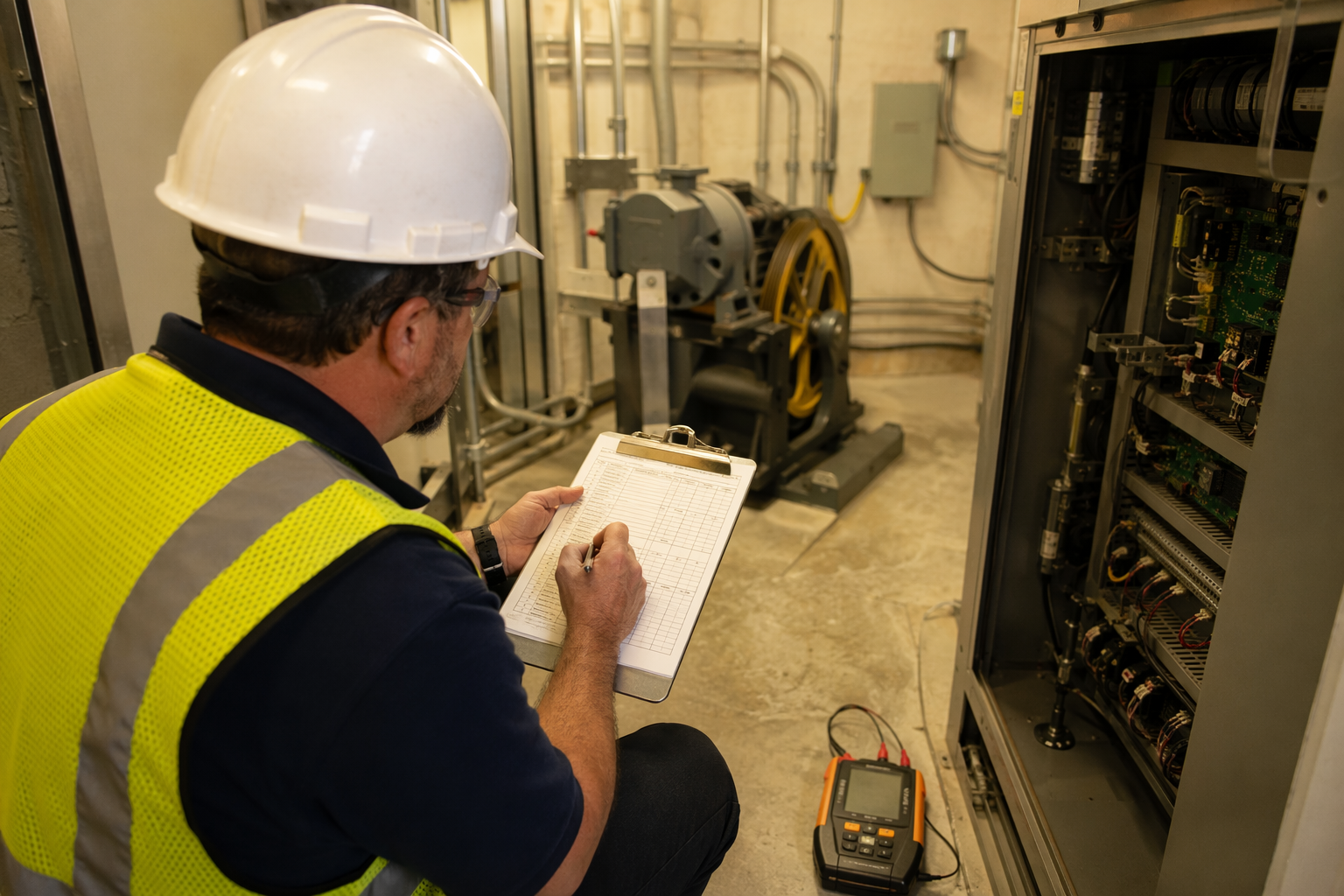
- OSHA General Industry Standards: Apply to elevator-related worker safety, particularly for maintenance technicians servicing elevator machinery spaces.
Liftech Elevator works with healthcare facility managers across Signal Hill, Long Beach, Los Angeles, and Orange County to navigate this multi-layered compliance environment and ensure every elevator meets current 2026 code editions.
Why Is Elevator Compliance Especially Critical in Healthcare Settings?

In a retail or office building, an elevator outage is an operational inconvenience. In a healthcare facility, it can interrupt the movement of patients on gurneys, delay medication delivery, impede emergency response teams, and expose the facility to Joint Commission deficiencies during accreditation surveys. Elevators in hospitals and nursing facilities also experience unusually high cycle counts, transporting heavy medical equipment, beds, and supply carts — all of which accelerate component wear and compress maintenance intervals.
Regulatory consequences for non-compliance can include permit revocation, forced elevator shutdown, fines, and citation in Joint Commission survey reports — all of which have downstream effects on patient care and facility reputation.
What Does ASME A17.1 Require for Healthcare Elevator Inspections?
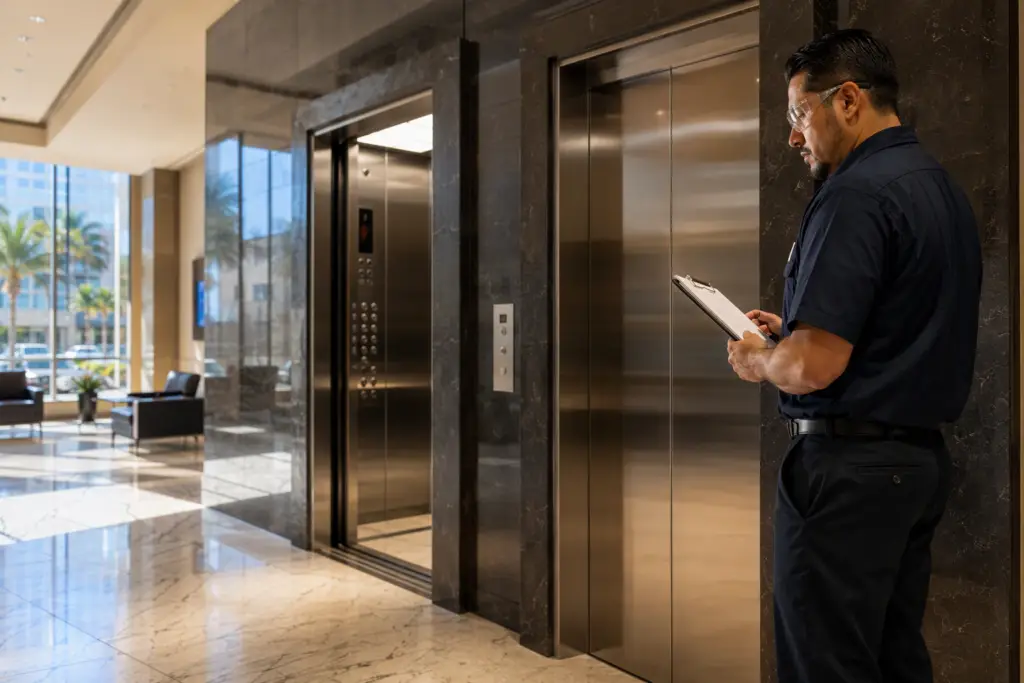
Under ASME A17.1, elevators in California must undergo periodic inspections and witnessing of safety tests by a state-certified elevator inspector. Key inspection categories include:
- Car and counterweight safeties
- Governor and overspeed device testing
- Door reopening device (safety edge/light curtain) functionality
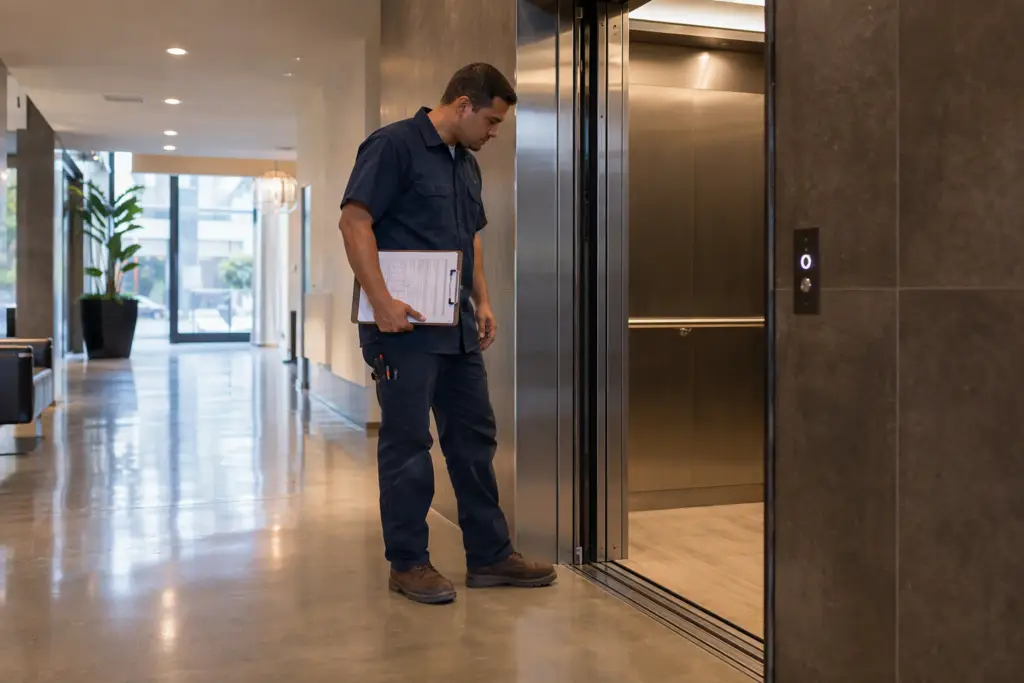
- Leveling accuracy — especially important for gurney transport
- Emergency lighting and communications systems
- Pit and machine room conditions
- Hydraulic system integrity (for hydraulic elevators)
- Fire service (Phase I and Phase II) recall operation
Inspection intervals and test types are defined by the ASME A17.1 Safety Code and California’s Title 8 regulations. Healthcare facilities should maintain a documented inspection log accessible to any regulatory surveyor or Joint Commission assessor.
What ADA Requirements Apply to Hospital and Clinic Elevators?
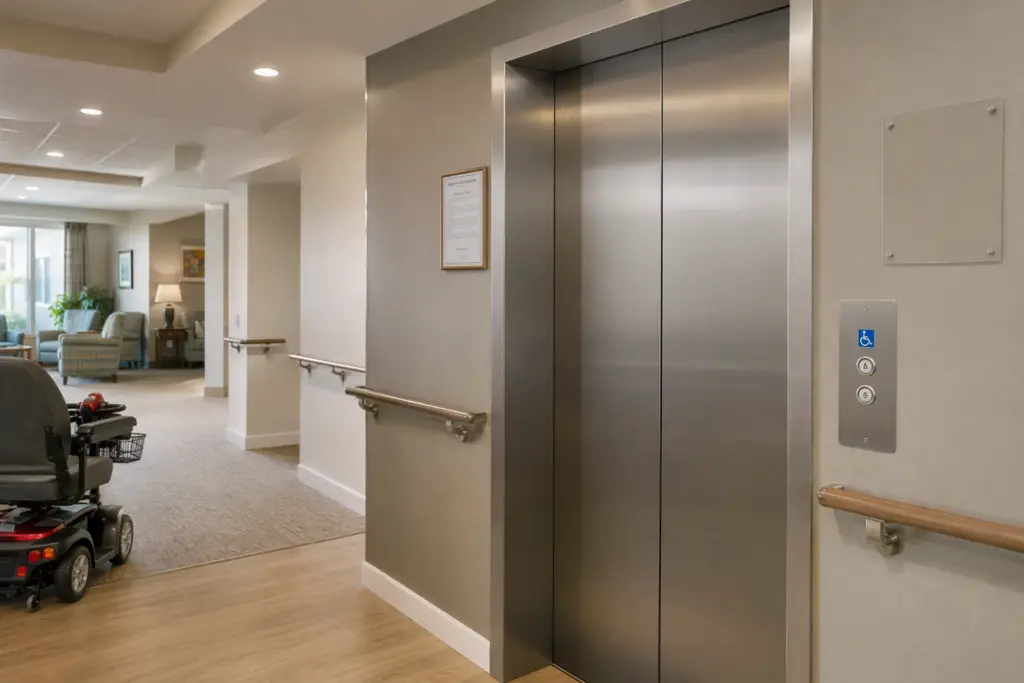
The ADA sets specific requirements for elevators serving the public in healthcare facilities. Key elements include:
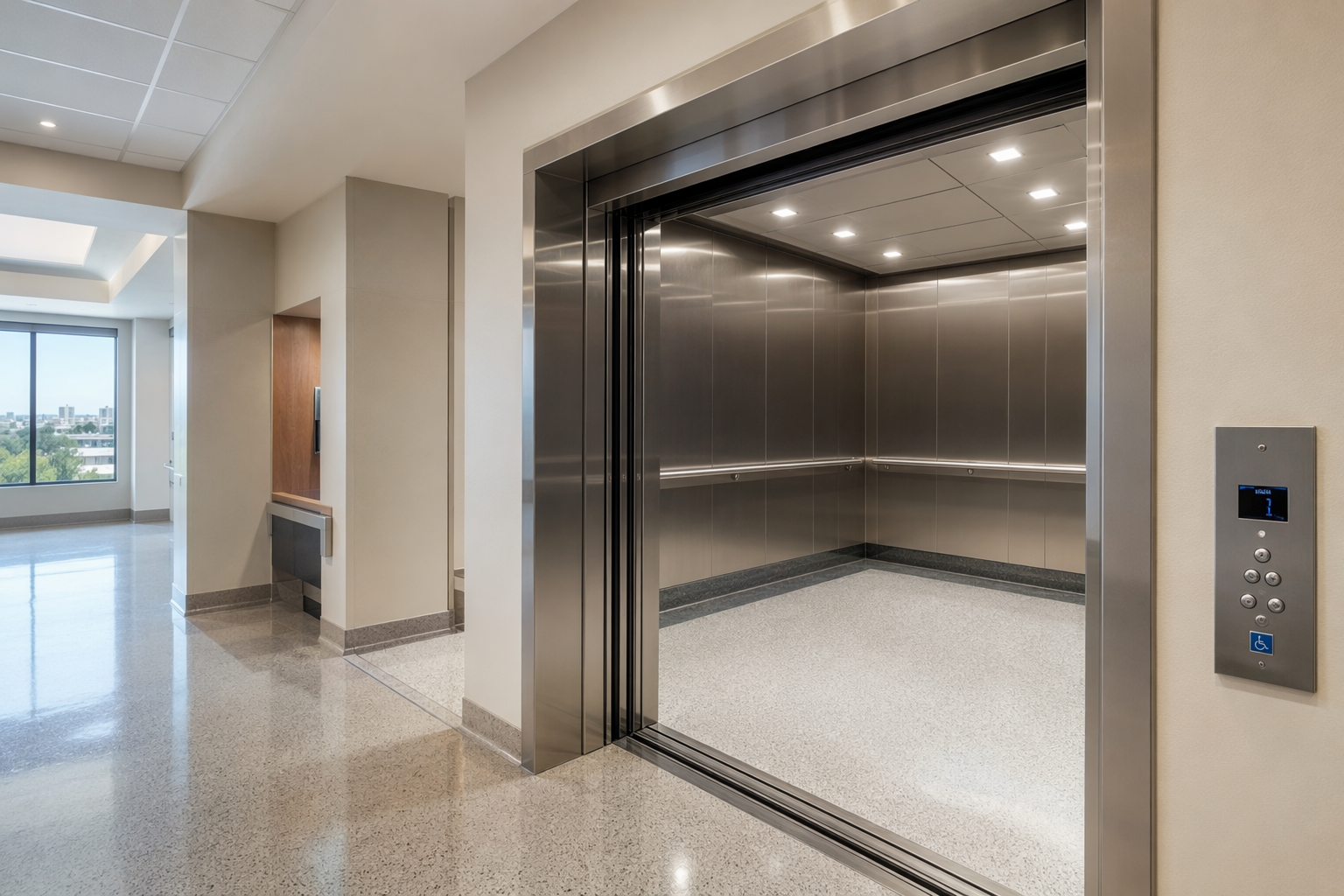
- Cab dimensions: Minimum interior dimensions to accommodate wheelchairs and mobility aids
- Door timing: Doors must remain open long enough for a person using a mobility aid to enter — particularly important when patients move slowly or use wide equipment
- Call button height: Controls must be within reach ranges defined by the ADA Standards for Accessible Design
- Audible and visual signals: Floor arrival announcements and visual indicators are required
- Braille and raised character signage: Required on hoistway entrances and car controls
- Two-way communication: Emergency communication systems must be usable by individuals with hearing or speech impairments
Hospitals undergoing renovation or new construction after the ADA’s effective date must meet current accessibility standards. Existing facilities may be subject to barrier removal obligations. Liftech Elevator performs ADA compliance assessments as part of its healthcare elevator evaluations in Los Angeles and Orange County.
What Are the Most Common Elevator Code Violations Found in Healthcare Facilities?
Recurring violations in healthcare elevator inspections tend to cluster around maintenance documentation gaps and deferred repairs to high-wear components. Common findings include:
- Inaccurate leveling — cab floor not flush with building floor, creating a trip hazard for gurney wheels and wheelchair users
- Door safety device failures — worn or misaligned safety edges that allow doors to close prematurely
- Expired or incomplete inspection certificates
- Non-functional or inadequate emergency lighting
- Two-way communication systems that fail to connect to a monitored location
- Fire service recall malfunctions
- Missing or illegible Braille and raised-character signage
- Pit water intrusion or inadequate pit lighting
- Outdated or non-compliant hydraulic fluid in older systems
Questions Your Inspector Will Ask
When a California state elevator inspector or a Joint Commission surveyor reviews your healthcare facility’s elevator program, expect questions along these lines. Being prepared with documented answers demonstrates a mature compliance program.
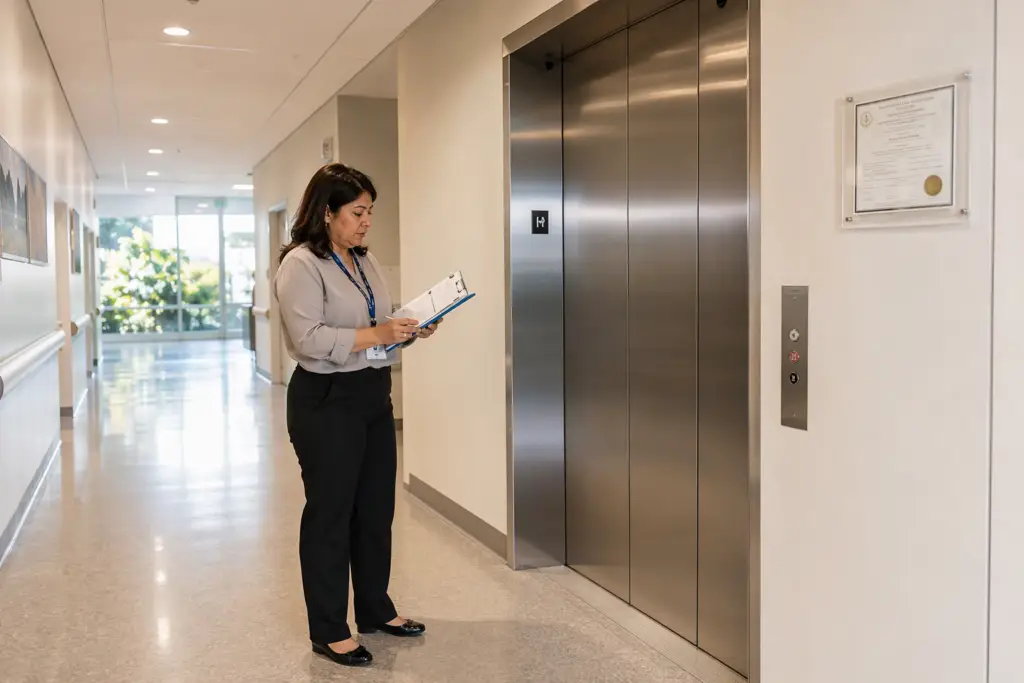
- Where is the current, valid elevator operating permit, and is it posted in the elevator cab? California requires the permit to be displayed in the cab or immediately available.
- When was the last periodic inspection and safety test performed, and where is the documentation? Inspectors will request the inspection log and test records dating back through the required retention period.
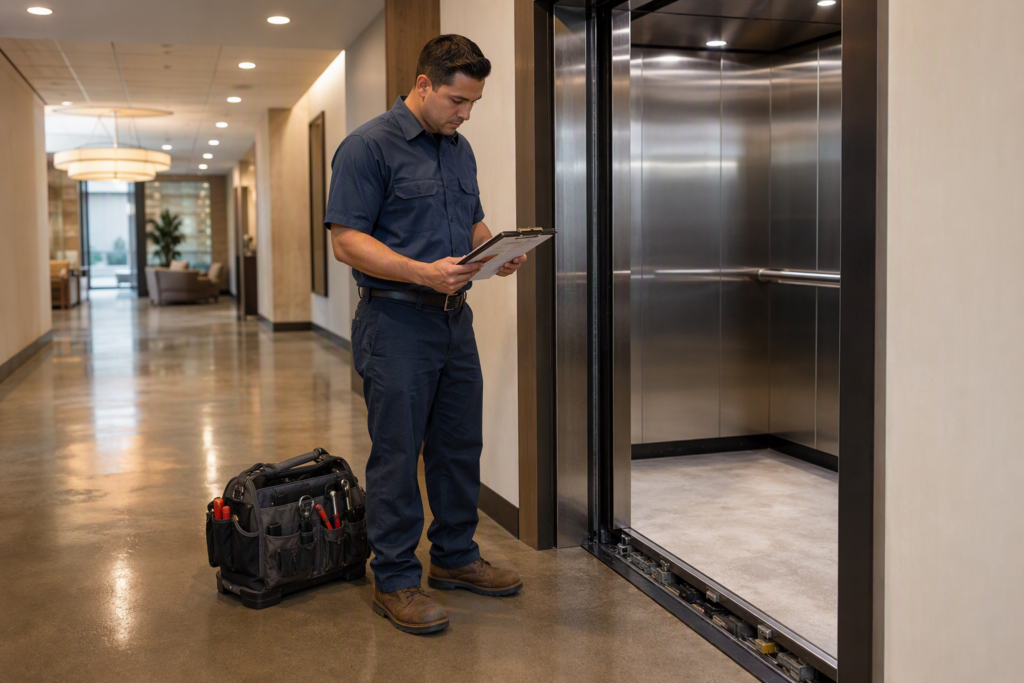
- Who is your licensed elevator maintenance contractor, and can you produce the maintenance contract? Accreditation surveys expect a formal, documented service relationship.
- What is your documented procedure when an elevator malfunctions or traps a passenger? Entrapment response procedures must be written, posted, and staff must be trained on them.
- Have any alterations been made to the elevator since the last inspection? Alterations trigger permit and re-inspection requirements under California Title 8.
- Is fire service (Phase I and Phase II recall) tested on a regular basis, and are records available? NFPA 101 and ASME A17.1 both address fire service operation.
- Are all ADA-required elements functional — door timing, audible signals, Braille signage, and two-way communications?
- What is the maintenance frequency for this elevator, and does it account for the high cycle counts typical of healthcare use?
How Should a Healthcare Facility Respond to an Elevator Safety Violation?
When an inspector issues a notice of violation or an elevator is ordered out of service, a structured response is essential to minimize patient care disruption and regulatory exposure.
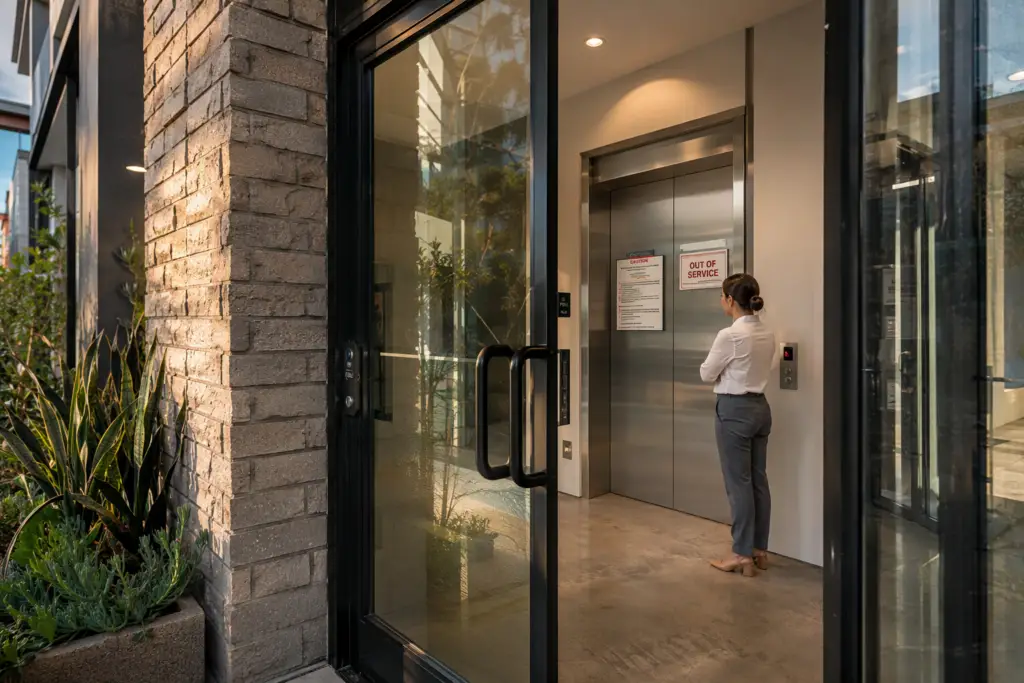
- Secure the elevator immediately. Lock out the cab from passenger use, post clear signage, and notify facilities staff and clinical leadership.
- Contact your licensed elevator service contractor. Provide the full inspection report and the specific violation citations so the technician arrives prepared.
- Obtain a written scope of repairs. Ensure the repair scope directly addresses the cited code sections — particularly ASME A17.1 requirements — not just a general tune-up.
- Confirm required permits. If the repair qualifies as an alteration under California Title 8, a permit must be obtained before work begins.
- Schedule a re-inspection. Contact the California Division of Occupational Safety and Health elevator unit to arrange a witnessing of any required tests.
- Update your maintenance log and documentation. Ensure the repaired elevator’s record reflects the corrective action, parts replaced, and test results.
- Notify accreditation liaison. If your facility is Joint Commission accredited, document the event and corrective action in your Environment of Care records.
How Often Should Healthcare Elevators Be Maintained?
Healthcare elevators typically operate under far greater demand than commercial office elevators. Patient transport, food service carts, linen carts, and medical equipment all contribute to elevated cycle counts. A maintenance frequency appropriate for a low-traffic office building will not adequately protect a hospital elevator operating around the clock.
Maintenance schedules should be established in consultation with a licensed elevator service contractor and should be documented in a formal maintenance control program as referenced in ASME A17.1. The program should specify the tasks, intervals, and qualifications required for each maintenance activity. Liftech Elevator develops maintenance control programs tailored to the operational demands of healthcare facilities in Signal Hill, Long Beach, Los Angeles, and Orange County.
What Is the Role of Elevator Maintenance Documentation in Healthcare Compliance?
Documentation is not a secondary concern — it is often the first thing an inspector or Joint Commission surveyor examines. A well-maintained elevator with no paperwork will generate the same citation risk as a poorly maintained one. Healthcare facilities should maintain:
- Current operating permit (posted in cab)
- Inspection and test reports with inspector signatures
- Maintenance logs with date, task, technician, and any findings
- Work orders for repairs, including parts replaced and correction of any deficiencies
- Alteration permits and approvals
- Entrapment response procedures and staff training records
- Maintenance contract with licensed elevator contractor
How Does Elevator Compliance Fit Into a Healthcare Facility’s Broader Safety Program?
Under Joint Commission Environment of Care standards, elevator safety is not siloed — it sits within a facility’s broader equipment management and life safety programs. Facilities must demonstrate that all equipment, including elevators, is managed to minimize risk to patients and occupants. This means elevator compliance activities — inspections, maintenance, and corrective actions — should be tracked in the facility’s CMMS (Computerized Maintenance Management System) and reportable to the Environment of Care committee.
Liftech Elevator provides healthcare facility managers with documentation and reporting support designed to integrate with existing compliance workflows.
What Should Healthcare Facilities in Southern California Know About Local Compliance Requirements?
Healthcare facilities in Signal Hill, Long Beach, Los Angeles, and Orange County operate under California’s state elevator safety program administered through Cal/OSHA’s Elevator, Ride, and Tramway Unit. California adopts ASME A17.1 with state-specific amendments. All elevators must be permitted, and permits must be renewed after each required periodic inspection. Inspectors are state-certified, and their findings carry the authority of California Title 8 enforcement.
Local municipalities may also have additional requirements for healthcare facility construction and renovation projects. Facilities undergoing significant elevator alterations should verify requirements with the local building department as well as Cal/OSHA.
How Can a Healthcare Facility Proactively Prevent Elevator Code Violations?
Reactive compliance — fixing violations after they are cited — is costlier and more disruptive than preventive maintenance. A proactive compliance posture includes:
- Establishing a formal preventive maintenance contract with a licensed elevator service provider
- Conducting internal readiness reviews before scheduled state inspections
- Tracking component life cycles to anticipate replacements before failures occur
- Keeping ADA elements — door timing, audible signals, signage — on a regular audit schedule
- Training facilities staff to recognize and report early signs of elevator malfunction
- Reviewing code updates annually to identify any new requirements applicable to existing equipment
Schedule Your Healthcare Elevator Compliance Assessment
Elevator safety code compliance in healthcare is too consequential to manage reactively. Liftech Elevator works with hospitals, outpatient facilities, skilled nursing facilities, and medical office buildings across Signal Hill, Long Beach, Los Angeles, and Orange County to establish and maintain compliant, well-documented elevator programs aligned with ASME A17.1, ADA, California Title 8, and Joint Commission Environment of Care standards.
Contact Liftech Elevator for a free elevator assessment: 562-609-3478
Need elevator service you can rely on? Liftech Elevator is ready to help.