Emergency Elevator Repair in Signal Hill, CA: Complete FAQ Guide
Who should I contact for emergency elevator repair in Signal Hill, CA?
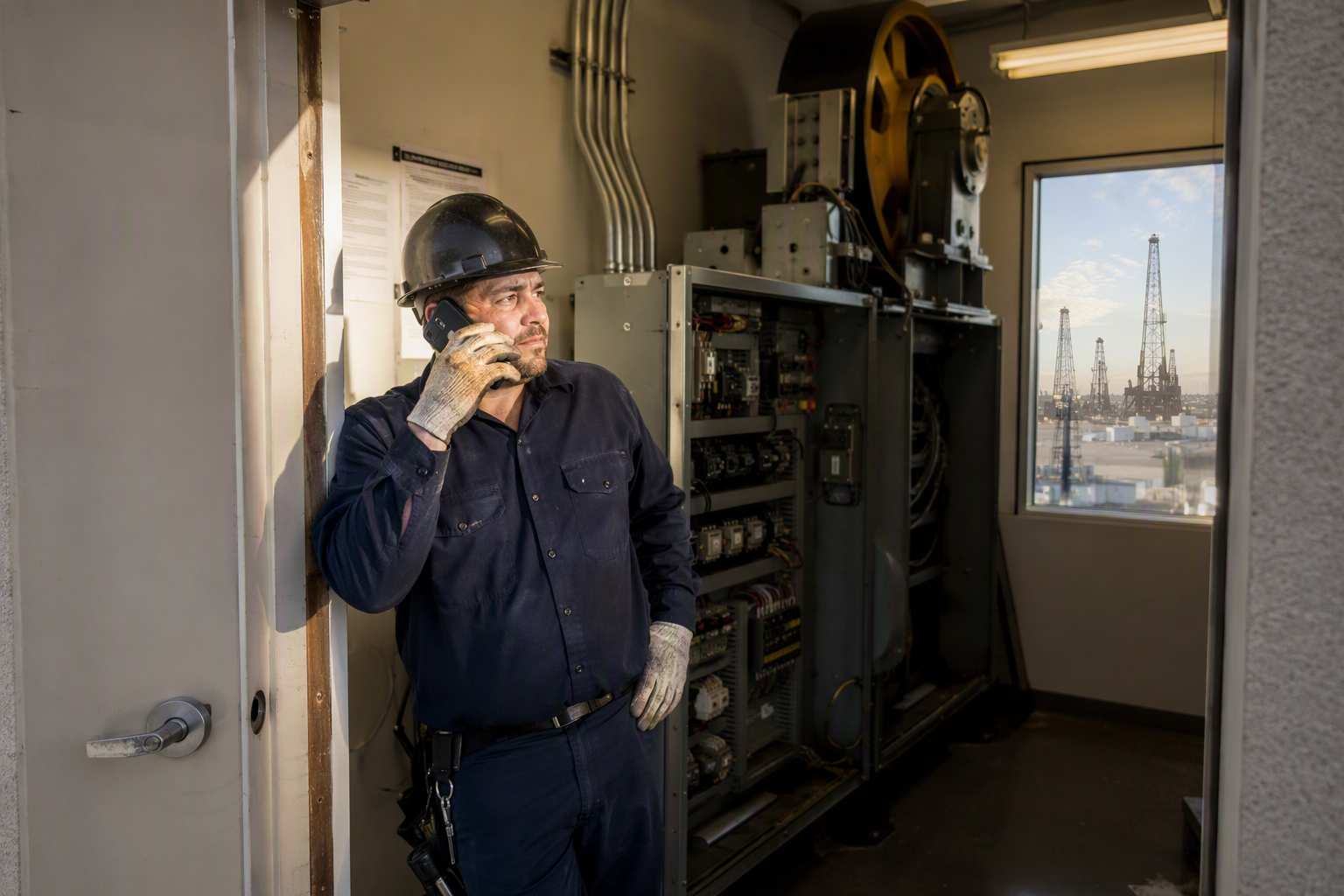
Contact a California-licensed elevator contractor immediately — Liftech Elevator provides emergency elevator repair services throughout Signal Hill, Long Beach, Los Angeles, and Orange County, CA, and can be reached at 562-609-3478.
Signal Hill property owners are legally obligated under California Code of Regulations (CCR) Title 8, Division 1, Chapter 4 to maintain elevators in safe operating condition. When an elevator experiences a sudden malfunction — entrapment, door failure, mechanical breakdown, or electrical fault — the response chain should begin immediately. Contacting a qualified elevator contractor is the priority step, followed by notifying the California Division of Occupational Safety and Health (Cal/OSHA) if the incident involves injury or entrapment that cannot be resolved through standard emergency procedures.
Not all elevator maintenance companies are equipped to handle after-hours or urgent mechanical failures. Property managers in Signal Hill should keep the contact information for a dedicated elevator service contractor on file at all times, posted near each machine room and at the building’s main security or management desk.
What counts as a true elevator emergency requiring immediate repair?
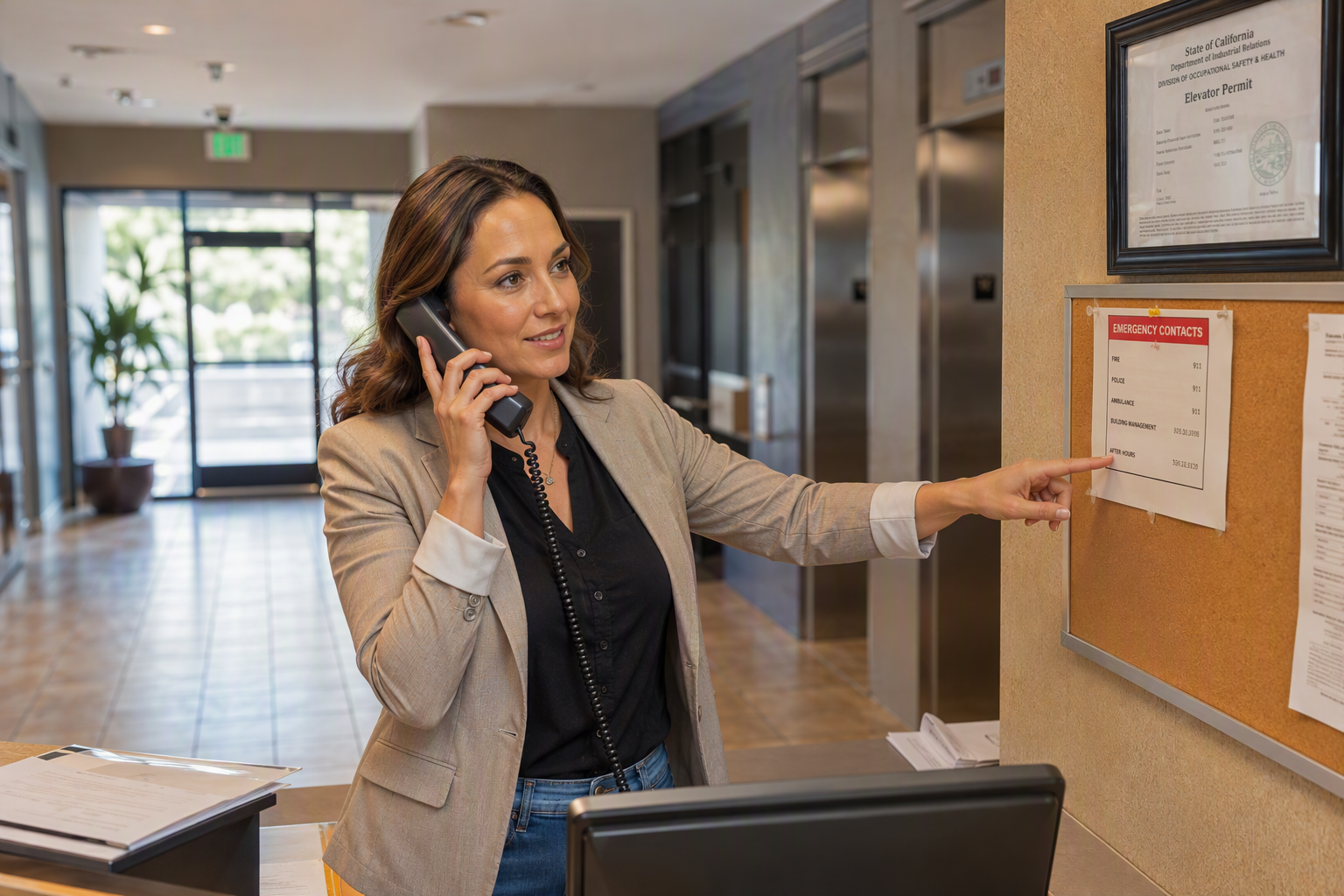
A true elevator emergency includes any condition that poses an immediate risk to passenger safety, traps occupants, or causes complete loss of vertical access in a building — all of which require urgent professional intervention.
Common emergency scenarios include:
- Passenger entrapment: Occupants are trapped inside the cab and cannot exit safely without mechanical assistance.
- Door malfunction: Doors fail to open or close properly, creating a shear hazard or blocking egress.
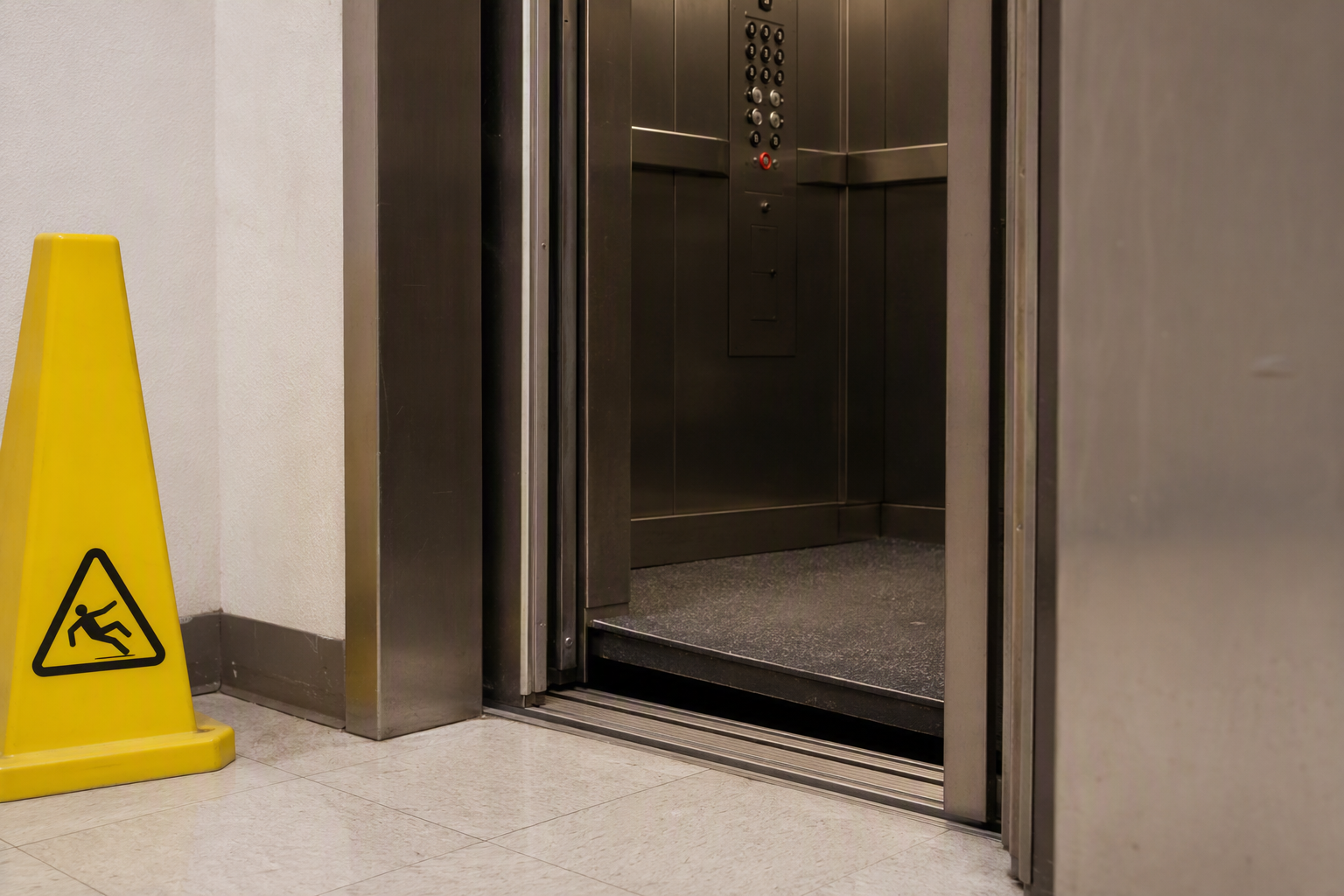
- Leveling failure: The cab stops between floors, creating a trip-and-fall hazard upon exit.
- Electrical failure: Power loss to the elevator system results in sudden stoppage mid-travel.
- Brake or drive system failure: The car moves unexpectedly or fails to hold position.
- Hydraulic fluid leak: For hydraulic elevators, a visible fluid leak indicates a serious risk of sudden descent.
- Alarm or communication system failure: The in-cab emergency phone or alarm is non-functional, leaving passengers without a way to call for help.
Under ASME A17.1 Safety Code for Elevators and Escalators, elevators must be taken out of service when a condition is found that renders them unsafe. Property managers should not attempt to restore service manually and should place the elevator out of service until a licensed technician has assessed and cleared the unit.
What should building occupants and property managers do immediately during an elevator emergency?
The immediate steps during an elevator emergency are to ensure passenger safety, prevent further use of the equipment, and contact qualified repair personnel — in that exact order.
- Do not panic and communicate calmly: If passengers are trapped, use the in-cab emergency phone or intercom to reassure them and confirm that help is being contacted.
- Call emergency services if needed: If passengers show signs of a medical emergency or if entrapment lasts beyond a short window, call 911 so trained responders can assist.
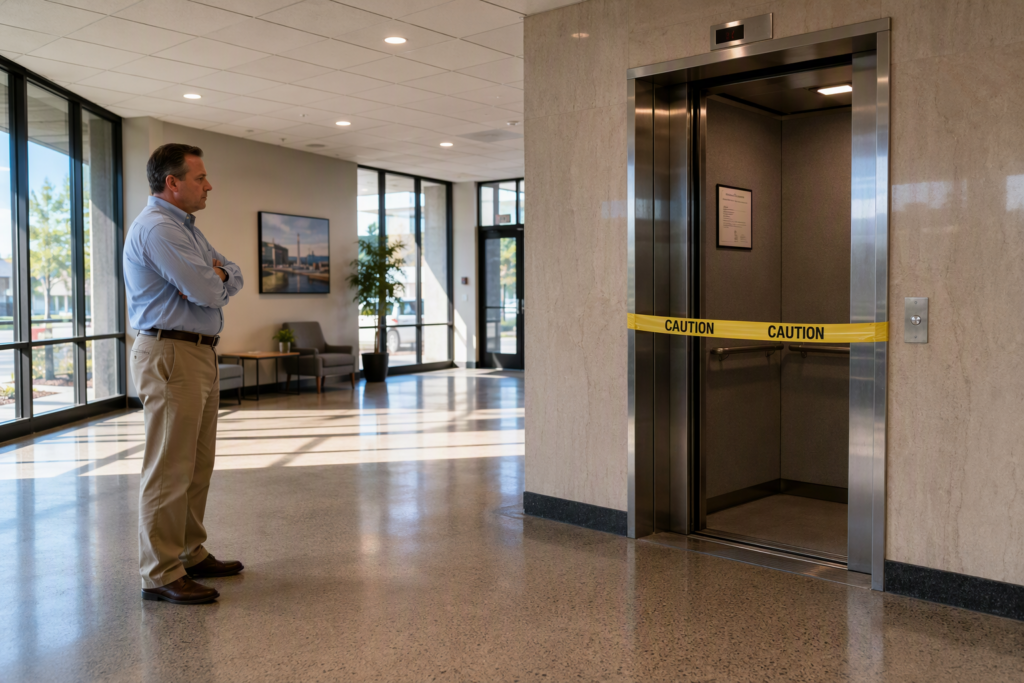
- Take the elevator out of service: Post signage at every landing indicating the elevator is out of service and, where accessible, switch the elevator to the “off” position in the machine room or main disconnect.
- Contact a licensed elevator contractor: Call 562-609-3478 or your designated service provider for emergency repair dispatch.
- Document the incident: Note the time, floor location, number of occupants affected, visible symptoms (noises, smells, error codes), and any actions taken prior to the malfunction.
- Notify Cal/OSHA if required: If the incident involves injury, contact OSHA and the California Elevator Unit as required under state law.
- Preserve records: Keep all documentation for regulatory review and insurance purposes.
Is it legal to continue operating an elevator in Signal Hill after a malfunction?
No — operating an elevator in a known unsafe condition is a violation of California state law and ASME code, and can expose property owners to significant liability.
California Code of Regulations Title 8 governs elevator operation in the state. When an elevator exhibits a malfunction that could compromise safety, the unit must be taken out of service until inspected and cleared by a licensed elevator mechanic and, where required, a state-certified inspector. Continuing to operate a defective elevator risks injury to occupants, regulatory penalties, and civil liability for the property owner. The ASME A17.1 Safety Code for Elevators and Escalators outlines the conditions under which elevators must be removed from service.
How quickly should an emergency elevator repair be completed?
While specific response time commitments vary by service provider, the industry expectation is that entrapment situations should be resolved as rapidly as possible, and any elevator taken out of service due to a safety fault should be assessed before being returned to operation.
The actual repair timeline depends on the nature of the fault, parts availability, and the complexity of the elevator system. Simple issues — such as a tripped circuit breaker or a minor door sensor fault — may be resolved within a single service call. Major mechanical failures involving hydraulic cylinders, drive motors, or control systems can require multiple visits and parts procurement that may span several days. Property managers in Signal Hill should discuss service expectations directly with their elevator contractor prior to an emergency occurring, so they understand the realistic scope of various failure scenarios.
What types of elevator systems are commonly found in Signal Hill and Long Beach buildings?
Buildings in Signal Hill and the broader Long Beach area typically house hydraulic, traction (geared and gearless), and machine-room-less (MRL) elevator systems, each with distinct emergency repair considerations.
| Elevator Type | Common in Building Type | Common Emergency Issues | Key Code Reference |
|---|---|---|---|
| Hydraulic | Low-rise commercial, residential (2–6 floors) | Fluid leaks, piston seal failure, pump malfunction | ASME A17.1, Section 3 |
| Geared Traction | Mid-rise commercial and multifamily | Gearbox wear, rope slippage, brake failure | ASME A17.1, Section 2 |
| Gearless Traction | High-rise commercial, hotels | Motor drive faults, controller errors | ASME A17.1, Section 2 |
| Machine-Room-Less (MRL) | Modern mid-rise commercial, mixed-use | Controller access difficulty, compact drive failure | ASME A17.1, Part 2.7 |
| Limited Use / Limited Application (LU/LA) | Low-rise ADA compliance retrofits | Door operator faults, leveling issues | ASME A17.1, Part 5.3; ADA |
Understanding which system a building operates is essential because emergency procedures and parts sourcing differ significantly between types. Liftech Elevator’s technicians are experienced servicing the range of elevator systems found throughout Signal Hill, Long Beach, Los Angeles, and Orange County.
What are the most common causes of emergency elevator breakdowns?
The most frequent causes of elevator emergencies include deferred maintenance, aging components, door system failures, and electrical or control system faults.
Specific root causes observed across the elevator service industry include:
- Door operator and safety edge failures: Door system faults are among the leading causes of elevator shutdowns. Worn rollers, misaligned tracks, and faulty safety edges cause doors to malfunction or trigger safety circuits.
- Brake wear or adjustment issues: Elevator brakes are safety-critical components that require precise calibration. Out-of-spec brakes can cause leveling problems or prevent the car from holding position.
- Control system errors: Modern solid-state controllers can develop faults due to power surges, software issues, or component aging.
- Hydraulic system deterioration: In older hydraulic elevators, seal degradation and fluid contamination can lead to slow descent or complete loss of lift pressure.
- Rope and sheave wear (traction elevators): Hoist ropes and sheave grooves wear over time and must be inspected and replaced per ASME A17.1 criteria.
- Deferred maintenance: Buildings that skip scheduled service visits accumulate minor faults that compound into major failures.
How does deferred maintenance lead to emergency elevator repairs?
Skipping routine maintenance intervals allows minor mechanical wear to progress into safety-critical failures that require emergency intervention and substantially higher repair costs.
Elevator components — lubrication points, door operator clutches, brake linings, controller contacts, and hydraulic seals — have defined service intervals for inspection and adjustment. When these intervals are missed, components degrade beyond their tolerance thresholds. A door safety edge that is slightly out of calibration may still function marginally during routine operation but fail completely under heavier use or in warmer temperatures. A hydraulic seal showing early weeping may rupture during a busy period. The compounding effect of several small deficiencies creates unpredictable system behavior and elevates the risk of emergency shutdowns significantly.
What does an emergency elevator repair typically involve on the day of the call?
An emergency elevator repair service call typically involves diagnostic assessment, safety verification, component repair or replacement, and a functional test before the elevator is returned to service.
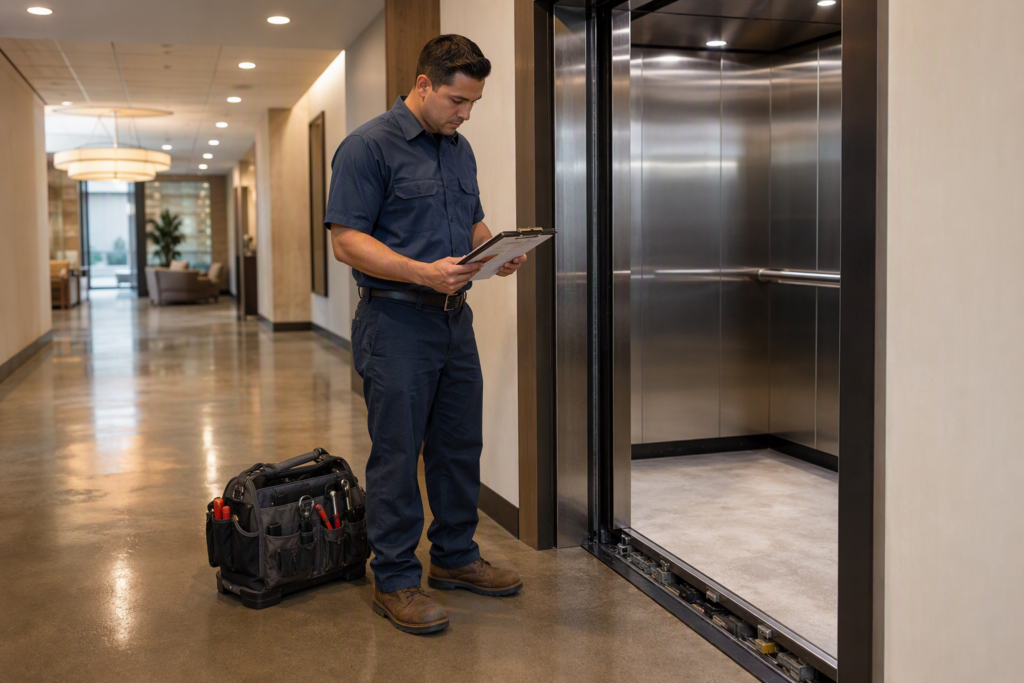
Upon arriving on site, a licensed elevator mechanic will:
- Review the reported symptoms and any error codes displayed by the controller.
- Inspect the machine room, pit, hoistway, and cab for visible damage, fluid leaks, or electrical faults.
- Identify the failed or malfunctioning component.
- Perform the repair using appropriate replacement parts and tools.
- Conduct a series of operational tests including door cycling, leveling, emergency stop, and — where applicable — safety device tests.
- Verify compliance with applicable code requirements before returning the unit to service.
- Provide written documentation of the work performed for the building’s maintenance records.
Are there ADA compliance requirements that affect emergency elevator repairs?
Yes — under the Americans with Disabilities Act (ADA), elevators in public accommodations and commercial facilities must meet accessibility standards, and emergency repairs must restore full ADA-compliant functionality before the unit is returned to service.
Relevant ADA requirements for elevators include proper cab dimensions, accessible controls at the correct height range, Braille and raised-character signage, audible and visual floor indicators, and a functioning two-way emergency communications system. If an emergency repair involves the cab controls, door system, or communication equipment, the returning technician must verify that ADA-required features are fully operational. Failure to restore ADA compliance can expose property owners to complaints or enforcement actions under Title III of the ADA.
How do I choose the right emergency elevator repair contractor in Signal Hill?
The right emergency elevator repair contractor in Signal Hill should be California-licensed, familiar with local code requirements, experienced with the specific elevator type in the building, and capable of providing documented repair records.
Key criteria to evaluate when selecting or pre-qualifying an elevator service contractor include:
- State licensing: California requires elevator contractors to hold appropriate licensure through the Division of Occupational Safety and Health. Verify credentials before authorizing work.
- Local service area: A contractor based in or near Signal Hill will have familiarity with local building stock, inspection authority requirements, and logistics for sourcing parts.
- Code knowledge: The contractor should demonstrate working knowledge of ASME A17.1 and California-specific amendments in effect for 2026.
- Documentation practices: The contractor should provide written service reports after every visit, whether routine or emergency.
- Communication: A reliable contractor clearly explains the diagnosis, required repairs, and options before proceeding with work.
Liftech Elevator serves Signal Hill and the surrounding region, bringing knowledge of the local building landscape and the regulatory environment applicable in Los Angeles County and Orange County.
What questions should I ask an elevator contractor before authorizing emergency repairs?
Before authorizing emergency elevator repairs, property managers should ask about the contractor’s licensing, the specific diagnosis, what parts will be used, how long the repair is expected to take, and what documentation will be provided.
A more complete list of pre-authorization questions includes:
- Is the company licensed as an elevator contractor in California?
- What is the specific cause of the failure?
- Are replacement parts OEM (original equipment manufacturer) or aftermarket, and are they code-compliant?
- Will the repair restore full ADA compliance?
- What tests will be performed before returning the elevator to service?
- Will a written service report be provided upon completion?
- Is the repair sufficient, or is a follow-up maintenance visit recommended?
- Are there underlying conditions that should be addressed to prevent recurrence?
How does Cal/OSHA oversight affect elevator emergency repairs in Signal Hill?
California’s Division of Occupational Safety and Health (Cal/OSHA) has jurisdiction over elevator safety in the state, meaning that certain incidents, permits, and repairs require notification or approval from the state’s Elevator Unit before work is performed or the elevator is returned to service.
The Cal/OSHA Elevator Unit enforces California Code of Regulations Title 8, which adopts and amends the ASME A17.1 Safety Code for Elevators and Escalators for use in California. Major repairs — defined under California regulations — may require a permit from the Elevator Unit prior to commencement. Property owners who proceed with unpermitted major repairs risk having the elevator shut down by a state inspector and face penalties. Qualified elevator contractors operating in Signal Hill should be familiar with when permits are required and should handle the permit application process on behalf of the building owner.
For incidents involving injury or fatality, OSHA notification requirements apply and should be reviewed with legal counsel.
How often should elevators be inspected to reduce the risk of emergency breakdowns?
California requires periodic inspections of elevators by state-certified inspectors, and the ASME A17.1 Safety Code for Elevators and Escalators provides the technical basis for inspection criteria applied during those reviews.
Beyond the mandatory state inspection cycle, industry best practice calls for ongoing routine maintenance visits by a licensed elevator contractor at intervals appropriate to the equipment type and usage intensity. High-traffic elevators in commercial buildings typically benefit from more frequent maintenance visits than low-use residential units. A structured maintenance program should include lubrication, adjustment, parts inspection, safety device testing, and controller diagnostics. Buildings that maintain a consistent preventive maintenance schedule experience fewer emergency breakdowns and are better positioned during state inspections.
What records should a Signal Hill property owner keep related to elevator repairs?
Property owners in Signal Hill should maintain a complete, up-to-date record of all elevator inspections, maintenance visits, emergency repairs, permits, and test certifications — most of which are legally required to be kept on site or accessible on demand.
Required and recommended records include:
- Current Certificate of Compliance (or Permit to Operate) issued by the Cal/OSHA Elevator Unit — this must typically be posted in or adjacent to the elevator.
- Records of all inspection reports from state-certified inspectors.
- Written service reports from every maintenance and repair visit.
- Documentation of any major repair permits and associated sign-offs.
- Test certificates for safety devices, including governor, buffers, and safeties, as required by ASME A17.1.
- Any incident reports involving passenger entrapment or injury.
Gaps in documentation can complicate insurance claims, regulatory reviews, and liability defense. Property managers should request written reports from their elevator contractor after every service visit and file them in a dedicated maintenance log for the property.
Can a building owner perform temporary repairs on a malfunctioning elevator themselves?
No — California law requires that elevator repair and maintenance work be performed by or under the supervision of a licensed elevator mechanic; unauthorized work is illegal and can void the elevator’s permit to operate.
Building maintenance staff are not permitted to perform adjustments, replacements, or repairs on elevator mechanical, electrical, or hydraulic systems unless they are licensed to do so under California regulations. Even well-intentioned temporary fixes — such as manually repositioning a door component or resetting a controller — can mask a safety-critical fault or create new hazards. The appropriate action is to take the elevator out of service and contact a licensed contractor such as Liftech Elevator at 562-609-3478.
What is the difference between an emergency repair and a major alteration for elevator compliance purposes?
An emergency repair addresses an immediate safety fault to restore safe operation, while a major alteration involves changes to an elevator’s rated capacity, speed, rise, or control system that require a separate permit and inspection process under California regulations.
The distinction matters because major alterations trigger a full plan review, permit issuance, and post-completion inspection by the Cal/OSHA Elevator Unit before the elevator can be returned to service. Emergency repairs, by contrast, focus on restoring the elevator to its last permitted condition. If the scope of work discovered during an emergency call reveals the need for modifications that meet the definition of a major alteration, the contractor is obligated to inform the property owner and secure the appropriate permit before proceeding with that portion of the work. Mixing these categories can create significant regulatory and liability complications.
How do I prevent elevator emergencies through a proactive maintenance program?
A structured preventive maintenance program — covering lubrication, adjustment, parts inspection, safety device testing, and controller diagnostics on a defined schedule — is the most effective way to minimize the frequency and severity of elevator emergencies.
Key components of a proactive elevator maintenance program include:
- Scheduled maintenance visits: Regular visits by a licensed elevator mechanic at intervals appropriate to the equipment and usage level.
- Lubrication: Proper lubrication of guide rails, hoist ropes (where applicable), door operator components, and machine bearings per manufacturer and code specifications.
- Door system inspection and adjustment: Door systems are the highest-frequency failure point and should be inspected and adjusted during every maintenance visit.
- Safety device testing: Governors, safeties, buffers, and overspeed protection must be tested at code-required intervals per ASME A17.1.
- Controller and electrical system review: Contacts, relays, fuses, and software parameters should be checked for wear and correct operation.
- Pit and machine room housekeeping: Clean, dry, properly lit machine rooms and pits allow technicians to identify problems early and meet code requirements for equipment access areas.
Does Liftech Elevator serve areas beyond Signal Hill for emergency elevator repair?
Yes — Liftech Elevator provides elevator repair and maintenance services throughout Signal Hill, Long Beach, Los Angeles, and Orange County, CA, making it a regional resource for property managers across a broad service area.
Building owners and property managers in these communities can contact Liftech Elevator at 562-609-3478 for emergency repair requests, routine maintenance scheduling, compliance consultations, and elevator assessment services. Operating across multiple markets in Southern California means Liftech Elevator has familiarity with the variety of building types, elevator systems, and jurisdictional requirements found throughout the region — from mid-rise commercial properties in Long Beach to larger mixed-use developments in Los Angeles and Orange County.
What should I do if my building’s elevator emergency phone is not working?
A non-functioning elevator emergency phone is itself a code violation and should be treated as an emergency requiring immediate attention — the elevator should be taken out of service until the communication system is restored to full operation.
Under ASME A17.1, elevators are required to be equipped with a means of two-way communication that connects passengers to a location staffed by a person capable of summoning assistance. The ADA also mandates that the emergency communication system be accessible to individuals who are deaf or hard of hearing, which in current practice is typically addressed through TTY capability or video relay-compatible systems. If the in-cab phone is found to be inoperative during an inspection or reported by a passenger, the property owner should contact their elevator service contractor immediately to restore this critical safety feature before continuing operation.
Contact Liftech Elevator for a Free Elevator Assessment
Whether you are dealing with an active elevator emergency in Signal Hill or want to establish a preventive maintenance program to reduce the risk of future breakdowns, Liftech Elevator is ready to assist. Serving Signal Hill, Long Beach, Los Angeles, and Orange County, CA, Liftech Elevator brings technical knowledge of the full range of elevator systems found in Southern California buildings, along with working familiarity with California regulatory requirements and ASME A17.1 compliance standards.
Call Liftech Elevator now at 562-609-3478 to request a free elevator assessment or to report an emergency repair need.
Do not wait for a minor fault to become a full emergency — proactive service protects your tenants, protects your compliance standing, and protects your investment in your building’s vertical transportation equipment.
Need elevator service you can rely on? Liftech Elevator is ready to help.