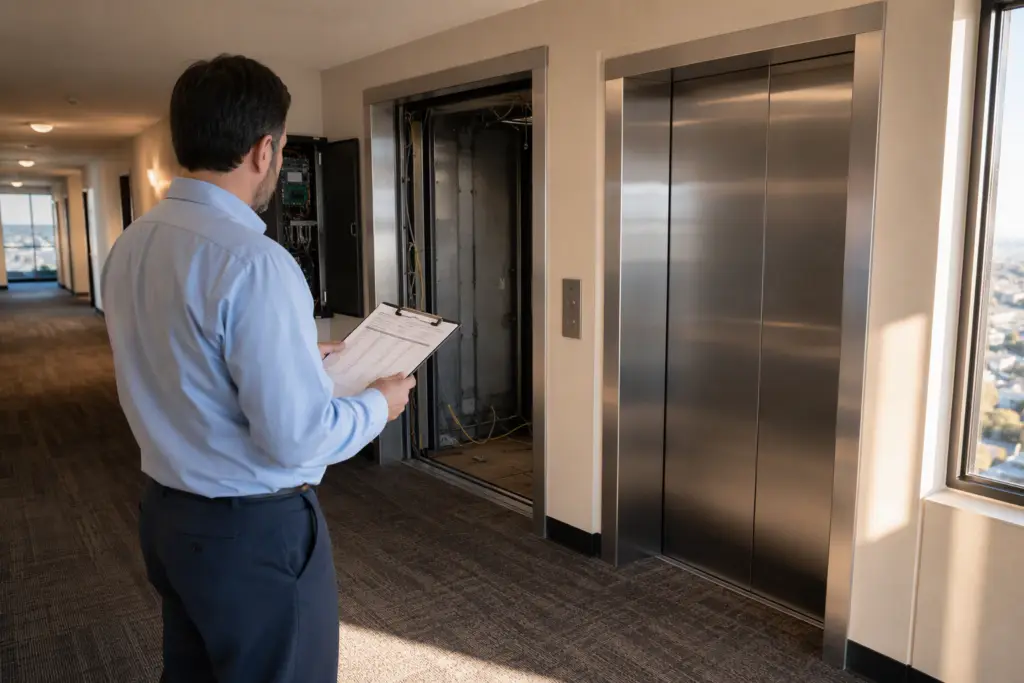
Elevator Repair & Maintenance Costs for Healthcare Facilities in Los Angeles and Orange County (2026)
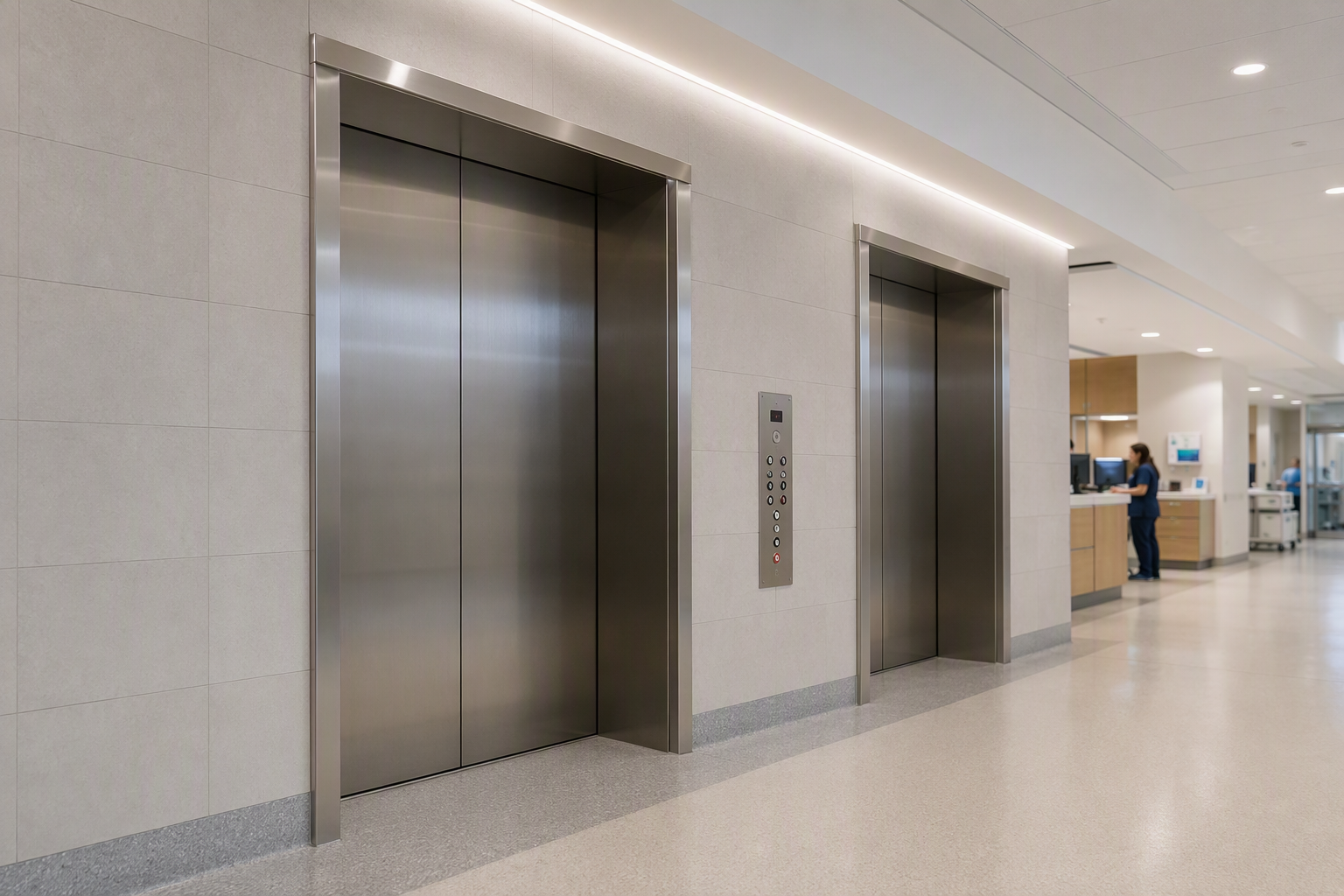
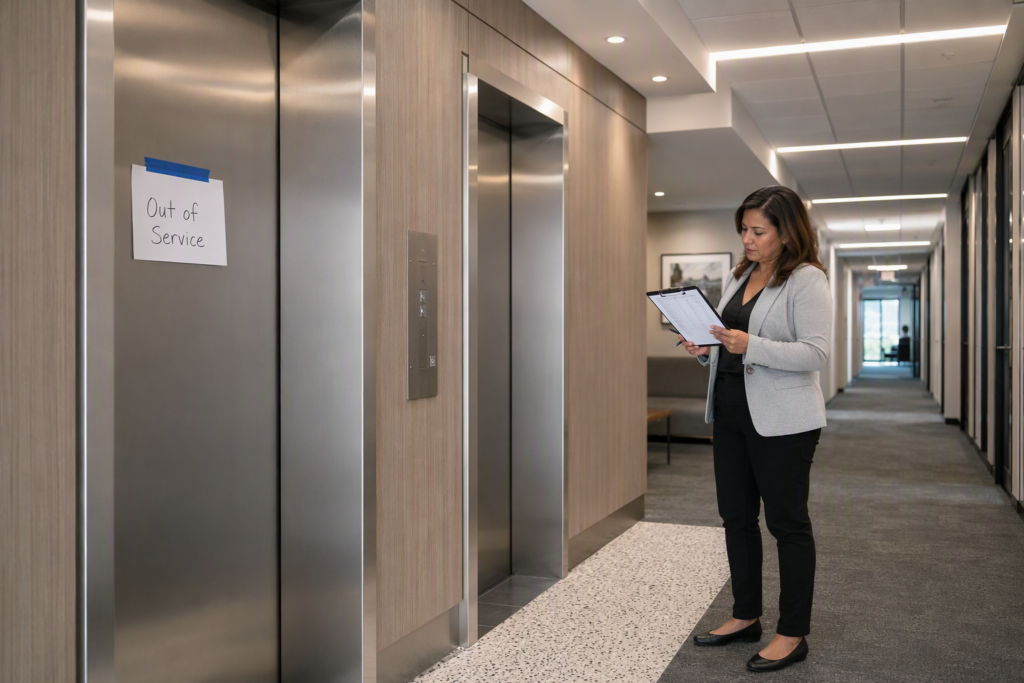
For hospital administrators, senior living operators, and outpatient clinic managers, elevator downtime is never just an inconvenience — it can affect patient safety, regulatory standing, and accreditation status. Understanding what drives elevator costs in Southern California healthcare settings helps facilities budget accurately and avoid compliance gaps that lead to emergency repair bills far exceeding planned maintenance expenses.
What Factors Determine Elevator Maintenance Costs in Healthcare Facilities?
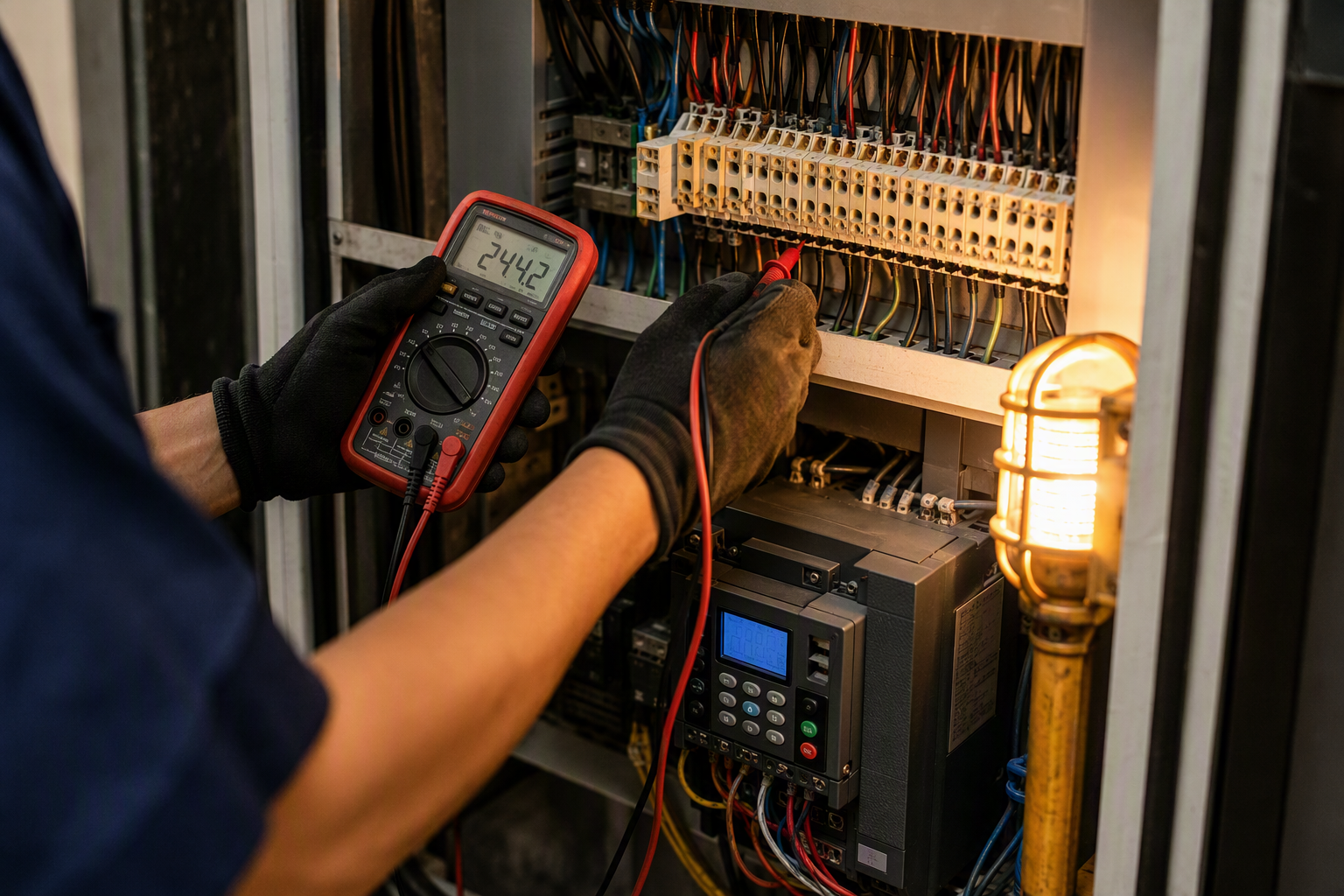
Several variables drive the total cost of elevator upkeep in a clinical environment:
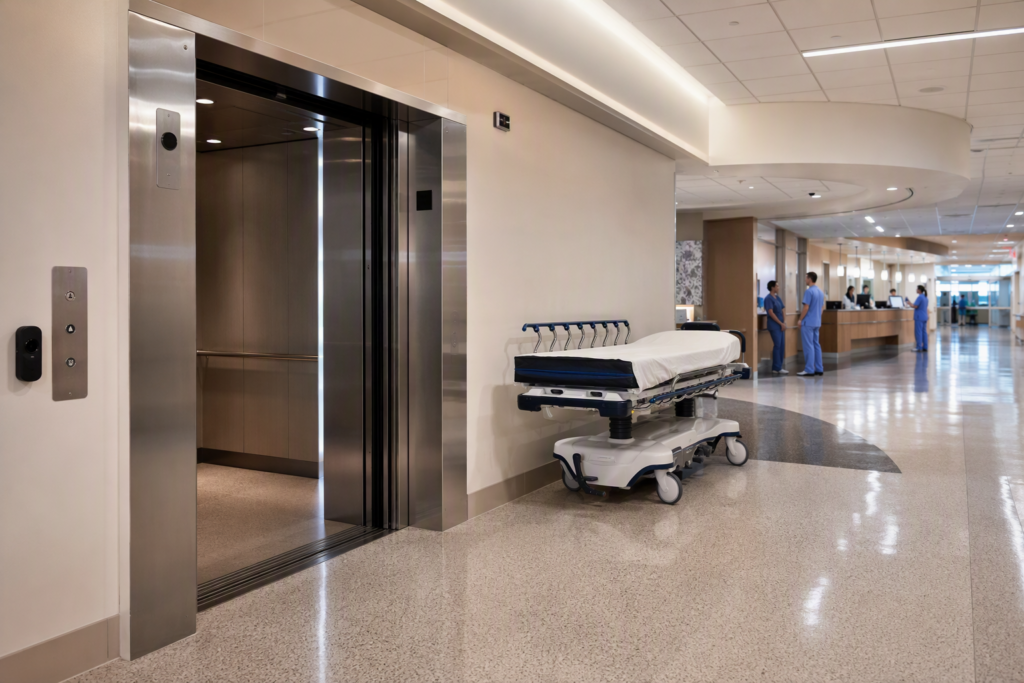
- Elevator type and capacity: Hospital-duty hydraulic and traction elevators designed for stretchers, gurneys, and bariatric equipment require more robust components and more frequent lubrication and adjustment cycles than standard passenger units.
- Number of units and travel distance: Multi-story acute-care hospitals with high-rise elevator banks carry proportionally higher per-building costs than a single-story outpatient clinic.
- Age of equipment: Older equipment subject to ASME A17.3 Safety Code for Existing Elevators and Escalators retroactive upgrade requirements can generate significant capital expenditures during re-inspection cycles.
- Inspection and permit fees: California elevator inspections are governed by the California Department of Industrial Relations — Division of Occupational Safety and Health (Cal/OSHA Elevator Unit), and annual permit fees vary by county and elevator class.
- Availability requirements: Healthcare facilities typically require priority response provisions in service contracts, which are priced differently than standard commercial agreements.
- Scope of contract: Full-maintenance agreements (covering parts, labor, and callbacks) are priced differently from oil-and-grease (lubrication-only) agreements. Healthcare facilities almost universally require full-maintenance coverage.
Because no two healthcare buildings share the same elevator mix, accurate budgeting requires a site-specific assessment. Liftech Elevator provides free on-site evaluations for healthcare clients across Signal Hill, Long Beach, Los Angeles, and Orange County to develop cost estimates grounded in actual equipment conditions rather than generic price lists.
What Compliance Standards Apply to Healthcare Elevators in California?
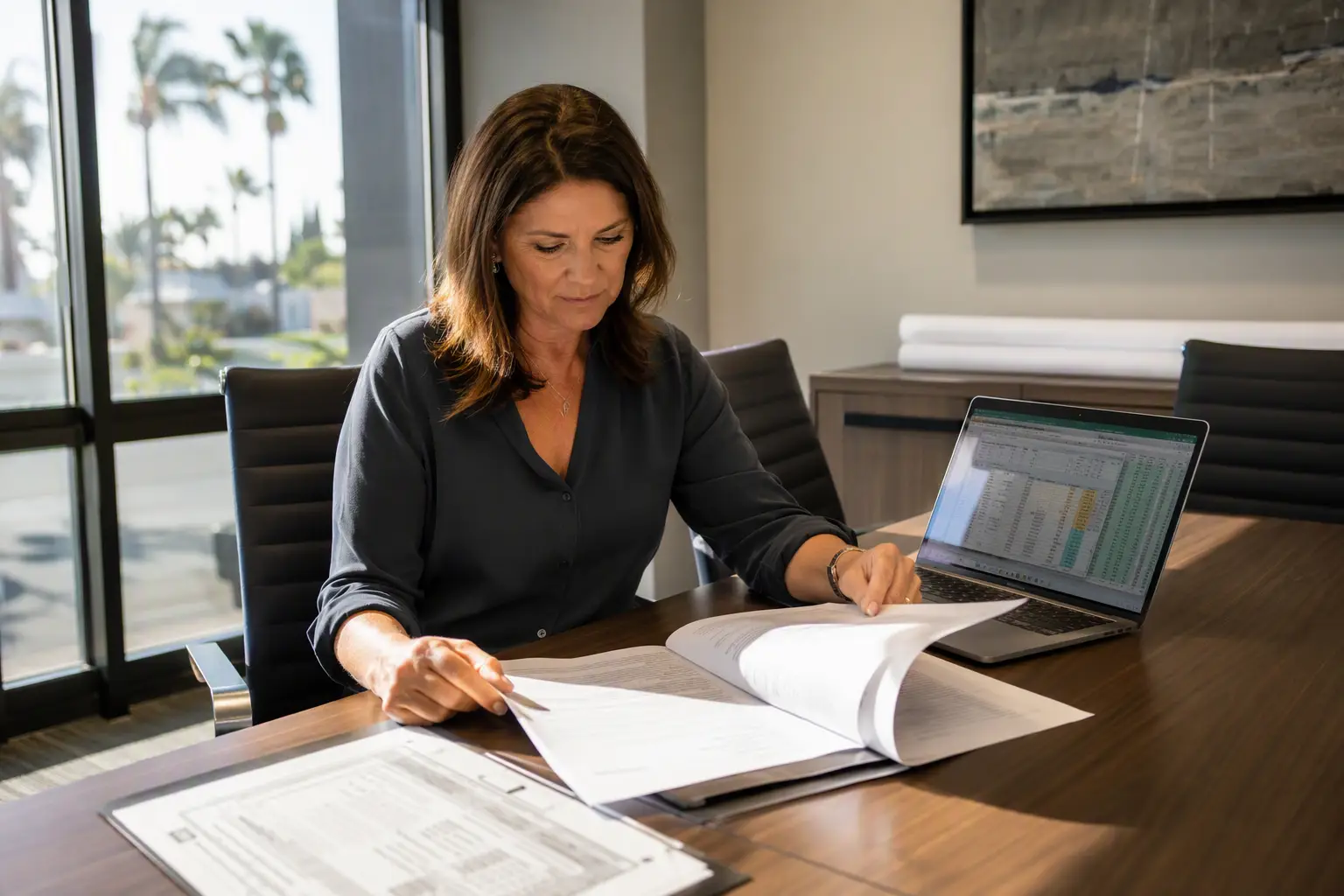
Healthcare elevator compliance in California operates on multiple layers:
- ASME A17.1 Safety Code for Elevators and Escalators: The foundational safety standard adopted by California. It governs design, construction, operation, inspection, testing, and maintenance requirements for new and altered elevators.
- ASME A17.3 Safety Code for Existing Elevators and Escalators: Addresses retroactive safety requirements for equipment already in service — particularly relevant for older hospital buildings throughout greater Los Angeles and Orange County.
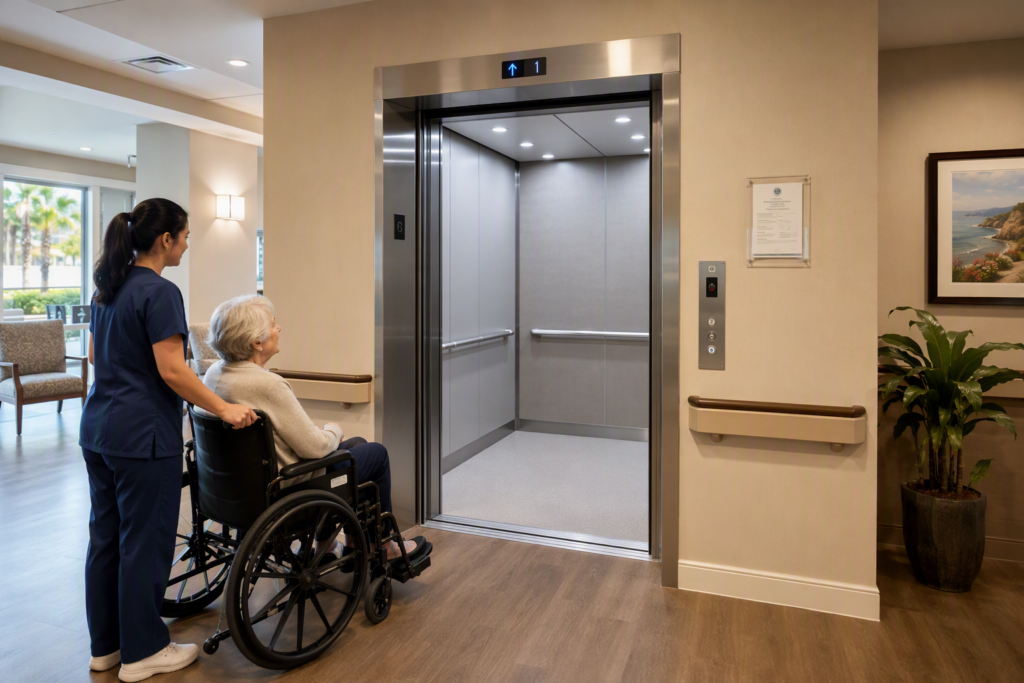
- Americans with Disabilities Act (ADA): Requires that elevators serving multiple floors in healthcare buildings are accessible to individuals with disabilities. This includes cab dimensions, door timing, control panel heights, Braille markings, and audible signals.
- California Building Code (CBC) Title 24: California’s state-specific amendments to federal accessibility and building standards, including elevator provisions that may exceed baseline ADA requirements in certain occupancy classifications.
- The Joint Commission and CMS Conditions of Participation: Accredited hospitals and Medicare/Medicaid-certified facilities must demonstrate that vertical transportation equipment is maintained under a documented, scheduled program. Inspection records and maintenance logs are subject to survey review.
- NFPA 101 Life Safety Code: Governs fire service access and firefighters’ emergency operation requirements for elevators in healthcare occupancies.
- Cal/OSHA Elevator Safety Orders: California requires annual inspections by a certified elevator inspector and valid operating permits for each unit. Facilities that allow permits to lapse face administrative citations and potential shutdown orders.
Non-compliance in a healthcare setting carries consequences beyond fines — Joint Commission surveyors, CMS inspectors, and local fire marshals may cite elevator deficiencies as immediate jeopardy findings, triggering accelerated remediation timelines and costs.
What Types of Elevator Repairs Are Most Common in Hospitals and Clinics?
Clinical-use elevators experience accelerated wear relative to comparable commercial equipment because of high duty cycles, heavy loads, and the corrosive effect of cleaning chemicals used in healthcare environments. Common repair categories include:
- Door operator and door sensor replacement — the single most frequent repair category in high-traffic healthcare elevators
- Hydraulic cylinder seal replacement and oil replacement in compliance with current environmental regulations
- Controller modernization to meet current ASME A17.1 code editions
- Cab interior rehabilitation including floor, wall panel, and handrail replacement to meet infection-control surface standards
- Emergency lighting and communication system upgrades required under ADA and life safety codes
- Governor and safety device testing and recertification
- Firefighters’ emergency operation (FEO) testing and repair
- Pit waterproofing and sump pump service in coastal Southern California facilities subject to groundwater intrusion
How Should a Healthcare Facility Structure Its Elevator Service Contract?
Contract structure directly affects both cost predictability and compliance exposure. Key elements a healthcare facility should require in any service agreement include:
- Full-maintenance scope: Confirm that the agreement covers parts, labor, and callbacks — not merely routine lubrication visits.
- Documented maintenance logs: Logs must be available for Joint Commission and CMS surveys on demand. Verify that the service provider maintains digital records accessible to the facility.
- Inspection coordination: The contractor should coordinate with the California-certified elevator inspector for annual inspections and permit renewals.
- Modernization planning: Identify any ASME A17.3 retroactive requirements or ADA deficiencies and document a capital plan for remediation.
- Escalation clauses: Understand how labor and parts cost escalations are passed through over multi-year contract terms.
- Callback provisions: Define what constitutes an emergency callback versus a routine service call and how each is handled under the agreement.
Liftech Elevator structures maintenance agreements specifically for healthcare operators in Long Beach, Signal Hill, Los Angeles, and Orange County, with documentation formats designed to satisfy accreditation survey requirements.
What Is the Elevator Inspection Process for California Healthcare Buildings?
California requires a certified elevator inspector to conduct a periodic inspection and witness required tests on each elevator unit. The process typically proceeds as follows:
- The facility or its elevator contractor schedules an inspection with a Cal/OSHA-certified elevator inspection agency or authorized inspector.
- The inspector reviews maintenance logs and prior inspection reports.
- A physical inspection of the car, hoistway, machine room, pit, and all safety devices is conducted.
- Required tests — such as safety device tests and pressure tests for hydraulic units — are witnessed.
- Deficiencies are noted; the facility receives a correction order specifying remediation timelines.
- A valid operating permit is issued (or renewed) upon satisfactory completion.
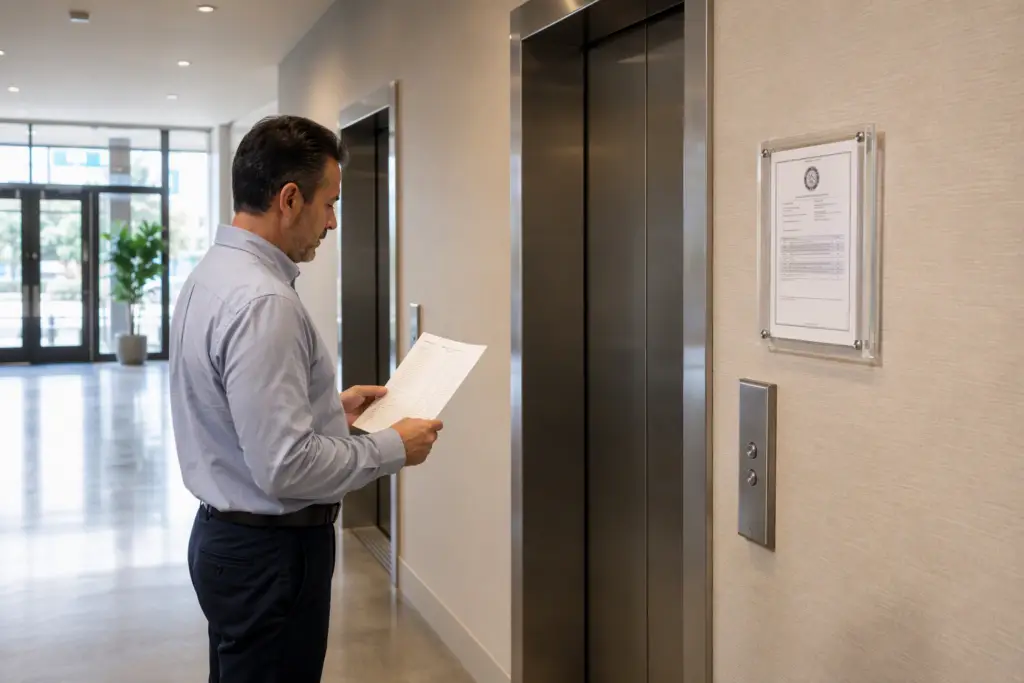
- Permit certificates must be posted inside each elevator cab per California regulation.
Questions Your Inspector Will Ask
California elevator inspectors and Joint Commission surveyors are trained to probe both physical conditions and documentation practices. Healthcare facility managers should be prepared to answer the following:
- Where are your current operating permits? Each unit must have a posted, non-expired permit visible inside the cab.
- Can you produce maintenance logs for the past 12 months? Logs must reflect the scope and intervals specified in your service agreement.
- When was the last firefighters’ emergency operation (FEO) test completed, and by whom? ASME A17.1 and NFPA 101 establish testing intervals; records must be available.
- Have any safety device tests been deferred or skipped? Deferrals require documented justification and rescheduling.
- Is there a documented corrective action plan for any outstanding deficiencies from the prior inspection?
- Who holds the current maintenance contract, and are they California-licensed? California requires elevator mechanics to hold a valid state certification.
- What is your procedure when an elevator traps a passenger or fails between floors? Healthcare facilities must have a written entrapment response protocol.
- Have any ADA-related complaints been filed regarding elevator access? Document any complaints and corrective actions taken.
- Is your hydraulic elevator fluid compliant with current environmental regulations? Facilities near water sources in Los Angeles and Orange County face additional scrutiny.
What Is the Difference Between Elevator Modernization and Repair in a Healthcare Setting?
Repair restores an existing component to operational condition. Modernization replaces an aging system or subsystem — such as a controller, drive, or door operator — with current-generation equipment. In healthcare buildings, modernization is often triggered by:
- ASME A17.3 retroactive code requirements identified during inspection
- Parts obsolescence making repairs no longer cost-effective or technically feasible
- ADA accessibility deficiencies that cannot be corrected through repair alone
- Energy efficiency goals or sustainability mandates from hospital systems or health network operators
- Infection control redesigns requiring new cab interior materials
Modernization costs vary considerably depending on scope. A full traction elevator modernization covering controller, machine, and cab differs significantly in cost from a targeted door system modernization. Facilities should request itemized assessments rather than bundled quotes to accurately compare vendor proposals.
How Do Los Angeles and Orange County Regulatory Environments Differ?
Both Los Angeles County and Orange County fall under California’s statewide elevator safety regulatory framework administered by the Division of Occupational Safety and Health. Local Authority Having Jurisdiction (AHJ) determinations for fire-related elevator provisions — such as smoke detector requirements for elevator lobbies — may vary between the City of Los Angeles, Los Angeles County unincorporated areas, and individual Orange County municipalities. Healthcare facilities should confirm AHJ requirements with their elevator contractor and local building department when planning modernization projects or responding to inspection deficiencies.
Liftech Elevator holds California elevator contractor certification and is familiar with the permitting and inspection workflows across Signal Hill, Long Beach, Los Angeles, and Orange County jurisdictions, reducing administrative delays during inspection and permit renewal cycles.
What Should a Healthcare Facility Do When an Elevator Fails or Traps a Passenger?
- Activate the elevator’s in-car emergency communication system to contact the trapped occupant and reassure them help is on the way.
- Contact your elevator service provider using the emergency callback number specified in your service agreement.
- Notify facility security and the charge nurse or administrator on duty per your internal entrapment response protocol.
- Do not attempt to manually open hoistway doors or assist passengers out of the cab — this must be performed by a certified elevator mechanic.
- Document the time of entrapment, time of service notification, time of resolution, and names of personnel involved.
- File an incident report in accordance with your facility’s safety management plan and any applicable accreditation requirements.
- Arrange for the elevator to be inspected by your service provider before returning it to service if the failure involved a safety device activation.
Why Does Vendor Selection Matter More in Healthcare Than in Commercial Buildings?
Healthcare facilities face a convergence of regulatory oversight bodies — state elevator inspectors, Joint Commission surveyors, CMS reviewers, local fire marshals, and ADA compliance officers — that most commercial buildings do not. A service provider who is unfamiliar with clinical documentation expectations, accreditation timelines, or the life-safety consequences of deferred maintenance creates compliance risk that extends far beyond the machine room.
Liftech Elevator serves healthcare clients across Signal Hill, Long Beach, greater Los Angeles, and Orange County with maintenance programs designed around the documentation, response, and compliance standards that clinical environments demand. Assessments are conducted at no charge, giving facilities a clear picture of their current compliance posture and maintenance costs before signing any agreement.
Get a Free Healthcare Elevator Assessment
Compliance gaps in a healthcare facility’s vertical transportation equipment can escalate from a maintenance line item to an accreditation finding. Contact Liftech Elevator for a free elevator assessment and receive a site-specific evaluation of your equipment condition, compliance status, and maintenance cost structure for your Los Angeles or Orange County facility.
Contact Liftech Elevator for a free elevator assessment: 562-609-3478
Need elevator service you can rely on? Liftech Elevator is ready to help.