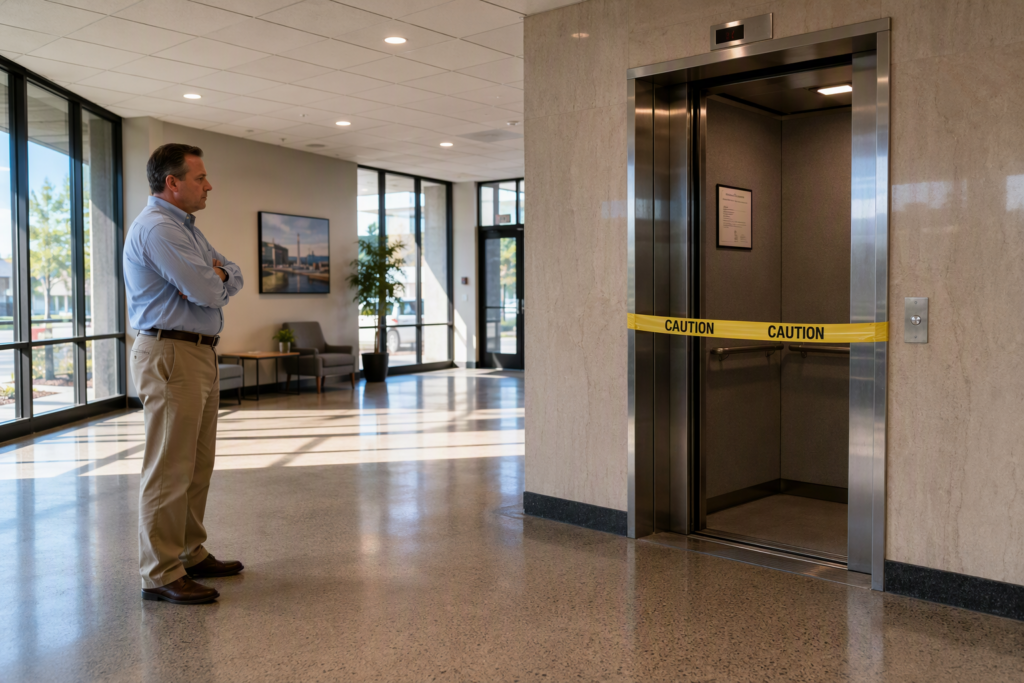
How to Switch Elevator Maintenance Companies Without Breaking Your Contract or Losing Service Coverage

Switching elevator maintenance companies is a routine business decision for building owners and property managers across California, yet it carries real risks if handled without a clear plan. Contract penalties, lapses in state-required inspection coverage, and equipment handoff disputes are the most common pitfalls. This guide walks through every stage of a compliant, uninterrupted transition — from reading your current contract to activating a new service agreement — with California code requirements and practical vendor-selection benchmarks throughout.
What Does a Typical Elevator Maintenance Contract Actually Say About Termination?
Most elevator maintenance contracts include a termination-for-convenience clause that allows either party to exit the agreement by providing written notice — commonly 30, 60, or 90 days in advance.
Beyond the notice period, contracts typically specify conditions for early termination, which may include a buyout fee calculated as a percentage of remaining contract value, return of proprietary parts, or restrictions on using documentation provided by the outgoing vendor. A thorough read of these provisions is the non-negotiable first step in any transition. Pay particular attention to automatic renewal clauses — many commercial elevator service agreements renew automatically for one-year terms unless written notice is delivered within a specific window, often 60 to 90 days before the anniversary date.
If the contract was executed by a property management company on behalf of a building owner, confirm who holds the legal authority to issue termination notice. Sending termination from the wrong party can delay the process or create a dispute over whether valid notice was given.
Can a Building Owner Be Held Liable for Canceling an Elevator Service Contract Early?
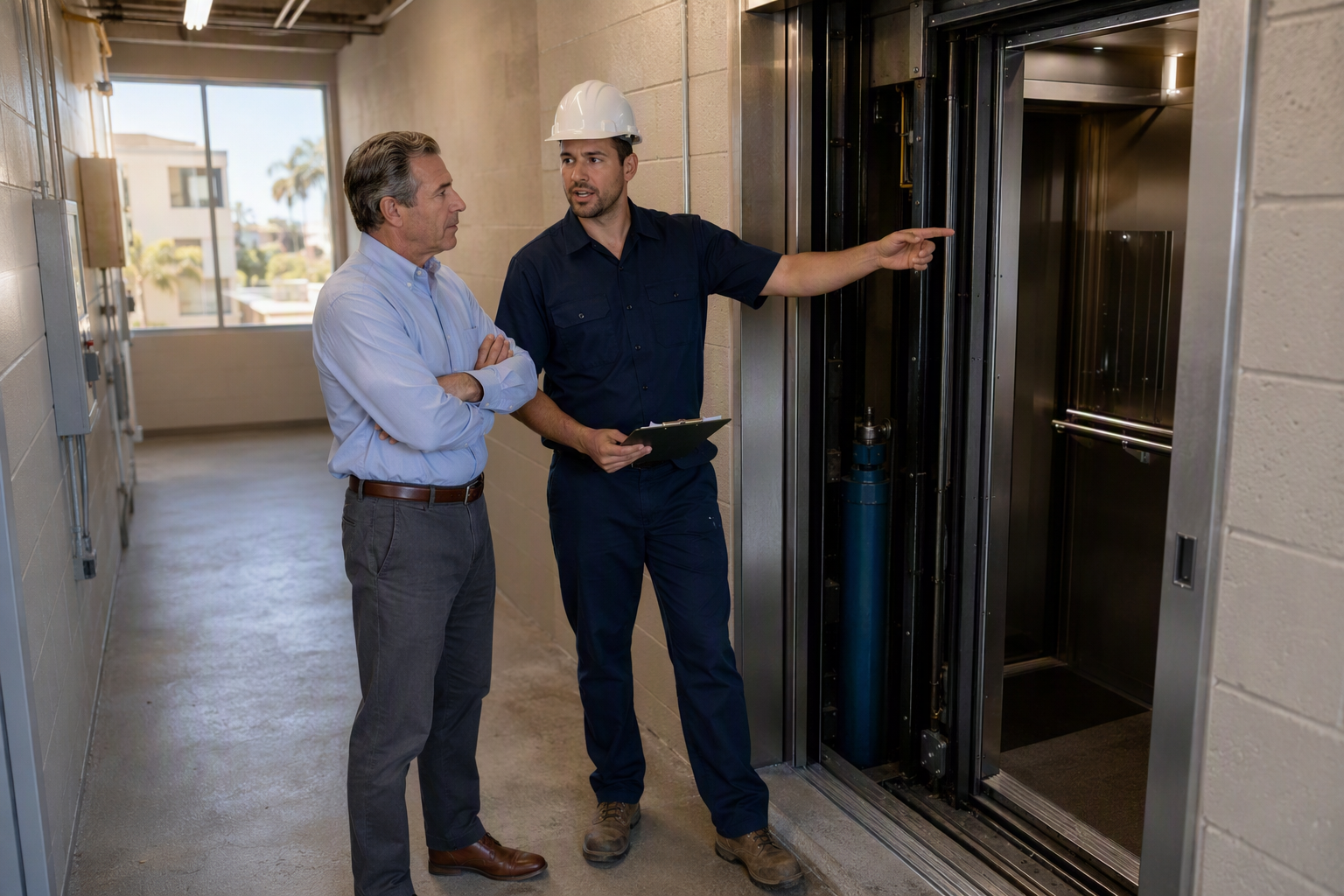
Yes — early termination without cause and without following the contract’s exit procedure typically triggers a liquidated damages or early cancellation fee as defined in the agreement.
However, there are legitimate grounds that can reduce or eliminate penalty exposure. These include material breach by the service provider (such as repeated failure to respond to a breakdown within the agreed timeframe, or allowing a required inspection to lapse), sale of the property, or a documented change in building use that eliminates the need for elevator service. California contract law generally requires the non-breaching party to mitigate damages, so a well-documented record of service deficiencies strengthens any position taken in a cancellation dispute. Consult a California-licensed attorney before invoking a breach-based termination if the contract value is significant.
What Records Must Be Transferred When Changing Elevator Service Companies?
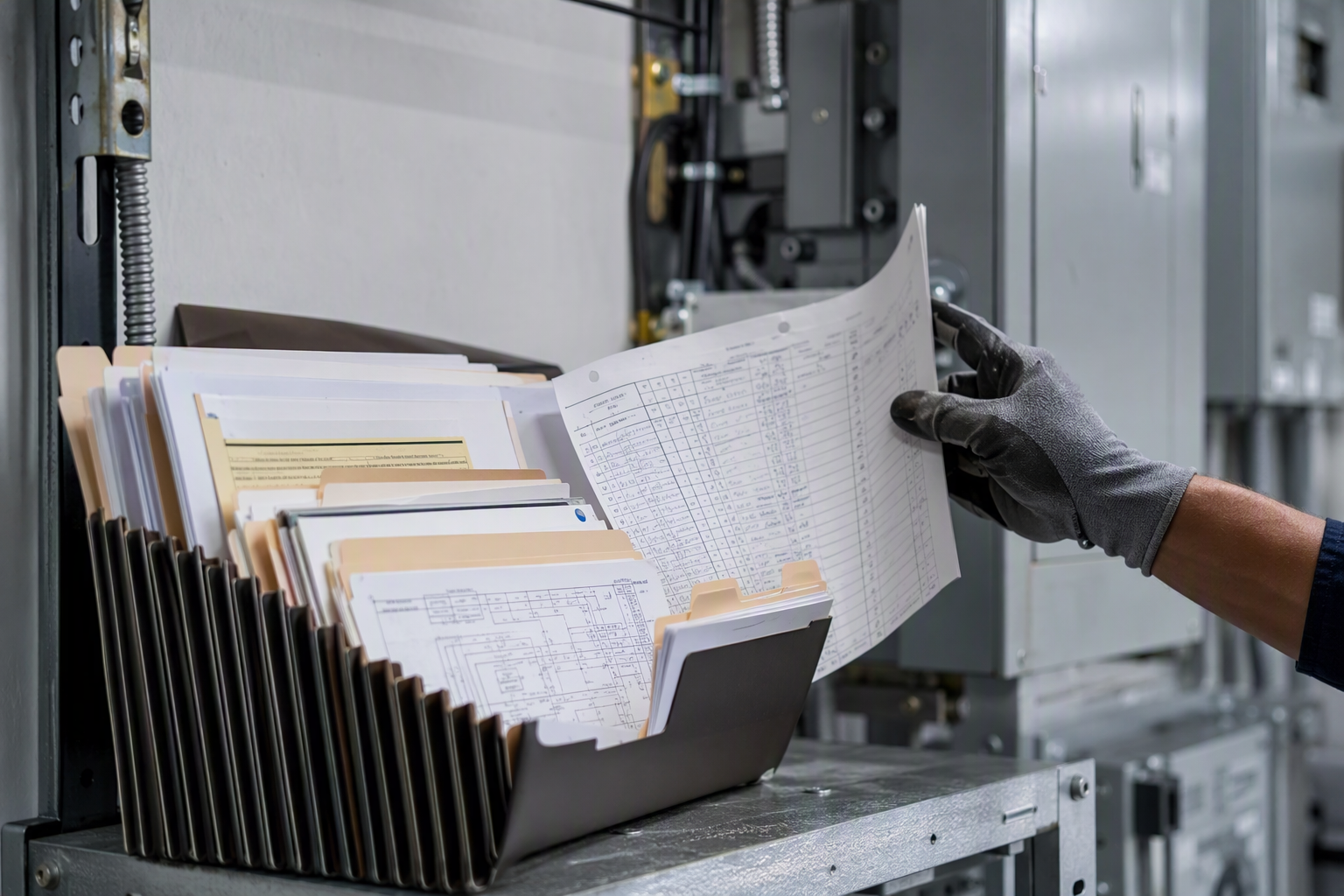
The incoming service provider needs a complete equipment file — including the current permit to operate, the most recent inspection certificates, maintenance logs, wiring diagrams, and a parts inventory — to assume service without interruption.
Under California’s elevator safety program, administered by the Division of Occupational Safety and Health (Cal/OSHA) Elevator Unit, a valid permit to operate must be posted in or on the elevator at all times. That permit is tied to the equipment, not to the service company, so it transfers with the building. What does not automatically transfer is the service company’s proprietary documentation. Many major elevator OEM-affiliated contractors retain wiring diagrams, software access codes, and component histories on the grounds that these are trade secrets. California does not have a statutory mandate requiring outgoing contractors to surrender proprietary technical documents, which means building owners should negotiate data access rights at the time the original contract is signed — and should raise the issue proactively during contract renegotiation if those rights are absent.
At minimum, request the following before the outgoing contractor leaves:
- Current permit to operate (Cal/OSHA Elevator Unit issued)
- Most recent periodic inspection report and any open violation notices
- Maintenance logbook (required to be kept current under ASME A17.1 Safety Code for Elevators and Escalators)
- Wiring diagrams and hydraulic schematics (negotiate release explicitly)
- List of installed replacement parts and their model/serial numbers
- Any open CAT 1 or CAT 5 test records and upcoming test due dates
What Are the California Inspection and Testing Requirements That Cannot Lapse During a Transition?
California requires periodic inspections and Category testing on defined schedules under the ASME A17.1 Safety Code for Elevators and Escalators, and a lapse in service coverage does not pause or reset those deadlines.
The Cal/OSHA Elevator Unit enforces inspection compliance, and a permit can be suspended if required tests are not completed on schedule. Periodic inspections must be conducted by a Qualified Elevator Inspector (QEI) certified under the ASME QEI-1 Standard for the Qualification of Elevator Inspectors. When switching contractors, confirm with your incoming provider the exact dates of all upcoming required tests — particularly Category 1 (annual safety test) and Category 5 (five-year hydraulic pressure test for hydraulic units) — and ensure the new service agreement explicitly assigns responsibility for scheduling and witnessing those tests. Do not assume the outgoing contractor will notify the AHJ (Authority Having Jurisdiction) on your behalf once their contract ends.
How Much Notice Should You Give Your Current Elevator Maintenance Company?
The required notice period is whatever your contract specifies — most commonly 30, 60, or 90 calendar days — and notice should be delivered in writing via a method that creates a delivery record, such as certified mail or email with read receipt.
Beyond the contractual minimum, allowing additional lead time is practical. A 90-day voluntary window gives the incoming provider enough time to conduct a pre-takeover inspection, order any immediately needed parts, complete onboarding paperwork with Cal/OSHA, and schedule a formal equipment walkthrough with both the outgoing and incoming technicians present. Rushed transitions are where equipment handoff disputes and service gaps most frequently occur.
How Do You Evaluate a New Elevator Maintenance Company Before Signing?
Evaluate prospective elevator service companies on licensing status with the California Department of Industrial Relations, technician certification, the scope of their service agreement, parts availability, and their direct experience with your specific equipment type and manufacturer.
The table below provides a practical comparison framework for assessing vendors side by side:
| Evaluation Criterion | Minimum Acceptable Standard | Best Practice Standard |
|---|---|---|
| California Contractor Licensing | Valid C-11 Elevator Contractor License (CSLB) | C-11 license with no open disciplinary actions |
| Technician Certification | NEIEP-trained or equivalent | IUEC-affiliated, manufacturer-trained where applicable |
| Service Agreement Scope | Covers labor and routine maintenance parts | Full coverage including major components, callbacks, and annual test |
| Inspection Coordination | Schedules and witnesses required tests | Proactively tracks all test due dates and AHJ deadlines |
| Parts Inventory Access | Can source parts from third-party suppliers | Maintains local inventory of common wear components |
| Equipment Familiarity | General multi-brand service capability | Documented experience with your specific make and model |
| ADA Compliance Support | Can identify ADA non-conformances | Provides written ADA assessment per ADA Standards for Accessible Design |
| Service Area Coverage | Covers your city or county | Local office or technicians based near the property |
Liftech Elevator serves property owners and managers throughout Signal Hill, Long Beach, Los Angeles, and Orange County, and is available to conduct pre-transition equipment assessments before a new service agreement is finalized.
What Is the Step-by-Step Process for Switching Elevator Maintenance Companies Correctly?
A structured transition follows a defined sequence that protects against contract penalties, compliance gaps, and equipment disputes.
- Audit your current contract. Identify the termination notice period, early exit penalties, automatic renewal windows, and any proprietary documentation clauses.
- Compile your equipment file. Gather the current permit to operate, inspection certificates, maintenance logs, open violation notices, and known upcoming test due dates.
- Issue an RFP or gather competing bids. Approach at least two to three licensed California elevator contractors and provide them with your equipment specifications so bids are directly comparable.
- Select and negotiate with your incoming provider. Confirm their C-11 license status, review their service agreement coverage scope, and ensure test scheduling responsibilities are explicitly stated.
- Sign the new service agreement before issuing termination notice. This eliminates any coverage gap and gives you a confirmed replacement before the current relationship ends.
- Deliver written termination notice to your current contractor. Use certified mail or a method that timestamps delivery. Reference the specific contract clause being invoked.
- Schedule a joint equipment walkthrough. Arrange for the outgoing and incoming technicians to walk the equipment together, documenting current condition and any outstanding issues.
- Transfer all records to the incoming provider. Ensure the new contractor receives everything in your equipment file and is formally registered with the Cal/OSHA Elevator Unit as the new responsible party.
- Confirm no open violations remain with the AHJ. Verify with Cal/OSHA or your local authority that there are no outstanding orders attached to your permit that need resolution before the transition is complete.
- Notify building tenants or occupants. In occupied buildings, brief communication about the service transition reduces confusion during the onboarding period.
What Happens to the Elevator Permit to Operate During a Contractor Change?
The permit to operate remains with the equipment and does not need to be reissued solely because the maintenance contractor changed — but the incoming contractor must be registered with Cal/OSHA as the new responsible maintenance provider.
California’s elevator safety program requires that a licensed elevator contractor be on record for each permitted unit. If there is any administrative gap in that registration, it can create a compliance flag during the next inspection. The incoming provider should submit the appropriate contractor registration documentation to the Cal/OSHA Elevator Unit promptly after the transition date, and building management should retain confirmation of that submission for their records.
Can You Switch Elevator Companies If the Equipment Is Under Manufacturer Warranty?
Yes — a manufacturer’s warranty typically covers defects in materials and workmanship, not the identity of the maintenance provider, though the warranty documentation should be reviewed carefully for any maintenance-by-manufacturer-affiliate requirements.
Some OEM elevator manufacturers include language requiring that warranty service be performed by their own certified technicians or authorized dealers. Switching to an independent contractor during the warranty period could potentially affect warranty coverage for defects that arise after the switch. Before transitioning during an active warranty period, obtain the warranty terms in writing and confirm with the incoming contractor whether they are an authorized service provider under that manufacturer’s program. Independent contractors with strong OEM training backgrounds can often qualify as authorized warranty service providers.
How Does an Elevator Modernization Affect a Maintenance Contract Transition?
A modernization project — replacing the controller, drive system, cab interior, or other major components — often creates a natural and legally cleaner contract transition point, since the scope of service changes significantly when new equipment is installed.
If the outgoing contractor performed the original installation but the building owner wishes to engage a different company for ongoing maintenance, review the installation contract for any post-installation maintenance commitments or right-of-first-refusal clauses. Modernizations also reset some testing schedules under ASME A17.1, and the incoming maintenance provider should document exactly which components were replaced and when acceptance testing was completed. This documentation becomes the baseline for all future periodic testing.
What Are the Most Common Mistakes Building Owners Make When Switching Elevator Companies?
The most frequent and costly mistakes are failing to read the automatic renewal window, allowing a coverage gap between outgoing and incoming agreements, and neglecting to transfer equipment documentation.
Other common errors include:
- Issuing verbal rather than written termination notice, leaving the date of notice legally unclear
- Choosing a new provider based on price alone without verifying C-11 license status or technician qualifications
- Assuming the outgoing contractor will schedule pending required tests before the transition — in practice, motivation to do so diminishes after notice is given
- Not confirming whether the new provider has experience with the specific brand and model of equipment in the building
- Overlooking ADA compliance obligations — a change in service provider is a good opportunity to conduct a fresh assessment under the ADA Standards for Accessible Design
- Failing to notify the AHJ or confirm that registration of the new contractor is complete
How Long Does a Smooth Elevator Maintenance Transition Typically Take?
A well-planned transition from first notice to full activation of the new service agreement realistically takes 60 to 90 days when accounting for contractual notice periods, equipment walkthroughs, and administrative registration with the Cal/OSHA Elevator Unit.
Transitions attempted in less than 30 days almost always involve shortcuts — skipped joint walkthroughs, incomplete record transfers, or service agreements signed before the incoming provider has adequately assessed the equipment. The additional time invested in a 60-to-90-day window typically prevents far more costly service disruptions and disputes after the transition is complete.
What Should Be Included in a New Elevator Maintenance Service Agreement?
A comprehensive elevator maintenance service agreement should specify the exact equipment covered, the scope of labor and parts included, callback response procedures, responsibility for scheduling and witnessing required tests, and terms for contract exit.
Key provisions to negotiate explicitly:
- Itemized list of covered equipment with unit numbers and locations
- Distinction between full coverage (all parts and labor) and basic coverage (labor only, parts billed separately)
- Clear assignment of responsibility for Category 1 and Category 5 testing coordination
- Callback provisions — what constitutes an emergency versus a routine callback, and how each is handled
- Records and documentation provisions — who owns the maintenance log and what happens to records at contract end
- Termination notice period and early exit penalty structure
- Automatic renewal terms and the advance notice required to prevent auto-renewal
- Subcontracting limitations — whether the contractor can subcontract work and under what conditions
Does Switching Elevator Maintenance Companies Affect ADA Compliance Obligations?
No — ADA compliance obligations attach to the building owner and are continuous regardless of which service provider is under contract, but a transition is a strategic opportunity to identify and address any existing non-conformances.
Under the Americans with Disabilities Act, building owners are responsible for maintaining accessible features in operable condition. An incoming elevator service provider should conduct a baseline assessment that includes reviewing cab dimensions, door timing, leveling accuracy, emergency communication systems, and control panel accessibility. Liftech Elevator offers equipment assessments that include an ADA compliance review as part of the onboarding process for new service clients in Signal Hill, Long Beach, Los Angeles, and Orange County.
What Role Does Cal/OSHA Play When a Building Changes Elevator Service Contractors?
Cal/OSHA’s Elevator Unit does not need to approve a contractor change, but it must have a currently licensed elevator contractor on record as the responsible maintenance party for each permitted unit.
The Cal/OSHA Elevator Unit administers the elevator safety program under California Labor Code and enforces compliance with the adopted edition of ASME A17.1 and ASME A17.3 Safety Code for Existing Elevators and Escalators. If a building owner allows a period during which no licensed contractor is registered for their unit, any subsequent inspection during that window can trigger a compliance notice. Building owners should request written confirmation from both the outgoing contractor (confirming their withdrawal from record) and the incoming contractor (confirming their registration submission) to close this administrative loop.
How Do You Handle Proprietary Parts and Software Lock-In When Switching Providers?
Proprietary parts and software access are the most technically complex aspect of switching from an OEM-affiliated contractor to an independent provider, and the resolution depends entirely on how the original installation and service contract was written.
Some elevator manufacturers design controllers with proprietary diagnostic software that only their affiliated contractors can access. If this applies to your equipment, the practical options are: negotiate access rights directly with the OEM, select an incoming contractor who has developed compatible diagnostic tools, or factor the cost of a controls modernization into the transition plan. Independent elevator service companies with broad multi-brand experience — such as Liftech Elevator — typically work with a wide range of equipment types and can advise on what proprietary access issues are likely for a specific make and model before a transition commitment is made.
What Questions Should You Ask an Outgoing Elevator Contractor Before the Transition Closes?
Before the outgoing contractor’s final day, building owners should obtain clear answers on pending work orders, upcoming test schedules, open permit issues, and parts on order.
Specific questions to ask in writing:
- Are there any open work orders, callbacks, or unresolved service tickets?
- Are there any outstanding violation notices from Cal/OSHA or the local AHJ?
- What Category tests are coming due in the next 12 months and on what dates?
- Are there any parts currently on order that have not yet been installed?
- Have all entries in the maintenance logbook been completed and is the log current?
- Will you release wiring diagrams and schematics, and in what format?
- Is the annual permit current and will it remain valid through the transition date?
Request all answers in writing and retain them as part of your permanent equipment file.
How Does a Multi-Building Portfolio Manager Handle Elevator Contract Transitions Across Multiple Properties?
Portfolio-level transitions require a staggered approach that sequences notice delivery and incoming contractor activation property by property, with a master tracking document that maps each unit’s permit status, test due dates, and contract termination timeline.
Large property management companies operating across Los Angeles or Orange County sometimes discover that individual properties are locked into different contract end dates with the same outgoing provider, making a simultaneous portfolio switch impractical. In these cases, negotiating a portfolio-wide termination date with the outgoing contractor — often in exchange for a reduced or waived early termination fee — can simplify the transition. The incoming provider should be able to demonstrate capacity to service all properties within the portfolio without gaps, which makes local presence and technician distribution a meaningful selection criterion.
What Are the Signs That It Is Time to Switch Elevator Maintenance Companies?
The clearest indicators are recurring unresolved breakdowns, missed or delayed required tests, slow response to reported deficiencies, and Cal/OSHA citations that the current contractor failed to prevent or resolve.
Other warning signs include unexplained billing increases not tied to contract provisions, difficulty obtaining maintenance log copies or inspection certificates, and a pattern of technician turnover that means no one consistently familiar with the equipment is being dispatched. Under OSHA General Duty Clause obligations, building owners have a responsibility to provide a workplace free from recognized hazards — an elevator service company that is not keeping equipment in safe operating condition contributes to that liability. Documenting service deficiencies contemporaneously is essential both for protecting the building owner’s legal position and for substantiating any breach-based termination argument.
What Makes an Independent Elevator Service Company a Better Choice Than a Large OEM-Affiliated Contractor for Some Buildings?
Independent certified elevator service companies often provide more personalized service, greater scheduling flexibility, and competitive pricing compared to large OEM-affiliated contractors — particularly for buildings with older or multi-brand equipment where OEM exclusivity is not a concern.
Large OEM contractors may deprioritize smaller buildings in favor of volume accounts, leading to slower response times and less experienced technicians being assigned to non-flagship properties. Independent companies with strong local presence — like Liftech Elevator in Signal Hill, Long Beach, Los Angeles, and Orange County — can offer building owners more direct accountability and technicians who develop specific familiarity with each property’s equipment over time. The trade-off is that for equipment still under OEM warranty or running highly proprietary controls, OEM-affiliated service may be necessary to protect warranty coverage during the applicable period.
Ready to Make a Smooth, Compliant Elevator Service Transition?
Switching elevator maintenance companies does not have to mean risk, penalties, or coverage gaps. With careful contract review, complete documentation transfer, and the right incoming service partner, building owners across Southern California make this transition successfully every year.
Liftech Elevator provides pre-transition equipment assessments, ADA compliance reviews, and full-service maintenance agreements for properties throughout Signal Hill, Long Beach, Los Angeles, and Orange County. A Liftech assessment gives building owners a clear picture of equipment condition, upcoming test obligations, and any compliance items that need attention before a new service agreement begins — so there are no surprises after the switch.
Contact Liftech Elevator for a free elevator assessment: 562-609-3478
Need elevator service you can rely on? Liftech Elevator is ready to help.