Who to Contact for Elevator Inspection Requirements in California
Navigating elevator inspection requirements in California involves multiple contacts: a state regulatory agency, qualified inspectors, and — for ongoing compliance — a certified elevator service company. This page maps the full contact chain, explains what each party does, and clarifies what building owners must do to stay legally compliant in 2026 and beyond.
What State Agency Governs Elevator Inspections in California?
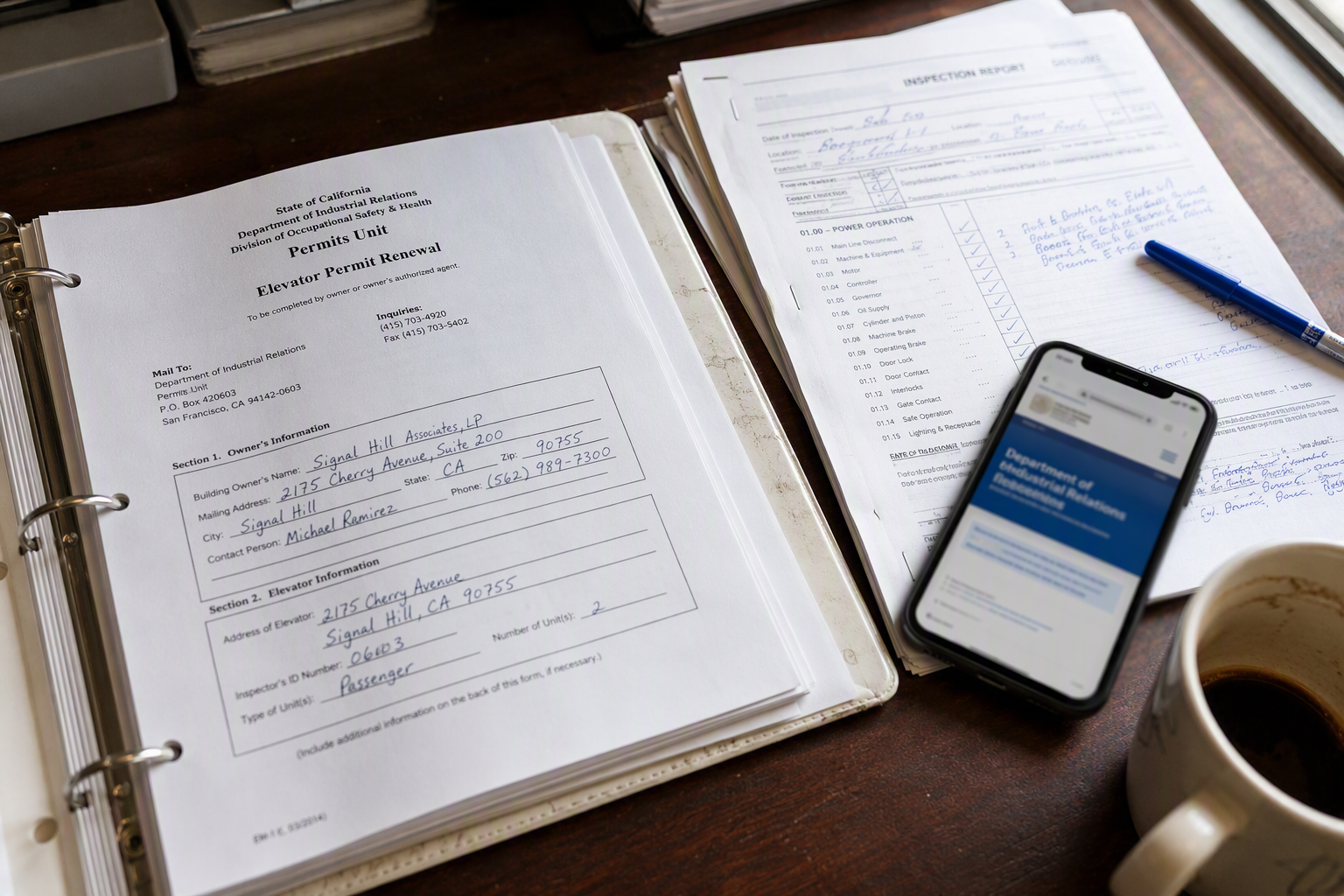
The California Department of Industrial Relations (DIR), through its Elevator, Ride, and Tramway (ERT) Unit — a subdivision of Cal/OSHA — is the primary government authority responsible for elevator safety regulation in California. This unit issues permits, conducts inspections, investigates accidents, and enforces compliance for all conveyances covered under California Labor Code.
Contact information for the Cal/OSHA Elevator Unit is published on the California DIR website. Building owners, property managers, and contractors should direct all permitting and inspection scheduling inquiries directly to this unit. For federal workplace safety overlay questions, the Occupational Safety and Health Administration (OSHA) provides supplemental guidance, though California operates under its own state plan.
Who Issues Elevator Operating Permits in California?
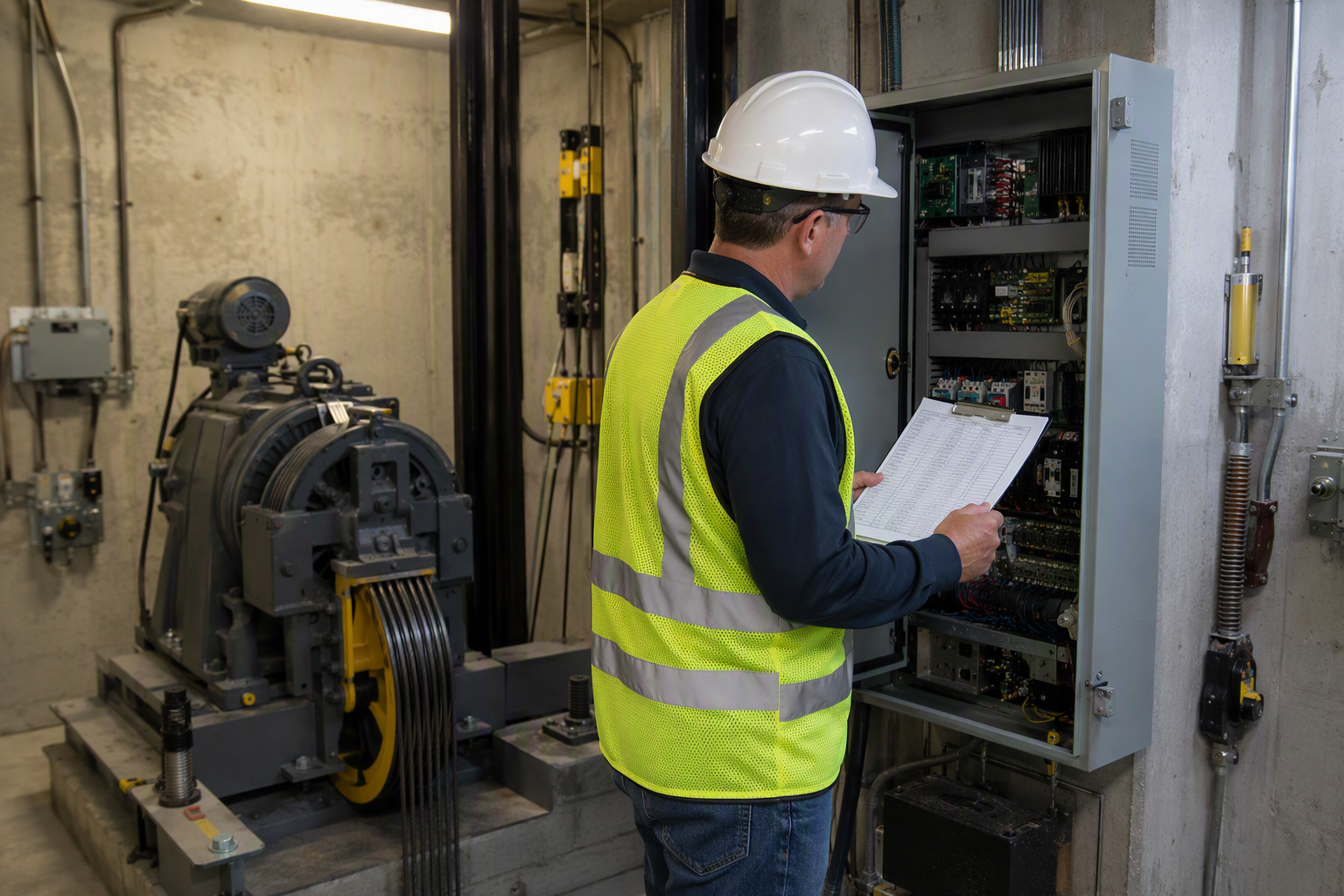
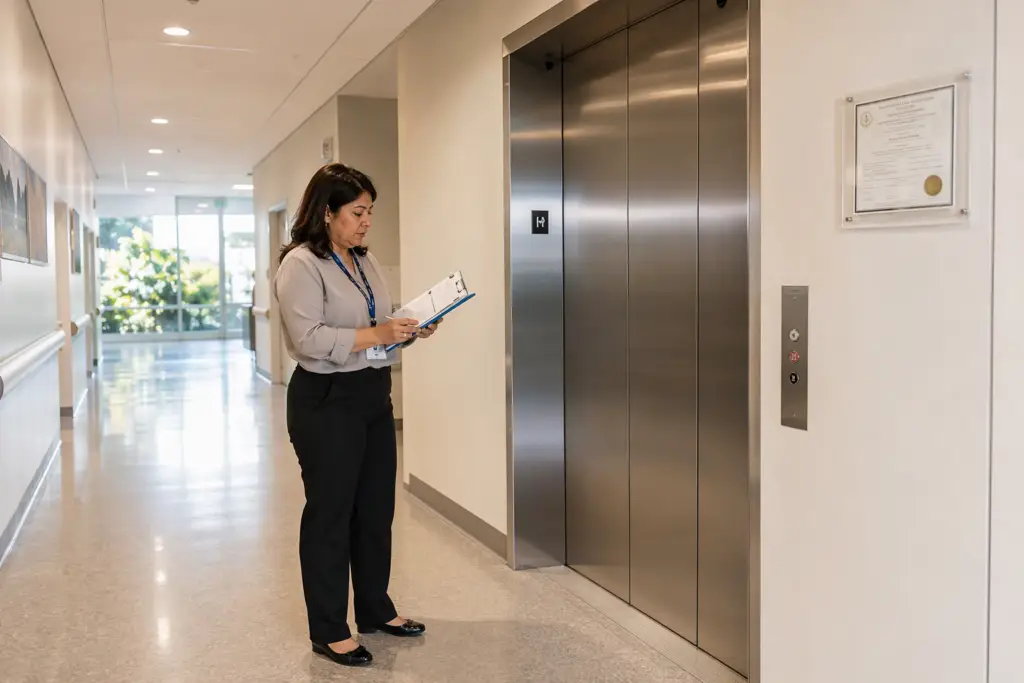
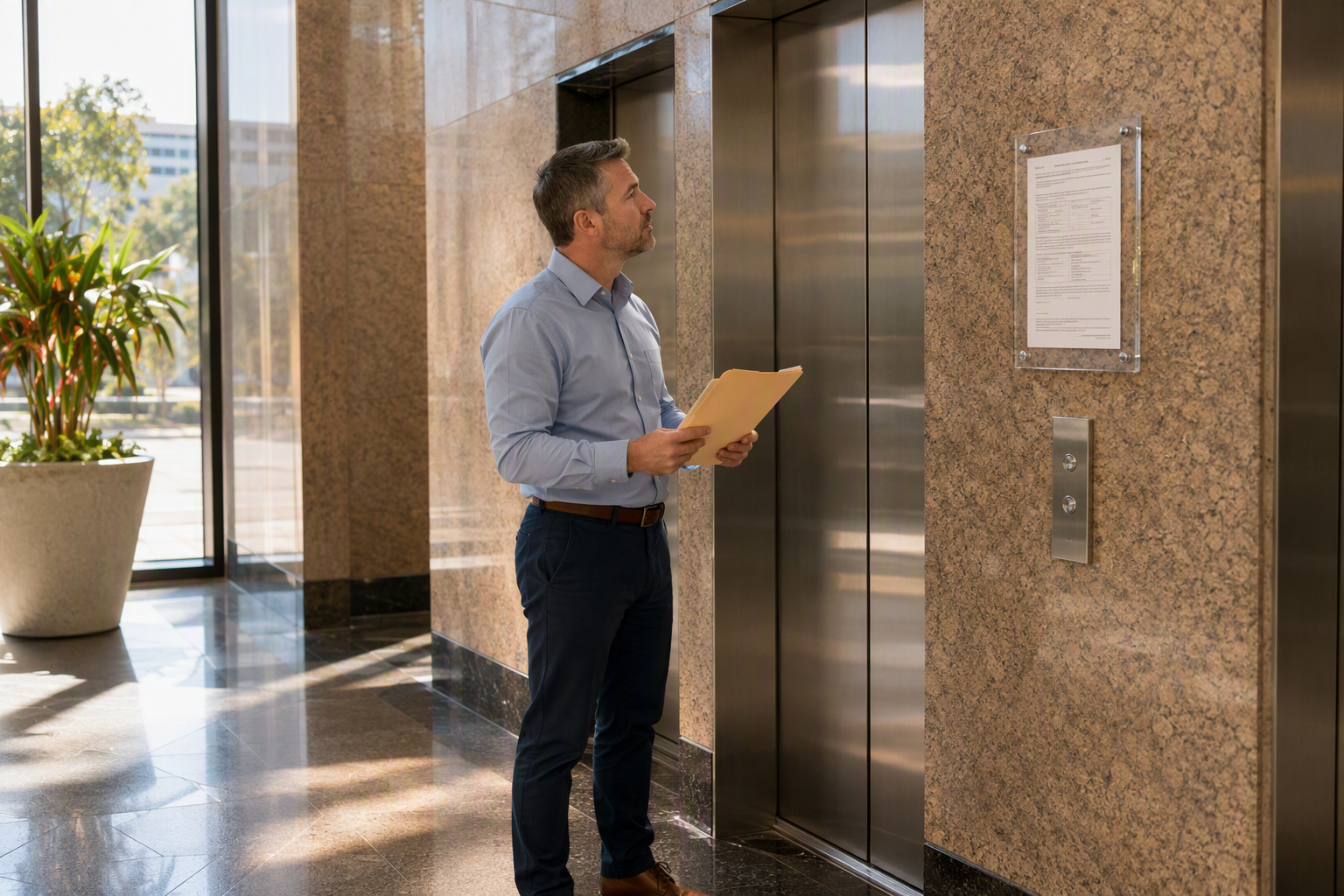
The Cal/OSHA ERT Unit issues Certificates of Compliance — commonly called operating permits — for elevators and other conveyances in California. An elevator may not legally be operated without a valid, current certificate posted in or near the elevator cab. The certificate is renewed on a periodic inspection cycle, and building owners are responsible for ensuring that cycle is maintained without lapse.
When an elevator fails inspection or operates with an expired permit, the Cal/OSHA ERT Unit has authority to order the conveyance out of service until deficiencies are corrected and re-inspected.
What Safety Codes Apply to Elevator Inspections in California?
California elevator inspections are conducted in accordance with the ASME A17.1 Safety Code for Elevators and Escalators, which sets the national baseline for elevator design, installation, and inspection procedures. California adopts editions of this code through its regulatory process, and inspectors use it as the technical benchmark for all safety evaluations.
For elevators in publicly accessible buildings, accessibility compliance under the Americans with Disabilities Act (ADA) also applies. ADA requirements govern cab dimensions, control panel height, door timing, and auditory and visual signals — elements that may be reviewed as part of a broader facilities audit even if they fall outside the Cal/OSHA inspection checklist.
The ASME A17.3 Safety Code for Existing Elevators and Escalators governs retroactive requirements for elevators already in service, which is particularly relevant for older California buildings undergoing upgrades or modernization.
How Do I Schedule an Elevator Inspection in California?
- Obtain or verify your permit status. Contact the Cal/OSHA ERT Unit to confirm whether your conveyance has a current Certificate of Compliance or identify what inspection category applies to your equipment.
- Submit the required permit application. New installations or major alterations require a permit application and plan approval before installation begins. The ERT Unit processes these applications and assigns an inspector.
- Engage a licensed elevator contractor. For installations or alterations, California requires work to be performed by a licensed elevator contractor. The contractor typically coordinates the inspection request with Cal/OSHA on behalf of the building owner.
- Prepare the equipment for inspection. The elevator must be fully operational, with all safety devices functional and all documentation — including maintenance logs and prior inspection certificates — available on-site.
- Accompany or designate a representative for the inspection. A knowledgeable party (typically the elevator technician or maintenance contractor) should be present during inspection to operate the equipment and answer inspector questions.
- Address any deficiencies noted in the inspection report. If violations are cited, coordinate with your elevator contractor to make corrections within the timeframe specified by the inspector.
- Request re-inspection and obtain updated Certificate of Compliance. After corrections are verified, the ERT Unit issues or renews the certificate, which must then be posted in the conveyance.
What Types of Elevators Require Inspection in California?
California’s elevator inspection program covers a broad range of conveyances beyond traditional traction and hydraulic passenger elevators. The Cal/OSHA ERT Unit regulates freight elevators, escalators, moving walkways, dumbwaiters, material lifts, man lifts, amusement rides, aerial tramways, and ski lifts, among others.
Certain limited-use, limited-application (LULA) elevators and private residence elevators may fall under different inspection thresholds, but building owners should verify the applicable requirements directly with the ERT Unit rather than assuming an exemption applies. The ASME A17.1 Safety Code for Elevators and Escalators provides the technical classifications that inform which inspection protocols apply to a given conveyance.
How Often Are Elevators Inspected in California?
California law requires periodic inspections of conveyances at intervals defined by regulation and consistent with the ASME A17.1 Safety Code for Elevators and Escalators. The specific interval depends on the type of conveyance, its use category, and its inspection history. In general, most commercial passenger elevators in California are subject to annual inspection cycles, though high-use or high-risk classifications may trigger more frequent review.
Building owners are responsible for tracking their inspection cycle and proactively coordinating with both the Cal/OSHA ERT Unit and their elevator service contractor. Allowing a certificate to lapse — even if the elevator is functioning normally — constitutes a regulatory violation and can expose property owners to liability.
What Happens If an Elevator Fails Inspection in California?
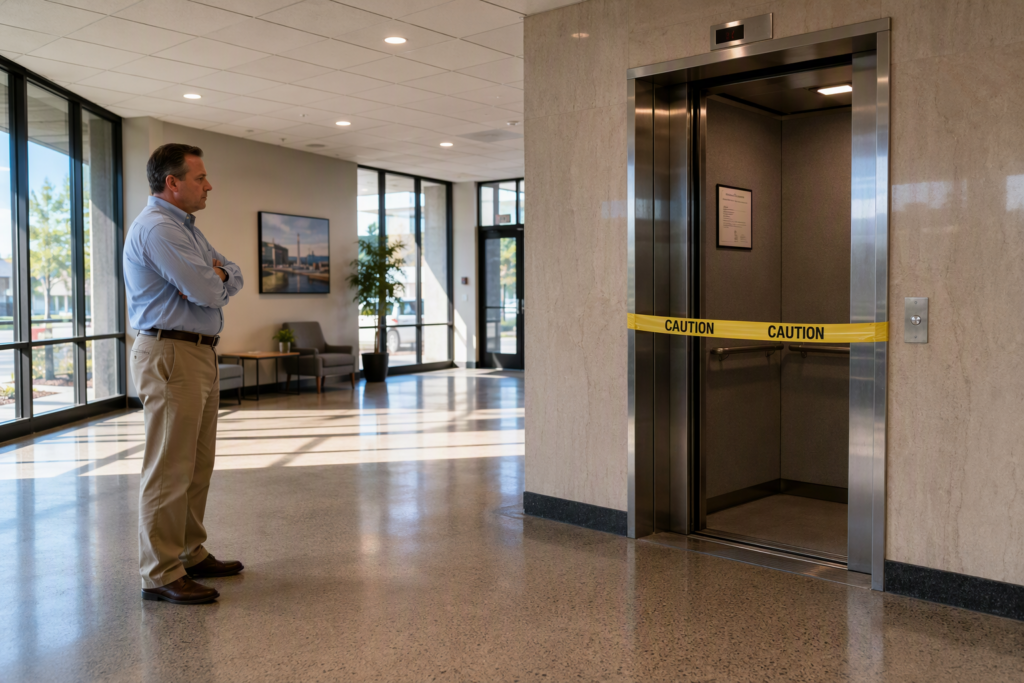
When a California elevator fails inspection, the Cal/OSHA ERT Unit issues a written notice of violation and, depending on severity, may immediately order the conveyance out of service. A “red tag” or stop-use order means the elevator cannot legally carry passengers or freight until deficiencies are corrected and a follow-up inspection clears the unit.
The consequences of operating a tagged elevator extend beyond regulatory fines. Building owners can face civil liability if a person is injured while riding an elevator under a known violation order. Lease agreements in commercial buildings may also include provisions triggered by loss of elevator access, creating downstream business disruptions.
Working with a qualified elevator service provider to address deficiencies promptly — and to maintain proactive maintenance records — is the most effective way to avoid failed inspections and their consequences.
What Is the Role of a Licensed Elevator Contractor in the Inspection Process?
Licensed elevator contractors in California play an essential role in the inspection ecosystem. They perform the installation, alteration, maintenance, and repair work that keeps equipment in compliance with the ASME A17.1 Safety Code for Elevators and Escalators, and they coordinate directly with the Cal/OSHA ERT Unit on permitting and inspection scheduling for work they perform.
A licensed contractor is not a substitute for the government inspector — state inspectors conduct independent evaluations and issue official certificates — but a competent contractor ensures the equipment is prepared and compliant before the inspector arrives, reducing the risk of citations and delays.
Liftech Elevator provides elevator maintenance, repair, modernization, and compliance support services for California building owners navigating the inspection process. As a data-driven service provider, Liftech tracks regulatory changes, code edition updates, and inspection history to help clients maintain continuous compliance.
Does ADA Compliance Factor Into Elevator Inspections in California?
The Cal/OSHA ERT Unit inspection focuses on mechanical and structural safety as defined under California labor and elevator codes. ADA compliance is technically a separate framework enforced through the Americans with Disabilities Act and, at the state level, the California Building Code (CBC).
However, building owners face both obligations simultaneously. A building may pass a Cal/OSHA elevator safety inspection while still being out of compliance with ADA accessibility standards — and vice versa. Property managers of publicly accessible facilities should treat safety inspection compliance and ADA compliance as parallel tracks requiring separate verification.
Common ADA-related elevator considerations include cab interior dimensions, floor-level tolerances, door reopening devices, control button specifications, audible and visual floor indicators, and braille or raised character signage. These are governed by the ADA Standards for Accessible Design and the relevant sections of ASME standards addressing accessibility.
What Documentation Should Building Owners Maintain for Elevator Compliance?
California regulations and industry best practices under the ASME A17.1 Safety Code for Elevators and Escalators require building owners to maintain a documented record of elevator-related activities. This documentation serves as evidence of due diligence during inspections and is critical if a liability claim arises.
Key documentation categories include:
- Current Certificate of Compliance (posted in or near the elevator cab)
- Maintenance logs showing routine service visits and any corrective repairs
- Inspection reports from prior Cal/OSHA ERT Unit inspections
- Records of any alterations, modernization work, or emergency repairs
- Equipment specifications and manufacturer documentation
- Contractor licenses and insurance certificates for any firm that has performed work on the equipment
What Are the Key Trends Shaping Elevator Inspection in California for 2025–2026?
Several qualitative trends are influencing how California building owners approach elevator inspection and compliance in 2025 and 2026:
Aging building stock and retroactive code requirements. A significant portion of California’s commercial elevator inventory is in buildings constructed decades ago. As code editions advance, the gap between installed equipment and current ASME A17.3 Safety Code for Existing Elevators and Escalators standards widens, putting pressure on building owners to invest in modernization to maintain compliance.
Digital maintenance records and remote monitoring. The elevator service industry is increasingly moving toward digital maintenance logs and IoT-enabled monitoring systems that provide real-time performance data. These tools create more granular documentation trails that support compliance demonstrations during inspections.
Workforce and inspection capacity pressures. Across California, demand for qualified elevator inspectors and licensed technicians continues to reflect broader skilled trades workforce dynamics. Building owners who maintain proactive service agreements tend to experience fewer scheduling delays when inspections are required.
Increased ADA enforcement attention. Advocacy organizations and regulatory bodies are placing greater emphasis on accessibility compliance in public accommodations, making it more important for California property managers to audit ADA alignment alongside their Cal/OSHA inspection cycle.
Energy efficiency and modernization incentives. Utility programs and sustainability mandates in California are creating additional impetus for elevator modernization, which often intersects with safety compliance upgrades. Building owners modernizing for energy reasons frequently discover co-occurring safety code gaps that need to be addressed simultaneously.
How Does a Building Owner Choose the Right Elevator Service Provider?
Selecting an elevator service provider in California is a consequential decision that affects both safety outcomes and regulatory compliance. Key factors to evaluate include:
- California contractor license status: Verify that any elevator contractor holds a current, valid California contractor’s license in the appropriate classification before engaging them for any work.
- Code knowledge: The provider should demonstrate current familiarity with the ASME A17.1 and A17.3 Safety Codes and Cal/OSHA ERT Unit requirements.
- Documentation practices: A quality provider maintains organized records of all service visits, deficiencies noted, and corrective actions taken — documentation that protects building owners in the event of an inspection or liability claim.
- Transparent scope of work: Providers should clearly communicate what maintenance is included in a service agreement versus what triggers additional charges, so building owners can budget and plan accordingly.
- References and track record: Request references from comparable California properties and ask specifically about the provider’s experience navigating Cal/OSHA inspections and deficiency corrections.
Liftech Elevator applies a data-driven approach to maintenance planning and compliance documentation, helping California property owners maintain inspection-ready elevators year-round rather than scrambling before scheduled inspections.
What Should I Do If I Receive a Cal/OSHA Elevator Violation Notice?
- Read the violation notice carefully and identify every cited deficiency, the severity classification, and the compliance deadline assigned by the inspector.
- Do not operate the elevator if a stop-use or out-of-service order has been issued — continuing to operate under such an order compounds liability and regulatory exposure.
- Contact your licensed elevator contractor immediately and provide them with a copy of the violation notice so they can assess the scope of corrective work required.
- Prioritize safety-critical deficiencies. Address items that directly affect passenger safety before cosmetic or administrative violations, though all cited items must ultimately be corrected.
- Document all corrective work with dated records, technician sign-offs, and parts or materials used — this documentation is required for the re-inspection process.
- Contact the Cal/OSHA ERT Unit to notify them that corrections have been made and to request a follow-up inspection to clear the violation and restore the operating permit.
- Review your maintenance program after the violation is resolved to identify whether gaps in routine service contributed to the cited deficiencies, and adjust accordingly.
Get Expert Guidance on California Elevator Inspection Compliance
California elevator inspection requirements involve multiple agencies, evolving code editions, and coordination between building owners, contractors, and the Cal/OSHA ERT Unit. Staying compliant requires proactive maintenance, accurate documentation, and a service partner who understands the full regulatory landscape.
Contact Liftech Elevator for a free elevator assessment and learn how a structured compliance program can keep your California conveyances inspection-ready, reduce the risk of costly violations, and protect building occupants year-round.
Call Liftech Elevator: 562-609-3478
Need elevator service you can rely on? Liftech Elevator is ready to help.