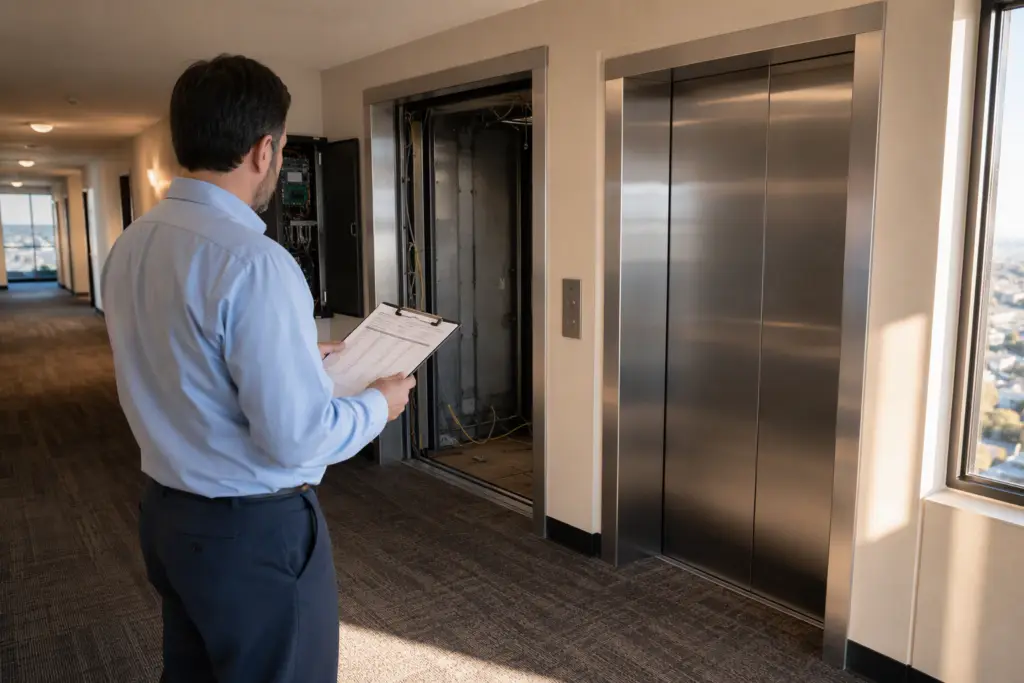
How Earthquake Activity Affects Elevator Safety and What Inspections or Repairs Are Required After a Seismic Event in California
Direct Answer: After any earthquake in California, elevators must be taken out of service immediately and inspected by a qualified elevator mechanic before resuming operation, with the scope of required repairs determined by observed damage and governed by the ASME A17.1 Safety Code for Elevators and Escalators and California’s Title 8 occupational safety regulations enforced by the Division of Occupational Safety and Health (Cal/OSHA).
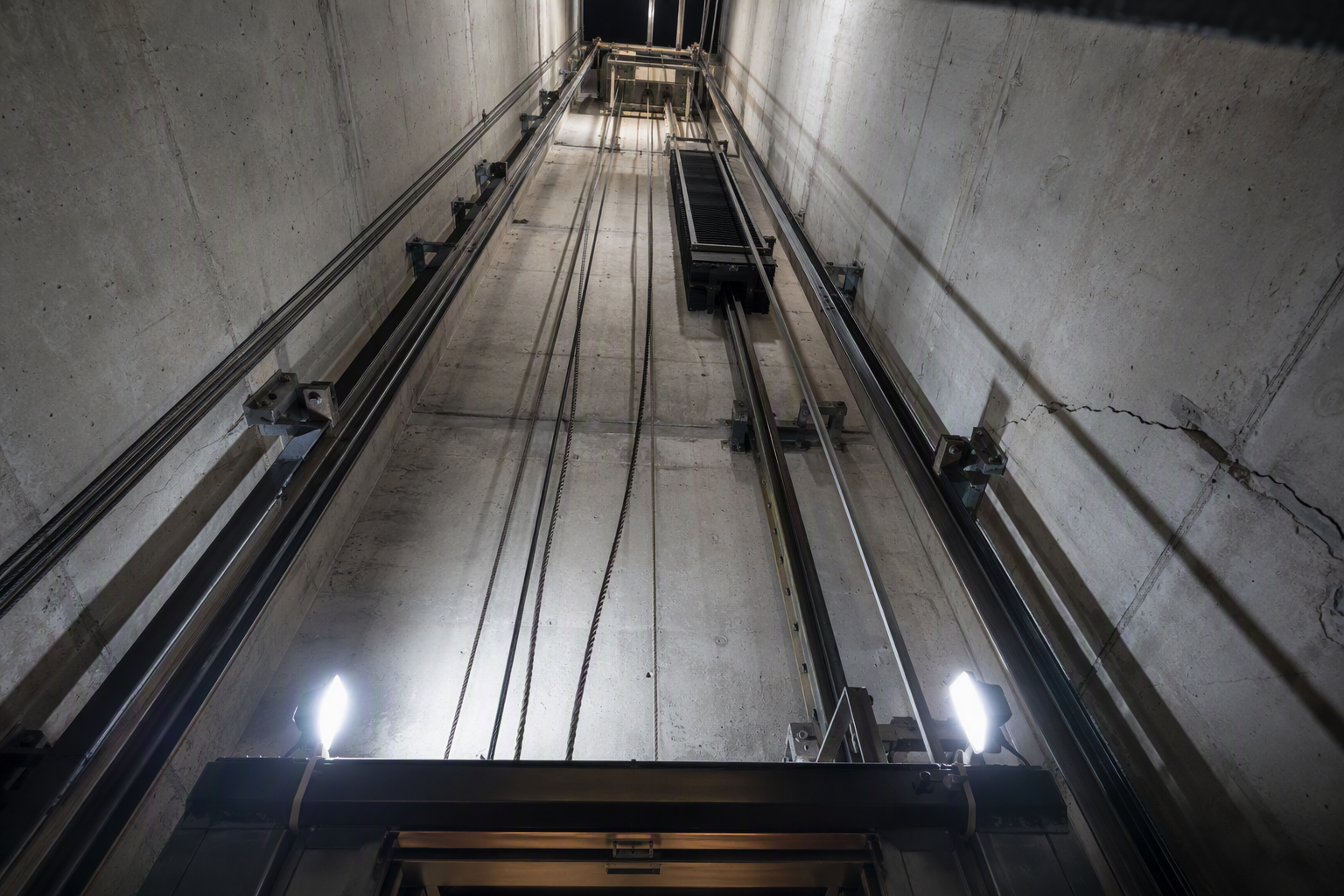
California is one of the most seismically active regions in the world, and the state’s dense inventory of elevators — in high-rises, hospitals, schools, hotels, and residential buildings — faces unique risks every time the ground moves. Understanding exactly what happens to an elevator during a seismic event, what the law requires afterward, and what a post-earthquake inspection actually involves is essential for every building owner and facilities manager operating in the state.
Liftech Elevator provides data-driven elevator maintenance, inspection, and seismic compliance services throughout California, helping building owners navigate the regulatory landscape that follows a seismic event with clarity and precision.
What Physical Forces Does an Earthquake Exert on an Elevator System?
Elevator systems are designed as vertical transportation devices, engineered primarily to manage vertical loads. Seismic events introduce lateral (horizontal) and torsional forces that the elevator structure is not continuously designed to absorb during operation. These forces can affect multiple subsystems simultaneously:
- Counterweight derailment: The counterweight — typically a heavy assembly riding on guide rails on the opposite side of the hoistway from the car — can be thrown off its rails by lateral shaking. A derailed counterweight is one of the most serious post-earthquake hazards because it can swing freely in the hoistway.
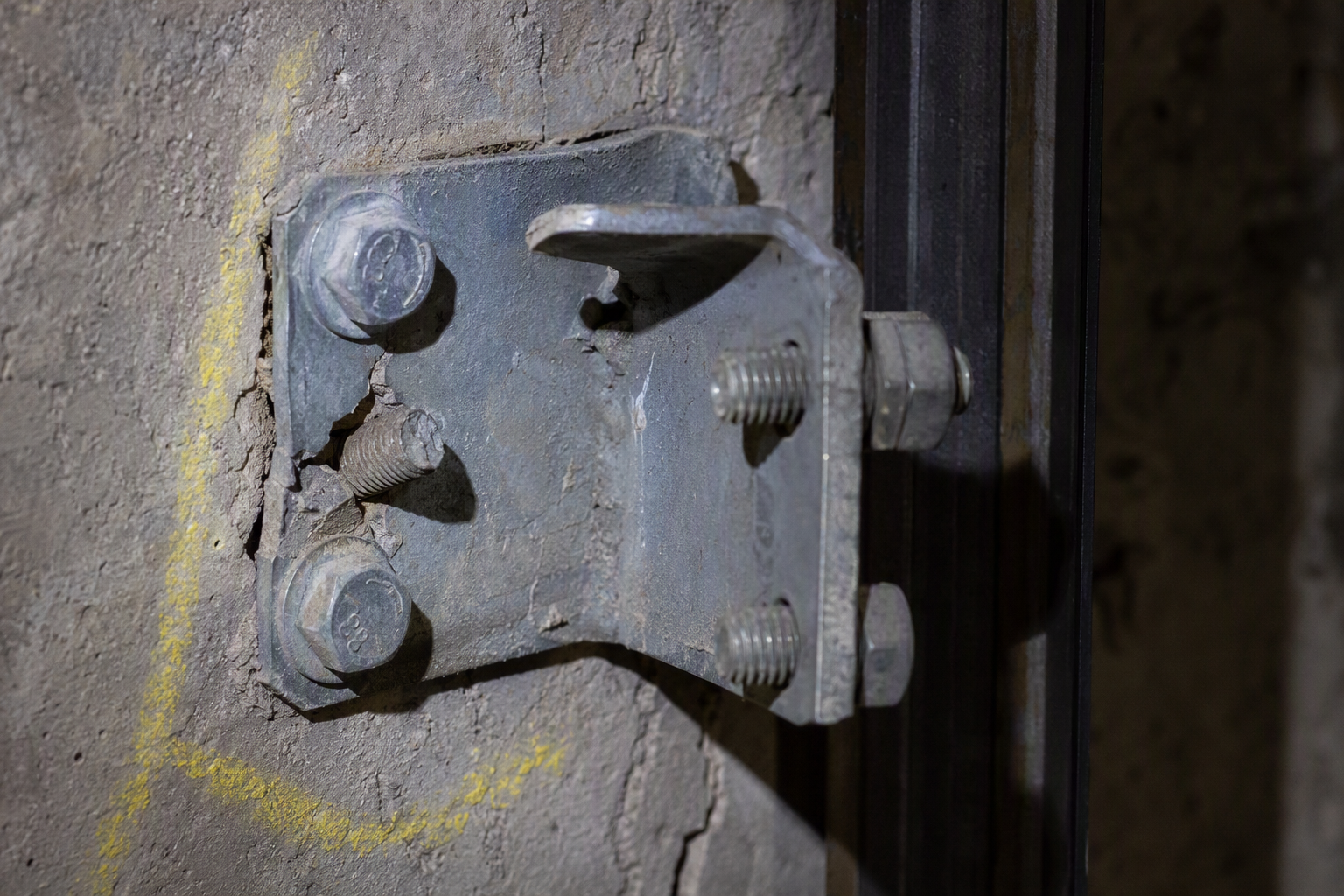
- Guide rail displacement: Steel guide rails that run the full height of the hoistway are bolted to brackets anchored in the building structure. Ground motion can loosen, bend, or shear these brackets and misalign the rails.
- Rope and cable damage: Hoist ropes, governor ropes, and compensation ropes can be thrown into a swinging motion — a phenomenon called “rope sway” — that allows them to snag on hoistway equipment or intrude into adjacent shafts.
- Machine room and pit equipment: Motor-generator sets, controllers, and hydraulic power units can shift off their mounting pads, severing connections or damaging componentry.
- Hydraulic system damage: For hydraulic elevators, seismic movement can crack underground cylinders or rupture piping, creating both a mechanical hazard and an environmental contamination concern.
- Structural hoistway damage: In severe events, the building structure itself may shift, causing the hoistway to rack — meaning the shaft changes shape — which can jam doors or trap a car between floors.
The severity of damage correlates with the earthquake’s magnitude, the building’s distance from the epicenter, soil amplification characteristics, the building’s construction type and age, and whether seismic safety devices were already installed on the elevator.
What Does California Law Require Immediately After an Earthquake?
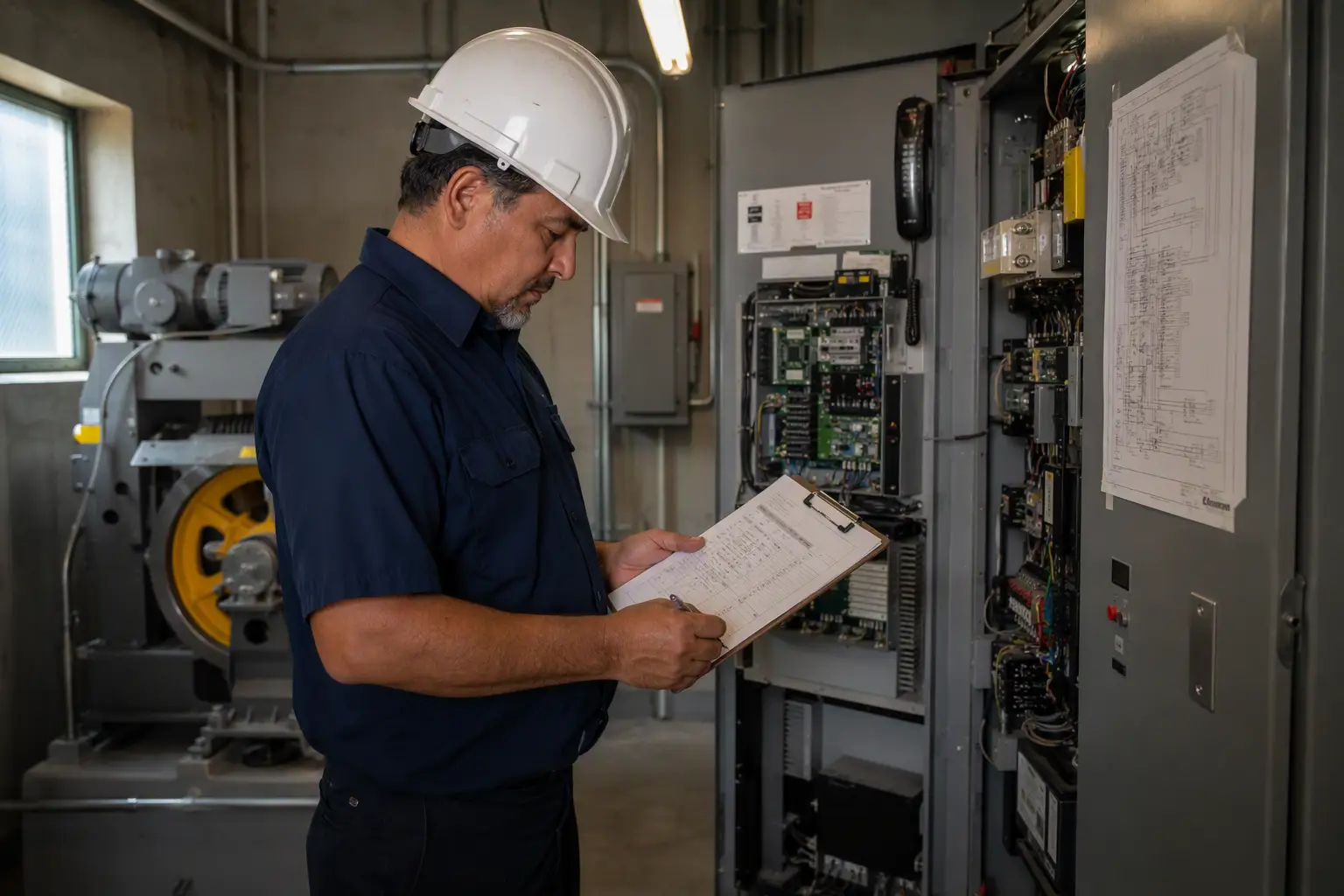
California takes elevator seismic safety seriously at both the state regulatory and local authority-having-jurisdiction (AHJ) levels. The core framework comes from two sources:
- Return-to-service prohibition: California regulations require that elevators be removed from service following a seismic event until a qualified elevator mechanic has inspected the equipment and determined it is safe to operate. Building owners and operators are prohibited from returning elevators to service on their own authority.
- Inspection by a certified elevator mechanic: The inspection must be performed by a mechanic certified under California’s elevator safety laws. The mechanic must physically examine the hoistway, machine room, pit, and all major subsystems before the elevator can be authorized to return to service.
- Reporting to the AHJ: If damage is found, it must be reported to the local AHJ — which in most California jurisdictions is the Division of Occupational Safety and Health (Cal/OSHA) Elevator Unit or the equivalent municipal authority. Repairs must be permitted and inspected before the elevator resumes normal operation.
- Compliance with ASME A17.1/A17.3: The ASME A17.1 Safety Code for Elevators and Escalators and the companion ASME A17.3 Safety Code for Existing Elevators and Escalators provide the technical baseline for what constitutes a safe elevator. California adopts and adapts these codes through its own regulatory framework, and any post-earthquake repairs must restore the elevator to compliance with these standards.
What Are the Step-by-Step Procedures After an Earthquake Affects an Elevator?
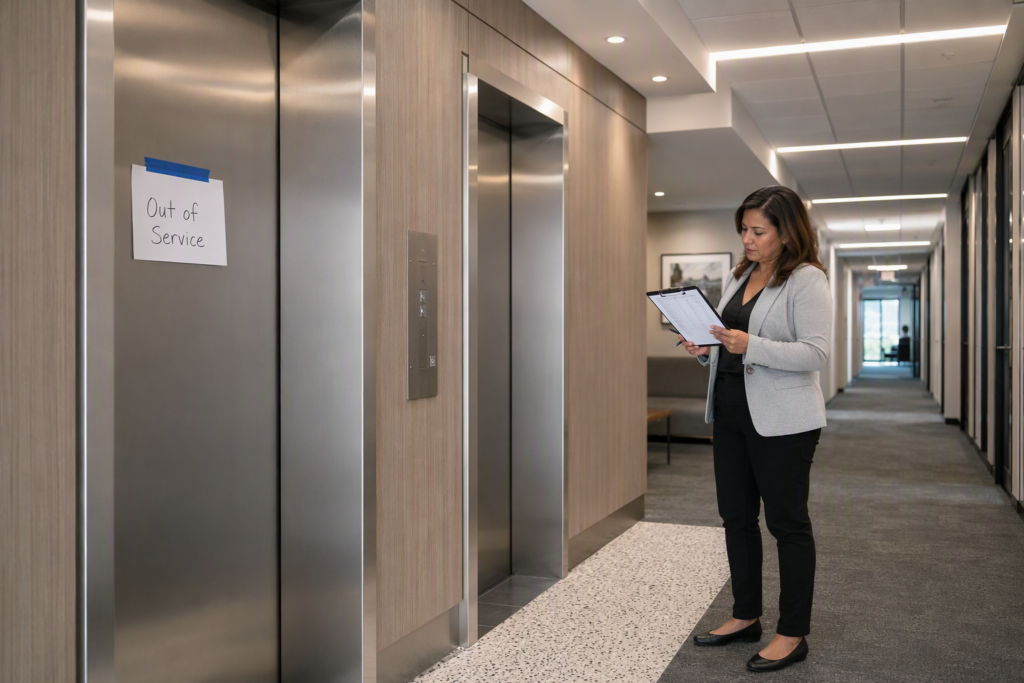
- Immediately shut down and lock out the elevator. Building management or the elevator’s building automation system should take all elevators out of service as soon as a seismic event is felt or detected. Do not allow passengers to use the elevator until clearance is granted.
- Ensure passenger safety first. If passengers are trapped in a car, follow your building’s emergency communication and rescue procedures. Contact the local fire department if rescue is required. Do not attempt to open hoistway doors or move the car manually without trained personnel.
- Contact a licensed elevator contractor. Notify a California-licensed elevator contractor immediately to schedule a post-earthquake inspection. In the aftermath of a significant regional earthquake, demand for inspection services increases sharply — early contact is critical.
- Do not reset seismic sensors or safety devices. Modern elevators equipped with seismic switches (earthquake detectors) will shut themselves down automatically when motion is detected above a set threshold. These devices must not be manually bypassed or reset without a mechanic’s authorization and physical inspection.
- Document visible damage. Photograph any visible structural changes to the machine room, pit, hoistway doors, or building structure adjacent to the elevator. This documentation supports insurance claims and regulatory reporting.
- Conduct the full mechanic inspection. The licensed mechanic inspects the hoistway from top to bottom: guide rails, rail brackets, counterweight, hoist ropes, governor, safety devices, buffers, pit equipment, controller, and machine room equipment.
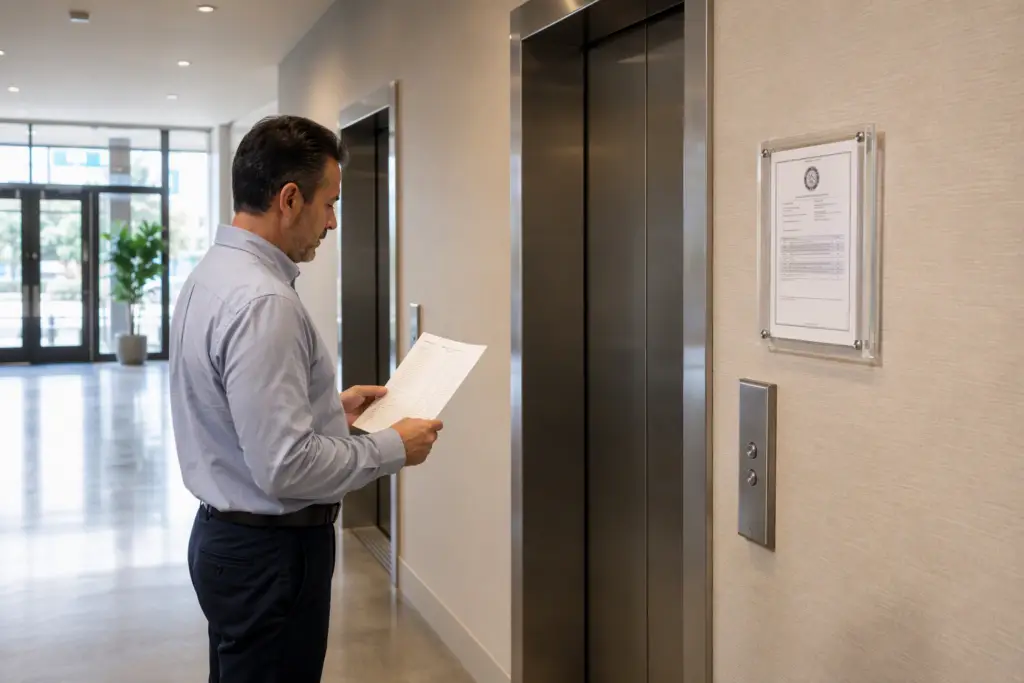
- Obtain a written inspection report. The mechanic must provide a written assessment stating whether the elevator is safe to return to service, or itemizing required repairs.
- Pull permits for required repairs. Any repairs beyond routine adjustment require permits filed with the AHJ. Work must be performed by licensed elevator mechanics.
- Pass final AHJ inspection. After permitted repairs are completed, the AHJ must inspect and approve the work before the elevator returns to full service.
- Update maintenance records. Document the event, the inspection findings, all repairs performed, and the return-to-service authorization in the elevator’s permanent maintenance log.
What Seismic Safety Devices Are Required on California Elevators?
California has long been at the forefront of elevator seismic safety requirements. The state’s seismic exposure led to the development of specific code requirements that go beyond what is required in lower-risk jurisdictions. Key seismic safety devices and requirements include:
- Seismic switches (earthquake sensors): These devices detect ground acceleration above a set threshold and automatically command the elevator to travel to the nearest floor, open its doors, and shut down. The ASME A17.1 Safety Code for Elevators and Escalators addresses seismic requirements, and California’s code adoptions impose specific sensor sensitivity thresholds appropriate for the state’s seismic zones.
- Counterweight guarding: Requirements for retainer plates and other devices that reduce the risk of counterweight derailment during lateral motion.
- Rope retainer devices: Guides and retainers that limit rope sway and prevent ropes from disengaging from sheaves during seismic motion.
- Pit ladders and clearances: Seismic codes also address minimum pit clearances and equipment securing requirements that become critical when the elevator shuts down in a seismic event.
Buildings constructed after California adopted modern seismic elevator standards are more likely to have these devices factory-installed. Older buildings may require retroactive upgrades — a significant compliance and cost consideration for building owners managing aging elevator inventory.
What Does a Post-Earthquake Elevator Inspection Actually Cover?
A thorough post-earthquake elevator inspection is not a routine annual inspection. It is a comprehensive safety evaluation focused on seismic-specific failure modes. The inspection covers:
- Guide rail alignment: Each rail section is checked for straightness, bracket integrity, and proper fastener torque.
- Counterweight and car frame: The mechanic checks whether the counterweight remains properly seated on its guide rails and that the car frame is undamaged and correctly aligned.
- Hoist ropes and compensation ropes: Ropes are inspected for kinks, broken wires, and evidence of contact with hoistway equipment caused by sway.
- Safety devices and governor: The overspeed governor and car/counterweight safeties are verified to be undamaged and properly set.
- Buffers: Oil buffers and spring buffers in the pit are checked for displacement, damage, or leakage.
- Door equipment: Hoistway doors, interlocks, and sills are inspected for misalignment that could trap passengers or create a fall hazard.
- Machine room: The drive machine, controller, motor, and all ancillary equipment are checked for displacement, loose connections, and structural damage.
- Hydraulic systems (where applicable): Hydraulic lines, fittings, cylinder, and power unit are inspected for leaks or structural damage.
- Seismic switch reset and testing: If the elevator was shut down by its seismic switch, the switch must be physically inspected before it is reset.
What Types of Repairs Are Commonly Required After a Seismic Event?
The range of post-earthquake repairs spans from minor adjustments to major structural work. Common repair categories include:
- Rail re-alignment and bracket re-tightening: Often required after moderate events even without visible damage.
- Counterweight re-railing: If the counterweight has derailed, specialized equipment and procedures are required to restore it to its rails safely.
- Rope replacement or re-reeving: Damaged or kinked ropes must be replaced entirely.
- Seismic switch recalibration or replacement: Sensors can be damaged or knocked out of calibration by the event they are designed to detect.
- Controller board and wiring repair: Electrical components can sustain damage from voltage surges accompanying utility disruptions during seismic events, or from physical shock.
- Hydraulic cylinder repair or replacement: Underground cylinder damage in hydraulic elevators can be among the most costly repairs, requiring excavation and environmental assessment.
- Hoistway structural repair: In significant seismic events, hoistway wall repairs may require coordination between the elevator contractor and the building’s structural engineer.
The cost of post-earthquake repairs varies widely depending on damage extent, elevator type, age of the equipment, and parts availability. Building owners should expect that insurance claims, permit timelines, and contractor availability following a regional earthquake event can extend the return-to-service timeline significantly compared to routine repair projects.
How Do Seismic Retrofits Reduce Post-Earthquake Damage and Downtime?
Proactive seismic retrofitting of elevators — upgrading older equipment to meet current seismic safety standards before an earthquake occurs — is the most effective way to reduce both the risk of injury and the scope of post-earthquake repair work. Retrofit work typically focuses on:
- Installing or upgrading seismic switches to current sensitivity standards
- Adding counterweight retainer plates and guarding
- Upgrading rope retainer devices
- Reinforcing rail brackets to withstand lateral loading
- Securing machine room equipment with seismic anchorage
Elevators equipped with these features are more likely to sustain minimal damage in a moderate seismic event and return to service faster after inspection. For California building owners, seismic retrofits are an investment that intersects directly with occupant safety, liability exposure, insurance requirements, and business continuity planning.
Liftech Elevator assists California building owners in assessing the current seismic compliance status of their elevators and identifying retrofit priorities based on equipment age, building location, and occupancy type.
What Is the Role of ADA Compliance in Post-Earthquake Elevator Restoration?
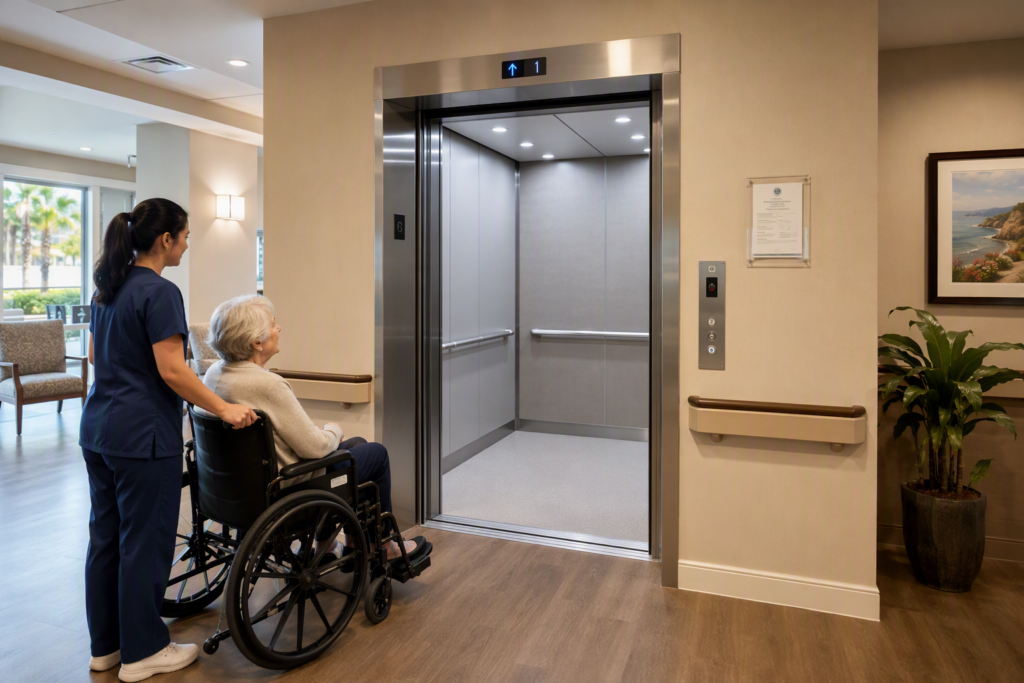
When an elevator is taken out of service following a seismic event, building owners with ADA accessibility obligations under the Americans with Disabilities Act face an additional compliance consideration. If the elevator is the primary or only accessible means of reaching upper floors, its extended outage may constitute an accessibility barrier. Building owners should:
- Assess whether alternative accessible routes exist during the outage
- Post clear notices about accessibility impacts and available alternatives
- Prioritize return-to-service timelines for elevators serving accessible routes
- Consult with ADA compliance counsel if extended outages are anticipated
The ADA does not waive accessibility obligations during natural disasters; it requires good-faith efforts to maintain accessible service or provide equivalent alternatives.
What Are the Industry Trends for Elevator Seismic Safety in California for 2025–2026?
Several trends are shaping how California building owners and elevator contractors approach seismic safety in the current period:
- Smarter seismic monitoring integration: Building automation systems are increasingly being integrated with elevator seismic switches, allowing remote monitoring of seismic shutdown events and faster deployment of inspection crews following an event.
- Predictive maintenance platforms: Data-driven maintenance tools are helping building owners track the pre-earthquake condition of elevator components, creating a documented baseline that supports faster post-earthquake assessment.
- Increased focus on older building stock: As California’s building inventory ages, regulators and building owners are paying greater attention to elevators that predate modern seismic code requirements — particularly in dense urban markets where retrofit backlogs have accumulated.
- Insurance-driven compliance pressure: Commercial property insurers are increasingly scrutinizing elevator seismic compliance as part of underwriting processes, creating financial incentives for building owners to address retrofit backlogs ahead of the next major event.
- Code update cycles: The ASME A17.1 Safety Code for Elevators and Escalators is updated on a regular cycle, and California’s adoption of new editions continues to evolve the technical standards against which post-earthquake repairs and retrofits are measured.
How Quickly Must an Elevator Return to Service After a California Earthquake?
There is no fixed statutory deadline for returning an elevator to service after a seismic event. The timeline is driven by the inspection and repair process itself. Key variables include:
- Availability of a licensed elevator mechanic to conduct the post-earthquake inspection — regional events create high demand simultaneously across many buildings
- Scope of repairs required and parts availability
- AHJ permit processing time, which can be affected by post-disaster workload
- Structural repairs to the hoistway or building that must precede elevator work
Buildings with existing elevator service agreements — particularly full-service maintenance contracts — typically receive priority inspection scheduling from their contractor following regional events, which can significantly accelerate the return-to-service timeline.
What Should Building Owners Do Before the Next Earthquake to Protect Their Elevators?
Preparation before a seismic event is the single most effective strategy for minimizing post-earthquake disruption. Key proactive steps include:
- Conduct a seismic compliance audit: Have a licensed elevator contractor assess each elevator against current California seismic requirements and identify gaps.
- Schedule outstanding retrofits: Address counterweight guarding, seismic switch upgrades, and rope retainer deficiencies before a seismic event forces emergency repairs.
- Review maintenance records: Elevators with up-to-date maintenance histories are easier to inspect post-earthquake and present fewer pre-existing issues that complicate damage assessment.
- Establish a service agreement: A relationship with a licensed California elevator contractor, including defined post-earthquake response protocols, provides critical advantages in the competitive post-disaster service environment.
- Train building staff: Building management and security staff should understand the post-earthquake shutdown protocol, including how to communicate with trapped passengers and how to correctly identify and contact their elevator contractor.
- Review insurance coverage: Confirm that elevator damage from seismic events is explicitly covered under the building’s property and equipment breakdown insurance policies.
Does OSHA Have Any Role in Post-Earthquake Elevator Safety in California?
The federal Occupational Safety and Health Administration (OSHA) establishes general industry safety standards that apply to workers who operate, maintain, or repair elevators. In the post-earthquake context, OSHA requirements are relevant to the safety of elevator mechanics performing inspection and repair work in potentially damaged hoistways — including lockout/tagout procedures, confined space considerations for pit work, and fall protection requirements. Building owners should ensure that any contractor performing post-earthquake elevator work in California maintains full OSHA compliance for the protection of workers on site.
What Makes Liftech Elevator the Right Partner for Post-Earthquake Elevator Compliance in California?
Liftech Elevator is a California-based elevator services company with deep expertise in the state’s seismic compliance landscape. Liftech Elevator’s approach to post-earthquake elevator services is grounded in the technical standards that govern California elevators — the ASME A17.1 Safety Code for Elevators and Escalators, ASME A17.3, and California’s regulatory framework — and in data-driven maintenance practices that create documented baselines for post-earthquake assessment.
Building owners across California rely on Liftech Elevator for:
- Post-earthquake inspection and return-to-service authorization
- Permitted seismic repair work coordinated with California AHJs
- Proactive seismic retrofit assessments and upgrades
- Full-service maintenance agreements that include post-earthquake response protocols
- Documentation support for insurance claims and regulatory compliance records
Sourced Data Reference Table
| Standard / Agency | Relevance to Post-Earthquake Elevator Safety | Source |
|---|---|---|
| ASME A17.1 Safety Code for Elevators and Escalators | Technical baseline for elevator safety, seismic device requirements, and return-to-service criteria adopted in California | ASME Codes & Standards |
| ASME A17.3 Safety Code for Existing Elevators and Escalators | Retrofit and compliance requirements for elevators already in service, governing post-earthquake repair standards | ASME Codes & Standards |
| Americans with Disabilities Act (ADA) | Accessibility obligations that continue during elevator outages caused by seismic events | ADA.gov |
| OSHA General Industry Standards | Worker safety requirements for elevator mechanics performing post-earthquake inspections and repairs | OSHA.gov |
Get a Free Elevator Assessment After a Seismic Event
California building owners should not wait to confirm their elevators are safe following an earthquake. A delayed inspection is a liability and a compliance risk. Liftech Elevator provides thorough post-earthquake inspections, seismic retrofit assessments, and permitted repair services across California — all grounded in the ASME codes and California regulatory requirements that govern your building.
Contact Liftech Elevator for a free elevator assessment: 562-609-3478
Need elevator service you can rely on? Liftech Elevator is ready to help.