Elevator Service in Signal, CA | Liftech Elevator
For commercial building owners and property managers in Signal, CA, navigating ADA elevator accessibility requirements can be complex. California imposes both federal ADA standards and state-level building code obligations, meaning that existing commercial buildings often face layered compliance requirements whenever renovations, alterations, or routine modernizations are undertaken. Liftech Elevator provides certified elevator services throughout California, helping building owners in Signal and the surrounding region understand and meet their accessibility obligations.
—
What ADA Elevator Accessibility Upgrades Are Required for Existing Commercial Buildings in California?
The ADA does not require existing commercial buildings to immediately retrofit every elevator to meet new-construction standards. Instead, the law uses a framework of “readily achievable barrier removal” for buildings that are not undergoing alterations, and a stricter “path of travel” requirement when alterations are made to a primary function area.
Common ADA elevator accessibility upgrades that may be required or strongly recommended for existing California commercial buildings include:
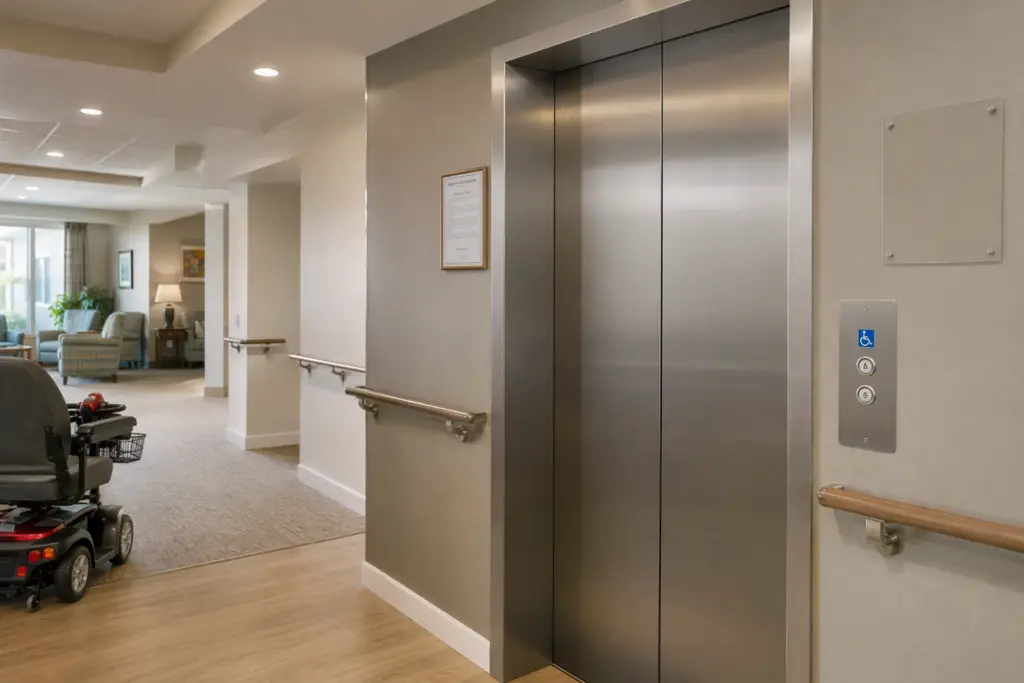
- Accessible call buttons: Call buttons must be operable with a closed fist and positioned at accessible heights.
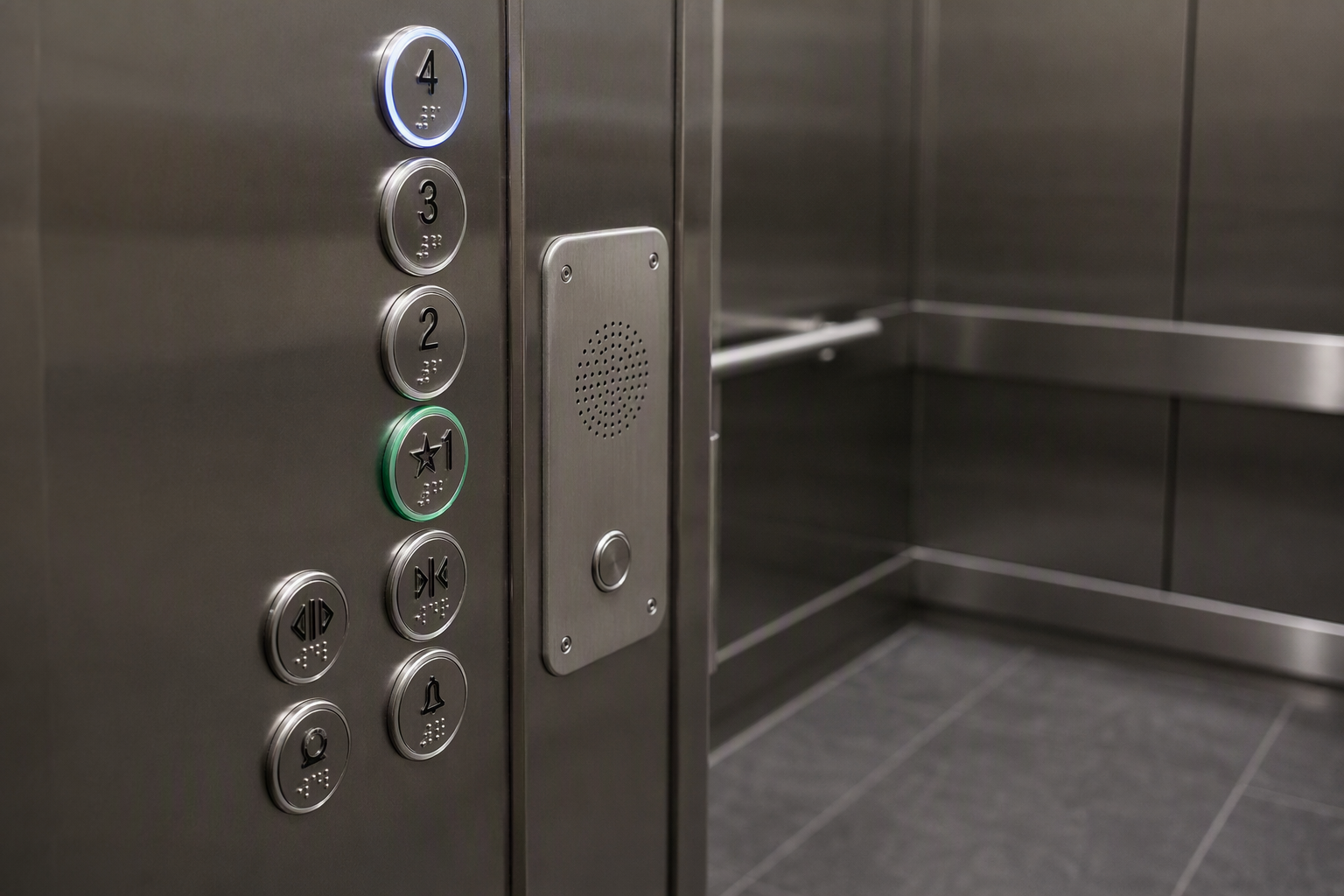
- Visual and audible floor indicators: Elevators must provide signals that announce the floor reached and the direction of travel.
- Braille and raised character floor designations: Cab interior and hoistway entrance signage must include tactile characters and Braille.
- Door timing and reopening devices: Doors must remain open long enough for a person using a mobility device to enter or exit, and must be equipped with a reopening device activated by an obstruction.
- Cab dimensions: Minimum interior cab dimensions are defined under ADA accessibility guidelines to accommodate wheelchair users.
- Illumination levels: Adequate lighting must be maintained inside the cab.
- Two-way emergency communication: An accessible emergency communication system must be provided inside the cab.
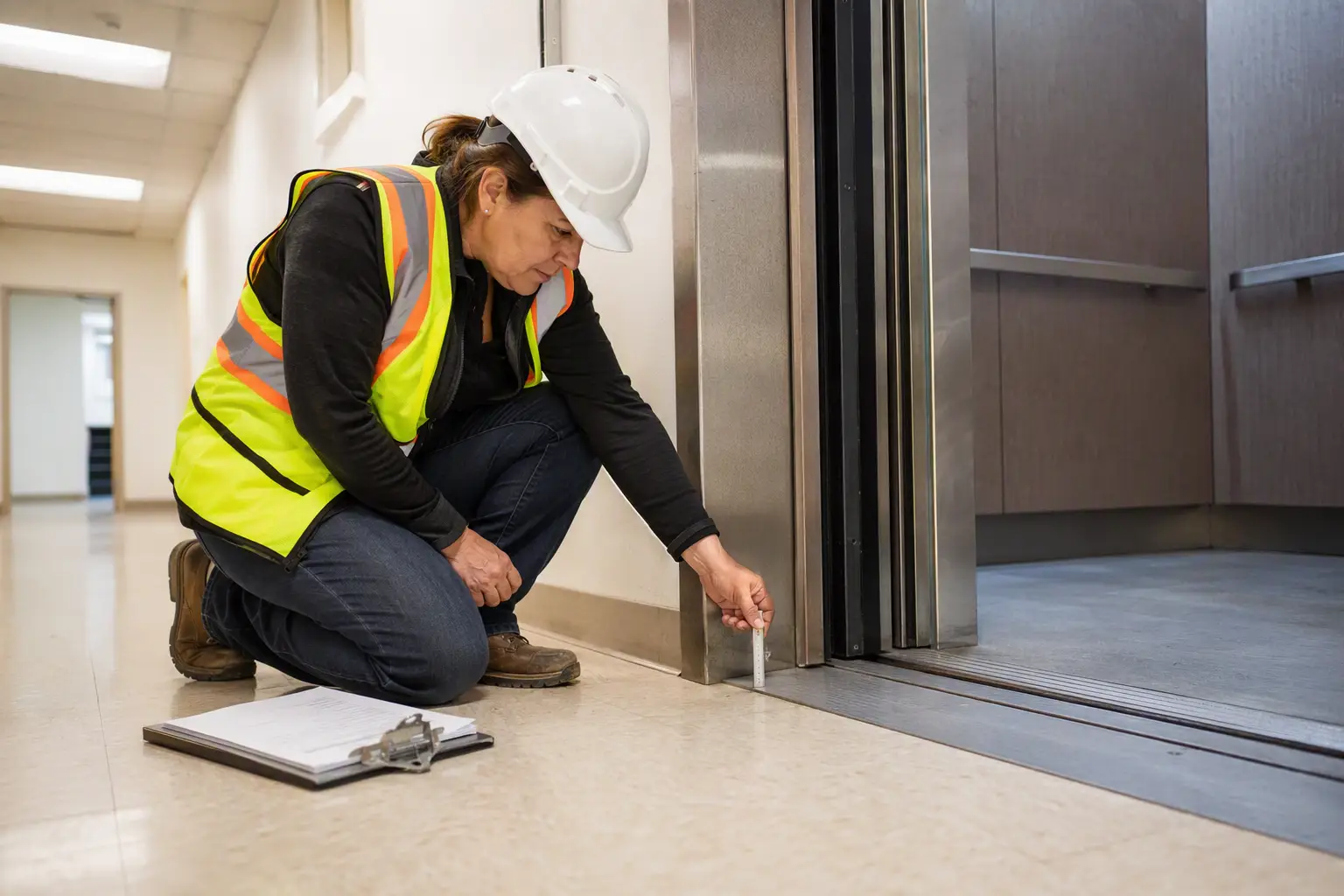
- Leveling accuracy: Cabs must level within a defined tolerance so that gaps between the cab floor and the landing do not create hazards for wheelchair users.
In California, these federal ADA requirements are reinforced by the California Building Code (CBC), which adopts and in some cases exceeds federal accessibility standards. Building owners should work with a qualified elevator service provider and consult with their local Authority Having Jurisdiction (AHJ) to determine the exact scope of upgrades required for their property.
—
Does the ADA Require Elevators in All Existing Commercial Buildings?
Not necessarily. The ADA generally requires elevators in new commercial construction of two or more stories, with certain exceptions for buildings under a specified square footage threshold per floor. For existing buildings, the obligation centers on whether the building is undergoing alterations and whether those alterations trigger path-of-travel obligations. Building owners in Signal, CA should consult with a licensed professional and their local building department to assess whether an elevator is required or whether accessibility alternatives are permissible.
—
What Triggers Mandatory Elevator Accessibility Upgrades in California?
Several conditions can trigger mandatory accessibility upgrades to an existing elevator in a California commercial building:
- Planned alterations: When a building owner alters a primary function area, federal and California law require that the path of travel to that area — which may include the elevator — be made accessible to the extent that the cost of the accessibility upgrades does not exceed a defined percentage of the cost of the alteration itself.
- Elevator modernization: When an elevator undergoes significant modernization work, it may be required to be brought into compliance with current accessibility and safety standards.
- Code-required inspections revealing deficiencies: California requires periodic elevator inspections through the Division of Occupational Safety and Health (Cal/OSHA Elevator Unit). Inspection findings that identify accessibility deficiencies can prompt required corrective action.
- Voluntary barrier removal: Even without alterations, the ADA encourages existing covered entities to remove barriers to accessibility where it is readily achievable to do so.
—
What California Codes Govern Elevator Safety and Accessibility?
California elevator safety and accessibility compliance is governed by a combination of federal and state standards. Key frameworks include:
- The Americans with Disabilities Act and the ADA Standards for Accessible Design, which set federal accessibility benchmarks.
- The ASME A17.1 Safety Code for Elevators and Escalators and its companion standard ASME A17.3, which address safety requirements for new and existing elevators respectively. California adopts these standards and enforces them through the Cal/OSHA Elevator Unit.
- The California Building Code (CBC), which incorporates state accessibility requirements and may impose standards that exceed the federal ADA minimums.
Because California enforces elevator safety through the Cal/OSHA Elevator Unit, all elevators in commercial buildings must hold a current permit to operate and must pass periodic inspections. Non-compliance with accessibility requirements identified during these inspections can result in enforcement action.
—
How Should a Building Owner in Signal, CA Prioritize Elevator Accessibility Upgrades?
A structured approach helps building owners manage compliance effectively:
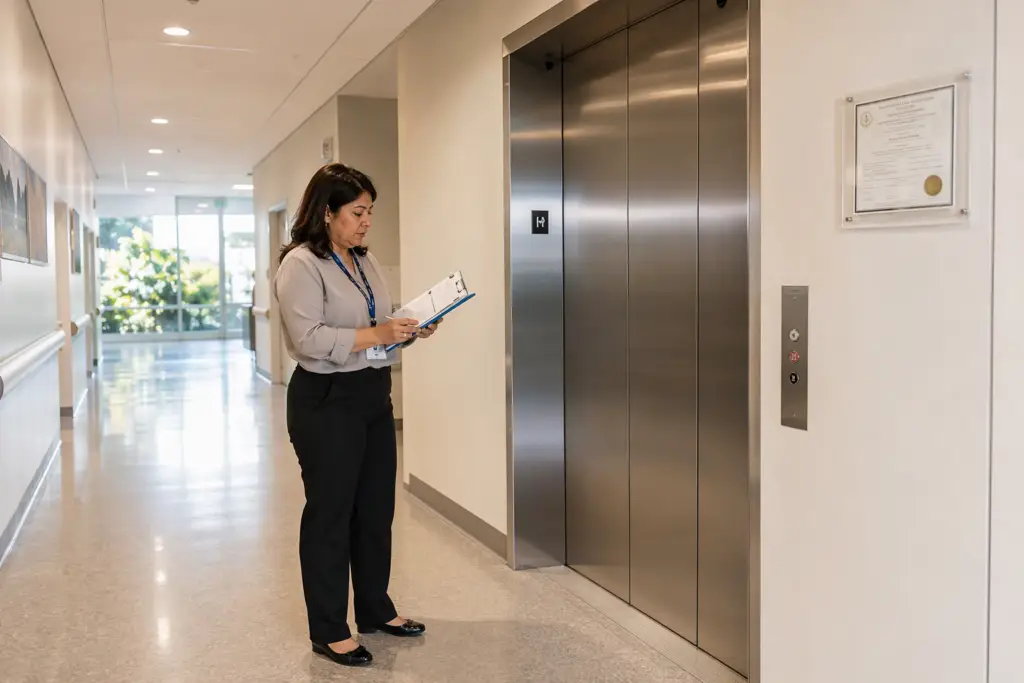
- Request a professional accessibility assessment of the existing elevator(s) from a qualified elevator service company familiar with California and federal requirements.
- Review current inspection records and any outstanding orders or deficiencies noted by the Cal/OSHA Elevator Unit.
- Identify planned building alterations that may trigger path-of-travel obligations under the ADA and CBC.
- Prioritize readily achievable upgrades — such as adding tactile signage, adjusting door timing, or updating call button hardware — that can be completed without major construction.
- Develop a modernization plan for more significant upgrades, coordinating with the local AHJ and your elevator service provider to sequence work efficiently.
- Document all improvements made toward barrier removal to demonstrate good-faith compliance efforts.
- Schedule follow-up inspections to confirm that upgrades meet the applicable code requirements and that the elevator permit remains current.
—
What Is the Difference Between ADA Barrier Removal and an Elevator Modernization?
Barrier removal refers to specific accessibility improvements — such as adding Braille signage or adjusting door open times — that can often be accomplished without replacing major elevator components. Modernization, by contrast, typically involves replacing mechanical and electrical systems such as controllers, drives, door operators, or cab finishes. A full modernization often provides an opportunity to bring the entire elevator into compliance with both current ASME A17.1 safety requirements and ADA accessibility standards at the same time, which can be more cost-effective than piecemeal retrofitting over time.
—
How Does Liftech Elevator Support ADA Compliance for Signal, CA Building Owners?
Liftech Elevator is a California-based elevator service company providing inspection, maintenance, modernization, and compliance consulting services to commercial building owners throughout the region, including Signal, CA and surrounding communities. The Liftech Elevator team works directly with property managers, building owners, and facilities directors to assess existing elevator conditions, identify ADA and California Building Code gaps, and develop practical upgrade plans aligned with each client’s budget and timeline.
Liftech Elevator’s service area includes commercial office buildings, retail centers, multi-family residential properties, healthcare facilities, and public-sector buildings across California. When urgent elevator issues arise, Liftech Elevator provides emergency service support — contact the team directly for availability details.
—
What Should Building Owners Know About Elevator Inspections in California in 2026?
As of 2026, California requires that all permitted elevators in commercial buildings undergo periodic inspections conducted or overseen by the Cal/OSHA Elevator Unit or an approved third-party inspection agency. The ASME A17.1 and A17.3 standards inform inspection criteria, and findings are used to determine whether a permit to operate will be issued, renewed, or conditioned on corrective action. Building owners in Signal, CA should maintain current permits and address any accessibility deficiencies identified during inspections promptly to avoid operational restrictions.
—
Schedule a Free Consultation
If your commercial building in Signal, CA has elevator accessibility questions or compliance concerns, the Liftech Elevator team is ready to help. From ADA barrier removal assessments to full elevator modernization planning, Liftech Elevator provides the expertise California building owners need to stay compliant and keep their elevators operating safely.
Contact Liftech Elevator today to schedule your free consultation: 562-609-3478
Need elevator service you can rely on? Liftech Elevator is ready to help.