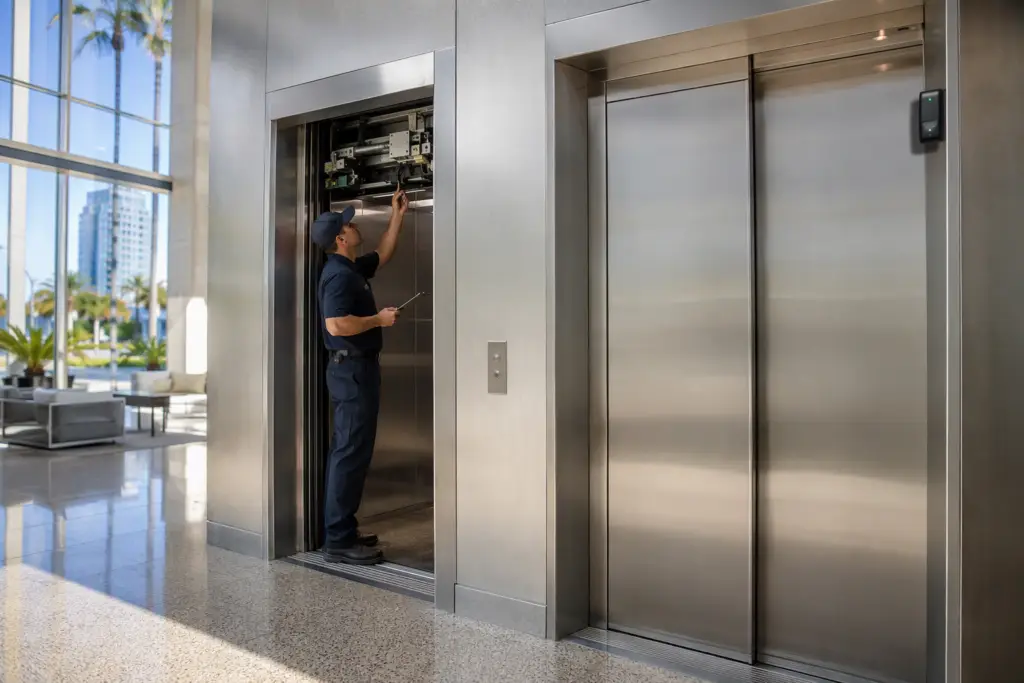

What are the core compliance requirements for elevator owners in California?
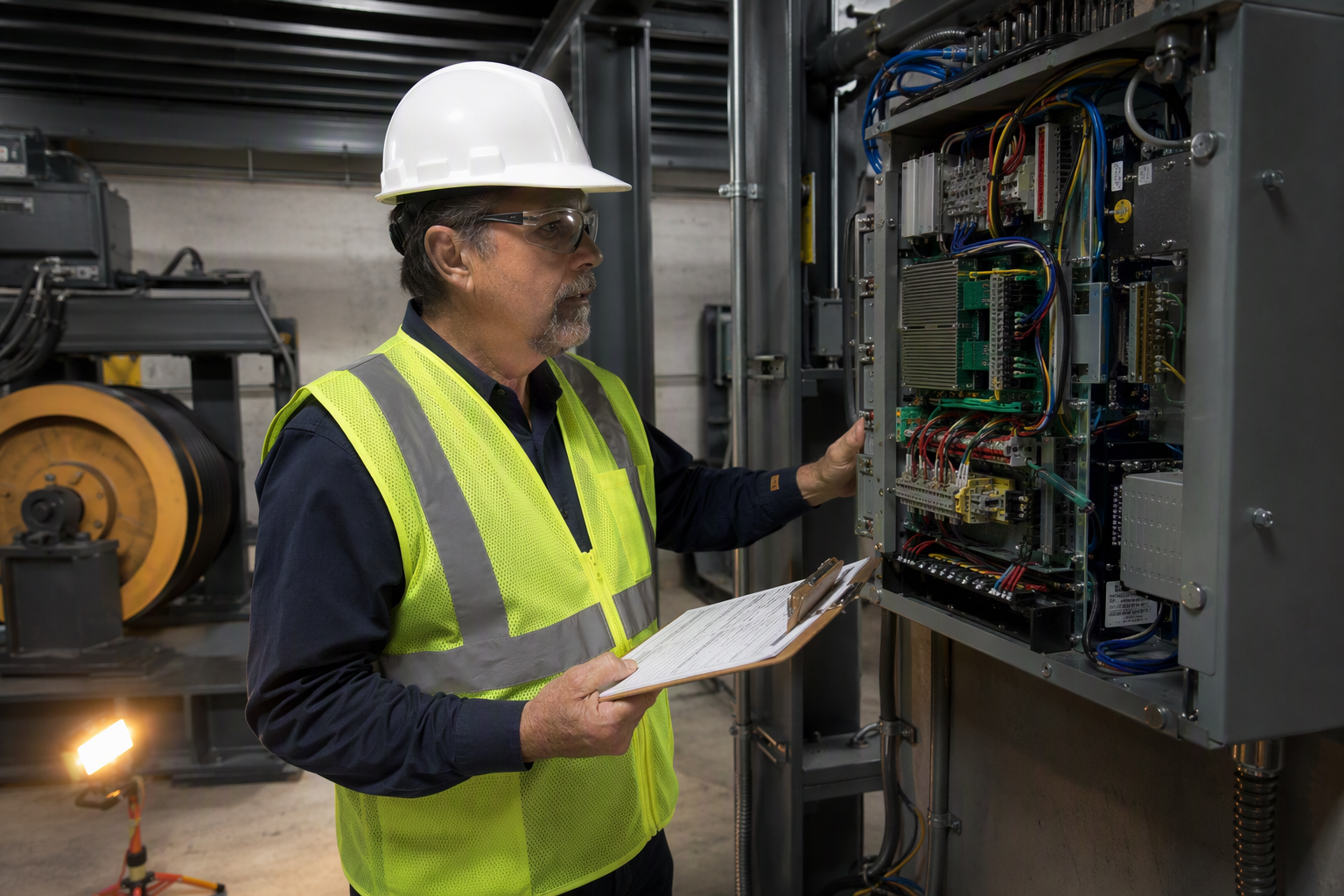
California elevator owners must comply with state-adopted safety codes, annual inspections by a licensed Qualified Safety Inspector (QSI), and permits issued through the local Authority Having Jurisdiction (AHJ).
California adopts and enforces elevator safety standards under the California Elevator Safety Construction Regulations, administered through the Division of Occupational Safety and Health (Cal/OSHA) Elevator Unit. These regulations reference ASME A17.1 Safety Code for Elevators and Escalators for new installations and ASME A17.3 Safety Code for Existing Elevators and Escalators for units already in service. Property owners are responsible for ensuring each elevator holds a current Permit to Operate, which is renewed annually after a passing inspection.
For portfolio owners, this means compliance is not a single event — it is a recurring calendar obligation tied to each unit’s permit anniversary date. Tracking multiple expiration dates across several buildings requires either a dedicated compliance coordinator or a contracted elevator service provider capable of managing that calendar on the owner’s behalf.
How does California’s elevator inspection process work?
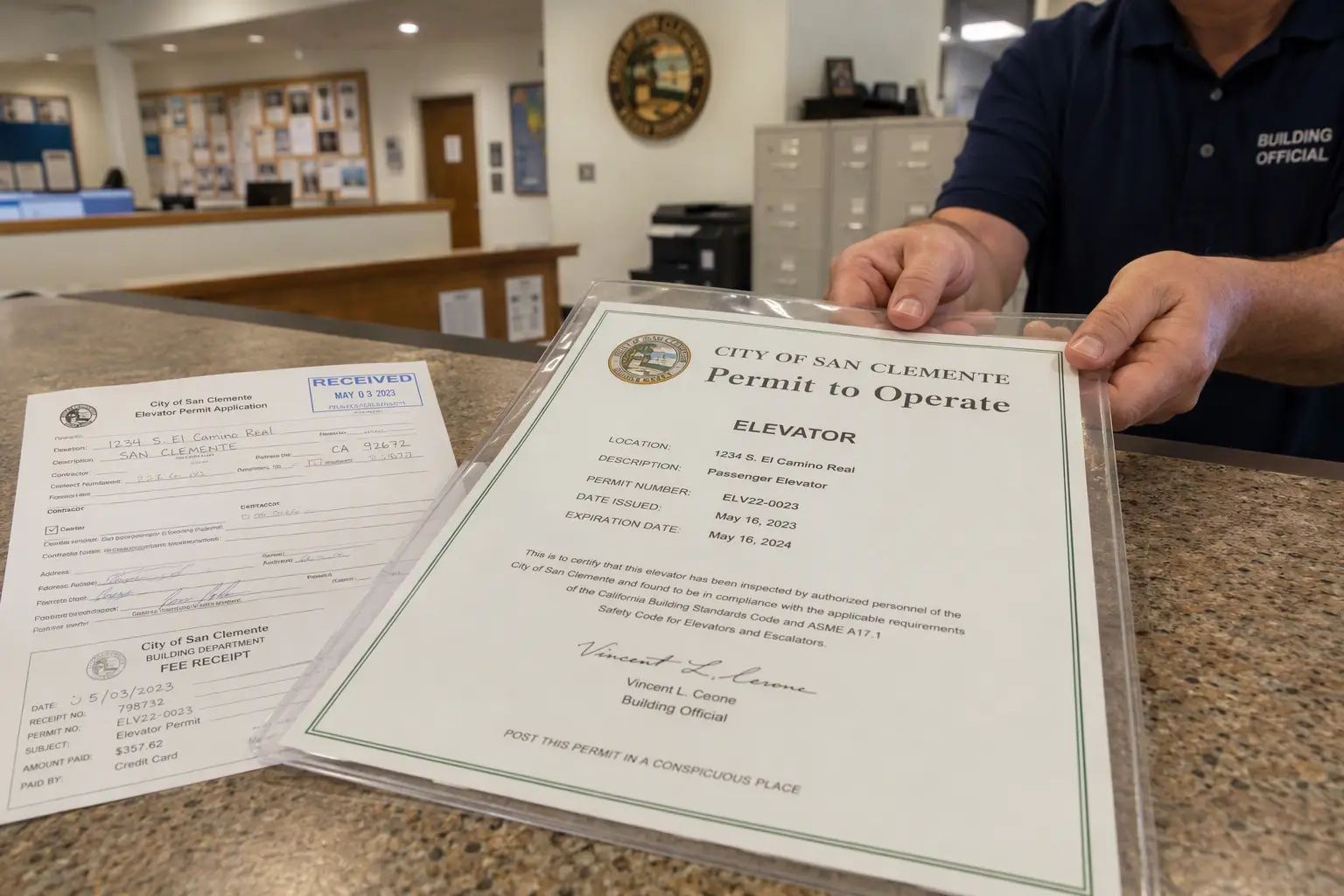
A licensed QSI performs a periodic inspection of every elevator in California, after which the local AHJ issues or renews the Permit to Operate if the unit passes.
Inspections in California are not performed by the elevator maintenance contractor — they must be conducted by a QSI who is independent of the maintenance company or by a state-employed inspector through Cal/OSHA’s Elevator Unit. The inspector evaluates the elevator against the applicable edition of ASME A17.1 or ASME A17.3, checking safety devices, electrical systems, mechanical components, cab conditions, and emergency communications.
If deficiencies are found, the owner receives a correction notice. Time-sensitive or safety-critical violations can result in an order to cease operation until repairs are made. For a portfolio owner, a single failed inspection at one property can escalate quickly if there is no maintenance partner already familiar with that unit’s history, making preventive maintenance the most effective risk-management strategy.
What is an Authority Having Jurisdiction (AHJ) and why does it matter for multi-building portfolios?
The AHJ is the governmental body — typically a city building department or county agency — that enforces elevator regulations and issues operating permits within its geographic boundaries.
In Southern California, a property portfolio can span multiple AHJ territories simultaneously. A portfolio owner with buildings in Los Angeles, Long Beach, Signal Hill, and Orange County must maintain compliance with each municipality’s specific permitting process, fee schedules, and inspection scheduling procedures. While the underlying safety codes are state-standardized, local procedures vary. Some cities have their own elevator inspection units; others rely on Cal/OSHA inspectors or approved third-party QSIs.
Understanding which AHJ governs each property is a foundational step in portfolio management. Working with an elevator service contractor that has established relationships across all relevant jurisdictions — such as Liftech Elevator, which serves Signal Hill, Long Beach, Los Angeles, and Orange County — significantly reduces the administrative burden of tracking multiple regulatory contacts and deadlines.
How often do commercial elevators need to be inspected in California?
Most commercial elevators in California require a full periodic inspection annually, with the Permit to Operate renewed each year upon passing.
The annual inspection cycle is the baseline, though the specific type of inspection (periodic, category test, or special) and frequency can vary based on elevator type, age, and use. ASME A17.1 defines inspection and test categories: routine periodic inspections occur annually, while more involved Category 1 (full-load safety test) and Category 5 (governor and safety device tests) have longer intervals specified in the code. California’s adopted regulations align with these intervals, and portfolio owners should confirm the applicable test schedule for each unit type — hydraulic, traction, or MRL — with their QSI and maintenance contractor.
For a multi-building portfolio, staggered inspection dates mean compliance activity is nearly continuous throughout the year. A well-managed maintenance program anticipates each inspection date and ensures the unit is properly prepared, reducing the likelihood of failed inspections and costly correction orders.
What is a preventive maintenance contract and why is it essential for portfolio owners?
A preventive maintenance (PM) contract is a formal agreement with a certified elevator service company to perform scheduled inspections, lubrication, adjustments, and parts replacement at defined intervals to keep elevators safe, code-compliant, and operationally reliable.
For property portfolio owners, a PM contract with a single qualified provider is the most efficient structure. It consolidates service records, standardizes reporting formats, and creates accountability for all units under one contractual framework. A well-structured PM contract should specify the frequency of maintenance visits (typically monthly or quarterly depending on elevator traffic and type), the scope of work covered at each visit, parts and labor inclusions, emergency call provisions, and documentation deliverables.
California’s elevator regulations do not specify the exact content of private maintenance agreements, but ASME A17.1 includes maintenance requirements that define the standard of care expected. Portfolio owners should ensure their PM contract scope aligns with those requirements and that documentation generated by the contractor is inspection-ready.
What documentation should property managers maintain for each elevator in their portfolio?
At minimum, every elevator in a California portfolio should have a maintained file containing the current Permit to Operate, the most recent inspection report, all correction notices and proof of completed repairs, maintenance logs, and any permits pulled for modernization or repair work.
Best practice is to maintain both a physical copy of the current Permit to Operate (which must be posted in or near the elevator cab) and a digital file for each unit. A centralized digital records system — even a structured folder in shared cloud storage — allows property managers to retrieve any unit’s compliance status instantly without visiting the site. This becomes especially valuable during property audits, insurance reviews, lease negotiations, and due diligence for acquisitions.
Maintenance logs should capture the date of each service visit, the technician’s name and license number, work performed, parts replaced, and any observations about developing issues. These logs demonstrate the owner’s duty of care if a liability claim arises and provide the maintenance contractor with a service history that improves diagnostic accuracy over time.
How do ADA requirements apply to elevators in multi-story commercial buildings?
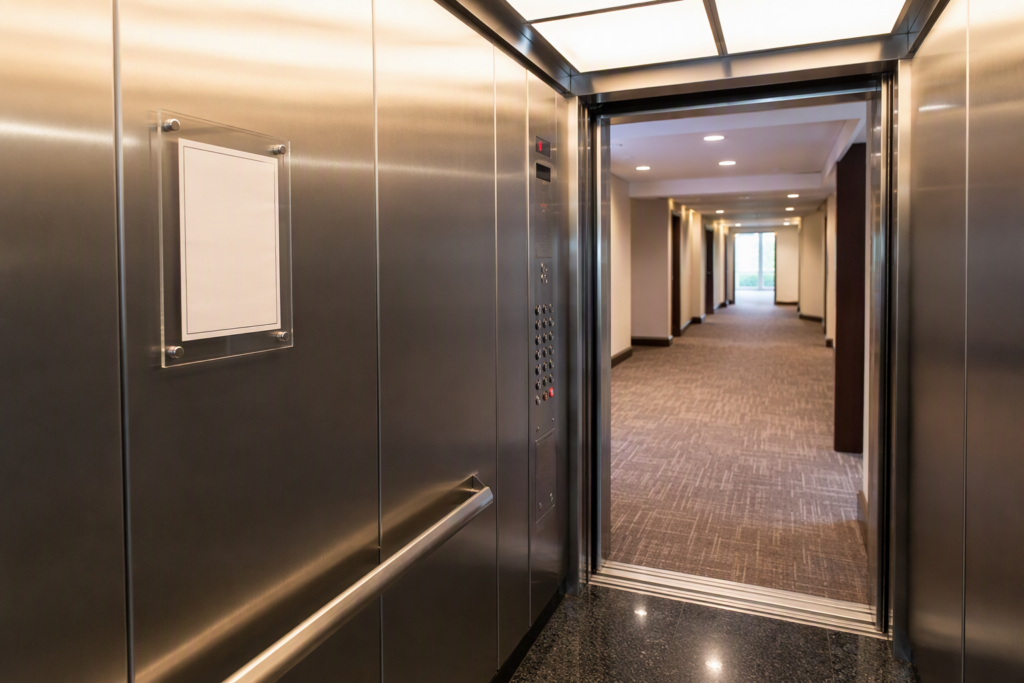
Under the Americans with Disabilities Act (ADA), elevators in multi-story commercial facilities are generally required to meet accessibility standards covering cab dimensions, door timing, control panel height and layout, Braille and tactile signage, and audible and visual indicators.
The ADA Standards for Accessible Design govern elevator accessibility in buildings subject to ADA Title II (public entities) and Title III (public accommodations and commercial facilities). For existing buildings undergoing alterations, the path-of-travel requirements trigger accessibility upgrades to the elevator if it serves an altered area. Portfolio owners evaluating renovations should assess the ADA impact on elevator compliance before finalizing project scopes.
Common ADA deficiencies found in older Southern California elevator stock include inadequate cab depth, non-compliant control button height, missing or worn Braille markings, and door re-opening devices that do not meet current sensitivity standards. A comprehensive portfolio assessment by a qualified elevator contractor can identify these gaps before they become complaints or enforcement actions.
What is elevator modernization and when should portfolio owners consider it?
Elevator modernization is the process of upgrading aging mechanical, electrical, or control systems to improve safety, energy efficiency, reliability, and code compliance — without replacing the entire hoistway structure.
Modernization is typically recommended when an elevator requires frequent repairs that indicate systemic component failure, when parts availability for older systems becomes limited, when energy consumption is significantly higher than modern equivalents, or when a unit falls out of compliance with current ASME A17.3 requirements for existing elevators. For portfolio owners, the financial case for modernization often involves comparing total cost of ownership — including reactive repair costs, tenant satisfaction impact, and liability exposure — against the capital investment of modernization.
In California, modernization work requires permits from the AHJ and must be performed by a licensed elevator contractor. After completion, a QSI inspection is required before the unit returns to service. Portfolio owners should plan for temporary elevator downtime during modernization projects and coordinate with building management to minimize tenant disruption.
How should property managers handle emergency elevator situations across multiple buildings?
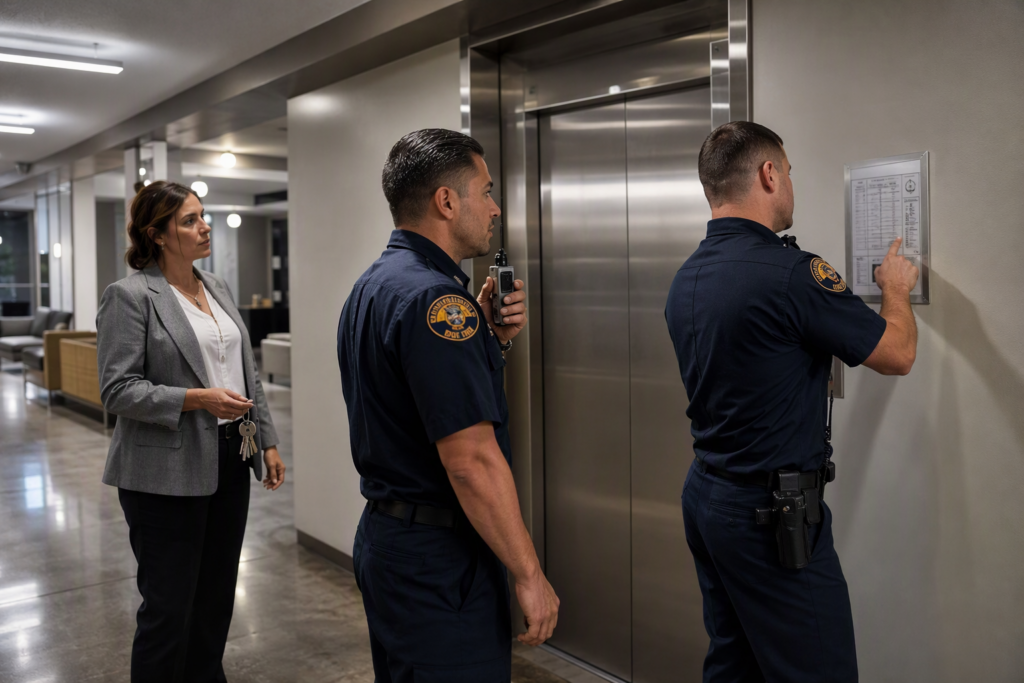
Every building in a portfolio should have a documented emergency response protocol that designates who contacts the elevator service contractor, how trapped passengers are communicated with, and who notifies emergency services if needed.
When a passenger is trapped, the immediate priority is communication and reassurance. California elevator code requirements include emergency lighting, two-way communication systems, and ventilation in elevator cabs to protect occupants during entrapments. Property staff should know how to use the emergency communication system to reach trapped passengers and how to relay information to the responding elevator technician.
- Confirm the elevator is stopped and the exact location of the cab within the hoistway is known to building staff.
- Activate the elevator’s emergency communication system to make voice contact with trapped passengers.
- Contact the elevator service contractor’s emergency line immediately — do not attempt self-rescue.
- If any passenger reports a medical emergency, contact 911 simultaneously.
- Keep the emergency communication channel open until the technician arrives and confirms it is safe to proceed with rescue.
- Document the incident, time of events, technician response, and resolution for the unit’s maintenance file.
- Report the incident to the AHJ if required under local regulations.
What should property owners look for when selecting an elevator service contractor for their portfolio?
A qualified elevator service contractor for a Southern California portfolio should hold a valid California Elevator Safety Contractor license, demonstrate experience with the specific elevator types in the portfolio, provide transparent maintenance documentation, and have operational coverage across all relevant markets.
Beyond licensing, portfolio owners should evaluate a contractor’s familiarity with the AHJ processes in each relevant jurisdiction, their capacity to service all properties without excessive scheduling delays, and their ability to provide consolidated reporting across all units. A contractor that operates in a single city may not be able to efficiently serve a portfolio spanning multiple counties.
Liftech Elevator serves property owners across Signal Hill, Long Beach, Los Angeles, and Orange County, providing maintenance, repair, modernization, and compliance support for commercial and residential elevator systems throughout Southern California.
How can portfolio owners reduce elevator-related liability exposure?
Liability exposure from elevator incidents is most effectively reduced through documented preventive maintenance, prompt response to inspection deficiencies, ADA compliance, and clear emergency response protocols.
Courts and insurers assess whether a property owner exercised reasonable care in maintaining the elevator. Evidence of a consistent preventive maintenance program, resolved correction notices, and staff training on emergency procedures demonstrates that care. Gaps in maintenance logs, overdue inspections, or ignored deficiency notices create significant exposure.
Insurance carriers in California increasingly require proof of current Permits to Operate and active maintenance contracts as conditions of coverage for commercial properties. Portfolio owners should confirm with their broker what elevator-specific documentation is required under their policies and ensure the maintenance contractor can supply that documentation in a timely format.
What are the most common elevator violations found during California inspections?
Common violations identified during California elevator inspections include expired Permits to Operate, non-functioning emergency lighting or communication systems, worn or damaged door operating equipment, oil leaks in hydraulic units, and missing or damaged safety signage.
Door-related deficiencies are among the most frequently cited because door systems experience the highest cycle counts of any elevator component and are directly linked to passenger safety. Emergency communication system failures are also commonly cited and carry particular urgency because they affect the ability to assist passengers during entrapments.
For portfolio owners, understanding the most common violation categories allows maintenance programs to be designed with targeted attention to high-failure-rate components. A well-structured PM contract should include door operator inspection and adjustment, emergency communication system testing, and hydraulic fluid level and leak checks at every scheduled visit.
How does elevator downtime affect property operations and tenant retention?
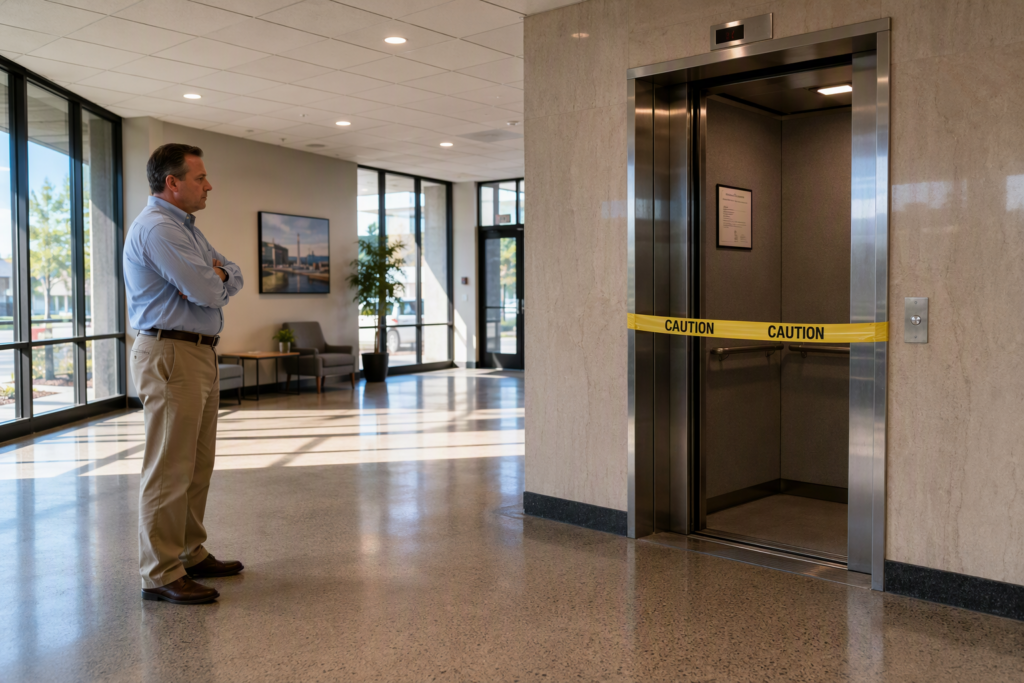
Unplanned elevator downtime in commercial and multi-family residential properties directly affects tenant accessibility, productivity, and satisfaction, and can trigger lease provisions or ADA-related complaints if access to accessible routes is disrupted.
For multi-story office buildings, retail centers, and residential high-rises, a non-operational elevator creates immediate hardship for occupants with mobility limitations and inconvenience for all building users. In buildings where the elevator is the only accessible means of vertical travel, downtime may constitute a failure to provide reasonable access under the ADA.
Preventive maintenance is the primary tool for reducing unplanned downtime. A PM program that identifies worn components before they fail converts what would be reactive emergency repairs — which typically involve longer wait times for parts and technicians — into planned maintenance activities that can be scheduled during low-traffic hours.
What is the difference between elevator maintenance and elevator repair, and how should portfolio owners budget for both?
Elevator maintenance encompasses scheduled, recurring service activities that preserve the unit’s condition and prevent failures, while elevator repair addresses specific component failures or deficiencies that arise despite — or in the absence of — regular maintenance.
A maintenance contract covers the labor and often the materials associated with routine service visits, adjustments, and minor parts replacement. Major component failures — motor replacements, valve replacements, control system failures — typically fall outside standard maintenance contract scope and are billed as repairs. Portfolio owners should understand precisely what their maintenance contracts include and exclude to budget accurately.
A realistic capital planning approach for a multi-building elevator portfolio includes a line item for unexpected repairs alongside the maintenance contract cost. The frequency and cost of repairs generally decreases with consistent preventive maintenance and increases with aging equipment, providing a financial incentive to modernize units that have passed their useful service life.
How should portfolio owners coordinate with property managers and building staff on elevator compliance?
Elevator compliance requires active coordination between the property owner, on-site property managers, building engineers or maintenance staff, and the elevator service contractor — with clear designation of responsibility for each compliance task.
A written elevator compliance responsibility matrix is a practical tool for portfolio owners managing multiple sites. This matrix assigns specific tasks — such as posting the current Permit to Operate, logging unusual elevator behavior, scheduling annual inspections, and responding to correction notices — to the appropriate role at each property. Without this clarity, critical tasks fall between organizational gaps.
Property managers should be trained to recognize early indicators of elevator issues — unusual noises, inconsistent leveling, slow door operation, or error codes on digital displays — and to report them promptly to the elevator service contractor rather than waiting for the next scheduled maintenance visit. Early reporting converts potential failures into manageable maintenance tasks.
What elevator compliance benchmarks should Southern California portfolio owners track?
Tracking key compliance metrics across a portfolio provides portfolio owners with a clear picture of their regulatory status, maintenance program effectiveness, and capital planning needs.
| Compliance Metric | Target / Benchmark | Notes |
|---|---|---|
| Permit to Operate currency | 100% of units — current, posted | Required by California AHJ; must be renewed annually after passing inspection |
| Annual inspection completion rate | 100% completed before permit expiration | Align maintenance visits with inspection prep at least 30 days prior |
| Correction notice closure time | Within AHJ-specified deadline; safety-critical items immediately | Document all closures with repair records |
| Preventive maintenance visit frequency | Per contract scope; minimum quarterly for low-use units, monthly for high-use | Align with ASME A17.1 maintenance requirements |
| Emergency communication system test | Tested at every maintenance visit | Required for passenger safety during entrapments |
| ADA compliance audit | Reviewed at each modernization or alteration; periodic audit for existing units | Reference ADA Standards for Accessible Design |
| Maintenance log completeness | 100% of service visits documented with date, technician, and scope | Essential for liability defense and insurance compliance |
| Equipment age tracking | Flag units approaching or past typical useful service life | Supports capital planning for modernization |
How should portfolio owners approach elevator compliance during property acquisitions?
Before closing on a property with existing elevators, buyers should conduct a thorough elevator due diligence review that includes inspection of current permits, recent inspection reports, maintenance logs, open correction notices, and a physical condition assessment by a qualified elevator contractor.
Inherited elevator compliance problems — expired permits, unresolved violations, or deferred maintenance — become the new owner’s responsibility immediately upon closing. A pre-acquisition assessment identifies these liabilities so they can be priced into the transaction or resolved as a condition of closing. The assessment should also evaluate the remaining useful life of major components and estimate near-term capital requirements for repairs or modernization.
Liftech Elevator provides portfolio assessment services for property owners and investors evaluating Southern California commercial and residential buildings, offering a detailed review of each unit’s compliance status and mechanical condition across the Los Angeles, Long Beach, Signal Hill, and Orange County markets.
What steps should a portfolio owner take to set up a centralized elevator compliance management system?
A centralized elevator compliance management system consolidates all unit-level compliance data — permits, inspection reports, maintenance logs, correction notices, and capital plans — into a single, accessible platform that provides portfolio-wide visibility.
- Create a complete inventory of every elevator unit in the portfolio, including property address, unit number, elevator type (hydraulic, traction, MRL), installation date, and current AHJ.
- Gather all existing compliance documentation for each unit — current permits, most recent inspection reports, open correction notices, and maintenance logs — and digitize any paper records.
- Identify permit expiration dates for every unit and build a compliance calendar with advance reminders set at least 60 days before each expiration.
- Establish a single point of contact at each property who is responsible for day-to-day elevator issues and communication with the service contractor.
- Select a qualified elevator service contractor capable of serving all properties in the portfolio and negotiate a consolidated maintenance agreement with standardized reporting requirements.
- Implement a cloud-based document management folder structure organized by property and unit, accessible to relevant portfolio management staff.
- Define a monthly or quarterly compliance review process where portfolio-level metrics are reviewed against the benchmarks in your tracking system.
- Integrate elevator capital planning into the broader property capital expenditure planning process, with equipment age and condition data informing annual budget development.
How do elevator code updates affect existing elevators in a California portfolio?
When California adopts a new edition of the ASME elevator safety codes, existing elevators are evaluated against ASME A17.3, which determines which new safety features must be retroactively applied to in-service units.
ASME A17.3 establishes a framework for applying updated safety requirements to existing elevators rather than requiring full replacement or compliance with every new installation standard. Specific provisions are phased in over time, and the applicable requirements depend on the elevator’s type, configuration, and date of installation. For portfolio owners, code updates can introduce new mandatory upgrades — such as firefighters’ emergency operation features, door reopening devices, or seismic safety requirements in California — that represent unplanned capital expenditure if not anticipated.
Working with a knowledgeable elevator contractor that monitors code adoption cycles in California allows portfolio owners to anticipate upcoming mandatory upgrades and incorporate them into the capital plan before they become compliance violations. California’s seismic environment also introduces state-specific considerations that interact with the national ASME codes, making local expertise particularly valuable.
Why should Southern California property portfolio owners partner with a single regional elevator service provider?
A single regional elevator service provider with coverage across all portfolio markets delivers consistency in service quality, documentation standards, emergency response, and compliance management that is difficult to replicate with multiple local vendors.
Managing different contractors for different properties means managing different reporting formats, different contract terms, different communication channels, and different levels of familiarity with each unit’s history. When an issue arises at a property, a single-provider model means one call connects the portfolio owner to a technician who already has access to that unit’s full service history.
For Southern California portfolios spanning Los Angeles, Long Beach, Signal Hill, and Orange County, Liftech Elevator offers comprehensive elevator maintenance, repair, modernization, and compliance support under a unified service framework. Consolidating elevator services with a regionally capable provider reduces administrative overhead, improves compliance visibility, and supports a consistent standard of care across every property in the portfolio.
Get a Free Elevator Portfolio Assessment
Managing elevator compliance across multiple Southern California properties requires expert support, current code knowledge, and a service partner with regional reach. Contact Liftech Elevator for a free elevator assessment of your portfolio — covering compliance status, maintenance program gaps, modernization needs, and ADA considerations across your Los Angeles, Long Beach, Signal Hill, and Orange County properties.
Call Liftech Elevator today: 562-609-3478
Need elevator service you can rely on? Liftech Elevator is ready to help.