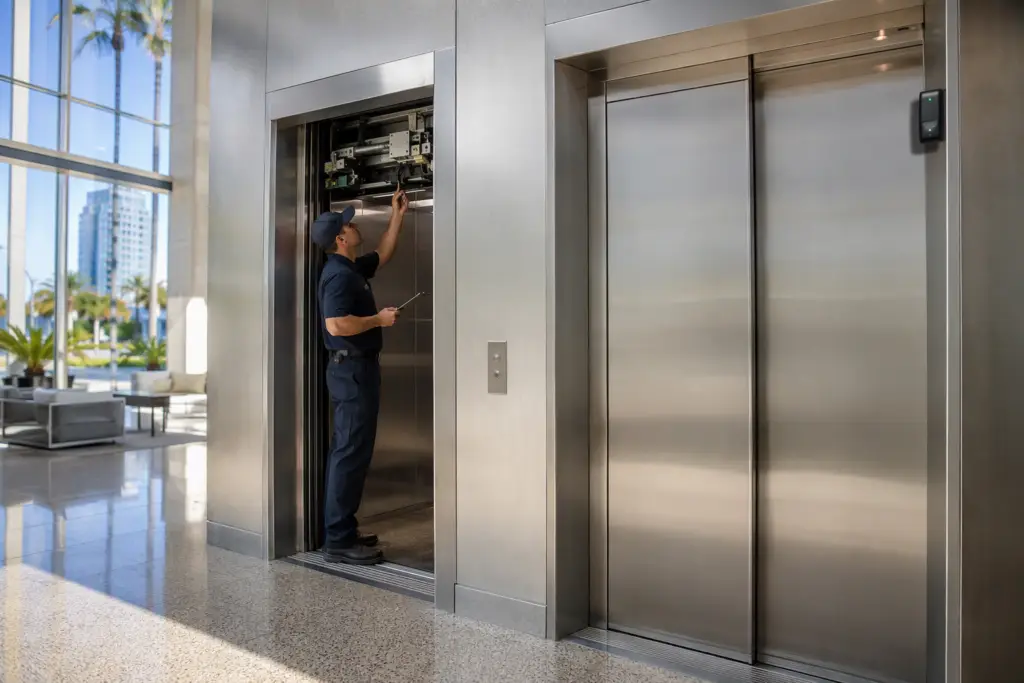
Elevator Maintenance & Inspection Requirements for Hotels and Hospitality Buildings in Los Angeles and Long Beach
Quick Answer: Hotels and hospitality buildings in Los Angeles and Long Beach must comply with California’s Title 8 elevator safety regulations enforced by Cal/OSHA’s Elevator, Ride, and Tramway Unit, alongside the ASME A17.1 Safety Code for Elevators and Escalators and federal ADA accessibility standards, requiring periodic inspections, documented maintenance programs, and valid permits to operate for every passenger elevator on the property.
For hotel operators and hospitality facility managers in Los Angeles, Long Beach, Signal Hill, and the surrounding Southern California region, elevator compliance is not a background task — it is a guest safety obligation and a legal requirement enforced by state regulators. A lapse in inspection permits or maintenance documentation can shut down a guest elevator, trigger liability exposure, and damage a property’s reputation. The sections below walk through every compliance layer that applies to hospitality elevators in California in 2026.
What Laws and Codes Govern Hotel Elevators in California?
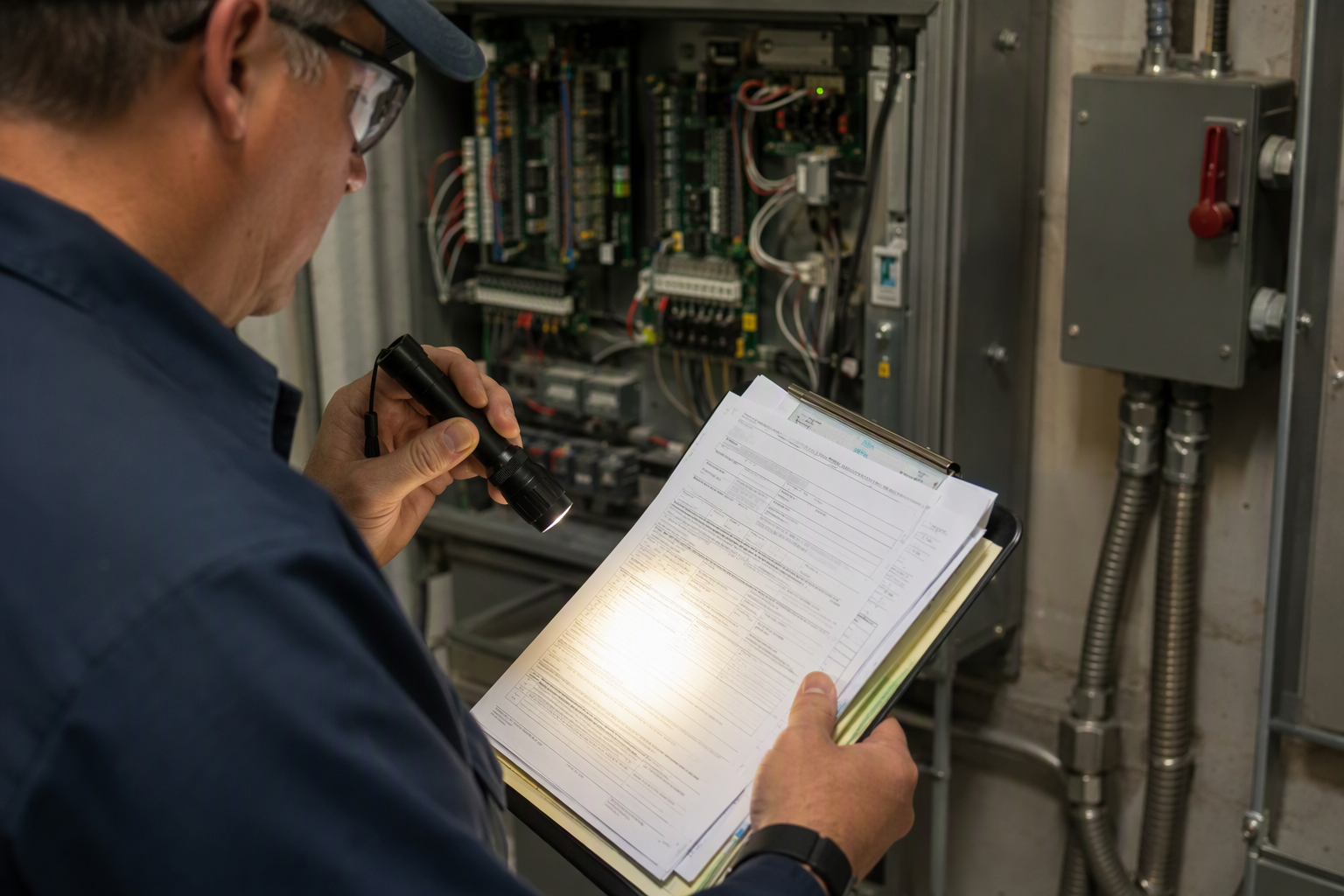
Hotel elevators in California sit at the intersection of several regulatory frameworks that operate simultaneously:
- ASME A17.1 Safety Code for Elevators and Escalators — The nationally adopted technical standard that defines design, construction, installation, and maintenance requirements for elevators. California enforces ASME A17.1 requirements through its state elevator safety program.
- ASME A17.3 Safety Code for Existing Elevators and Escalators — Applies retroactively to existing elevator installations, setting minimum safety requirements for equipment that predates the current A17.1 edition.
- California Elevator Safety Orders (Title 8, California Code of Regulations) — California’s state-level implementing regulations administered by the Division of Occupational Safety and Health (Cal/OSHA) through its Elevator, Ride, and Tramway (ERT) Unit. All elevators in hotels serving the public fall under this program.
- Americans with Disabilities Act (ADA) — Federal civil rights law requiring accessible elevator design and operation in places of public accommodation, which includes hotels of any size.
- California Building Code (CBC) — Incorporates elevator-related provisions for new construction and significant alterations, including those tied to ADA accessibility.
Liftech Elevator works with hotel and hospitality clients throughout Los Angeles County and Long Beach to navigate all of these overlapping requirements and maintain continuous permit compliance.
How Often Do Hotel Elevators in Los Angeles Need to Be Inspected?
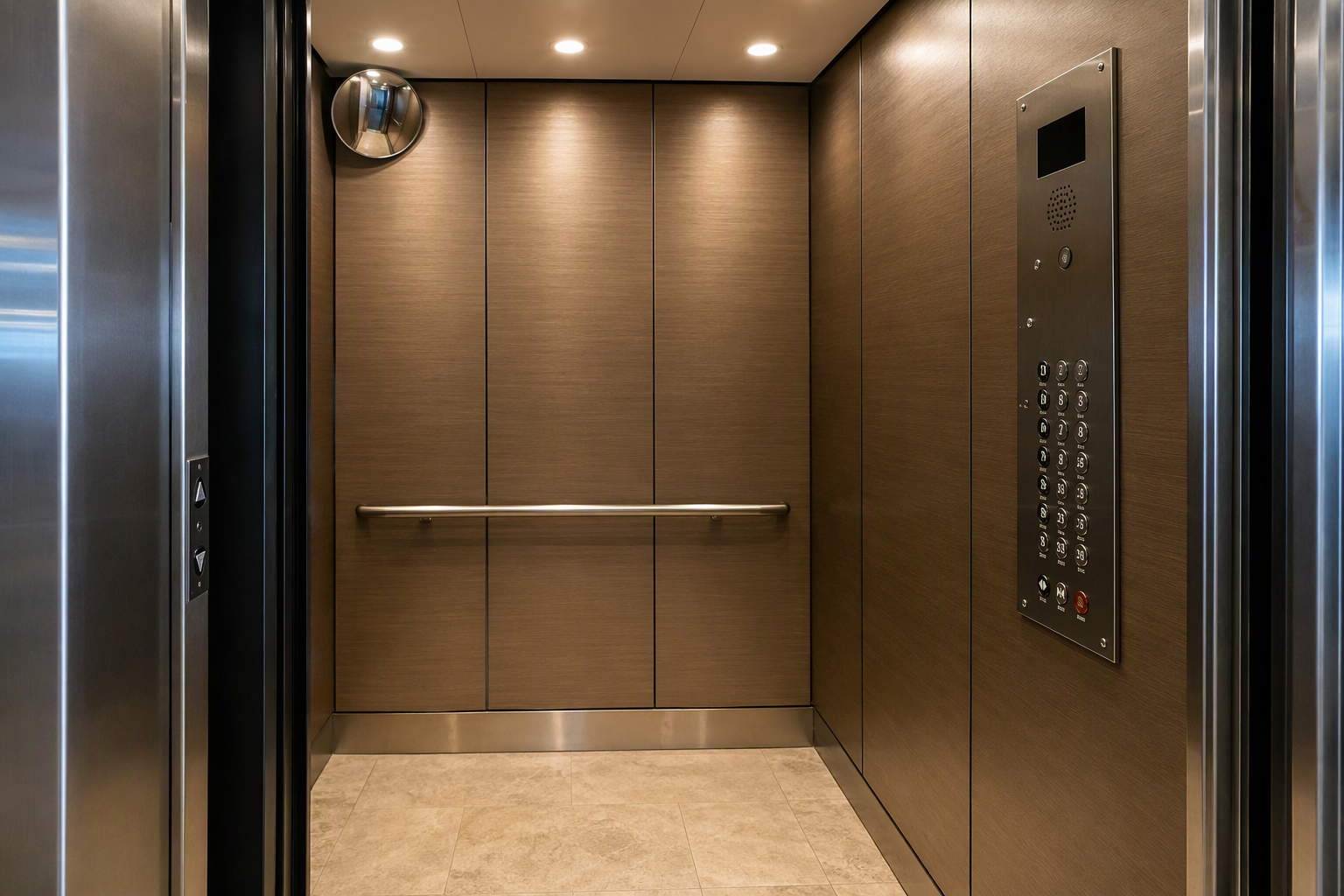
California’s elevator safety program requires that all conveyances subject to state jurisdiction — including hotel passenger elevators — undergo periodic inspections by a Qualified Elevator Inspector (QEI) certified under ASME QEI-1 standards. The inspection cycle results in a permit to operate issued by the ERT Unit. Operating an elevator without a valid, current permit is a violation of California law.
In practice, routine periodic inspections and Category tests are scheduled according to ASME A17.1 requirements and the state’s enforcement calendar. Hotels with older equipment may also be subject to Category 5 (full-load, full-speed) tests on a periodic multi-year cycle as defined by the applicable code edition.
Beyond state-mandated inspections, ongoing maintenance — meaning lubrication, adjustment, parts replacement, and safety device testing — must occur on a regular scheduled basis. Maintenance records must be kept on-site and made available to inspectors on demand. Gaps in maintenance logs are among the most common findings during state inspections of hospitality properties.
What Are the ADA Requirements Specific to Hotel Elevators?
Under the ADA, hotels are places of public accommodation. Elevators in multi-story hotels must meet ADA Standards for Accessible Design, which address:
- Minimum car interior dimensions sufficient for wheelchair users and mobility devices
- Door width and timing requirements to allow safe entry and exit
- Accessible call button placement and height at each landing
- Audible and visual floor indicators (hall lanterns and in-car position indicators)
- Braille and raised character floor designations on hoistway entrance jambs
- In-car emergency two-way communication systems usable by guests with hearing or speech impairments
- Leveling accuracy so that the car floor aligns precisely with each landing floor
ADA compliance is not a one-time installation task. Elevators must remain functionally compliant during operation. Malfunctioning door sensors, failing two-way intercoms, or worn leveling mechanisms can each create ADA exposure for a hotel operator. Liftech Elevator includes ADA functional checks as part of its hospitality maintenance assessments.
What Specific Maintenance Tasks Are Required for Hotel Elevators?
The ASME A17.1 Safety Code for Elevators and Escalators outlines a maintenance, repair, and replacement program requirement for all elevators. For hotel properties, a compliant maintenance program typically encompasses:
- Regular lubrication of guide rails, cables, and mechanical components
- Inspection and adjustment of door operating mechanisms and safety edges
- Testing of safeties, governors, and buffers per applicable Category test schedules
- Examination and cleaning of machine room equipment, including drive units and controllers
- Verification of lighting levels in the car, machine room, and pit
- Testing of emergency lighting and battery backup systems
- Inspection of pit equipment, including pit ladders, stop switches, and sump systems
- Review and documentation of all maintenance performed, kept in a written log
For high-traffic hotel elevators — particularly those in lobbies, conference centers, or towers with significant guest volume — more frequent maintenance intervals are appropriate and reflect the elevated wear these units experience.
What Happens If a Hotel Elevator Fails a California Inspection?
When a Cal/OSHA ERT Unit inspector identifies a violation, the elevator’s permit to operate can be placed on hold or the unit may be ordered out of service immediately, depending on the severity of the finding. The hotel operator must:
- Receive the written notice of violation or order to cease operation from the inspector.
- Review the specific violations cited and identify which are immediately dangerous versus those requiring correction within a defined timeline.
- Engage a licensed elevator contractor to perform the required repairs or adjustments.
- Have the work completed and documented by the elevator contractor in writing.
- Request a follow-up inspection from the ERT Unit to verify the corrections.
- Obtain reinstatement of the permit to operate before returning the elevator to service.
- Retain all correction documentation on-site for future inspection review.
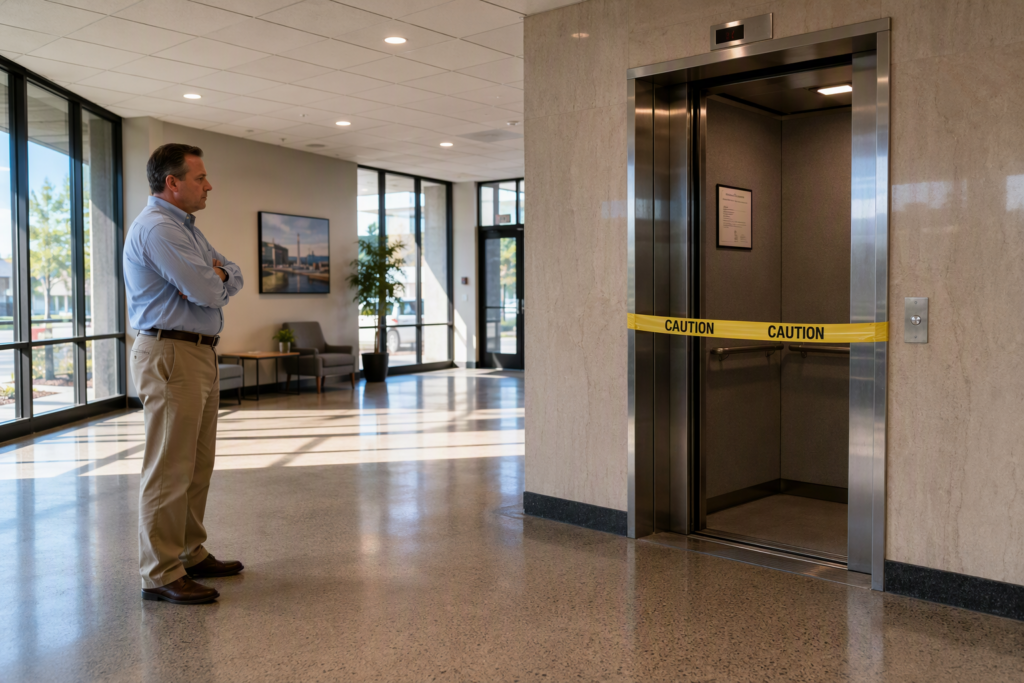
Operating an elevator under a stop order is a serious legal violation. Hotel management should treat an out-of-service elevator as an emergency maintenance situation and contact a qualified elevator contractor promptly.
Do Los Angeles and Long Beach Have Local Elevator Requirements Beyond State Rules?
California’s elevator safety program is administered at the state level by Cal/OSHA’s ERT Unit, which means permit issuance and state inspections follow a uniform statewide framework. However, the City of Los Angeles and the City of Long Beach both have local building departments that interact with elevator compliance during new construction permitting and significant alteration projects. Local plan check and permit processes must be satisfied before major elevator work — such as modernization or new installation — can begin.
For routine maintenance and periodic inspections on existing hotel elevators, the primary authority having jurisdiction (AHJ) is the Cal/OSHA ERT Unit. Liftech Elevator is experienced working within both the Los Angeles and Long Beach jurisdictional environments, including coordinating with local building officials when modernization or alteration work requires local permits in addition to state oversight.
What Are the Machine Room Requirements for Hotel Elevators in California?
California’s elevator safety regulations, consistent with ASME A17.1, establish specific requirements for elevator machine rooms that hotel facility managers must maintain:
- Machine rooms must be kept locked and accessible only to authorized elevator personnel
- Adequate lighting must be maintained at all times, even when the elevator is not in service
- Temperature and humidity must remain within ranges that protect electrical and mechanical equipment
- No storage of non-elevator materials is permitted in the machine room
- A fire extinguisher appropriate for the equipment type must be present
- Machine room access must not be impeded by hotel storage, HVAC equipment, or other building systems
Machine room violations are frequently cited during state inspections and are entirely preventable with proper facility management protocols. Hotel engineering teams should conduct routine visual checks of machine room conditions between formal inspection cycles.
How Does a Hotel Prepare for a California Elevator Inspection?
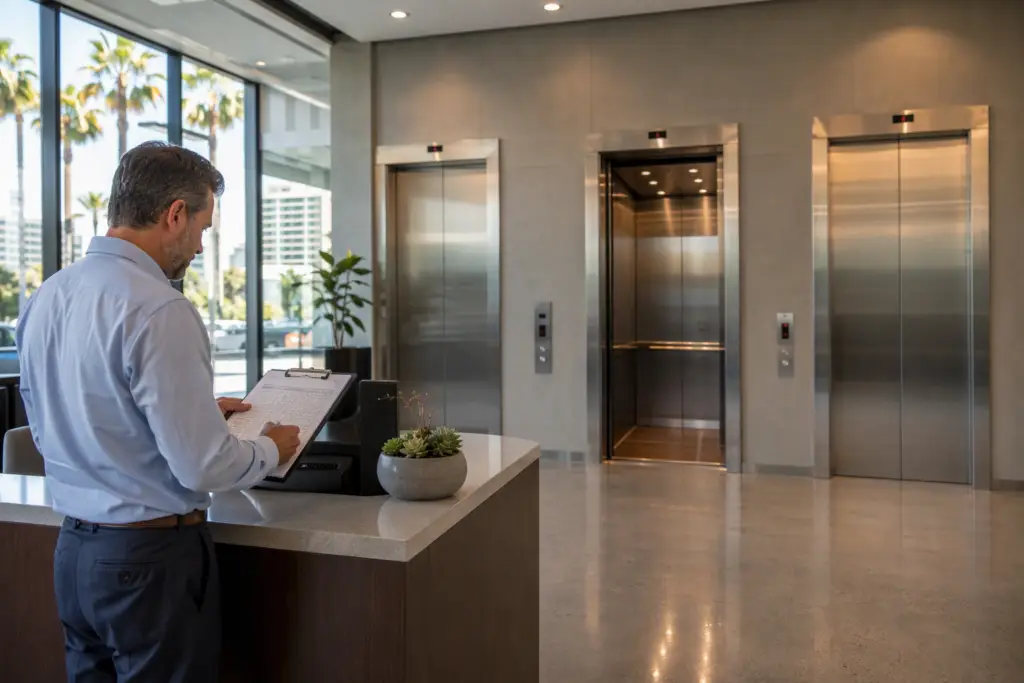
Preparation reduces the likelihood of citations and helps inspections proceed efficiently. Hotel facility managers should ensure the following before a scheduled ERT inspection:
- Confirm that all maintenance logs are complete, up to date, and accessible in the machine room.
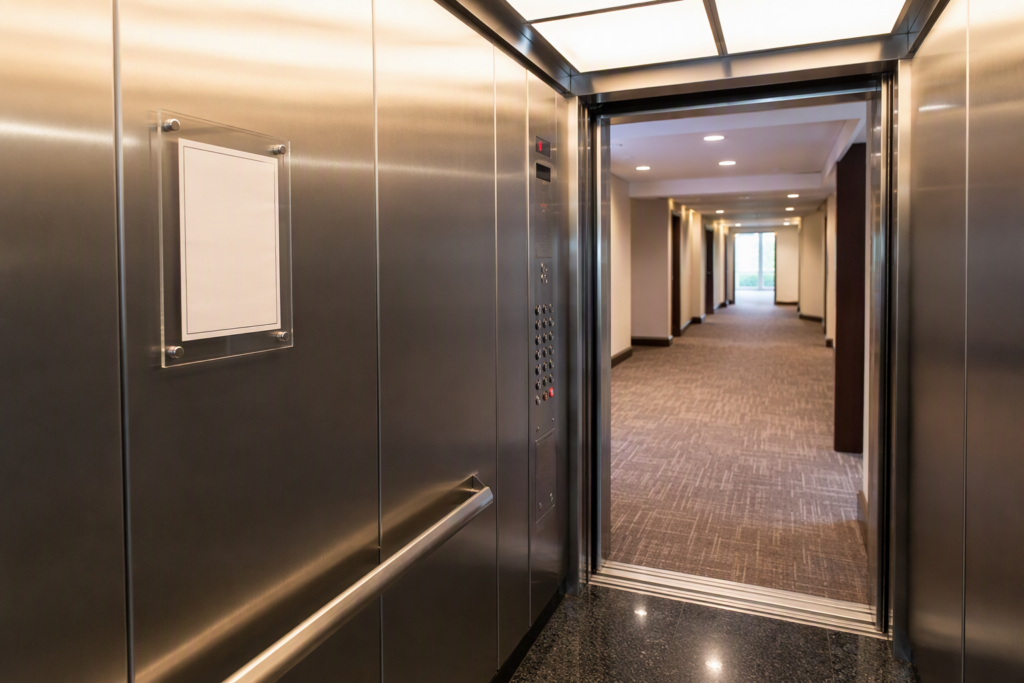
- Verify that the current permit to operate is posted in the elevator car as required.
- Check that machine room access is clear, well-lit, and that the machine room is clean and locked.
- Test the in-car emergency telephone and confirm it connects to a monitored line.
- Confirm that all elevator lights — car interior, pit, and machine room — are functioning.
- Check that all required signage (capacity placards, no-smoking signs, permit) is posted and legible.
- Notify the elevator maintenance contractor in advance so that a technician can be present if needed.
Questions Your Inspector Will Ask
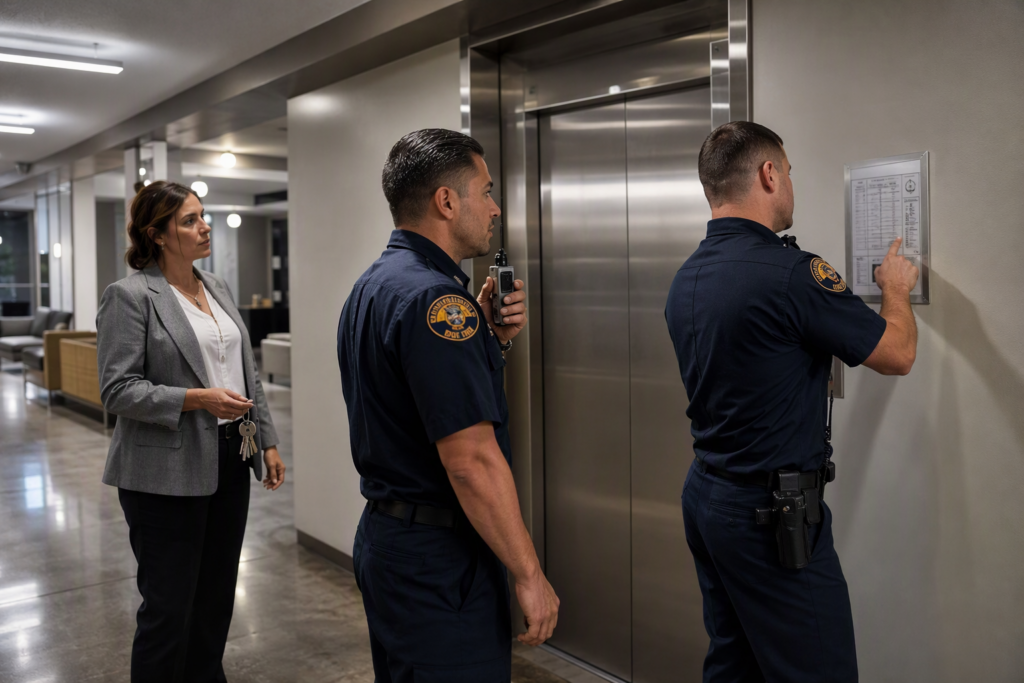
During a Cal/OSHA ERT Unit inspection of a hotel elevator, inspectors commonly ask facility managers and on-site personnel the following:
- Where is the maintenance log, and when was the last service performed? Inspectors will review the written maintenance record to verify that scheduled maintenance has been performed and documented.
- Who is the licensed elevator contractor performing maintenance on this unit? All maintenance must be performed by a licensed elevator contractor holding the appropriate California Contractors State License Board classification.
- Has the emergency telephone been tested recently, and where does the call route? The in-car emergency communication device must connect to a location that is monitored at all times the elevator is in service, per ASME A17.1.
- When was the last Category 1 or Category 5 test performed, and are the test records available? Test documentation must be retained and available on-site.
- Are there any known deficiencies or outstanding repair orders for this unit? Inspectors may ask if management is aware of any unresolved issues.
- Who has access to the machine room, and is access controlled? Machine room access control is a standing code requirement.
- Has any alteration work been performed since the last inspection? Alterations trigger additional approval and re-inspection requirements.
What Is the Cost of Non-Compliance for Hotel Elevator Operators?
Non-compliance carries consequences beyond the administrative cost of correcting violations. Hotel operators in Los Angeles and Long Beach face:
- Stop-use orders requiring an elevator to be taken out of service until corrections are made — directly impacting guest experience and operational capacity
- Civil penalties assessed by Cal/OSHA’s ERT Unit for violations of California elevator safety orders
- Liability exposure in the event of a guest injury associated with a non-compliant elevator
- Insurance complications that can arise when a carrier discovers permit lapses or undocumented maintenance
- Reputational damage from guests who encounter out-of-service elevators or file ADA-related complaints
Proactive compliance — maintained through a structured maintenance agreement with a qualified contractor — is consistently less costly than reactive enforcement response. Liftech Elevator helps hotel clients in the Los Angeles and Long Beach markets structure compliant maintenance programs designed to prevent violations before they occur.
How Should a Hotel Evaluate an Elevator Maintenance Contractor?
Hotel facility managers and asset managers evaluating elevator maintenance contractors in Southern California should consider the following criteria:
- California Contractors State License Board licensing — Verify that the contractor holds a current, valid California contractor’s license appropriate for elevator work.
- QEI-certified inspection capacity — Confirm that the contractor works with or can coordinate with QEI-certified inspectors for periodic state inspections.
- Familiarity with Cal/OSHA ERT Unit processes — Experience navigating California’s state inspection and permitting system is essential for hospitality properties operating under continuous state oversight.
- Documentation practices — The contractor should provide clear, complete maintenance logs that will satisfy inspector review.
- ADA compliance knowledge — The contractor should be able to identify and correct ADA functional deficiencies, not only mechanical safety issues.
- Service geography — Confirm the contractor regularly services Los Angeles, Long Beach, Signal Hill, and the surrounding Southern California region.
Liftech Elevator serves hotel and hospitality clients across Los Angeles County, Long Beach, Signal Hill, and Orange County, providing maintenance programs aligned with California’s regulatory requirements.
What Elevator Issues Are Most Common in Hotel Buildings?
Hotels present a distinct elevator use pattern compared to commercial office buildings or residential properties. High-volume passenger traffic, luggage and housekeeping carts, and guests unfamiliar with elevator etiquette create wear patterns that maintenance programs must account for. Common issues observed in hospitality elevator environments include:
- Door operator wear and door edge sensor degradation from high-frequency door cycling
- Car interior wear and leveling drift from heavy load cycles associated with luggage, carts, and peak check-in periods
- Emergency telephone failures, often discovered only during inspection
- Permit lapses when inspection scheduling is not proactively managed
- ADA leveling accuracy issues that develop gradually and go unnoticed until a guest incident occurs
- Machine room access violations when hotel storage gradually encroaches on elevator machine room space
Contact Liftech Elevator for a Free Elevator Assessment
Hotel and hospitality facility managers in Los Angeles, Long Beach, Signal Hill, and Orange County can rely on Liftech Elevator for compliant, professionally managed elevator maintenance and inspection coordination. Whether a property needs a comprehensive maintenance program, assistance preparing for a Cal/OSHA ERT inspection, or an ADA compliance review, the Liftech Elevator team is equipped to help.
Contact Liftech Elevator for a free elevator assessment: 562-609-3478
Need elevator service you can rely on? Liftech Elevator is ready to help.